Eva Victor

Nathan Ma meets Eva Victor: the character comedian changing her industry without leaving her apartment.

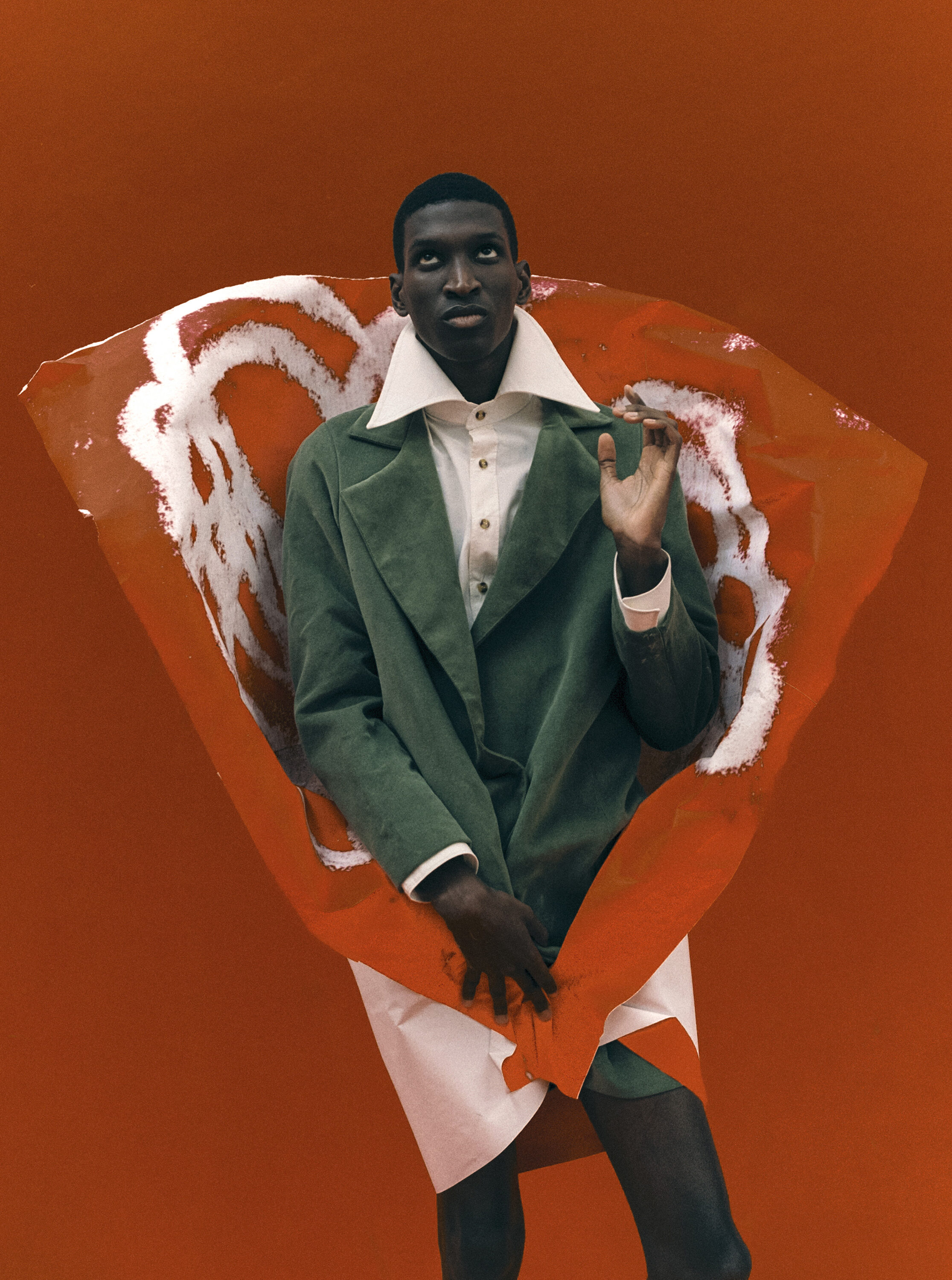
She wears a coat by Helmut Lang and a vest by Perry Ellis.
“I have all this pent-up fear and fraudulence and worry about not living up to the titles assigned to me.”
On Twitter, comedian Eva Victor is a headline act. As an actor, her on-camera credits include Showtime’s prestige drama Billions. As a writer, her satirical pieces have been published on Reductress and in The New Yorker. But Victor has found her beat in short-form comedy sketches that she films with her phone and uploads to Twitter. The videos are low-fi and low- to no-budget, like Instagram Stories with a plot. In one, she plays a glamorous widow, idly cooperating with the police as they investigate the disappearance of her husband who she definitely did not kill. In the next, she’s a record store clerk with a septum piercing and plenty of attitude: The girl in a movie who is “different.”
In these videos, Victor doesn’t assume the role of different people—she fully inhabits them. Her humor comes in two acts: First, she recreates familiar characters—often Hollywood tropes or metropolitan millennials—with eerie precision and an unforgiving eye for detail. Then, she knowingly exposes the unspoken fault lines under each of her impressions. Her record store clerk character, for example, gets dumped by the high-school quarterback two weeks after prom—a rebuttal to the happy endings we have grown to expect.
When Victor logs onto Zoom, she’s sitting cross-legged on the floor with a kale sandwich on her plate in front of a massive, four-door fridge. At 26 years old, she has just got the keys to a new apartment in New York. The walls are bare and the space is mostly unfurnished—it’s a blank canvas for her next act.
What’s it like to work as a comedian in a pandemic?
It’s a weird task, but it also serves as an escape—not even doing comedy, but writing at all. These people don’t exist, but they get to go to a party and they get to go to a store and whatever else that I can’t [in a pandemic].
You recently finished a screenplay. What catalyzed your move from on-camera work toward on-paper work?
As much as my work lives on phones right now, I really don’t like having a phone. Writing takes you away from the noise, even if it’s for an hour or two. I was a playwriting minor in college, and wrote a few—I must say—horrible plays. Still, I loved the quiet practice of that. Returning to that private work is exciting. I also like that when something is on paper you can hold it in your hand: “I made this! Look, it’s on a piece of paper so it must be real.”
How have you been spending your time outside of work?
I’m about to start a pottery class, which I’ve been looking forward to for a long time. I’ve also been jogging—horribly, I look like a little duck. It’s like trying to outrun your thoughts, in a way that makes you shut your brain down—because your brain will kill you. When I was in high school, I had my first bout of depression in a big way, and it was really scary and I thought I was gonna die. Now it happens every so often, like my period: “Okay, it’s here, it’s gonna go, it’s gonna come back, let’s just live with it.”
What makes you laugh?
I really like silly people. Should I just name them? The Michelle Buteau Netflix special is so funny, and Pen15 too. I also thought Rosemary’s Baby was funny—like, I think it’s funny when we talk about death, or wanting to die, because it makes me feel connected. Take I May Destroy You. It’s taking me a while to finish it but it’s so worth it. It’s triggering, and it’s accurate in terms of the experience of trauma, and that is satisfying. It’s the first time, actually, that I’ve felt like I’ve seen something depict what that particular experience of trauma felt like in my life in a way that really landed and hurt my feelings too. That hit me really hard, but in a good way. Like it was meant to.
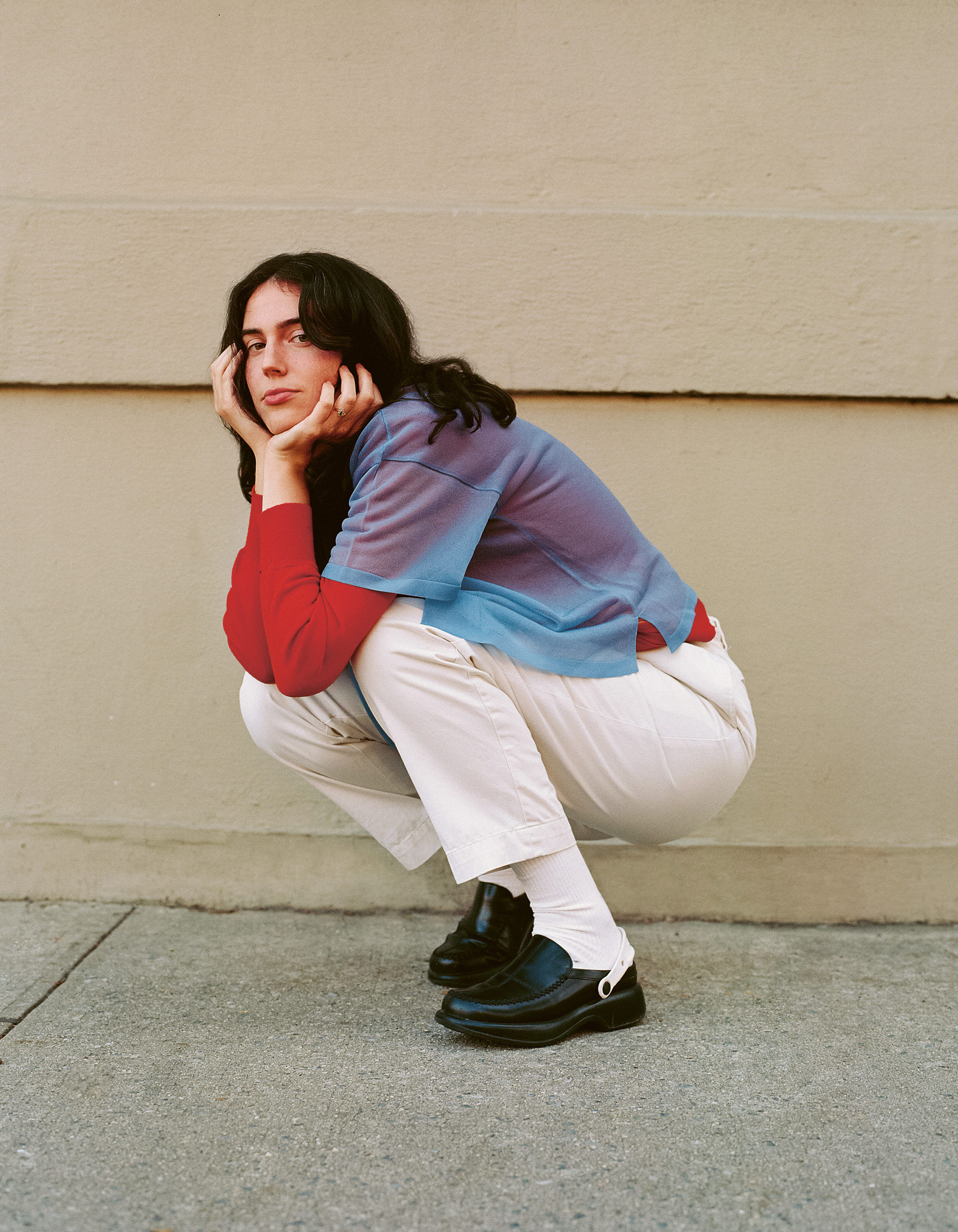
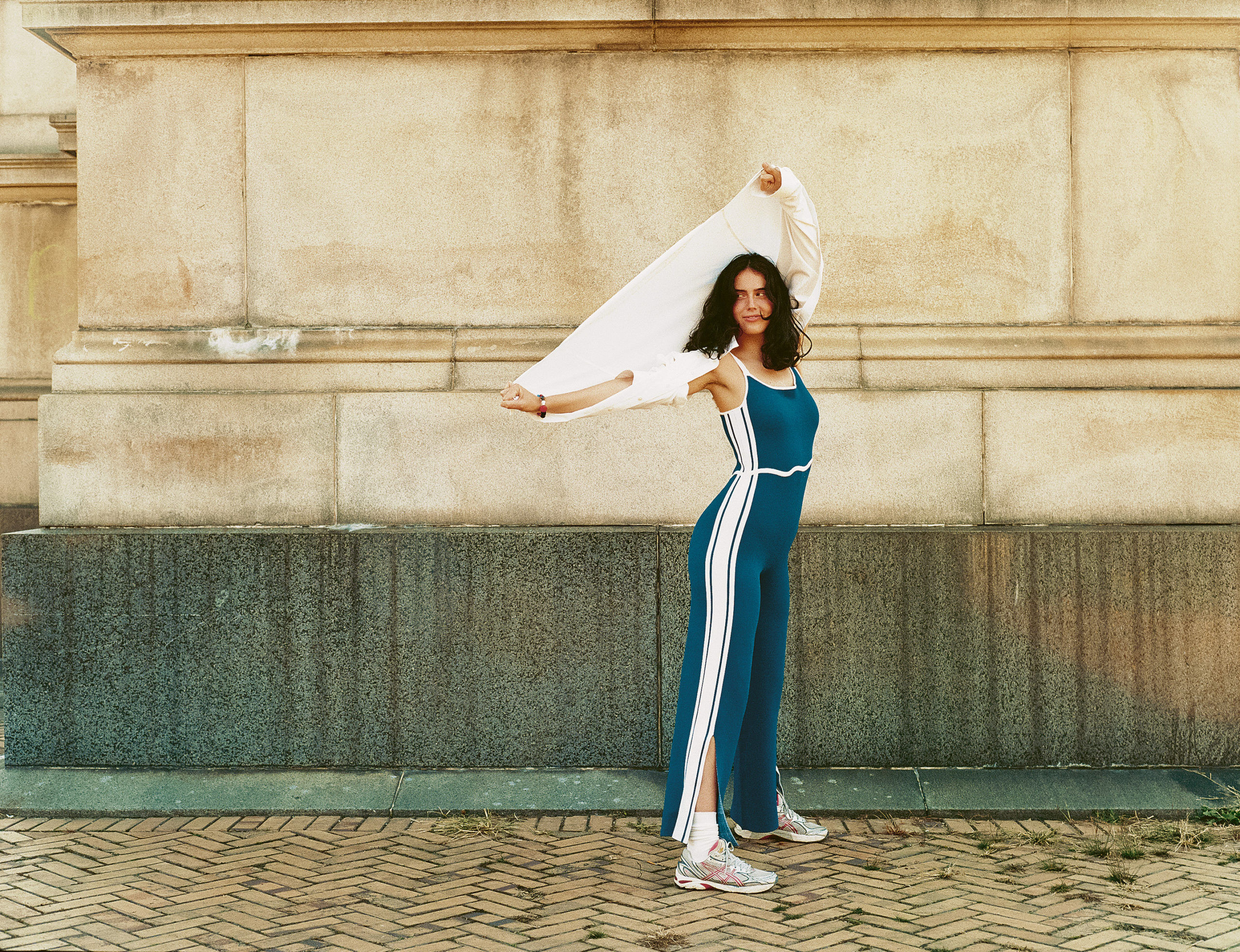
Victor wears a jumpsuit by PH5 and a shirt by Uniqlo.
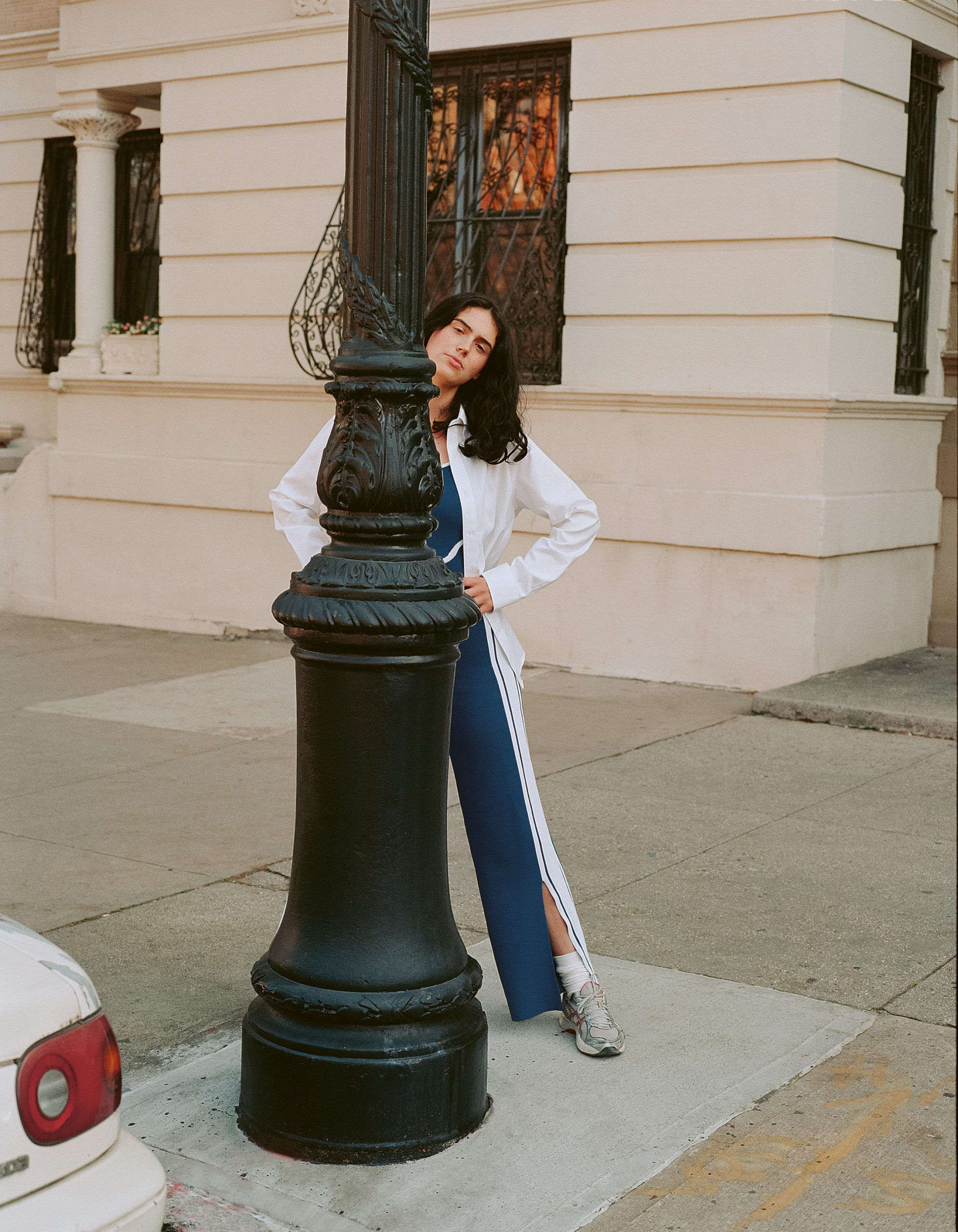
Victor wears a jumpsuit by PH5 and a shirt by Uniqlo.
Forms of creative expression are implicated in the same power structures as our lives in general. You deal with these power structures in your comedy, like with your character of the overeager girlfriend telling her boyfriend about why she wants to go to “straight pride.” What inspired those parodies?
Maybe a year and a half ago, Alyssa Milano was like, “Women, we’re on a sex strike!” and everyone was like, “No, we’re not. That doesn’t serve us in anyway. We like sex.” People are so fucking insane and they have really roundabout ways of doing what they want. People organizing a straight pride? I was like, “This is funny, this is really funny, but stupid, and you’re not getting what you want from this. I’m gonna make it harder for you to get what you want.”
There are also plenty of opportunities to compare yourself to those around you. How do you feel about competitiveness in comedy?
I’m so grateful that so many people are so funny! And sometimes I’m like, “Wow, I’m incredibly funny,” but it has nothing to do with anyone else. There’s no limit to what people need as entertainment to survive. Whenever people get an opportunity to make what they want to make, it’s brilliant and it’s golden. I think all of our favorite TV shows are just people being like, “I want to fucking make this. This is my dream, and it’s exciting to me, and it sounds funny.” All these rules are put in place, but I don’t think those formulas are necessarily helpful.
People who follow you on social media generally see you when you’re in character. Who is the real Eva Victor?
Oh, God, don’t ask me. I don’t know. If I think about that for too long, I’ll explode or die. It’s weird. I still have trouble saying I’m a writer, even when I’m getting paid to write, which is a pretty justifiable reason to say that. And when I came out, I was like, “I’m bi and everyone needs to remember that,” but I think after a few years of living in my-self longer, I’m like, “Oh, God, please don’t hold me to anything I say in terms of who I am.” [When it comes to my sexuality] we can put things under “queer” and you can hold onto that. Mom, you can look that word up.
I don’t feel like anyone really asks me to say “I’m a writer,” “I’m a comedian,” “I’m an actor” and I’m so glad that I don’t have those titles because I think I have all this pent-up fear and fraudulence and worry about not living up to the titles assigned to me. I don’t like that and all that fear—all that pressure—is coming from me. I guess I’m, like, the one that just got an apartment. And a sandwich.

She wears a coat by Helmut Lang and a vest by Perry Ellis.
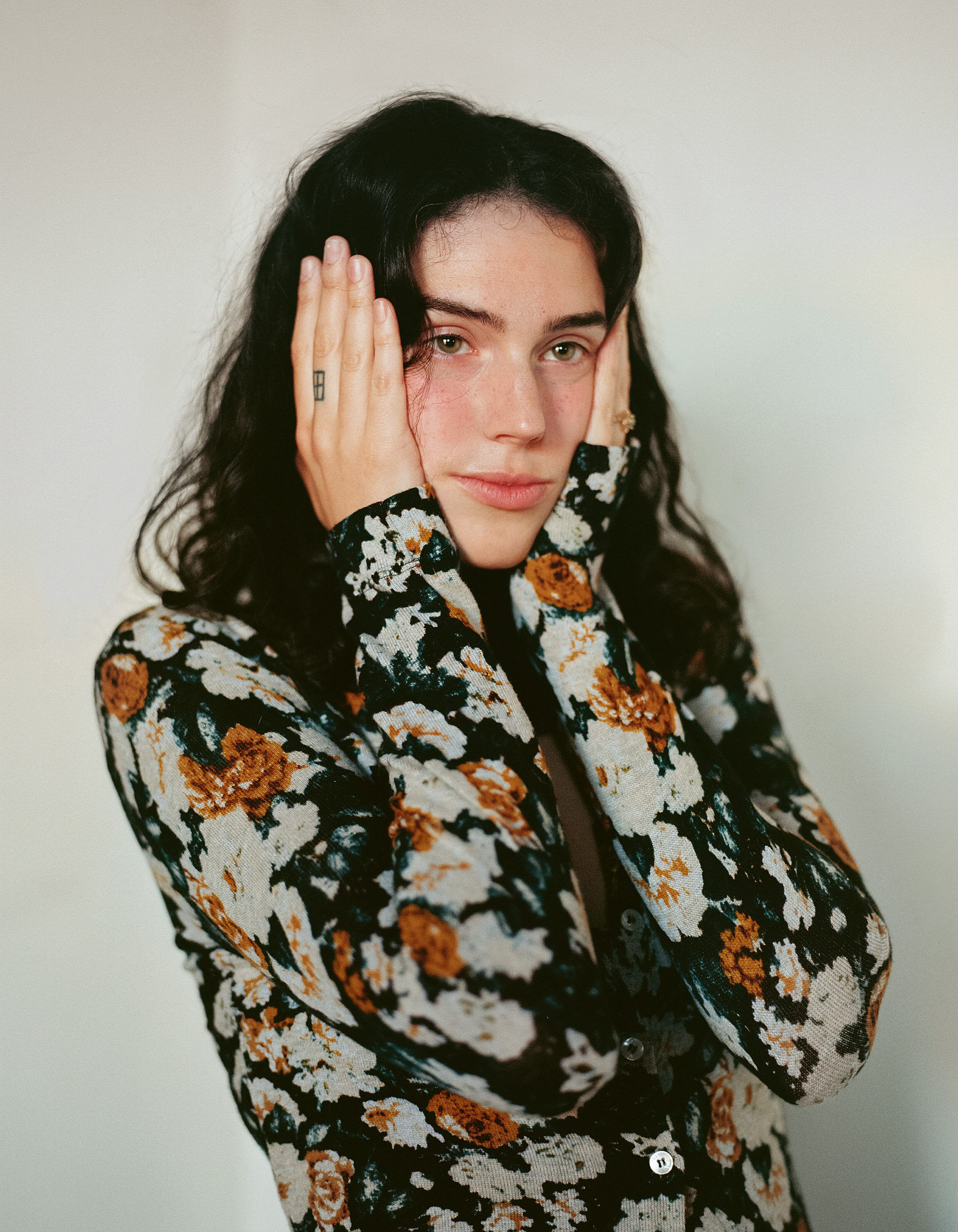
She wears a cardigan and trousers by Leset.