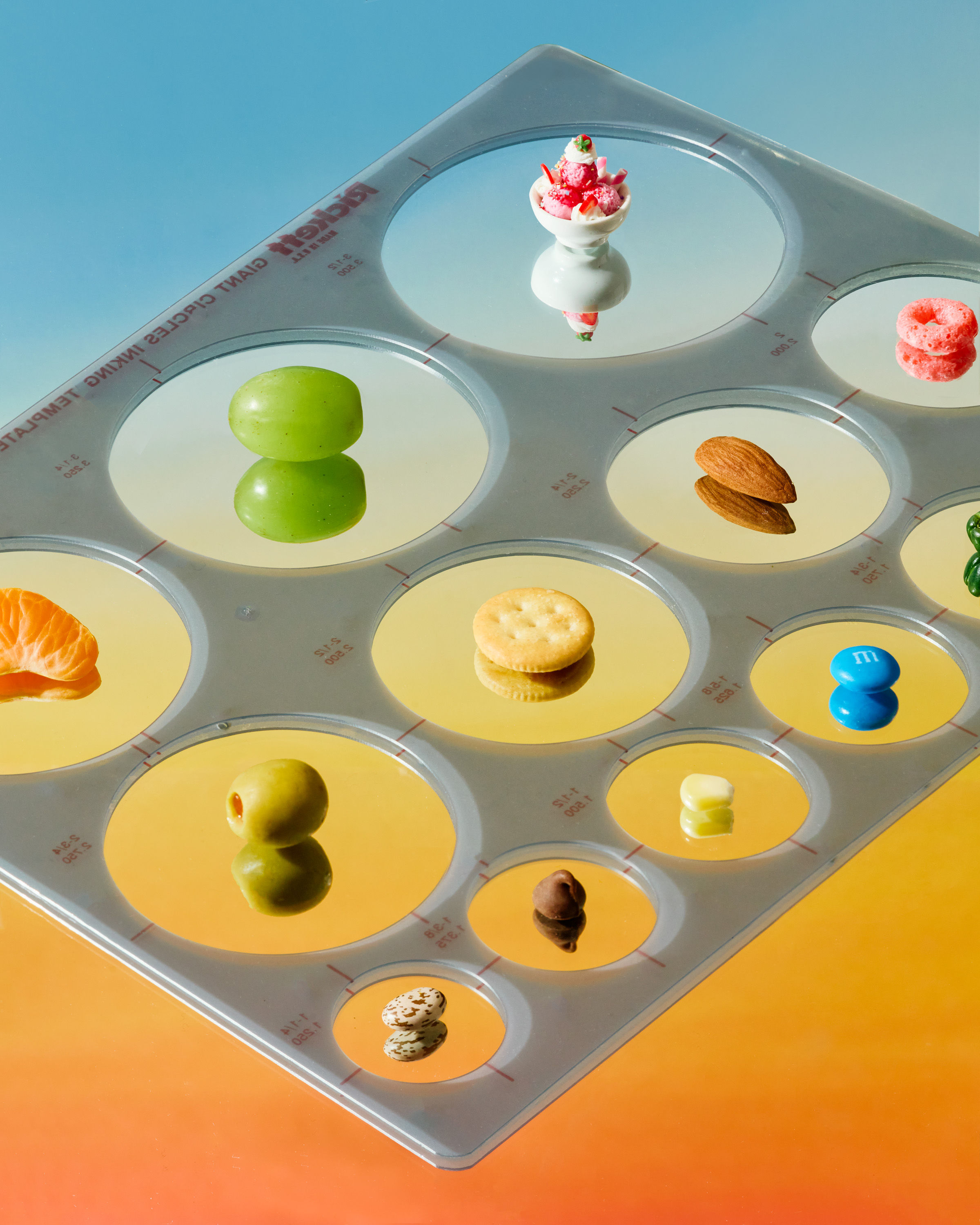
How To: SnackA bite-size guide to informal eating.
How To: SnackA bite-size guide to informal eating.
Shockingly, there is no entry for “snack” or “snacking” in Alan Davidson’s 1999 Oxford Companion to Food, the much-celebrated encyclopedia of culinary knowledge. It does however receive a fleeting reference in the entry for “lunch,” where “a light snack” is suggested as an alternative to a “proper lunch” as a form of eating that will not interrupt the day’s activity.
This does at least hint at what it is to snack: to eat between meals, at a time that is not formally allocated to it; in other words, a moment of stolen pleasure. Eating a snack can thus bestow a feeling of rebellion, of briefly absconding from your obligations at work, your responsibilities as a parent, your spring cleaning (something advertisements for chocolate bars and chips often enthusiastically play into).
However, in a significant way, the snack actually facilitates these commitments by making them bearable without requiring you to stop what you’re doing. After all, one cannot fully relax during snack time; you can’t run to the post office or conduct an extramarital affair, as you can during a lunch hour (see for reference, the 1961 film Lunch Hour).
The use of the word “snack” accelerated exponentially from the 1960s onward, tracking both the rise of consumer culture in late capitalism and the decline of the sacred lunch break. Today lunch increasingly resembles a snack—that is, food eaten during a moment snatched from the day, without interrupting the activity at hand . . . at our desks, in the car, on the go.