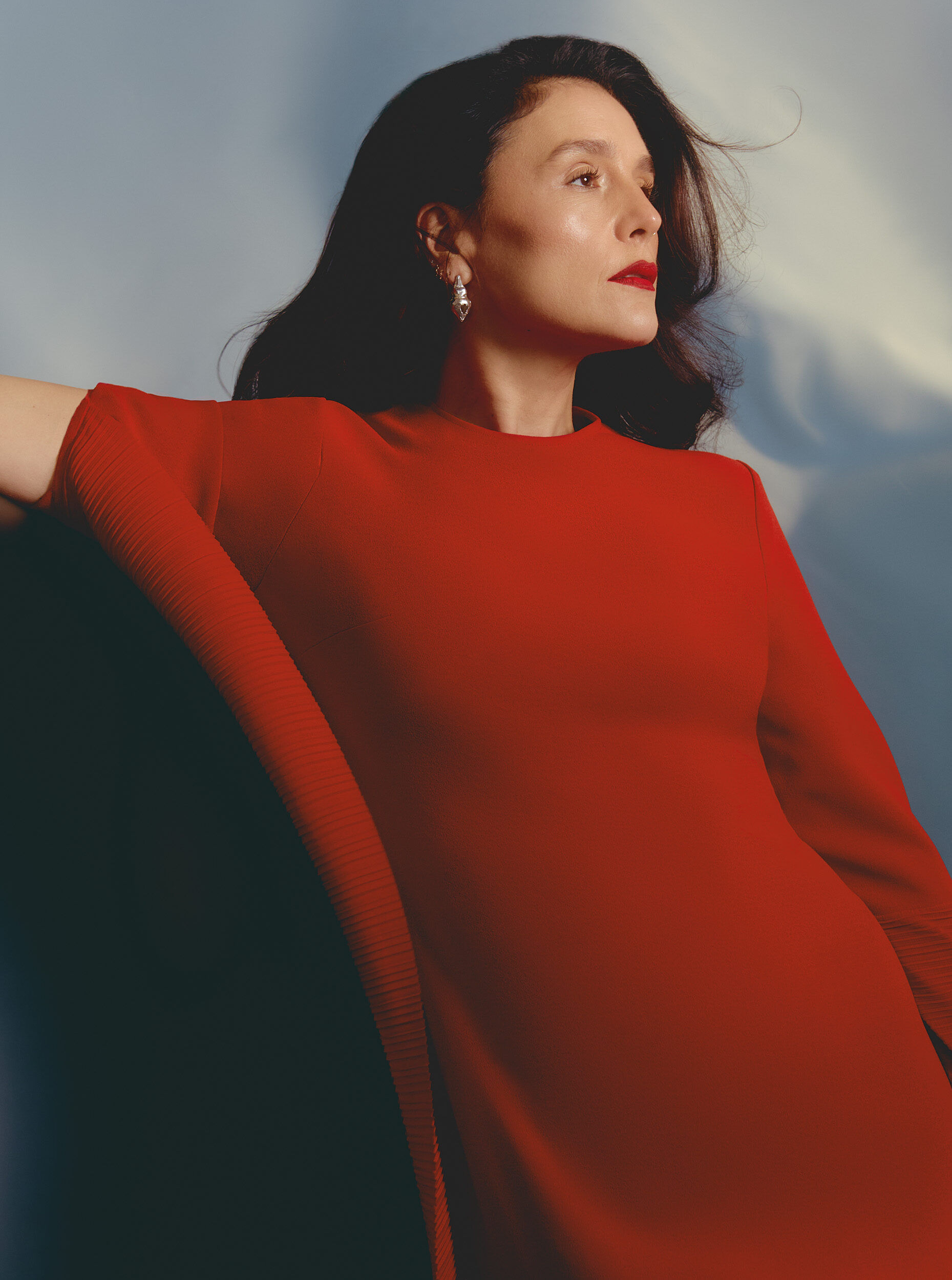
Akwaeke EmeziAn interview with the author who finished writing three novels before their first was even published.
Akwaeke EmeziAn interview with the author who finished writing three novels before their first was even published.
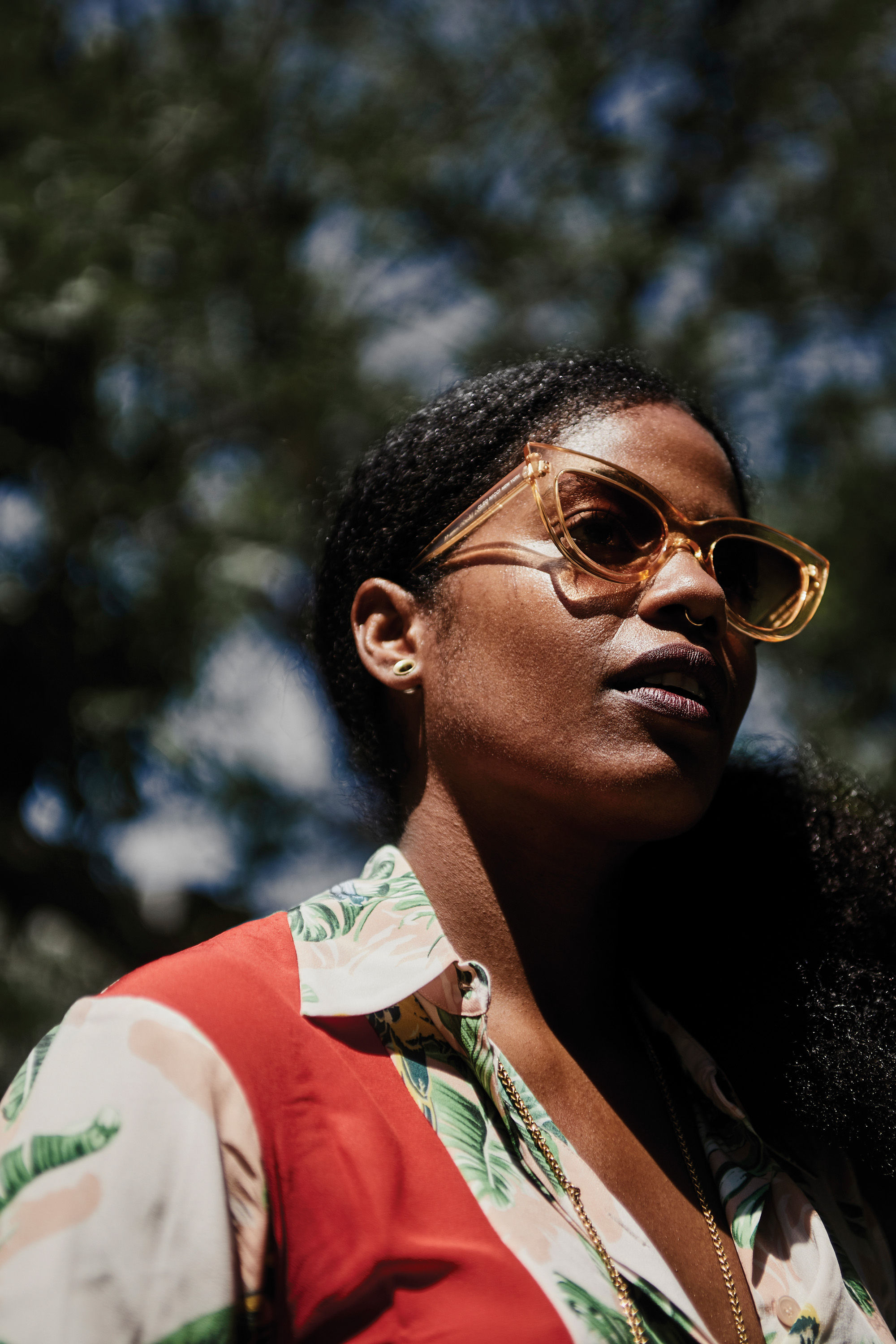
Emezi’s debut novel Freshwater is heavily autobiographical, and wrestles with the limitations of existing in a single body.
Akwaeke Emezi’s social media followers love the videos they posts of themselves dancing when they are in a particularly good mood—and, lately, they have had many reasons to celebrate. The Igbo and Tamil writer’s debut novel, Freshwater, was published to resounding praise in early 2018, prompting the sale of two future novels. Both the protagonist of their unflinching bildungsroman and the author identify as ogbanje—in Emezi’s words, “an Igbo spirit that’s born into a human body, a kind of malevolent trickster whose goal is to torment the human mother by dying unexpectedly only to return in the next child and do it all over again.” Wresting Igbo spiritualism from colonial interpretations that see it as a relic of the past, Freshwater situates that spirituality in a contemporary context. The book also challenges popular conceptions of female and queer identity and the self in general. It is as uncompromising as Emezi.
Before deciding to write full-time in 2014, you attended veterinarian school for two years. What did you learn there that has stayed with you?
I learned a lot about how I learn. I was very good at taking tests and retaining knowledge temporarily—which isn’t useful if you’re in the medical field! Anatomy, for example, was easy for me because it required a lot of memorizing, but other courses weren’t. I called my dad the second time I failed physiochemistry and was terrified to tell him because I remember the first B grade I ever got, when I was nine, which made him furious. But he laughed at me instead and told me I’d never had to really work at anything, that I had always coasted, and now I would have to learn what it was like to try.
One of my professors—a cranky old man who nobody liked but me, because I grew up in a culture in which rigor was a way of showing care—eventually gave me permission to just stop, which no one had ever really done before. So I left and went to New York to get a master’s in public administration, because the only way I could placate my family was by getting a graduate degree.
Were you writing that entire time?
Yes, I’ve been writing since I was 5. My mom has these little books that I wrote and illustrated when I was 7, one of which has a third-person bio that says, “Her ambition is to become a world-famous artist and writer.” When I stopped working in a nonprofit where I ran a resource website and started writing full-time, my mom sent that to me. I thought my parents were going to push back more than they did, but they weren’t that surprised; I’d been writing for so long, it was kind of inevitable.
Your master’s degree brought you to New York, where you’ve stayed ever since. Do you consider it home now?
I consider it a home. I tried finding somewhere else, though. I don’t have a lot of career goals, but one of them is to get a bungalow. I grew up in one, and there’s a particular feel to it that I like: a yard, fruit trees, painted colors. So I went traveling to find out where I might want it. I was living in Trinidad for a while and then was in Nigeria, Singapore, Malaysia, Tanzania… but after all of it, I got tired and realized that adjusting to a new city is really hard—especially when it’s in a different country. I hadn’t moved countries since I was 16. So I came back to Brooklyn, because I wanted to be in a place that felt familiar, and that’s when I realized that Brooklyn is one of my homes. It’s also the only place in America where I’ve lived just to live, not just for school. In that sense, there’s a hometown feel to it.
How do you find the solitude here that you’ve said you need in order to write?
I tend not to leave my apartment. When people tell me they find New York very exhausting, I tell them it’s because they have a social life—which will do that to you. If you just avoid that, everything’s fine! My home is quiet, and I write better there. I’m not one of those people who likes to write in cafés because that means you have to change out of your pajamas and pay for snacks. I try to make sure that wherever I’m living feels like a sanctuary, where all the noisy parts outside disappear. Most of my friends had no idea where I lived in my last apartment here, and even now very few people come into my home. I feel very strongly about bubbles and maintaining them, being rigorous about the boundaries that demarcate them and what passes in and out.
Do you balance that solitude, in a way, with your active presence on social media?
I’ve been thinking recently about how manipulated and curated that social media self is. I often talk with my sister Yagazie, a photographer who has a much larger following than I do, about how people think they know you because your digital persona seems very accessible, but they don’t differentiate between that persona and the actual person. For example, one reader review of Freshwater expressed disappointment because they expected the book to be like my Instagram profile, which is more light and positive. Some people think everything you make will be a manifestation of your true self, and that my true self is my Instagram profile.
When the novel came out, I wasn’t just who I’d been online but now also “an author” who would be doing readings and events, and people who knew me only on social media were going to meet me in person. My digital self used to be just another version of me and I could talk more freely, but now it’s my professional self. Whatever I put online is going to be seen by editors and critics. It took me most of 2018 to adjust and surrender to that, because there’s nothing I could do about it.
Has your recent success made you more cautious about what you share?
I’ve had to find a balance. I worried that how I was on Instagram would be seen as unprofessional and that there would be consequences for it—repercussions happening in rooms I wasn’t even in. But I decided not to pull back because I don’t believe in being controlled by fear. I spent a large part of my life doing that, and not doing that is a very costly freedom that I’m not inclined to give up.
I’ve had to choose to allow the fear, yes, but still do the things I want to do anyway. It might affect my career in the future—I don’t know anyone who’s won a MacArthur Fellowship who has a video of them dancing in a bikini online—but the real decision I made was being myself and understanding that this choice may cost me things, even things I might never find out about.