Amaryllis Fox
What happens when a precociously talented undercover CIA officer turns her mind to peace?
- Words Robert Ito
- Photography Emman Montalvan
- Styling Jardine Hammond
- Hair/Makeup Nicole Wittman
- Photo Assistants Fred Mitchell and Patrick Molina
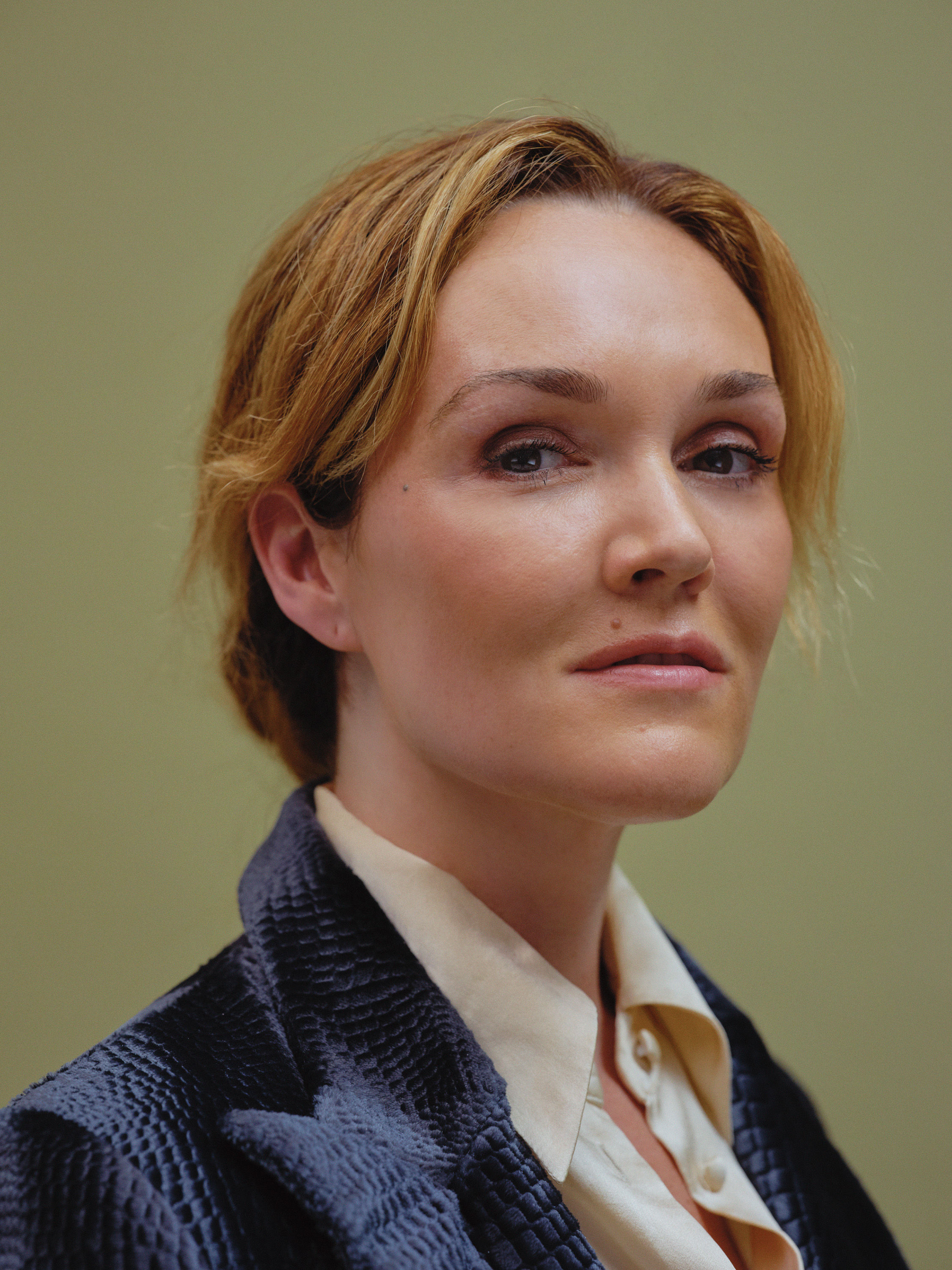
Blazer by Gabriela Hearst and vintage shirt.
In 2009, Amaryllis Fox flew to Pakistan in the hopes of convincing representatives from three extremist groups not to detonate a bomb in the middle of a crowded city center there. Here’s a community center you would hit, she told them, pointing at a spot on a tourist map. Here are two schools. Here is a mosque. Innocents would die, she told the men, all of whom had ties to Al Qaeda and the Taliban. Americans would die, yes, but so would Muslims, in even greater numbers. Fox appealed to them as men of honor, as men of God. Do not do this thing, she told them.
Before this fateful meeting in a cramped, book-filled apartment in Karachi, Fox had already spent much of the past decade as an undercover officer in the CIA. Over the years she had tracked the flow of weapons of mass destruction from the agency’s counterterrorism center in Iraq, infiltrated terrorist groups in Southeast Asia and the Middle East and negotiated with arms dealers who were selling chemical and biological weapons on the global black market. As a Clandestine Service officer, one of her primary jobs was meeting with people who wanted to do grave harm to others, either by committing acts of terrorism themselves or by supplying arms and aid.
For most of her time in the agency, few outsiders knew just what Fox was doing or where she was doing it: not her closest friends nor her first husband, not her mother or father, not her older brother, Ben, nor her younger sister, Antonia. During much of her time in the field, they thought she was an intrepid art dealer, buying and selling indigenous art for wealthy collectors. Even many of her closest colleagues in the CIA were kept in the dark about her missions and whereabouts.
Since leaving the CIA, however, Fox has undergone what appears to be, at first blush, the unlikeliest of transformations. After years spent in a shadow world living among people intent on making war, she has come out, boldly—exuberantly even—as one of the country’s most visible and outspoken advocates for peace. In a three-minute video produced in 2016 that quickly went viral, Fox pleads her case. “If I learned one lesson from my time with the CIA, it is this: Everybody believes they are the good guy,” she begins. We need to listen to our enemies, she explains, to try to see them as they see themselves, and vice versa. Consider this: If US forces were in a Hollywood sci-fi flick, would audiences be cheering for them? “To the rest of the world,” an Al Qaeda fighter once told her, “you are the Empire, and we are Luke and Han.”
“This is how the kung fu masters work, right? If a force hits you, you can own it.”
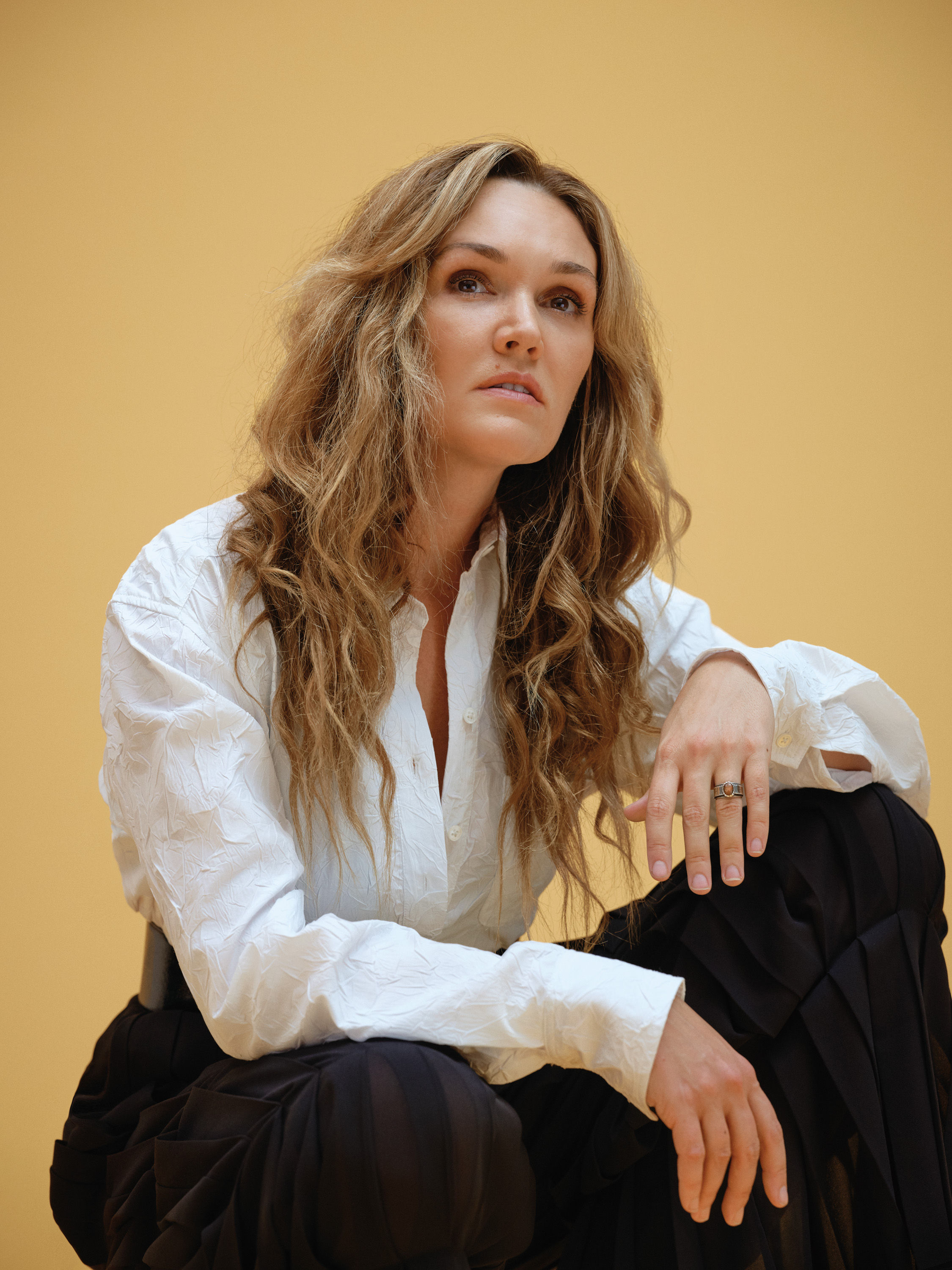
Fox wears a shirt by Sies Marjan, trousers by COS and a vintage Yves Saint Laurent belt.

She wears a sweater by Orseund Iris.

Coat by COS.

Fox wears a sweater by Orseund Iris, a dress by Giuseppe di Morabito.
On a recent afternoon, Fox was at the San Vicente Bungalows in West Hollywood, a members-only club midway between Melrose Avenue and the Sunset Strip. Before I’m allowed to meet her, a desk attendant asks for my cellphone, ever so politely, and places tiny stickers emblazoned with palm trees and the club’s name over the camera lenses. It’s standard policy at the paparazzi-free zone, but seems almost absurdly low-tech under the circumstances, given the levels of care that Fox used to conceal her identity in her past life. For Fox, however, the stickers and all they represent aren’t really why she comes here: She just likes the food and tea and outdoor setting, and the fact that it’s close to a lot of her current hangouts, and not so far from her home.
Hello, hello, she says, signaling me over to her small table. She had spent the morning swimming in the Pacific, she tells me, and wonders if I’d like something to eat? Over lunch, she describes some of the myriad twists and turns that her life has taken, including how she came to be in the CIA, and how later, she came to leave it. Talk to her long enough, and two things become very clear. First, she likes to find common ground in everything and everyone, so, for instance, while she was in the CIA and I was not, we’re both parents, and humans, and living in LA, which makes us almost kin, at least in the human family. Second, she feels things more deeply than most, and definitely deeper than is probably good for one’s mental health.
“As a child, it was overwhelming,” she says. “At times, seeing the suffering of the world felt as though it would drown me. It wasn’t until I was at university and a friend of mine pointed out, this is how the kung fu masters work, right? If a force hits you, you can sort of own it and metabolize it and put it back out into the world, and it will fuel your work.”
Fox was born Amaryllis Damerell Thornber in 1980. Her father became one of the youngest economics professors in the history of the University of Chicago; her mother, an actress and British national, grew up in a stately home in the English countryside. Raised as an Episcopalian, Fox dreamed of one day becoming a priest. As a child, she loved The Velveteen Rabbit, a tale about “the beauty of being real even if you’re shabby and your eyes have been loved off,” and the Paddington books. Her mother would read the stories to Fox and her brother and sister, acting out the parts as she went. C.S. Lewis’ Narnia series, with its rich Christian allegory and tales of heroism and youthful camaraderie, was another favorite. “They did a really wonderful job of using adventure to introduce kids to a sense of responsibility and guardianship toward one another and toward the world,” she says. “And there’s the promise that, as long as you work and sacrifice, spring will follow winter.”
A precocious student, Fox spent her days in high school learning Sanskrit and theoretical physics and falling in love with the writings of Henry David Thoreau. When it came time for her to select a university, she was faced with a difficult (albeit enviable) choice: the US Naval Academy, proving ground for generations of Navy and Marine Corps officers, or Oxford, alma mater of Stephen Hawking and Sir Walter Raleigh. Annapolis offered her the chance to become a naval aviator, the most direct path, she reasoned, to becoming a NASA shuttle pilot. “I wanted to be a Blue Angel and join the space program,” she says. “It was really only the draw of the library at Oxford that made me think, well, I’ll just do this one other application.” The previous summer, Fox had completed the Naval Academy’s “plebe summer,” a program that simulates the hardships and hazing of that school’s famously brutal first year, so Annapolis was already a lock. But then Oxford said yes, too. If she went to the Naval Academy, she’d study aerospace engineering; if she picked Oxford, she’d study theology and law. “It was a good problem to have,” she admits.
In the end, Fox chose Oxford, but she decided to spend a gap year in Myanmar, where she lived and worked in a refugee camp on the border of Myanmar and Thailand. While there, she met rebel fighters and former political prisoners, and filmed a clandestine interview with Aung San Suu Kyi, the Myanmar leader and Nobel laureate who was, at the time, under house arrest. After smuggling the film out of the country inside her vagina, Fox took the recording, with Suu Kyi’s rare and inspiring call to action, to the BBC and CNN. The next month, Fox was at Oxford, albeit in flip-flops and with a renewed sense of purpose.
For the next three years, Fox studied theology and international law, volunteered for Amnesty International, and made friends. In the September before her final year at Oxford, hijackers flew American Airlines Flight 11 into the North Tower of the World Trade Center. Four months later, Daniel Pearl, a reporter for The Wall Street Journal and a “writing hero” of Fox’s, was kidnapped and beheaded by terrorists in Pakistan. Fox recalled how, more than a decade before, when she was in third grade, she had lost one of her best friends on Pan Am Flight 103, which was destroyed by a terrorist’s bomb over Lockerbie, Scotland. Fox knew she had to do something, even if she wasn’t sure quite what.

Fox’s approach challenges the realpolitik logic of international diplomacy. “The greatest act of patriotism any of us can engage in is finding common ground,” she insists.
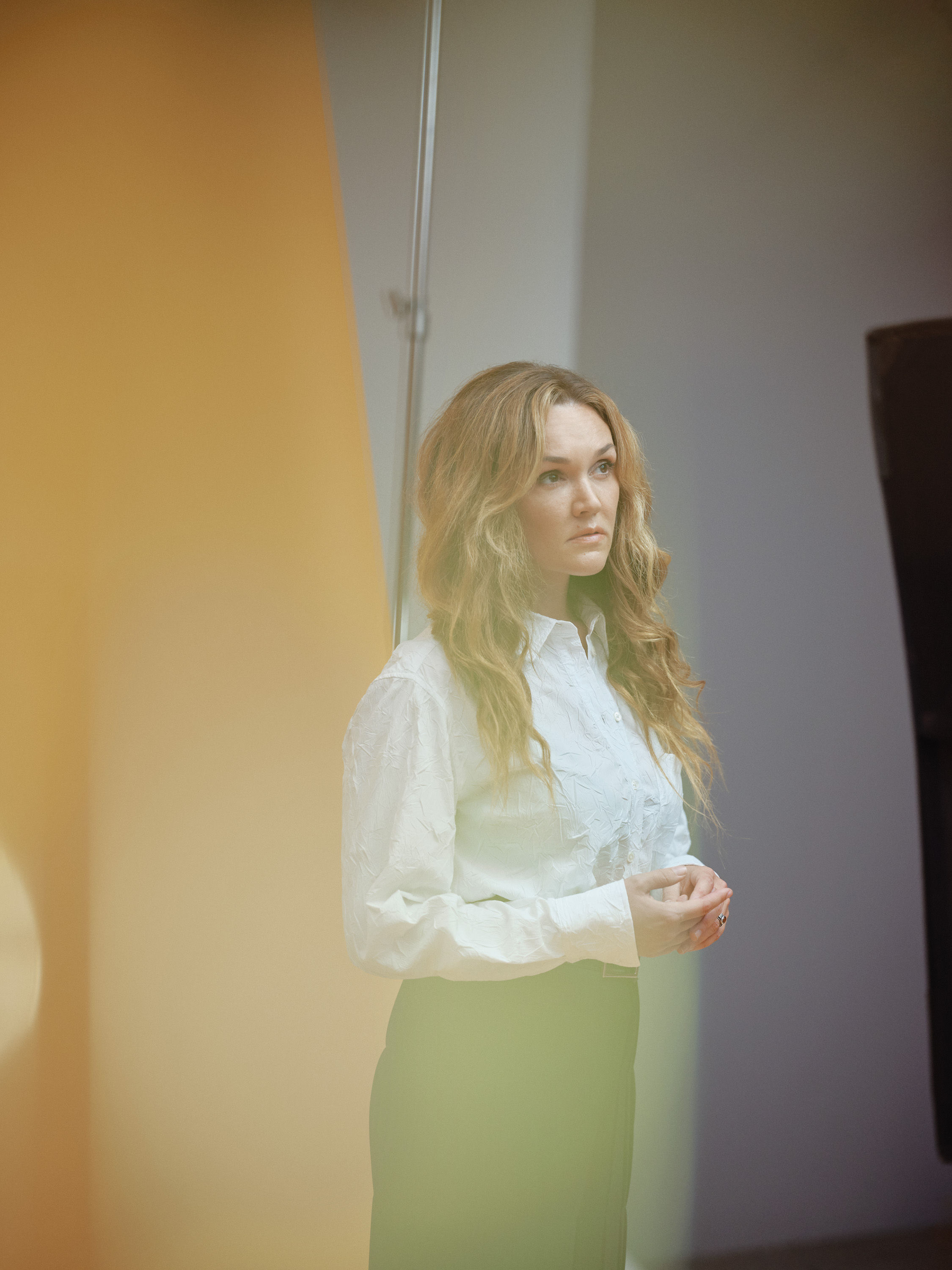
“The skills I had learned to bring adversaries together in conversation are actually in great, dire demand in today’s society.”
That fall, after graduating from Oxford, she began a master’s program in conflict and terrorism at Georgetown University in Washington, D.C. “For me, I came to my work in counterterrorism having really faced the cost of terrorism on a personal level,” she says. “And having felt those losses so deeply as a young person, when I started in the world of counterterrorism, it really wasn’t with the view to find some sort of common ground. It was very much about destroying the adversary and getting them off the chessboard.”
While studying at Georgetown, Fox developed an algorithm to identify areas around the world most likely to be used as terrorist safe havens. The project caught the attention of a CIA officer-in-residence at the university, who recruited Fox in 2003. She was 22. For the next eight years, Fox lived the life of a CIA agent, eventually becoming a member of the agency’s elite Clandestine Service. She worked on kidnapping cases as she planned her first wedding, and discovered how flaws on American watch lists were leading to the torture of innocent victims worldwide. In 2008, Fox gave birth to a daughter, Zoe.
Fox was supremely good at what she did, so good that each successive assignment led to another, more challenging and dangerous one. But even as her responsibilities rose within the agency, she began to question the CIA’s tactics and its general approach to fighting terrorism. Should we be trying to convince our enemies that we could be just as fearsome as they? Or should we be identifying the areas where our humanity overlaps with theirs? After nearly a decade as an agent, Fox left the CIA in 2010. She came to California to stay with her mother and stepfather, and slowly went about the task of finding her true self, the one she had kept hidden behind assorted disguises. “It was a long arc,” she admits. “But in the end, I learned that the authentic, vulnerable version of myself, with no cover and no sidearm and no protection of alias or fiction, is better equipped to do the work of peace in the world than the version of me that might have felt safe, but was locked away under all these things.”
Back in the US, Fox sought out opportunities to use the skills she had learned in the CIA among people who weren’t, say, arms dealers or terrorists. At California’s Pelican Bay State Prison, the notorious former home of Charles Manson and Marion “Suge” Knight, she helped prisoners prepare to make amends to survivors of their crimes. In Los Angeles, she worked with gang members who were trying to reintegrate into their communities; in northern Iraq, she brought US and Iraqi veterans together to talk about their shared experiences during the wars. “I found that the skills I had learned to bring adversaries together in conversation are actually in great, dire demand in today’s society,” she says.
On July 7, 2018, Fox married Robert F. Kennedy III, scion of the Kennedy clan, at the family’s compound in Hyannis Port, Massachusetts. The two live in Laurel Canyon in the Hollywood Hills with Zoe, now 11, and their seven-month-old daughter, Bobby, aka Bobcat. Zoe attends a socially progressive grade school with a strong music and arts program, fitting for an area that Jim Morrison, Joni Mitchell and the Mamas and the Papas once called home.
One of their favorite things to do is pack their kids into a 1962 school bus that they converted into an RV (“it has a little kitchen and a bedroom and a hanging crochet cradle for the baby”), and drive up to a national forest to camp and fish for trout. The weekend before I met Fox, she’d been “off the grid,” doing just that. “We were in the redwoods,” she says.
“You can show up and put $20 on your honor in a slot to reserve your spot, and you have the most beautiful view in the world.”
In October 2019, Knopf published Fox’s memoir, Life Undercover: Coming of Age in the CIA. The book has all the twists and turns and exotic locales that one might expect from the spy thriller that it is, but it also goes deep into what it means to live the life of a CIA spook as a human being, and what sorts of strains that puts on one’s loves and relationships and psyche. The story has already captured the attention of Hollywood, with the Academy Award–winning actress Brie Larson set to star in a new drama series based on Fox’s life. “She is one of my favorite people to talk to about geopolitics,” she says of Larson. “I find her extremely entertaining company.” Fox also spent the last year working on a new Netflix documentary series “about the economics that drive the worldwide war on drugs, and why it’ll never work.”
These various projects have kept Fox from doing something she’s wanted to do for years, even before she started work on her memoir: write a book for kids. Her lifelong love of children’s literature probably has a lot to do with that, and Life Undercover ends with a nod to The Velveteen Rabbit, a book she first read to her daughter not long before leaving the CIA. The memoir also has references to the Harry Potter books, Star Trek and to the legendary Japanese animator Hayao Miyazaki. So is Fox, former CIA agent and current advocate for peace, a nerd? “I am very much a nerd,” she says with a laugh. “I love science fiction. I love fantasy. I think there is a freedom that comes with telling stories about very difficult topics against fictional backgrounds.” She’s happy to discuss the themes of autocracy and torture and the struggle for purpose in J.K. Rowling’s books, and to tell you about how fans of Hogwarts end up being, in a nutshell, better, more empathetic people. They’ve done studies on it, she says.
Fox is currently putting the finishing touches on her own YA book, which will be released in 2020. “We are shaped so much by the stories we internalize as young people,” she says. “If you go back to the earliest human days sitting around the campfire, stories are really what allow us to have experiences beyond our own life, and to understand perspectives that are different from ours. And I think the habits we form around being open or not open to stories as children go with us for the rest of our lives.”
Writing these books, she insists, is not altogether different from the work she did in the CIA. In both, she says, you’re appealing to things that are common in all of us. Back in Pakistan, she was reaching out to the representatives of Al Qaeda as honorable men (in the end, the terrorist groups, thanks to Fox’s appeals, did not bomb the city center). Today, in Los Angeles, she’s trying to inspire people to reach out across the divisions that exist in their own communities. “I’m immensely proud of the work that I did at the CIA,” she says. “And when I left, it was at a point where I had done the work that I was meant to do, and it was time to move on and speak to a different set of readers.”
Fox believes that humans ultimately want to get along, despite what all the polls and political pundits might say. “I think, at our core, humans are hopeful,” she says. “We yearn for connection. And if you’re alive to the possibility of climbing inside the shoes of someone with whom you disagree, it can become a pretty exhilarating thing. Even if you’ll never agree with them, even if their worldview seems so distant from yours, it allows you to better understand how to prevent conflict with that person and move forward, in a way, hopefully, that works for both of you.”