Earthly DesiresThe paths we tread together.
Earthly DesiresThe paths we tread together.
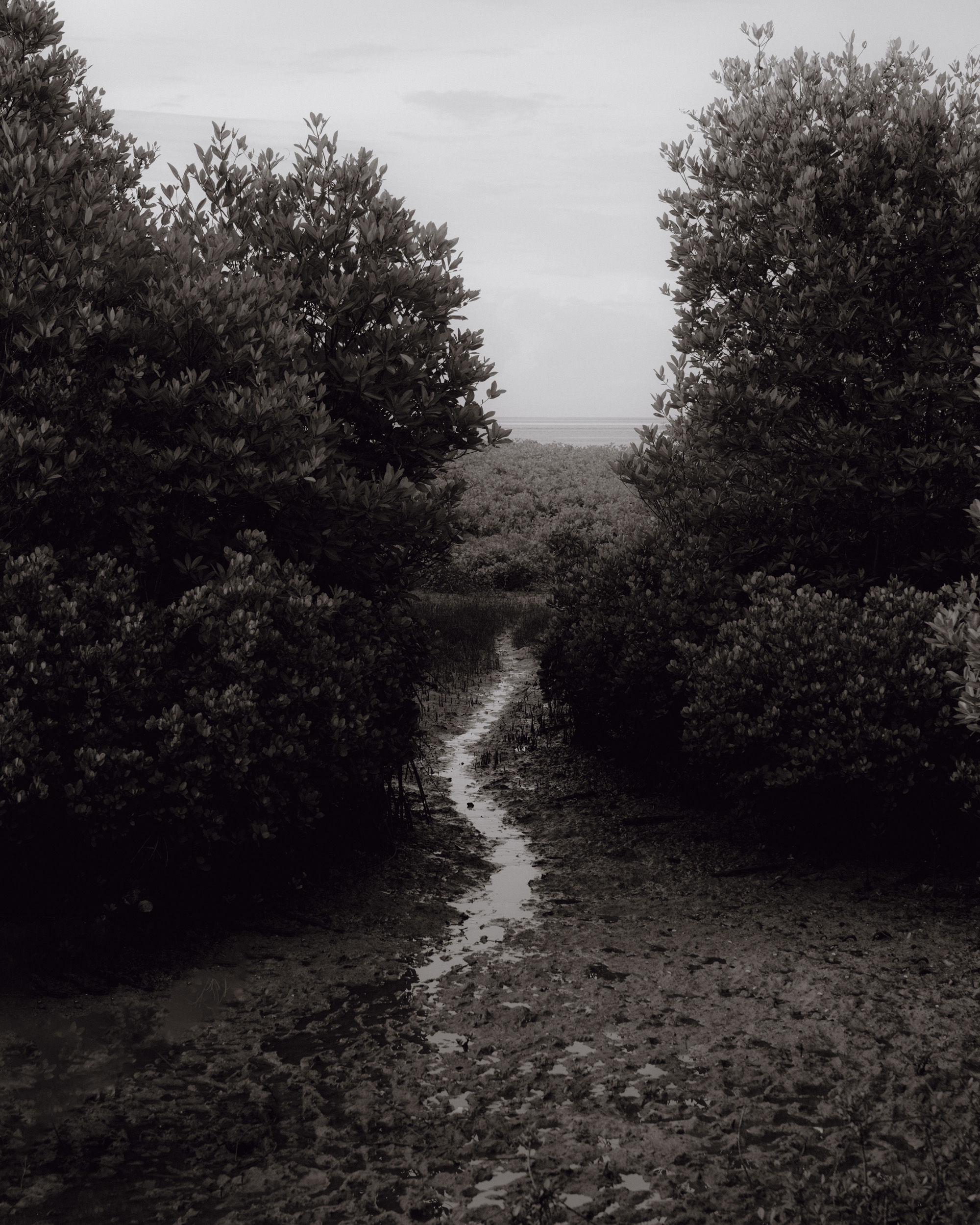
Which way would an elephant go? The Dutch term olifantenpad—elephant path—describes the informal paths that emerge due to the human (and apparently elephantine) tendency to take the most direct route rather than the path laid out by planners. In English, these routes are called desire paths, and you can find them in both rural and urban settings: a path beaten through the forest to reach a beauty spot; a line worn in the grass, bypassing the sidewalk from the parking lot to the building entrance.
Contrary to the name, desire paths are normally formed by necessity and convenience—they don’t even need to lead anywhere. Often they will run alongside a paved path in a park, formed by joggers who prefer the softer ground.
While designing new campuses, several US universities opted to let students vote with their feet and built paths along those that emerged organically. The result, viewed from the air, looks like a web spun by a spider who stayed too late at a frat party: The paths form an asymmetrical maze that no landscape architect would be able to anticipate, but they work for those who use the space, rather than against them.
It’s a philosophy far removed from the pristine lawns of Oxford and Cambridge, which are protected by signs warning time-strapped students to “keep off the grass.” But efforts to thwart the will of pedestrians rarely succeed in the long term. A subreddit on desire paths charts a pattern, some examples of which are evidenced in a series of Google Street View screenshots. The first shows the emergence of the desire path; then an obstruction is put in its way, such as shrubs or a bench; the path mutates to avoid the obstacle; and eventually whoever owns the land bows to the wisdom of the masses and puts down paving stones along the desired route.


