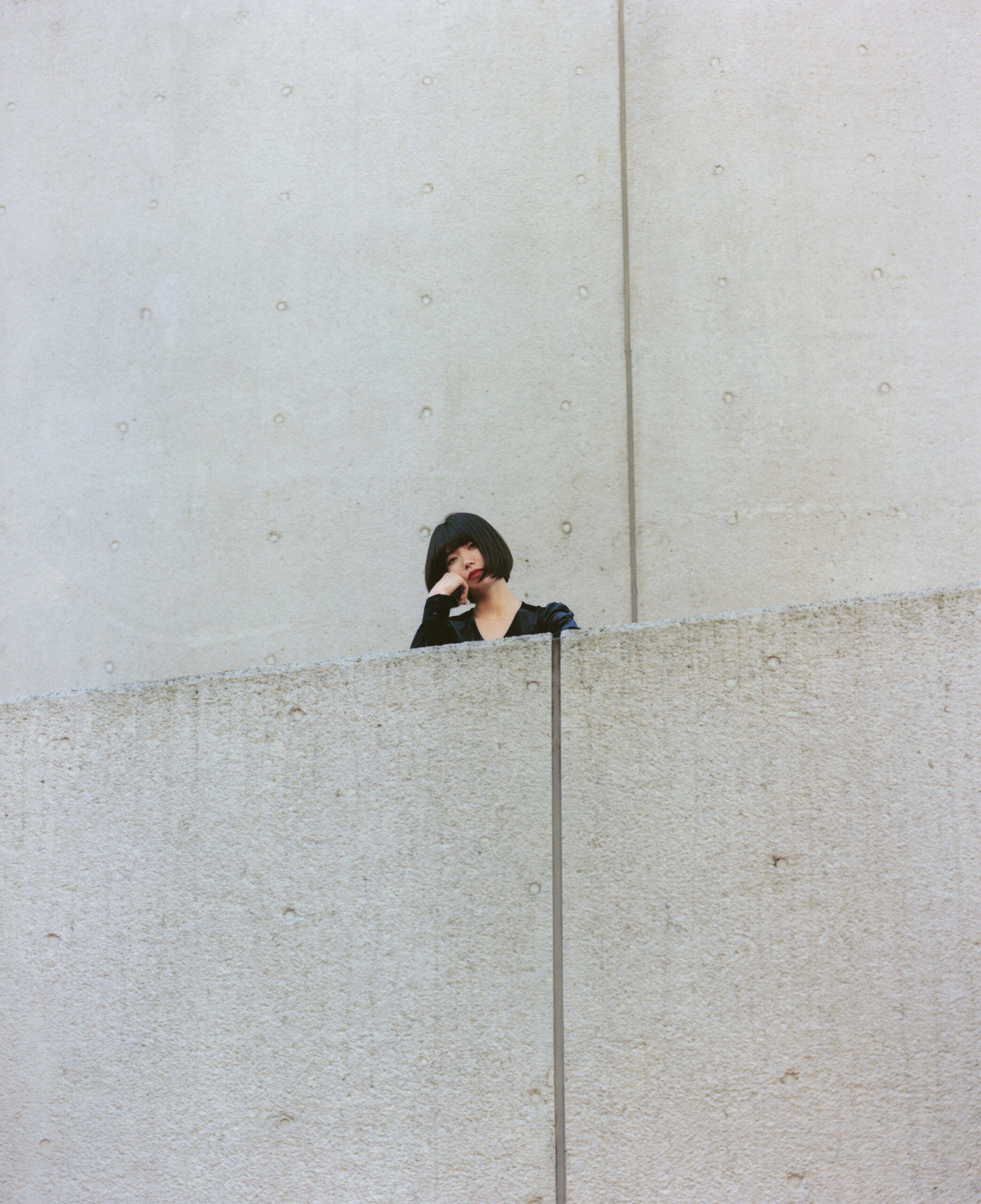
Mieko Kawakami is pictured at the Edo-Tokyo Museum—a museum dedicated to exploring the history of Tokyo during the Edo (or Tokugawa) period from 1603 to 1868, commonly considered the last epoch of traditional Japan.

Mieko Kawakami Meet the rising author who already longs for obsolescence.

Mieko Kawakami Meet the rising author who already longs for obsolescence.

  • Words Selena Hoy
  • Photograph Jun Yasui
  • Makeup Mieko Yoshioka

Mieko Kawakami writes about women and gender, but she wishes society would progress to a point where she didn’t have to. In 2008 she won the Akutagawa Prize, arguably Japan’s most prestigious literary award, for her novella Chichi to Ran, or Breasts and Eggs, which explores body image in modern Japan through the relationships between a girl, her mother and her aunt. Kawakami expanded the story into a novel, which will be published in English by Picador in spring 2020. When we meet under the spaceship-like shadow of the Edo-Tokyo museum, Haruki Murakami’s favorite young writer talks about the gender gap, memory and the Osaka dialect.

You’ve written about a nostalgia for your school years. What formative experiences from your youth have you carried into your writing?
Until I was about 30, I never thought I’d be able to make a living as a writer. But thinking about it now, my childhood sense, my discomfort at the time, the strangeness—for example—of a landscape that left a really strong impression, that is all directly related to my current work. Of the things that scared or surprised me as a child, their sense of strangeness gets stronger every year.

You previously had a career as a musician. What role does music play in your written work?
I think what I’ve learned most from music is rhythm. I was born in Osaka and have the Osaka dialect accent, which is very melodious. For example, during Buddhist incantations, Tokyoites read it straight, but Osakans sound almost drunk—or like they’re really feeling it. That kind of musicality affects how we think about things, and how melodic dialogues are spoken. We can’t separate music from it.

Do you have any writing rituals?
I decide on the music first of all. Then I make plenty of burdock tea—it’s delicious. The scene I’m writing is connected to the music, and then whenever I’m writing and I play that music, I can enter the scene. That’s my little magic.

You examine the nature of memory in several of your works. What draws you to this?
The identity of our self is memory. Of course, if we lose our memory, self still exists, but it is strange to think that there is no such thing as a complete loss of memory. For humans, memory is a huge mystery. I’m 43 years old, but I can only recall a really small amount of time from my 43 years. There might be a memory that left a deep impression on me, but the person next to me may have forgotten it. It has that kind of a strange existence. Memory is a huge source of imagination within fiction.

What kind of relationship do you hope your readers will have with your work?
I write about women in Japan—a country that has a severe gender gap. There is no meaningful sex education in Japan, and gender education in general is lagging—there’s a really deep-seated impression that women are here for the pleasure of men. A lot of young people read my writing with a heavy heart. But when people read my books [in the future], I want them to say, “Mieko’s books are no longer necessary for young people.” Instead of relating to the painful feelings, if my books became unnecessary, that would be the best thing. Men, women and other-gendered people will focus on the next literary topic and on a wider view. I want to see that kind of maturity.

FREE PREVIEW

Take a look inside Issue Sixty

You are reading a complimentary story from Issue 35

Want to enjoy full access? Subscribe Now

Subscribe Discover unlimited access to Kinfolk

  • Four print issues of Kinfolk magazine per year, delivered to your door, with twelve-months’ access to the entire Kinfolk.com archive and all web exclusives.

  • Receive twelve-months of all access to the entire Kinfolk.com archive and all web exclusives.

Learn More

Already a Subscriber? Login

Your cart is empty

Your Cart (0)