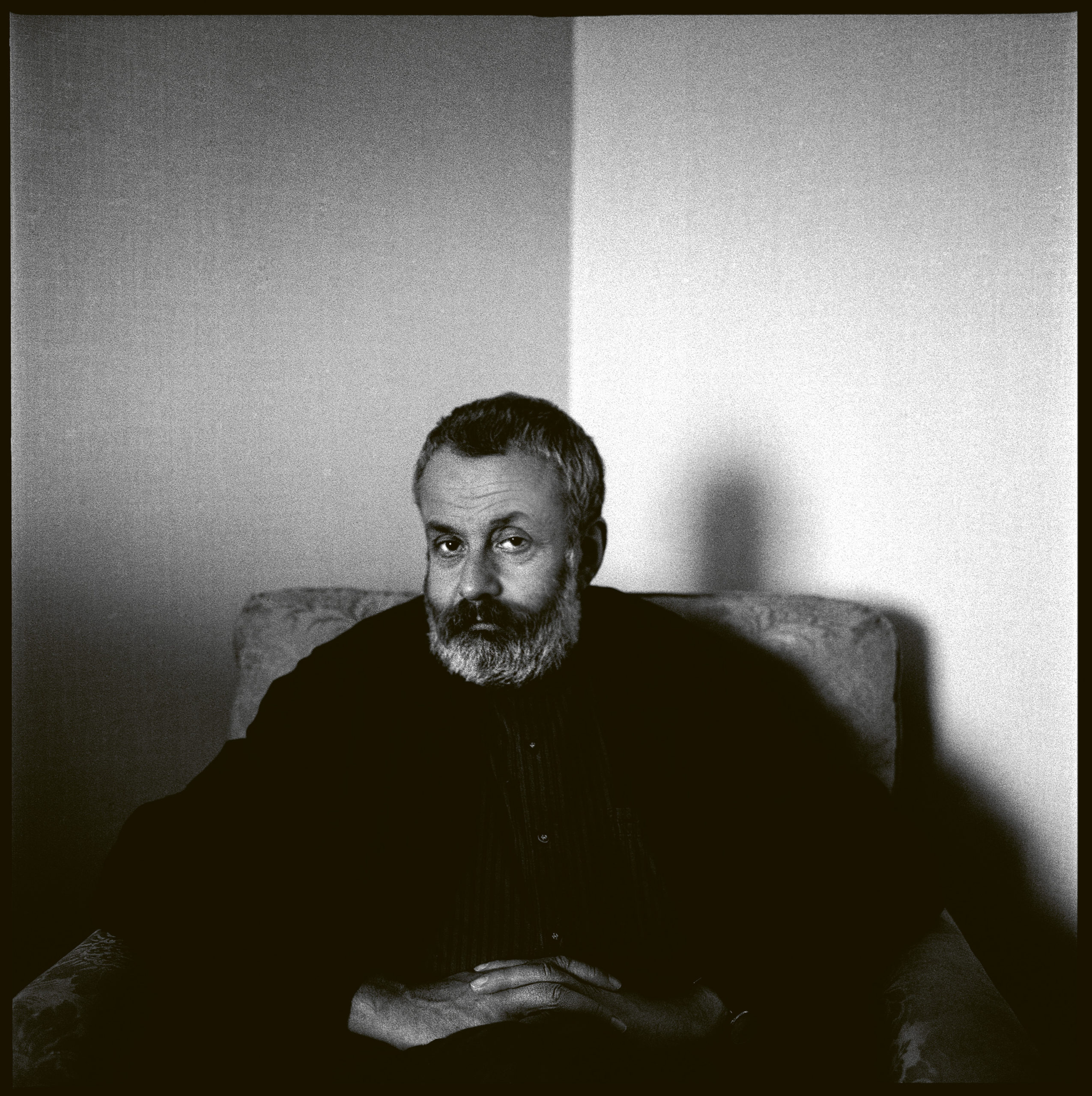
Mike Leigh The remarkable director discusses starting from nothing, over and over again.
Mike Leigh The remarkable director discusses starting from nothing, over and over again.
The British director Mike Leigh has been making critically acclaimed films and plays for 50 years. He is perhaps best known for his collaborative, improvisation-led approach, which involves rehearsing with an ensemble cast over an extended period of time. Much like real life, a Mike Leigh film is recalled not in chronological plot terms, but in single, impressionistic shots that contain everything there is to know: a mother standing in the doorway of her teenage daughter’s bedroom in Life Is Sweet, the way Vera Drake holds her cup of tea, or the listless quiet of a London street in Naked.
POPPY BEALE-COLLINS: Where are you speaking to me from?
MIKE LEIGH: I live in London, but I’m based in Cornwall in this moment. I’ve been isolating here for over a year. I miss my kids, and my grandson, and all that stuff, but we’re connected by [online] means. We were supposed to make a film last year, but I don’t think I can realistically do anything under COVID conditions until probably next year, given the way I work.
PBC: Does the way you work, under normal conditions, involve much writing?
ML: The writing process is part of the process of working with actors and building up the whole world. I actually don’t write anything, in that conventional way. I’ll have ideas on the go. Secrets & Lies and Vera Drake came from specific notions: Secrets & Lies out of the fact that people close to me had adopted, and Vera Drake from the fact that I’m old enough to remember what it was like before the Abortion Act. But even then, making those films was very much a journey of creating the characters and investigating the relationships over a long period, and building scenes through rehearsal. Writing is through rehearsal. The writing is very precise at the end, but it’s not arrived at by my going away and writing a script and bringing it back. The vast majority of what we wind up with comes out of improvisation. All the 20-odd films I’ve done have come out of [this] process.
PBC: Has all this downtime meant that you’ve done more reading?
ML: Yes. There’s never enough time to read everything you ought to have read. And given what I quite often am doing, my tally is even worse than it ought to be. About 18 months ago, I was having a conversation with somebody and Philip Roth came up, and I realized I’d only ever read Portnoy’s Complaint. I’ve now read everything Philip Roth ever wrote. You get into habits. People say, “What are your influences?” I always say, and I truly am, influenced by Yasujiro Ozu. Then I suddenly thought, I’ve got quite a comprehensive collection of his films on Criterion box sets, but haven’t watched all of them. There’s a certain level of hypocrisy about that. So I sat down and watched all of Ozu.
PBC: Until the last year, you’d spent most of your working life in London. How important is location to your creative process?
ML: I am a people-watcher. I get actors to talk about people they know and that stimulates or resonates with ideas I may or may not have. There’s less people-watching in Cornwall, but that’s not really an issue. I’m not sitting here thinking, Oh my God, I’m not seeing people and I’m drying up. After over a year of it, I am, slightly inevitably, suffering from [the feeling of] Have I wasted this last year? Why didn’t I write a novel?, but it depends on what you call wasting your time. My natural habitat has always been theater and filmmaking, because it is about collaborating. It’s about the craic of the team, and the fun of that really. That’s part of the stimulus.
When we make these films or plays—and I’m very uncompromising about this—we get an empty building, like a school, so it’s a complete space, a laboratory to really explore in an uninhibited way. The working environments, the disciplines are really important. Also, speaking as one of the greatest procrastinators in history, the great thing about how I work is that I have to get up and be there at 9 o’clock every day for six months, and that’s nonnegotiable. I’ve got to go and make something happen, and some days are more creative than others. And that for me is one of the “secrets of success”—the fact that you’ve got to get in there and do it. Get involved. You can’t phone it in.