Payam SharifiWall-to-wall: The artist on his decade-long exploration of Eurasia.
Payam SharifiWall-to-wall: The artist on his decade-long exploration of Eurasia.
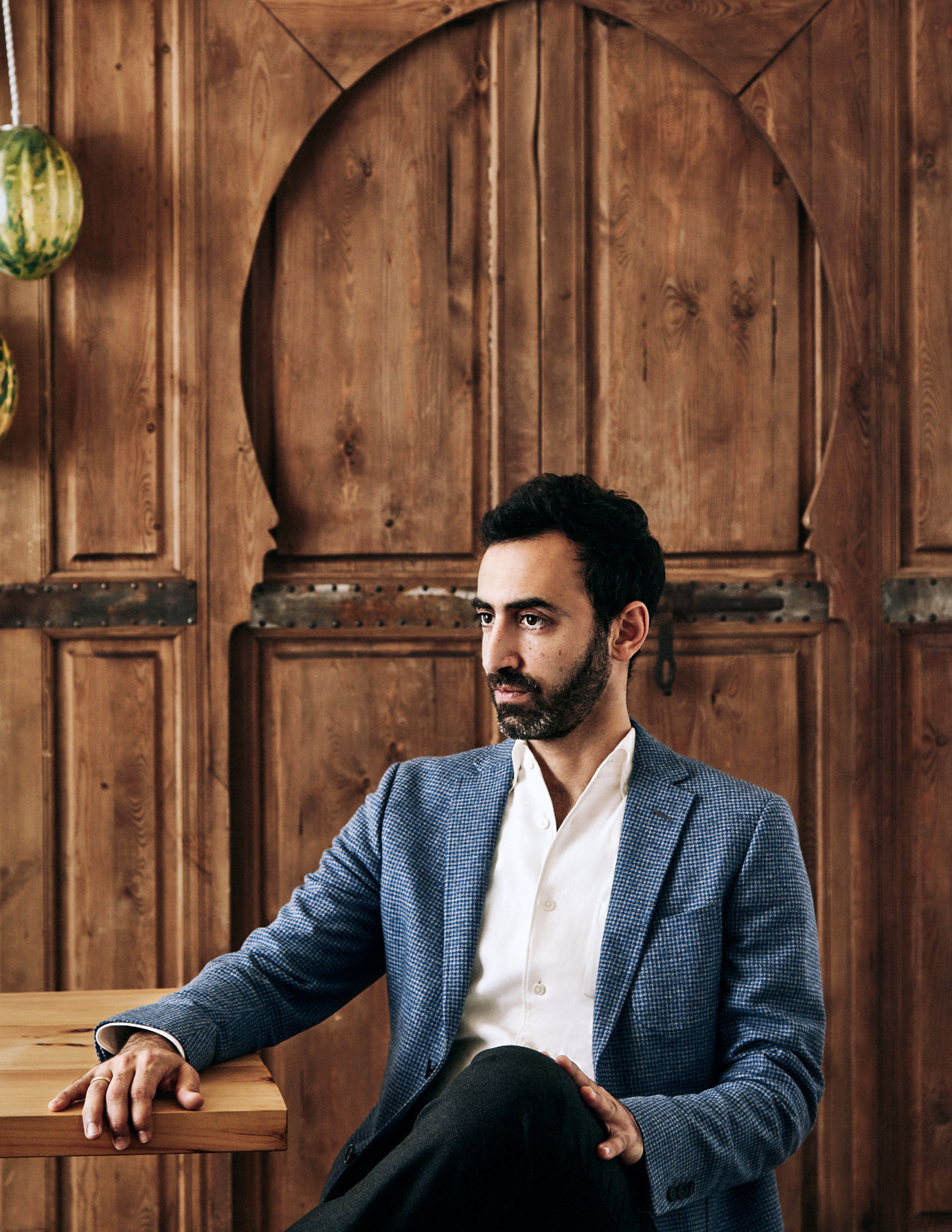
Payam co-founded Slavs and Tatars with Kasia Korczak in 2006. Since then, the art collective has exhibited in some of the world’s most celebrated museums including the Centre Pompidou in Paris, Berlin’s Hamburger Bahnhof and the Museum of Modern Art in New York.
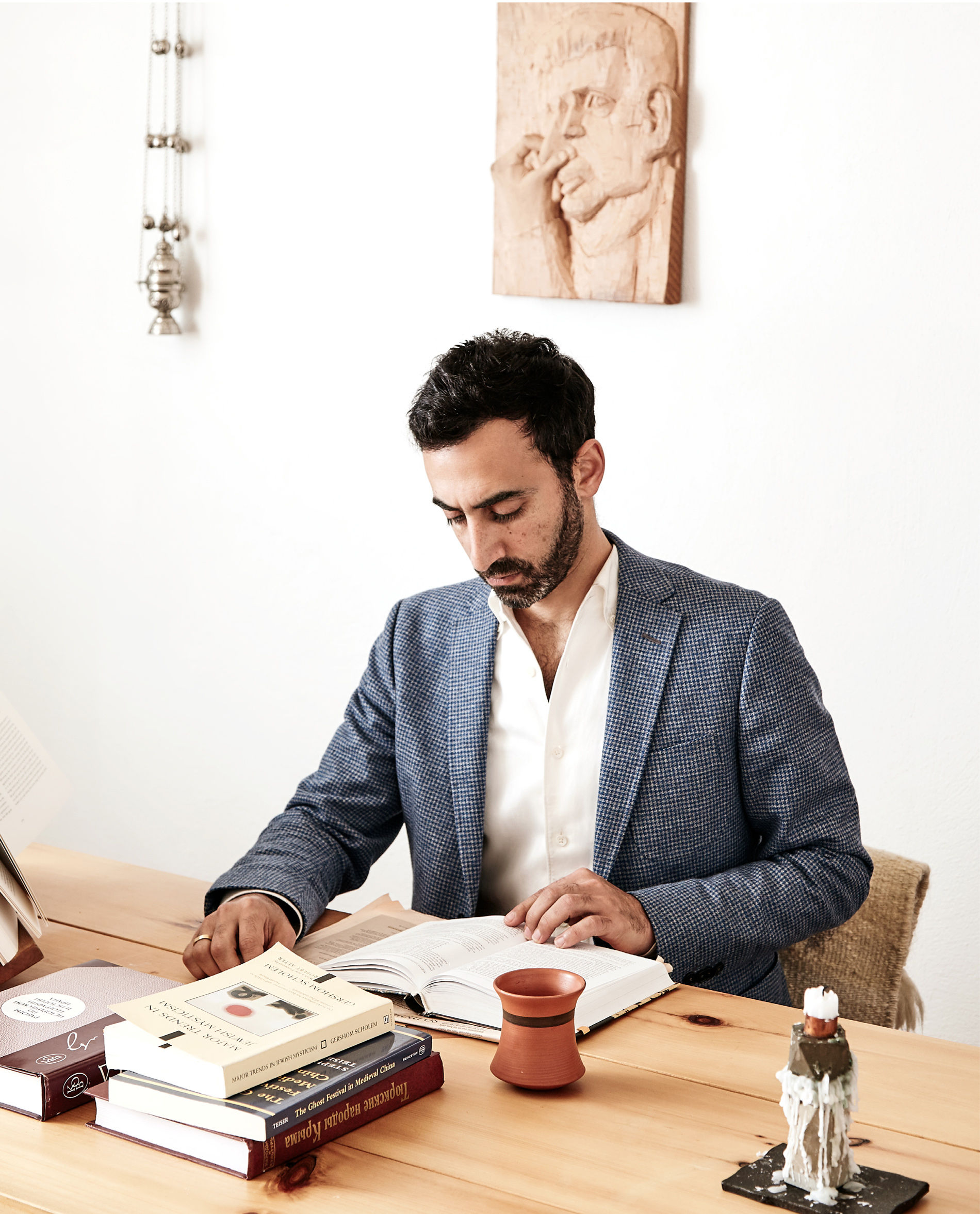
Payam was born and raised in Texas and has since lived in Paris, Moscow, New York and Tehran. Here, he is pictured in his home in Berlin.
“We ask very stupid questions about very smart subject matters.”
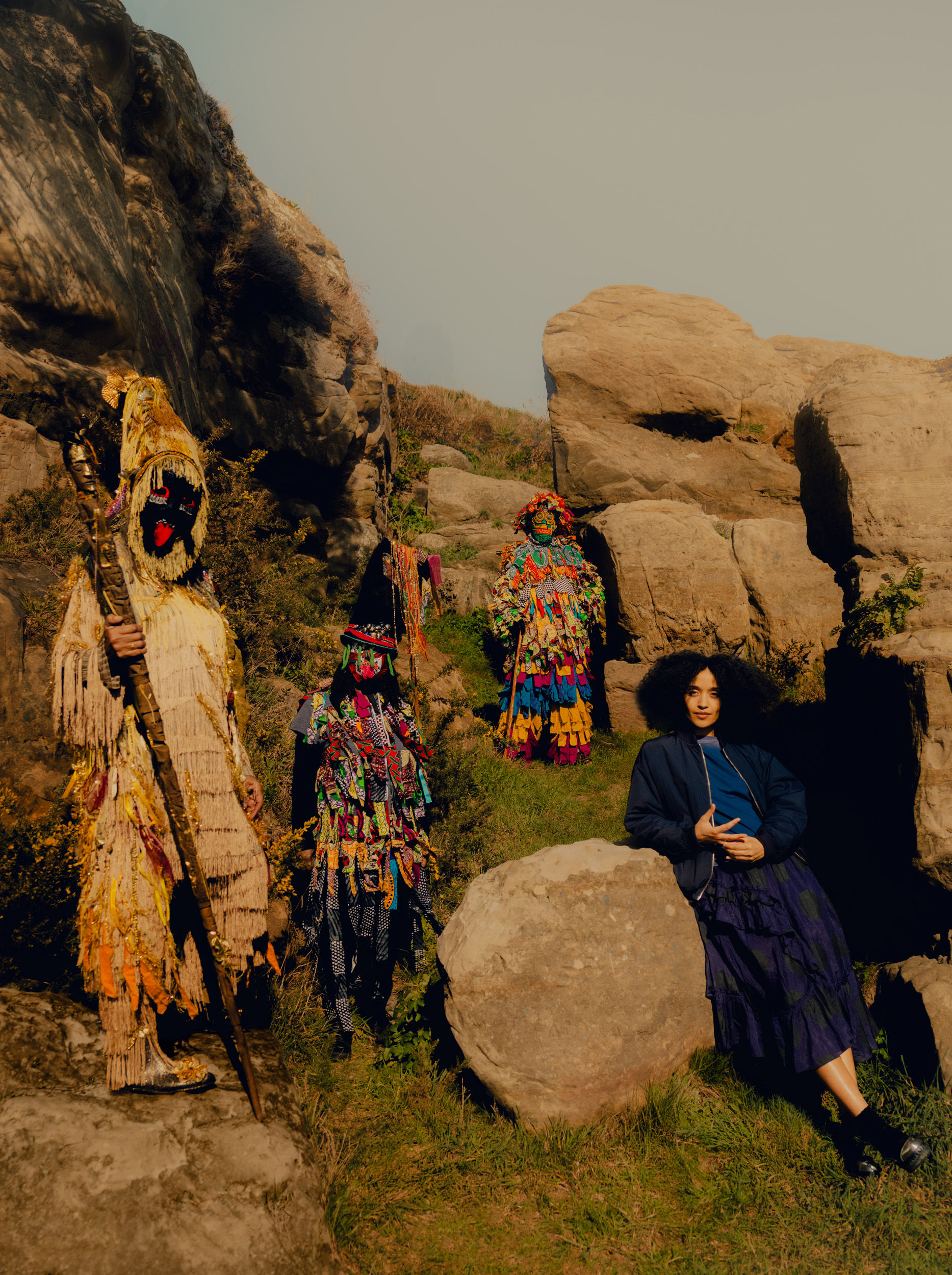
Since 2006, art collective Slavs and Tatars has presented a distinctive and kaleidoscopic vision of Eurasia—a geography that co-founder Payam Sharifi prefers to define as “the area east of the former Berlin Wall and west of the Great Wall of China.” Over the last, complicated decade, for example, the collective’s multidisciplinary projects have oscillated between the outlandish and the poignant: It has translated satirical 1930s cartoons from Azerbaijan, documented unlikely confluences in Iran and Poland’s economic, social, political, religious and cultural histories, and examined the sacred role of language on more than one occasion. Slavs and Tatars’ body of work even includes an adaptation of the Flashdance track “She’s a Maniac” into “She’s Armenian” (replacing the struggles of an as- piring dancer with those of the Armenian diaspora). Here, ahead of a new retrospective, Sharifi reflects on the last 10 years.
Previously, Slavs and Tatars’ members were scattered across the globe. Now that you’re all living in Berlin, has it had an impact on your practice?
There’s a flexibility in not having a studio in this line of research-based work. But I guess it was inevitable that we would end up with a studio—we have professionalized over the years. It’s unsexy, but it allows us to focus. Berlin has a strategic advantage over other cities in its research resources. It has the breadth of libraries of a former Eastern capital because of its history, but also the volumes that I would find in Washington, D.C. Here, I find it all in one place.
Books are one of your biggest outputs. What significance do they hold?
There’s something very sacred about books; they can have a talismanic quality. When you go to someone’s house, the first thing you see on the coffee table is a monograph of the artists they like or have collected—it’s like a support material. What we try to do is the opposite. One of the reasons we’re so fond of books is that they can be so accessible. Ours are not precious. They are books that you can take to your bathtub and read, and it’s no big deal if they get wet. All of our installations—ex- pensive, delicate, precious—are just a premise to bring people back to the books.
I hear you’re opening a pickle bar.
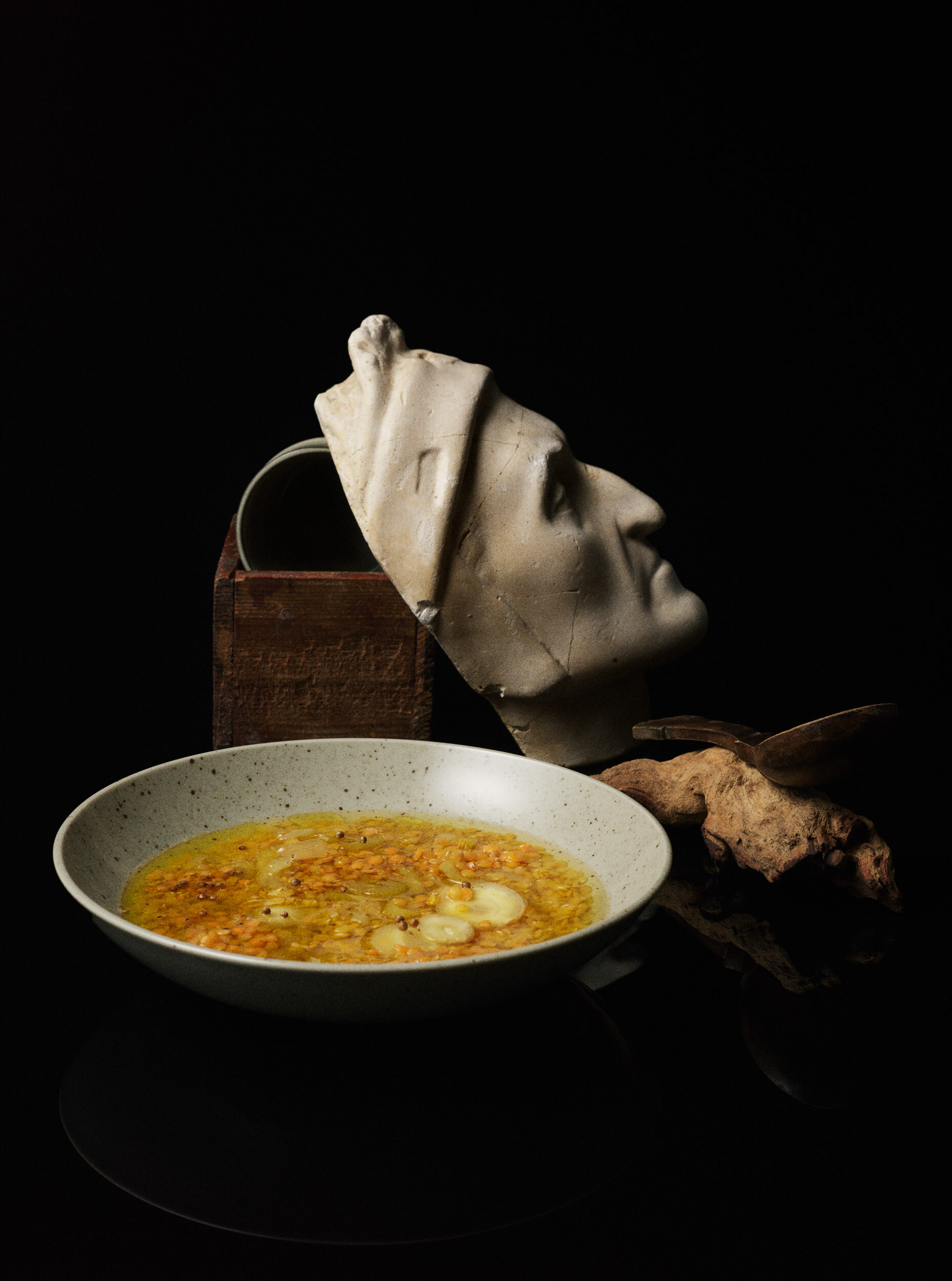
Our newest work is about the idea of souring—the politics behind fermentation. Pickling is kind of cool and fermentation has become hip again. And it originates in Central Asia and eastern Europe amongst Slavic and Turkic peoples. We’re opening a pickle bar to be able to engage with the politics of pickling, beyond the arts institution, in the hospitality sector.
How much of a role does satire play in your work?
There’s something generous about humor. The ideal form is welcoming, a sort of laughing at oneself—an icebreaker. It can be a disarming way for us to allow access to a subject matter that would otherwise strike somebody as distant or frightening. But it can also be more than that. There’s a great book, Domination and the Arts of Resistance by James C. Scott about the idea of “infrapolitics.” A play on the
word “infrared,” it describes the politics that are there but that you can’t see. It’s the rumors, the jokes, the things that are hushed or whispered at home—the underbelly of politics beyond marching in the street, manifestos and policy acts. It’s folk politics. Each joke is a tiny revolution.
Does the role of satire hold more significance today than it used to?
The world is a very different place from when Slavs and Tatars started, in unexpected and unfortunate ways. The natural desire, of course, is to have your sphere of activity and your audience widen as opposed to narrow. But the world has been radicalized so much, and that presents a challenge for us: How do we sharpen our language appropriately?
Are you between a rock and hard place?
A very important thing in art is to disrespect and respect at the same time. In order to disrespect your source, you have to respect it—you have to be familiar. The Western idea of criticism is always from a distance. But there’s a way of critiquing through complete intimacy. Imagine critiquing something through a bear hug. We ask very stupid questions about very smart subject matters.
You’re a decade into your practice. Are you asking questions about your own work?
We’re marking 10 years with a series of exhibitions—a sort of a midcareer survey that’s traveling from Warsaw to Tehran, and then to Istanbul, Vilnius and Dresden. The challenge is to make sure that the work is never the end point. That sounds very cliché—but no matter how good the work is, it shouldn’t self-reflect. It’s not a black hole. It should ping-pong somewhere else.
Did it hold any personal significance to exhibit in Tehran recently?
Absolutely. Iran is one of the four countries I feel devoted to and where I’ve spent a lot of time. It’s also important in a professional sense, however, because certain places like Turkey, Poland or Iran have a different understanding of our work.
Who do you see as your audience?
One of the things that I’m most proud of is that we have a community of people interested in our work that is not normally interested in contemporary art. That’s important to me—that we’re not attracting only the specialist, but also the generalist, the layman. It’s like how Chekhov was a doctor but is remembered as a writer. Maybe it’s the release of professional constraints that allows people to have a more interesting take on what is not their primary source of income. They are people who are studying different subject matters and that are able to start from a different point of departure.
Do you have any hobbies of your own?
My parents raised me saying, “Make sure that you wake up every morning passionate about what you’re doing.” We’re fortunate to be able to make a living doing what we love. But it’s not enough: The real challenge is not just to have an interest in a line of work, but to actually have a life that is equally as interesting and distinct from that work. The people I most admire—and I can count them on one hand—are those whose work is compelling, but whose life is even more so.
Who were your role models while growing up?
I was reading an interview recently with Nassim Nicholas Taleb, who wrote The Black Swan. He was asked who his role models were and he said he didn’t have any, that he had anti– role models instead. In a sense, the Iranian community in Texas was important to me as an anti– role model in that it represented only a very thin layer of what Iranian culture could be. That was what pushed me to pursue other identities—to start Russian studies, to live in Russia and to learn Russian. And it was actually in and through Russia that I later became
interested in Iran beyond my Iranian ethnicity.
What type of community are you finding in Berlin?
Each place, each move, each new experience, has its challenges. Language filters your experience, and the biggest challenge of moving to Berlin thus far is not being able to speak German. So I’m learning it. I prefer hanging out with older Germans rather than younger, coffee-drinking hipsters because 60-year-olds tell and teach me much more—not just linguistically, but culturally.
Does Slavs and Tatars have an overarching goal for its future?
Our interests remain the same, but the question is how to deliver them differently. I think that’s going to mean looking outside of the art world and outside of the expected context of art—the white cube, the gallery, the museum. It’s not a coincidence that art is following the path that fashion followed, and cinema before it. Fashion is still important, but not nearly as much as it was 10 years ago. As soon as something is in the zeitgeist, it’s on its way out. Maybe we’ll soon say the same thing about art.