Relationships
Trust, intimacy, independence and communication.

Trust
Sometimes ordinary life takes a turn for the worse. Like the totally average evening when your partner’s phone bleeps with an incoming text message that throws your relationship off a cliff. Or a hurtful comment from a friend that snowballs into a savage severing of your shared history.
Cynthia Wall has a favorite way to describe the brutal shock of betrayal. Using an analogy borrowed from The 7 Habits of Highly Effective People, she describes trust as the oxygen in the room of relationships. When that vital life force is removed, the emotional pain can be visceral. “It’s really the absence of trust that we feel,” she says.
The author of The Courage to Trust: A Guide to Building Deep and Lasting Relationships, Wall has decades of experience as a therapist and social worker. We all, she points out, put superficial trust in others on a daily basis: the postal worker who stops by our house each morning, the driver in the car in front of us. But true trust springs from a willingness to share our inner selves—even when that exposure places us in a position of vulnerability.
“Our intimate relationships— and by intimate, I don’t necessarily mean sexual—are those in which we can open up and say, ‘This is who I am and how I’m really feeling,’” she says. “That’s why intimate relationships are pretty total. They’re literally, ‘I’ll reveal everything about myself, I’ll show you this mole I hide from everyone else, I’ll tell you my deepest, darkest secret. Will you still love me then?’”
So what do you do when you’ve metaphorically—and perhaps literally—bared yourself to someone who then lets you down? Wall has been married for 36 years but admits her most brutal heartaches have been caused by friends who chose to end their friendship rather than confronting issues. In such situations, there’s a lack of honesty; bad feelings are bottled up, situations silently escalate and no one dares break the ice until it completely freezes over. “Grinning and bearing it is acting like it’s okay, but we need to say ‘no’,” she says. “To build trust is to say ‘no’ with kindness and compassion. And combining honesty with kindness builds trust. Or it wrecks the relationship,” she adds. “But if a relationship cannot tolerate honesty when done well, then it doesn’t have much legs to it.”
Wall describes trust as a set of Russian nesting dolls: three layers, each stacked neatly inside the next. At the core is trust in oneself—the ability to count on yourself, stick to your word and to pra tice self-compassion when things go sideways. From there, it’s necessary to develop trust in a positive future so that, even if a worst-case scenario plays out between you and a loved one, you feel confident knowing that hearing the truth is better than playacting a lie. With these components in place, it becomes possible to establish a relationship with someone else that is rooted in the risky, rewarding intimacy that comes from being willing to ask questions even when afraid of the answer.
“I wish I could have a watermark in my book saying, ‘Everyone’s afraid of rejection,’” says Wall with a gentle laugh. It’s a sentiment worth keeping in mind when broaching a grievance; inherent in being the initiator of the discussion is that it immediately places the other person at a disadvantage. So, before starting a conversation, Wall recommends that you sit quietly and visualize how you would like it to go. Once you determine what you hope to achieve, put yourself in the other person’s shoes. It helps to assume their actions were caused by obliviousness rather than any malicious intent. “What would she need to hear to know that she’s hurt your feelings and that she needs to apologize without being made to feel like a bad person?” Wall asks. From there, pluck up the courage and ask to talk. Done well, it will bring new depths to your relationship.
“What might be a simple misunderstanding to one person could be a devastating reenactment of a betrayal to another person,” says Wall. “And they’re both right. It’s about having the vulnerability to share those perspectives. If that’s responded to with love and understanding as we clear up assumptions, then that makes a bond stronger than before.”

Intimacy
“Tantric sex is a way of having sex that invites a transformative, spiritual experience,” says Barbara Carrellas, author of Urban Tantra: Sacred Sex for the Twenty-First Century. According to this centuries-old spiritual practice, the physical body is a manifestation of divine energy, which in turn means that sexual energy can be harnessed as a powerful tool in the journey toward enlightenment and intimacy. “It’s not all about the sex,” Barbara adds. “However, Tantric sex can be the door that opens into a Tantric life of mindfulness, connection and personal power.”
Tantra encourages couples to focus solely on one another, without a rush toward the finish line. Many of its rituals transmute sex into something laced with far more profundity: eye contact, kissing, touch and synchronized breathing. Such techniques inspire a more intimate experience, which in turn fosters greater closeness and trust between partners. As Barbara explains, “Tantric sex invites participants to slow down, release expectations and goals, become more mindful, breathe more deeply and focus on the energetic aspects of sex—not just the physical. People become partners on a journey into the unknown with no fixed agenda or anticipated result.” Barbara suggests starting your own Tantric journey by researching the subject. Ten minutes of eye-gazing and slow breathing is a simple introductory exercise that couples can try together to deepen their intimate contact. But, she warns, the real work requires an overhaul of one’s ingrained ideas about sex. In Tantra, there’s less attention paid to “having” sex and more emphasis on encouraging erotic energy to flow through the body.
Barbara’s own journey toward Tantra was driven by the AIDS epidemic in the 1980s. As she watched her community succumb physically and psychologically to the disease, she began to search for a sex-positive practice that would restore her strength. Tantra proved the perfect war cry, its message of spiritual growth and personal liberation correlating with an emphasis on cultivating sexual and political power. “Tantra is not couples therapy, nor is it exclusively for privileged, white, middle-aged, middle-class, apolitical, woo-woo, New Age workshop junkies,” Barbara says firmly. All that’s needed is a willingness to explore one’s spirituality in its many guises, including the physical.
Independence
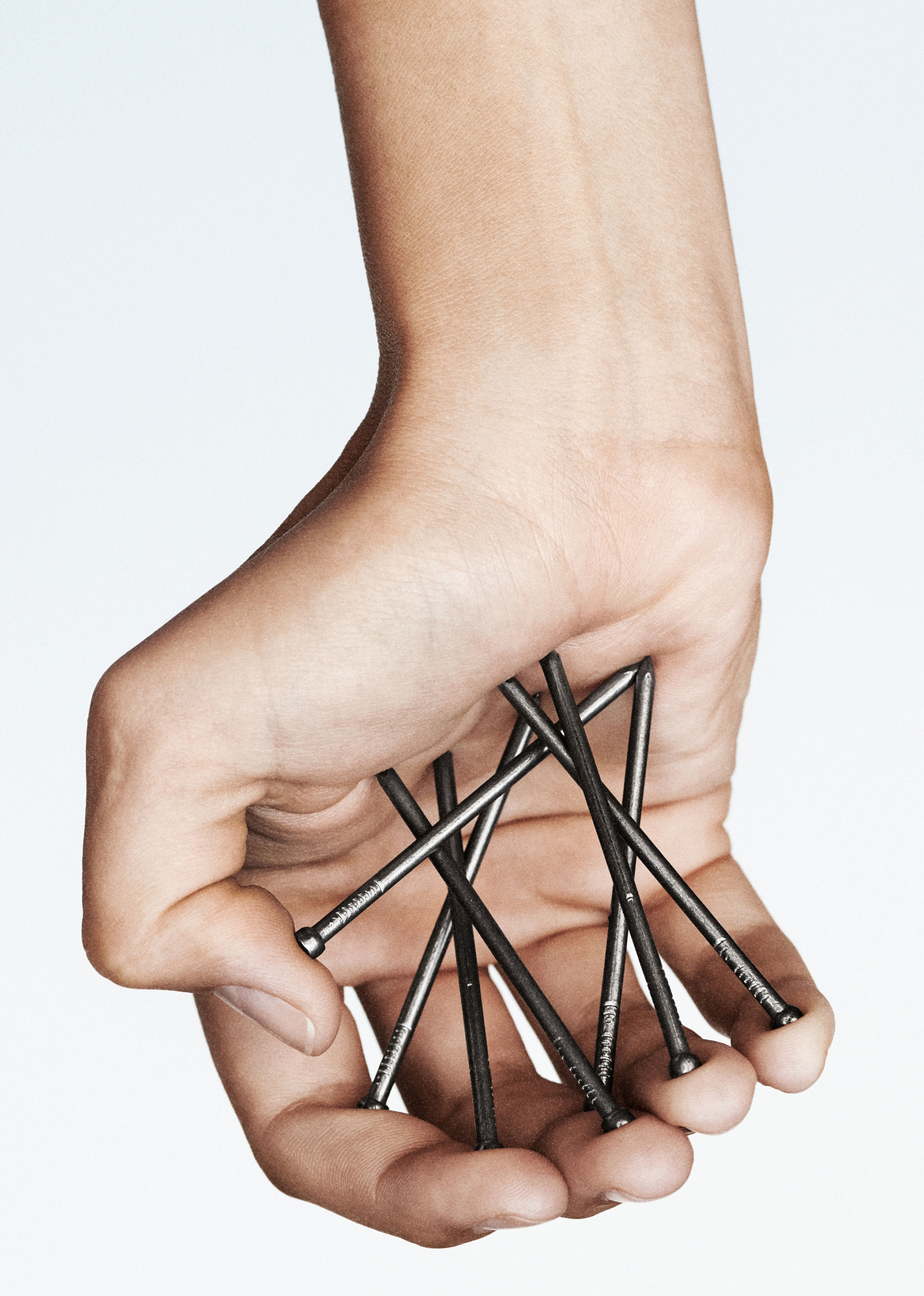
Striking just the right balance in relationships can be tricky: Absence either makes the heart grow fonder, or it causes the beloved to slip one’s mind. In our relationships with others, the tightrope that spans romantic attachment and individual autonomy must be cautiously tread. Push too far in one direction and our identity is engulfed; hold back, and true intimacy evades us.
“Not being sucked into the relationship and drowned by it is so important,” says Dr. Stephen Trudeau, a California-based clinical psychologist and the author of Courage to Thrive: Triumph in the Face of Adversity. Married for 21 years, Dr. Trudeau likes to tear around on his motorcycle—an obsession that has earned him the nickname “the Psych on the Bike”—while his wife prefers to attend ’80s rock concerts with her girlfriends. The two have always been happy to let one another pursue individual interests in the belief that it strengthens them as a unit. “Because of our separate adventures, we have things to talk about, people to influence us, and other experiences that foster our continued growth as both separate people and as a couple,” he says.
But for an independent relationship to work, there must be emotional infrastructure in place to support it. First, Dr. Trudeau emphasizes the necessity of open communication. Both parties should feel listened to and understood in moments of vulnerability. Second, he recommends adopting a two-way support system in which both partners take on the role of being the other’s biggest cheerleader. Third, each person should selflessly keep their partner’s best interests at heart. From that springs trust. With this trifecta in place, a supportive space emerges in which both people can explore their identities without losing common purpose as a couple.
A couple that allows for zero independence does so at their peril. Quash your differences and it’s likely that you’ll end up losing more than a hobby or two. What can start as an impassioned desire to please your partner and remain a deeply entrenched unit may result in a loss of respect from the very person you seek to please. “What attracts us to each other to begin with is the mystery of ‘who is this person?’,” says Dr. Trudeau. “If we let that go and let the relationship smother us, then we become unattractive to our partner.”
The opposite end of the spectrum is no better, however, hence the tightrope walk. Independence should be fostered, but not at the cost of one’s relationship. “Too much independence, and what value is the relationship?” says Dr. Trudeau. “When we couple up, we’re saying, ‘I want you in my life!’”
Communication
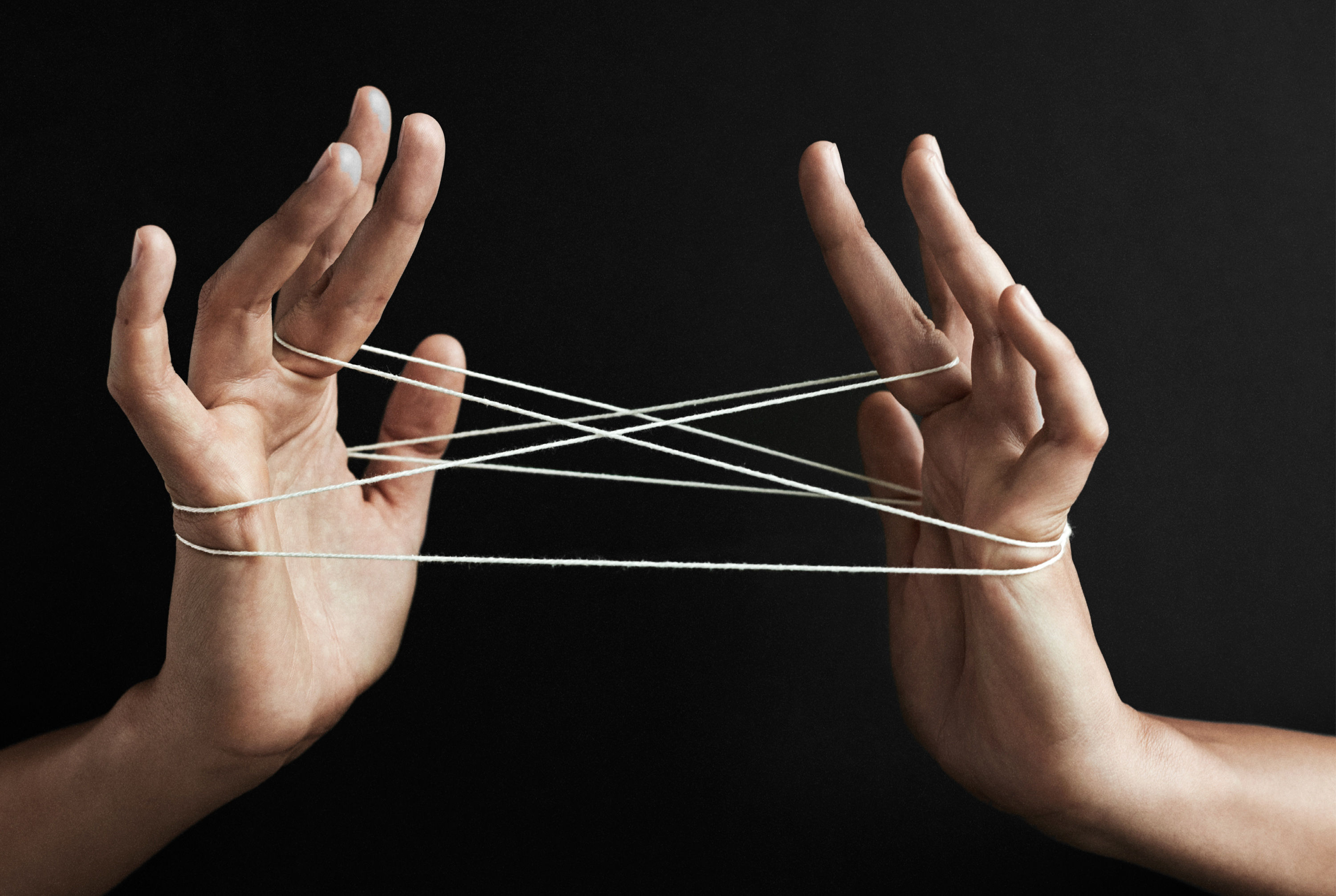
Dr. Gary Chapman has devoted decades to understanding why romantic relationships sour. The marriage counselor and pastor readily acknowledges that his own marriage was “miserable” in its early years. “My wife and I were in love, but we were missing each other, and our attempts to show love were falling short,” he says. He noticed similar frustrations and hurt feelings erupting in the partnerships of those he counseled.
Determined to figure out why this disconnect was happening, Dr. Chapman began to sift through the years of notes he had accumu- lated during his professional life. As he catalogued his data, a pattern emerged; he published the results in his New York Times best-seller The 5 Love Languages, which has sold more than 11 million copies to date.
What Dr. Chapman’s data had revealed was five distinct categories that explain how people communicate love: words of affirmation, acts of service, receiving gifts, quality time and physical touch. Couples ran into difficulty when they gave—and expected in return—a type of love that their partner didn’t value as highly. That meant that a person raised in a household that prioritized acts of service—collecting one another’s dry cleaning, cooking dinner—could show their partner love on a daily basis, but such devotion may go unnoticed if the partner required the intimacy of physical touch or the thoughtfulness of a carefully selected gift instead. It wasn’t that couples didn’t love one another enough, Dr. Chapman discovered—it was simply that they didn’t know how to communicate it in the way that would mean more to their partner. Once these communication preferences were revealed, couples were better equipped to make one another feel valued.
“I discovered that when a person began to speak the primary love language of their spouse or partner, the other person began to feel loved and the emotional climate of their relationship immediately began to improve,” he says. “Learning to speak someone else’s love language says to them that you are willing to do what it takes to communicate love and build a strong relationship,” explains Dr. Chapman, whose own 50-year marriage improved after he had identified the love language concept. “That sometimes means learning to do what doesn’t come naturally.”
He points to the example of a newly married couple who successfully applied insight from The 5 Love Languages to the daily working of their relationship. The wife had identified herself as an “acts of service” type, but she knew that her husband preferred words of affirmation—and so, during a routine email exchange, she decided to adopt his love language.
“My husband emailed me to let me know he was coming home from work. I wrote back, ‘Great, I will start dinner,’” she recalled. “I immediately realized that was not in his style of communication, but in my preferred style. I did not receive an email back. So one minute later I wrote another email that said ‘Love you. Can’t wait to see you.’ He immediately wrote back, ‘You make me feel special.’”
Small adjustments, colossal impact. But Dr. Chapman warns that the work doesn’t stop there. He suggests couples set a weekly date in which they sit down and address issues that are bringing conflict into their relationship. Checking in on a partner’s emotional state—even if it brings up tricky truths about one’s own faults and failures—will foster lasting intimacy.
“Ask them, ‘How am I doing in my efforts to make you feel loved?’” he says. “This takes courage and a willingness to listen to their responses. But, if you’re willing to ask each other these questions, you’ll create an atmosphere of openness that will help to lessen reoccurring bad habits.”