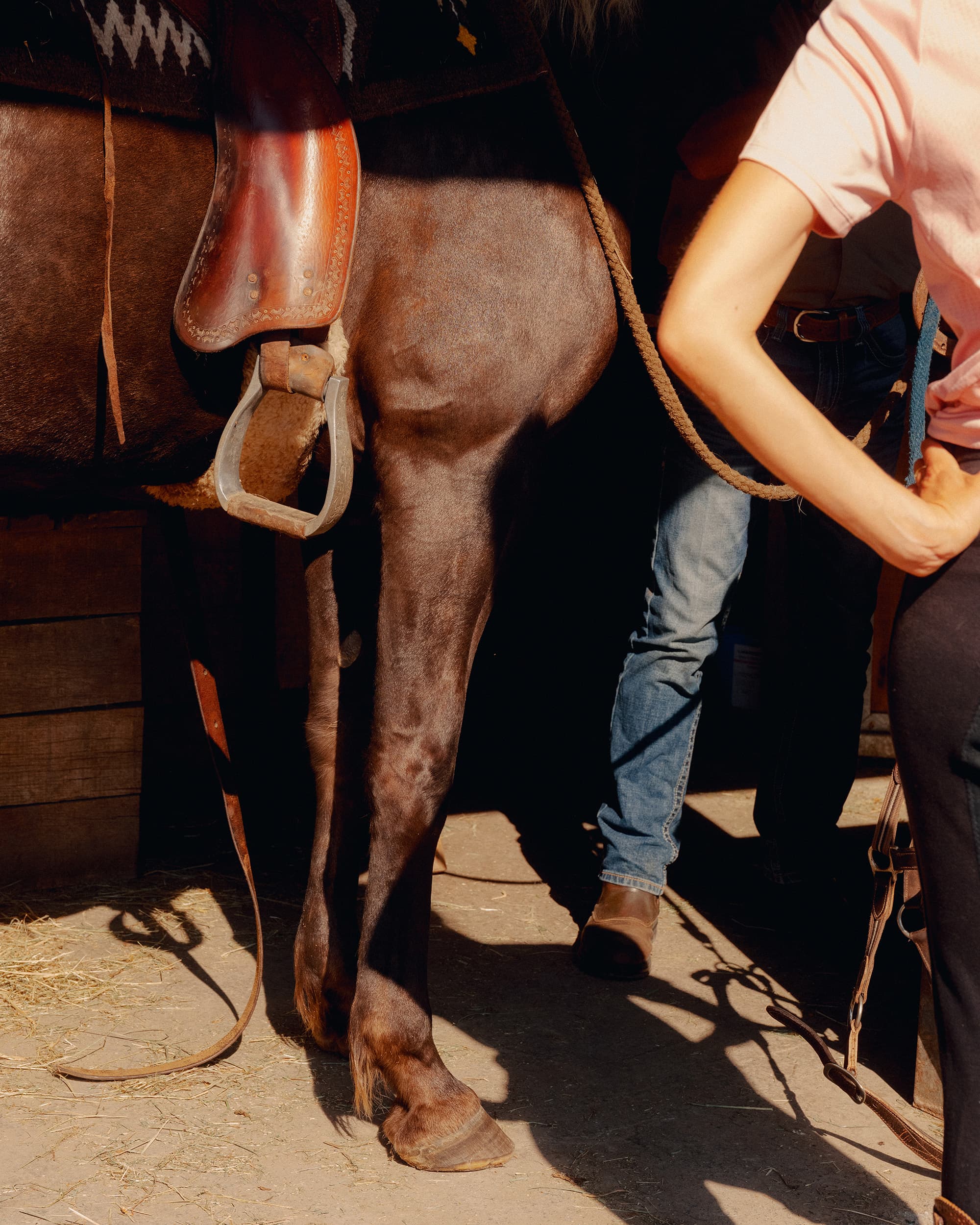
The sturdy front legs of an Ardennais horse, one of the oldest European breeds. In this region of the Ardennes, the horses are still deployed for farm work and heavy drafting, such as logging.
The Ardennes On horseback among sylvan splendor.
The Ardennes On horseback among sylvan splendor.
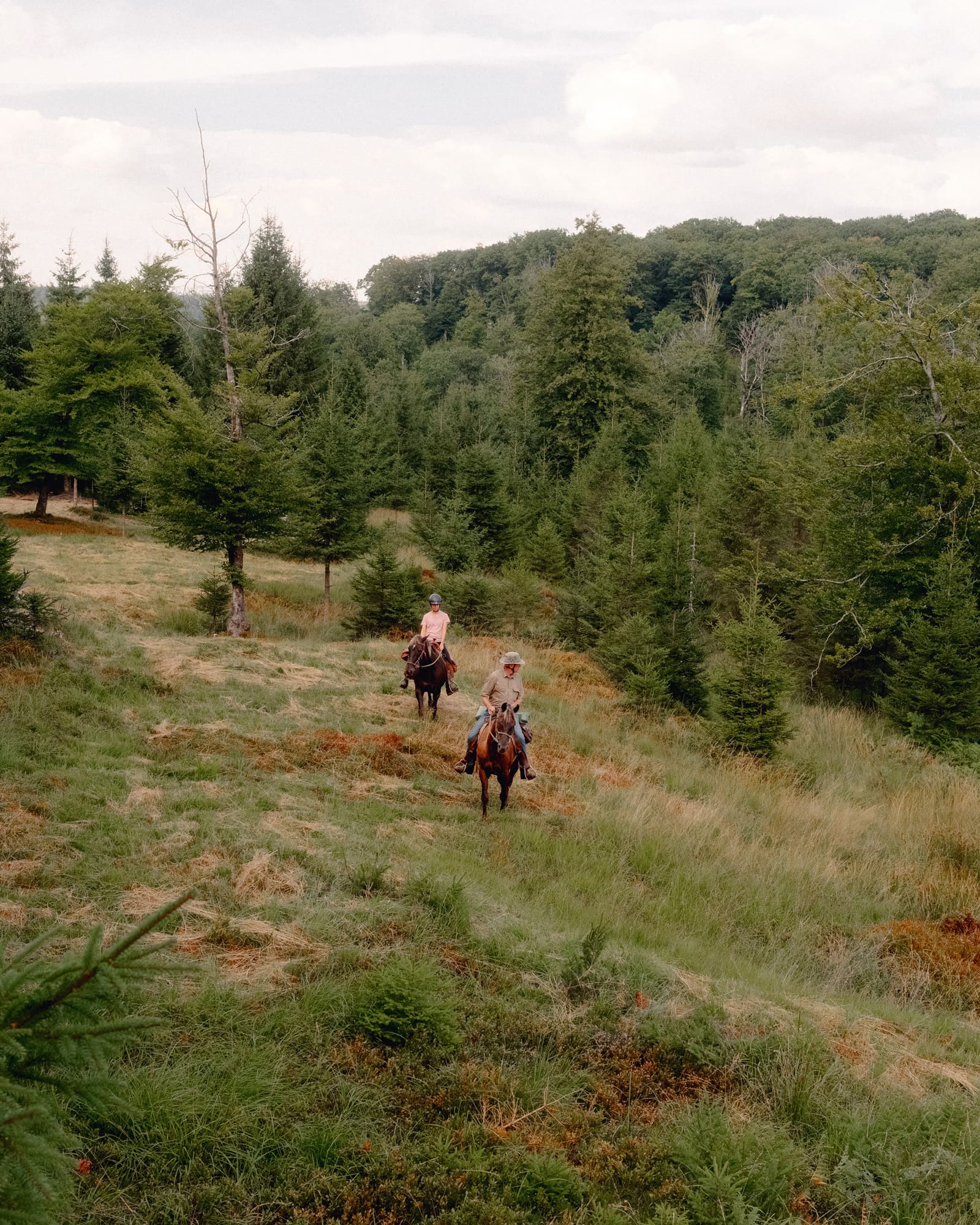
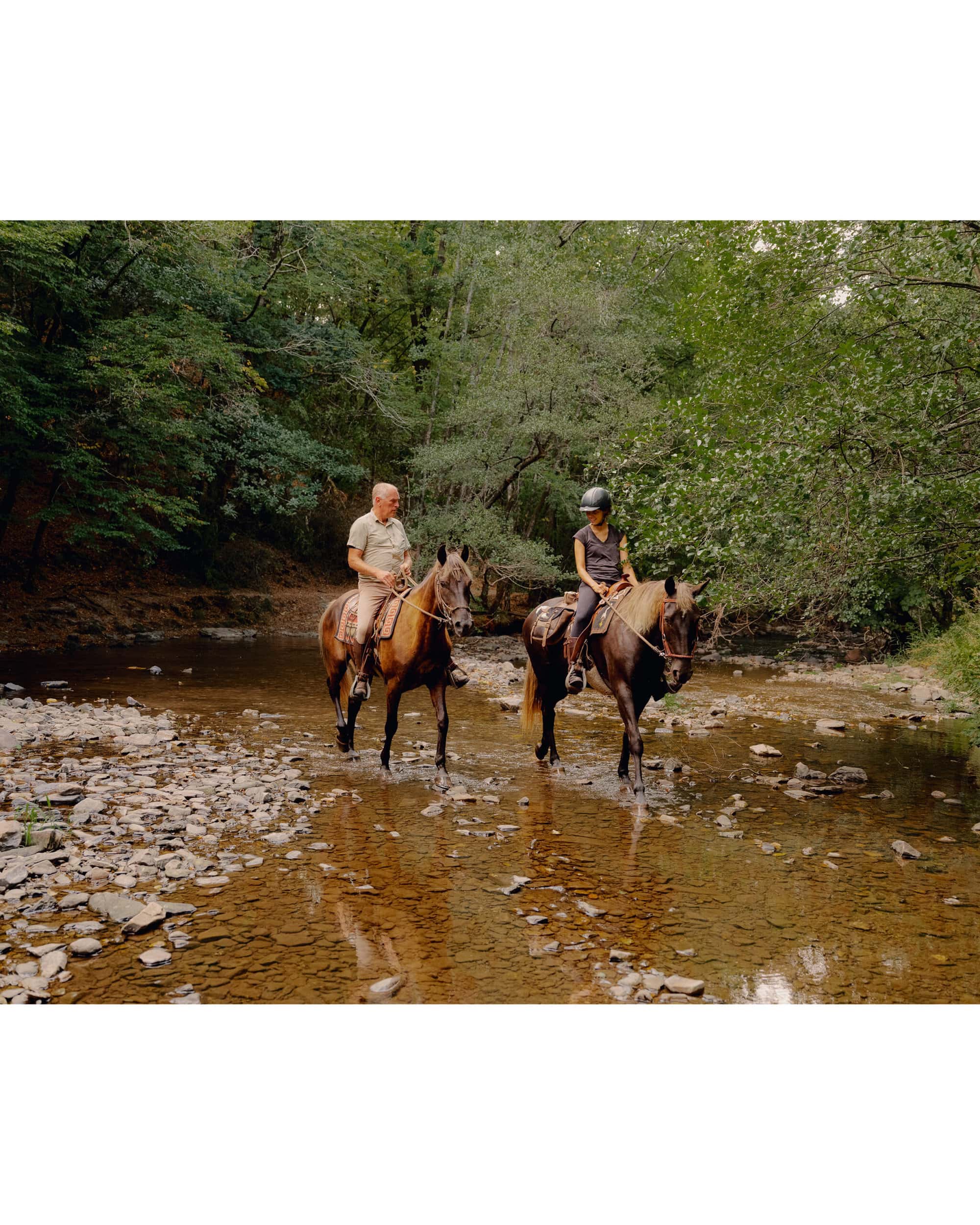
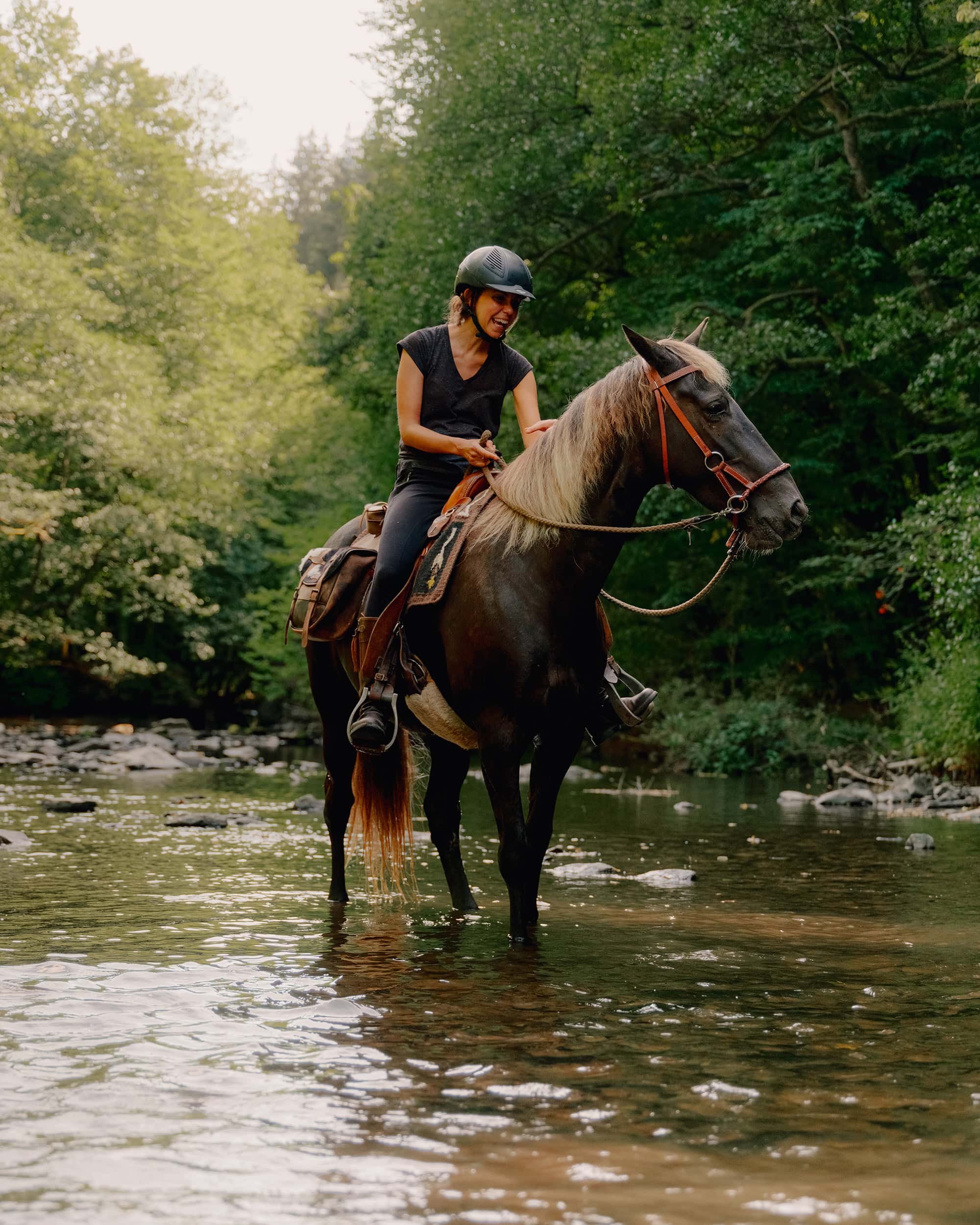
While riding a horse, there sometimes comes a point when you feel both grounded and outside of yourself, connected both with your surroundings and with another living being. The Belgian Ardennes offers an ideal setting for anyone hoping to achieve this sensation. Hacking through thick woods and across trickling streams on horseback, riders get a taste of the freedom that comes from time spent with nature.
Located halfway between Brussels and Luxembourg City in Belgium’s southeastern corner, the Belgian Ardennes is a land of charming beauty. Cows graze in verdant pastures, and the picture-perfect ruins of medieval castles rest atop steep river valleys. Deep in the heart of the region lies the Grande Forêt de Saint-Hubert, a sparsely populated 247,000-acre forest teeming with game and thousands of miles of marked hiking, mountain biking and horse-riding trails. “You can go for hours without crossing a single village or paved road, and yet the landscape is so varied that it will never get boring,” says trek leader Dirk de Ridder. “People love exploring the region on foot or by bike, but it’s even better in the saddle. It gives you more time to soak up the natural beauty.”
De Ridder was instrumental in developing the Chevauchée Forestière, a 104-mile looped trail ride through the Grande Forêt de Saint-Hubert. Designed for riders of all levels whether alone on their own steed or accompanied by de Ridder and one of his four well trained Rocky Mountain horses—the trek takes about five days to complete, but de Ridder arranges shorter routes for those with less time. While camping is possible in the forest’s dedicated campgrounds (wild camping is illegal), the trail’s organizers have teamed up with hotels and bed-and-breakfasts in local villages where both humans and animals can find shelter—a comfortable bed for the former, a lush paddock for the latter. It makes for a less cumbersome trek, requiring only the bare minimum of equipment: weather-appropriate clothing and snacks; brushes and hoof picks are provided by the guide. There’s nothing more liberating than reducing your belongings to what fits into two saddlebags.

GETTING THERE The town of Saint-Hubert—smack in the middle of the Grande Forêt—is a great starting point for your horse trek. Arrive by train at Poix-Saint-Hubert, which is a two-hour train ride from Brussels with a transfer at Marloie.
SEE & TOUR Plan a detour to pass through Redu, a picturesque village whose cobbled streets are lined with dozens of bookshops. There’s a small but wellcurated art museum, Mudia, which shows over three hundred works spanning seven centuries.
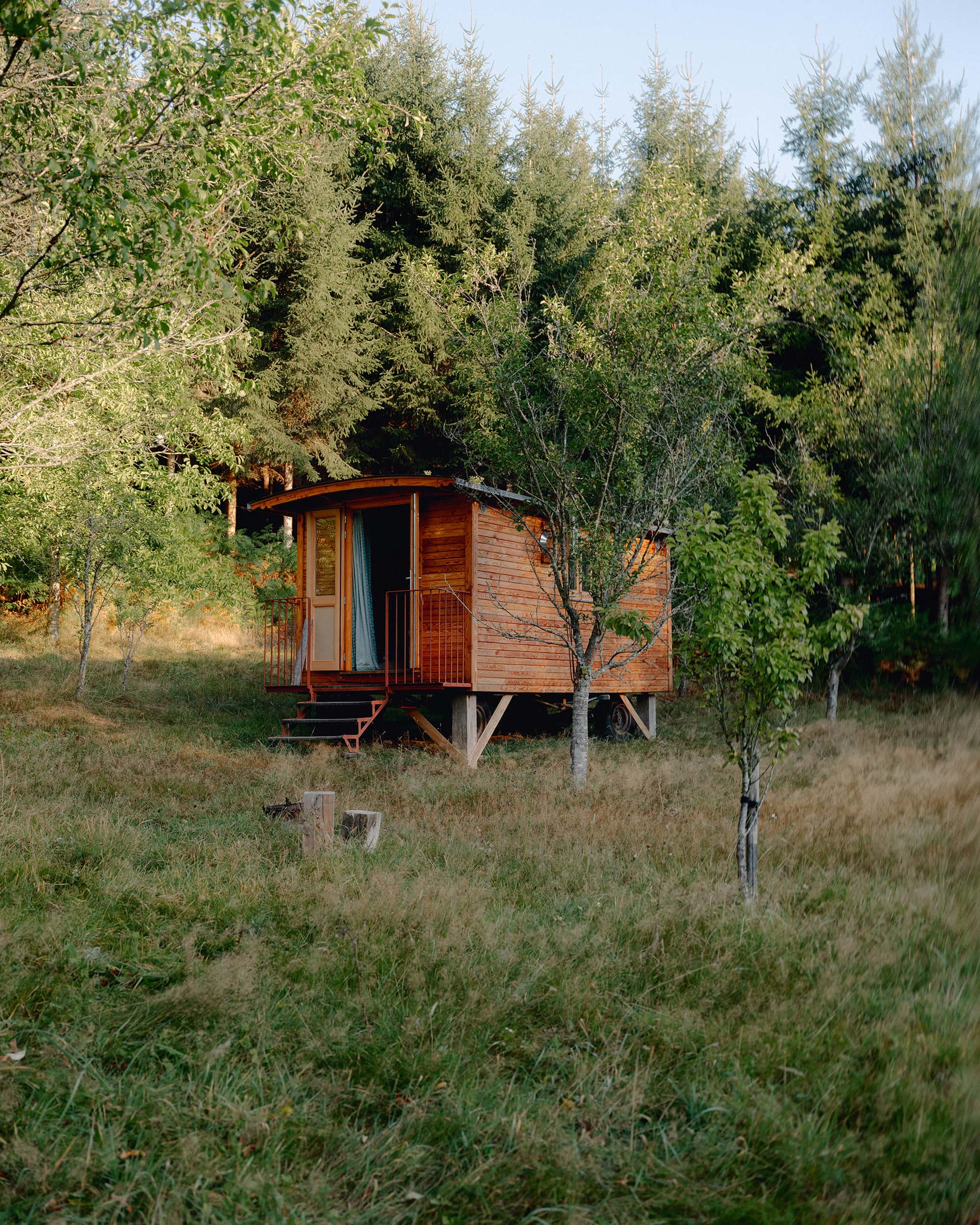
STAY You won’t have to struggle to find a room in the simple auberges along the Chevauchée Forestière, but to reward yourself after a hard trek, book a room at the Château de Mirwart, a castle turned minimalist boutique hotel.
WORTH KNOWING On November 3 Saint-Hubert celebrates its titular patron saint with a service at the basilica, during which hunters play traditional horns and their dogs are blessed. The basilica, with its mix of architectural styles, is worth visiting all year round.
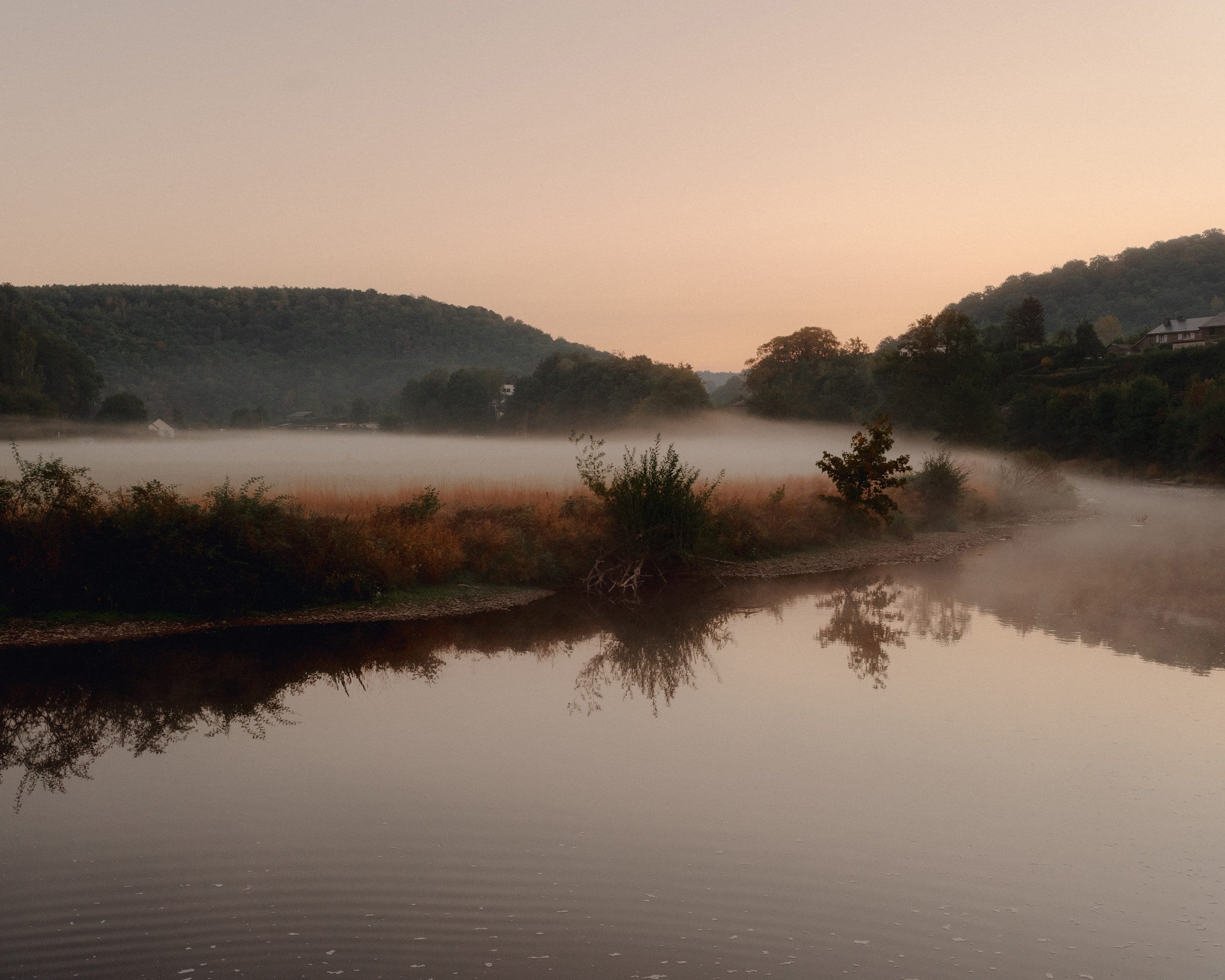
For seasoned equestrians, the Chevauchée Forestière boasts stretches of open fields to gallop through, but the real reward lies in a slower, fit-for-all-levels pace of travel. Because of the area’s rugged topography, the horses often can’t travel faster than a gentle walk up and down narrow forest tracks. These might lead you to lookout points offering panoramic views of the Semois River snaking below, to craggy hilltops where your hair blows in the wind or to shallow waters and streams. The trek is a multisensory experience: Your body fills with endorphins, the greenery takes on a brilliant hue in the dappled sunlight and the breeze carries the scent of the surrounding pine trees. The terrain might be challenging at times, but riding through a sea of ferns or across soft blankets of moss to the sound of birdsong overhead is a panacea for body and soul.
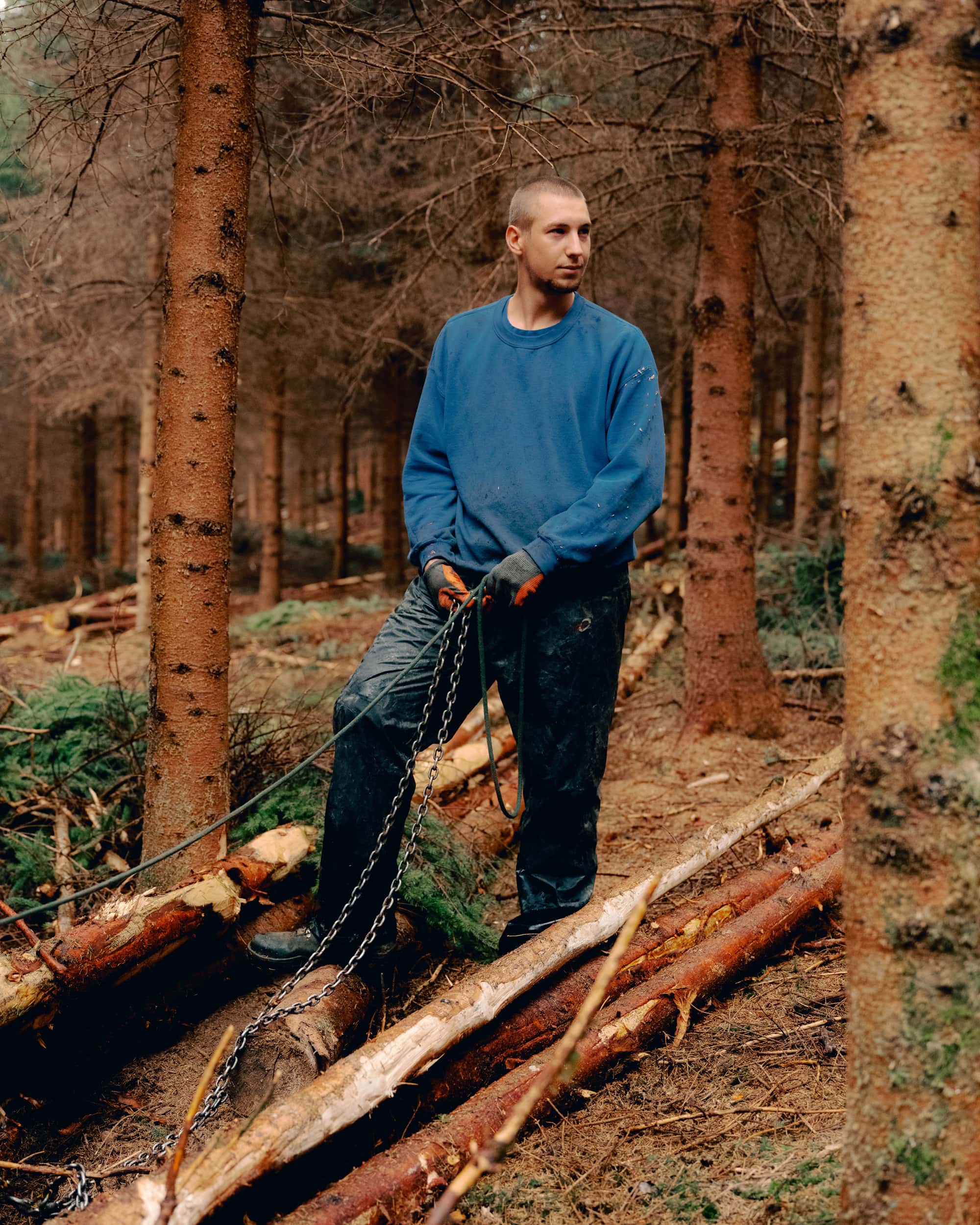
In this sparsely populated region, it’s not uncommon to spot wildlife along the way. More often than not, just after sunrise, herds of deer and wild boar can be seen running through the woodland; a reason to set off early. Another familiar sight along the Chevauchée Forestière is the Ardennais draft horse, a breed with a particularly bulky build and thick legs, which is still used for logging on forest grounds inaccessible by machinery.
The Grande Forêt de Saint-Hubert is also a popular hunting ground and, come mid-autumn, parts of it close for hunting season. On your ride, you will come across the odd turreted château, or castle, built in the 19th century as hunting lodges by the Belgian bourgeoisie. The castle grounds, some of which are open for riders, are often dotted with fishing ponds where you can stop for a scenic picnic and your horse can graze and have a drink.
Though every season in the Ardennes has its draw, de Ridder recommends visiting on either side of the summer months, when nature is at its most vibrant. In late spring, the riverbeds are flanked by wildflower meadows, while in early fall the rolling hills are awash with golden colors. “Sometimes I send friends photos of the scenery I pass on my rides and they ask me which faraway country I’m in, but I prefer not to tell them,” he says with a smile. Indeed, the Belgian Ardennes—unspoiled and largely unvisited by international travelers—is a secret worth keeping.
GETTING THERE The town of Saint-Hubert—smack in the middle of the Grande Forêt—is a great starting point for your horse trek. Arrive by train at Poix-Saint-Hubert, which is a two-hour train ride from Brussels with a transfer at Marloie.
SEE & TOUR Plan a detour to pass through Redu, a picturesque village whose cobbled streets are lined with dozens of bookshops. There’s a small but wellcurated art museum, Mudia, which shows over three hundred works spanning seven centuries.
STAY You won’t have to struggle to find a room in the simple auberges along the Chevauchée Forestière, but to reward yourself after a hard trek, book a room at the Château de Mirwart, a castle turned minimalist boutique hotel.
WORTH KNOWING On November 3 Saint-Hubert celebrates its titular patron saint with a service at the basilica, during which hunters play traditional horns and their dogs are blessed. The basilica, with its mix of architectural styles, is worth visiting all year round.
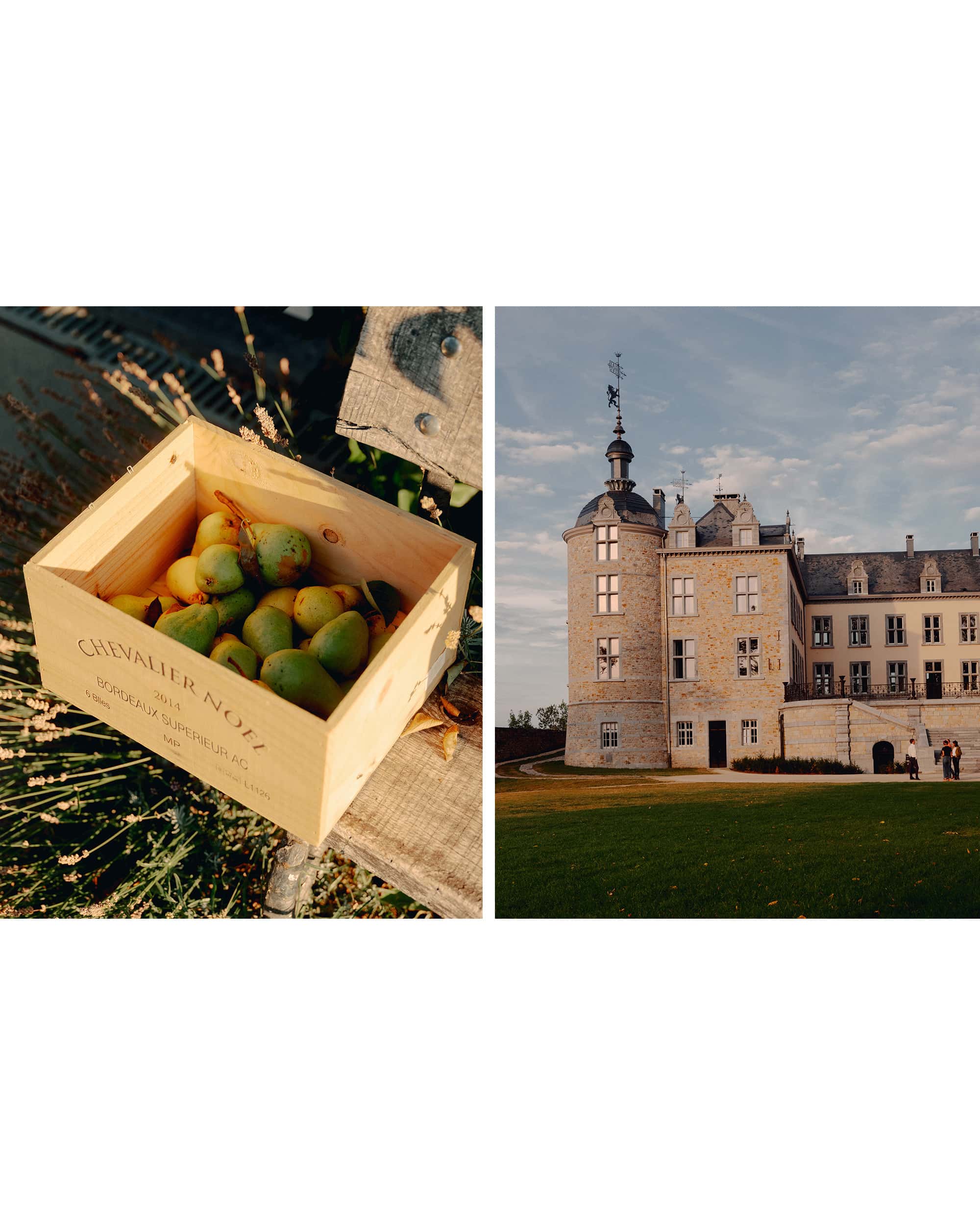
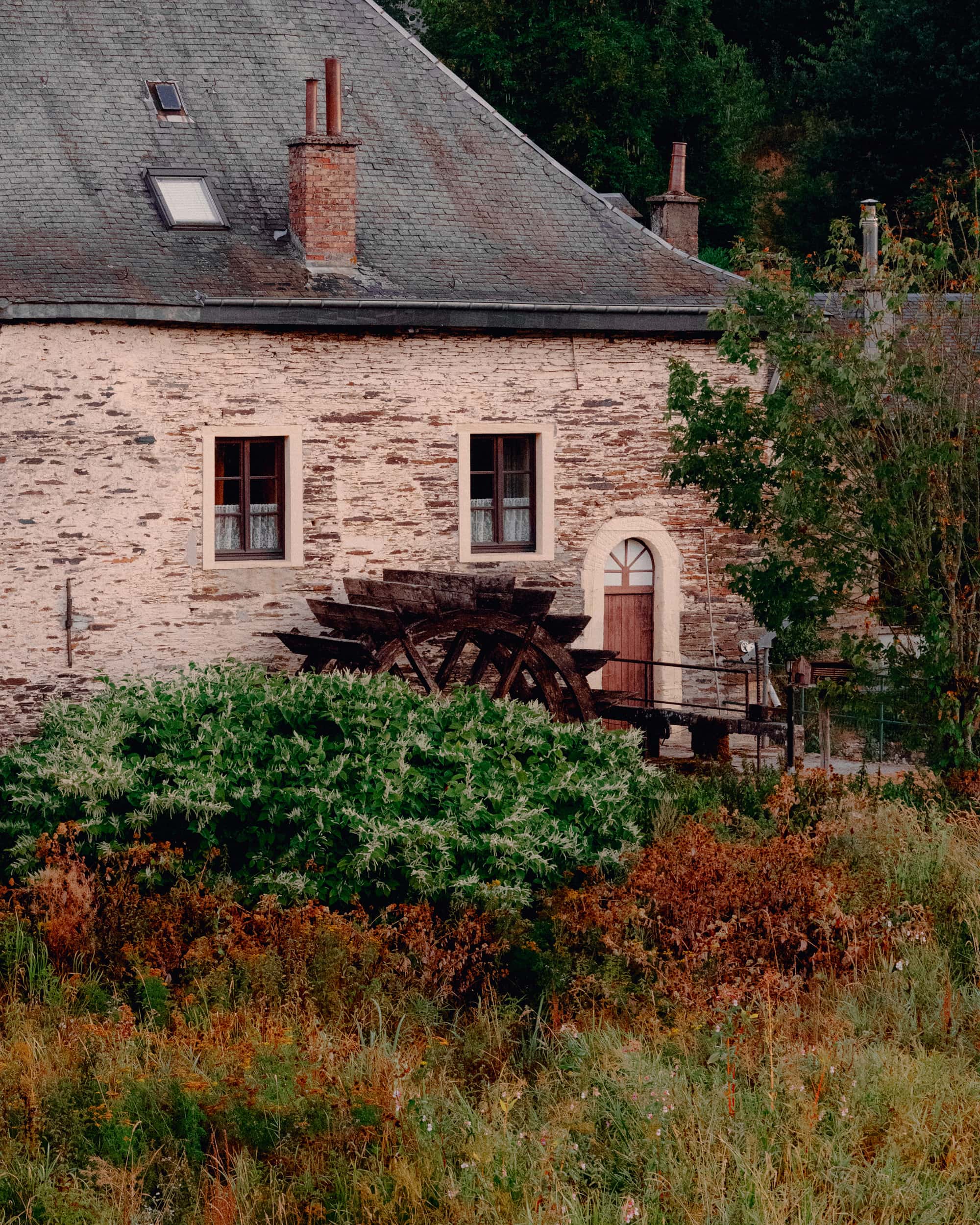
Château de Mirwart is a boutique hotel that traces its roots back to the eighth century. The castle is located in the picturesque village of Mirwart, which is at the heart of the Saint-Hubert forest.
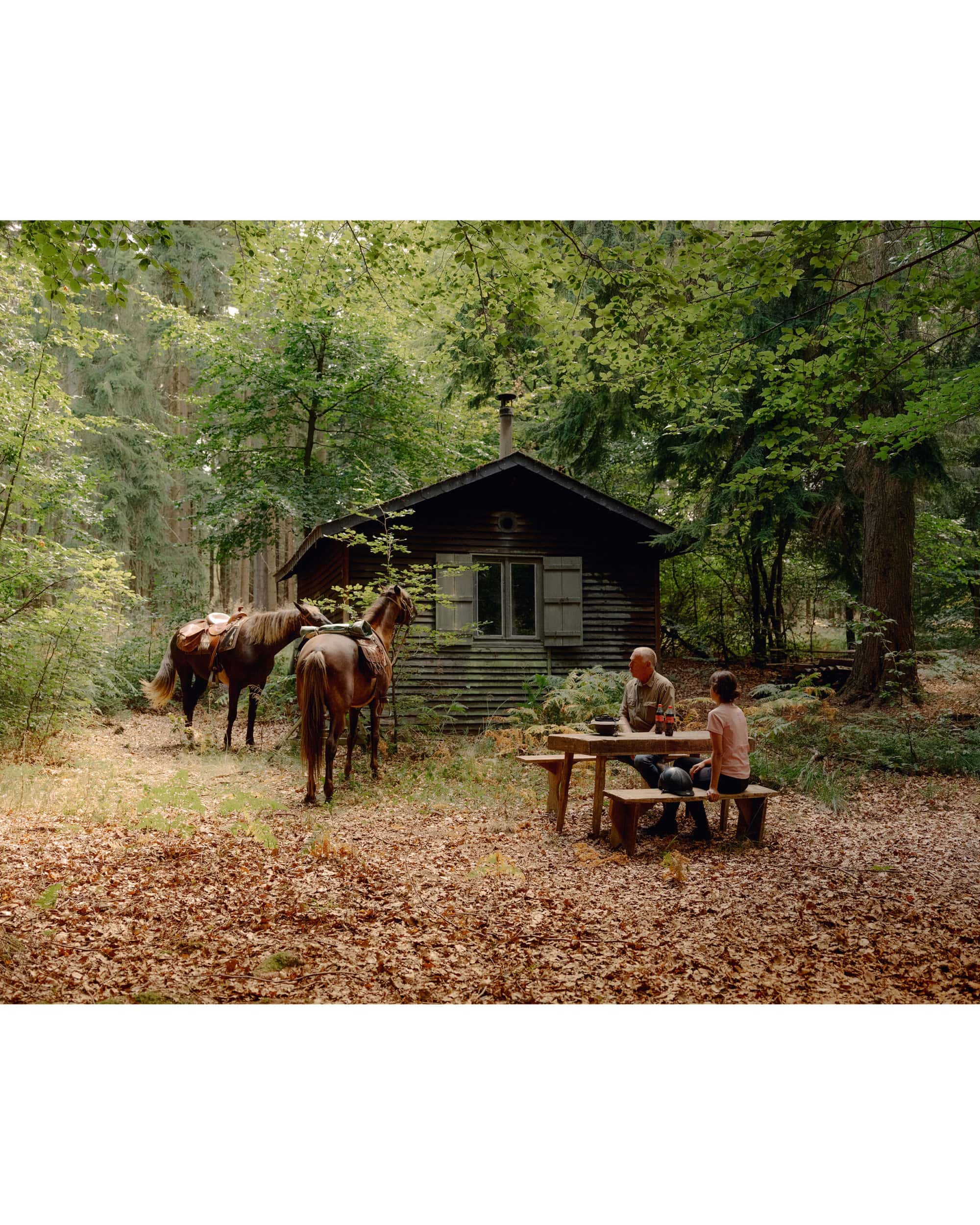
Local guide Dirk de Ridder takes a break from the trail with his client while their horses graze. There are several picnic and barbecue spots throughout the Grande Forêt de Saint-Hubert; make sure to dispose of your trash responsibly.
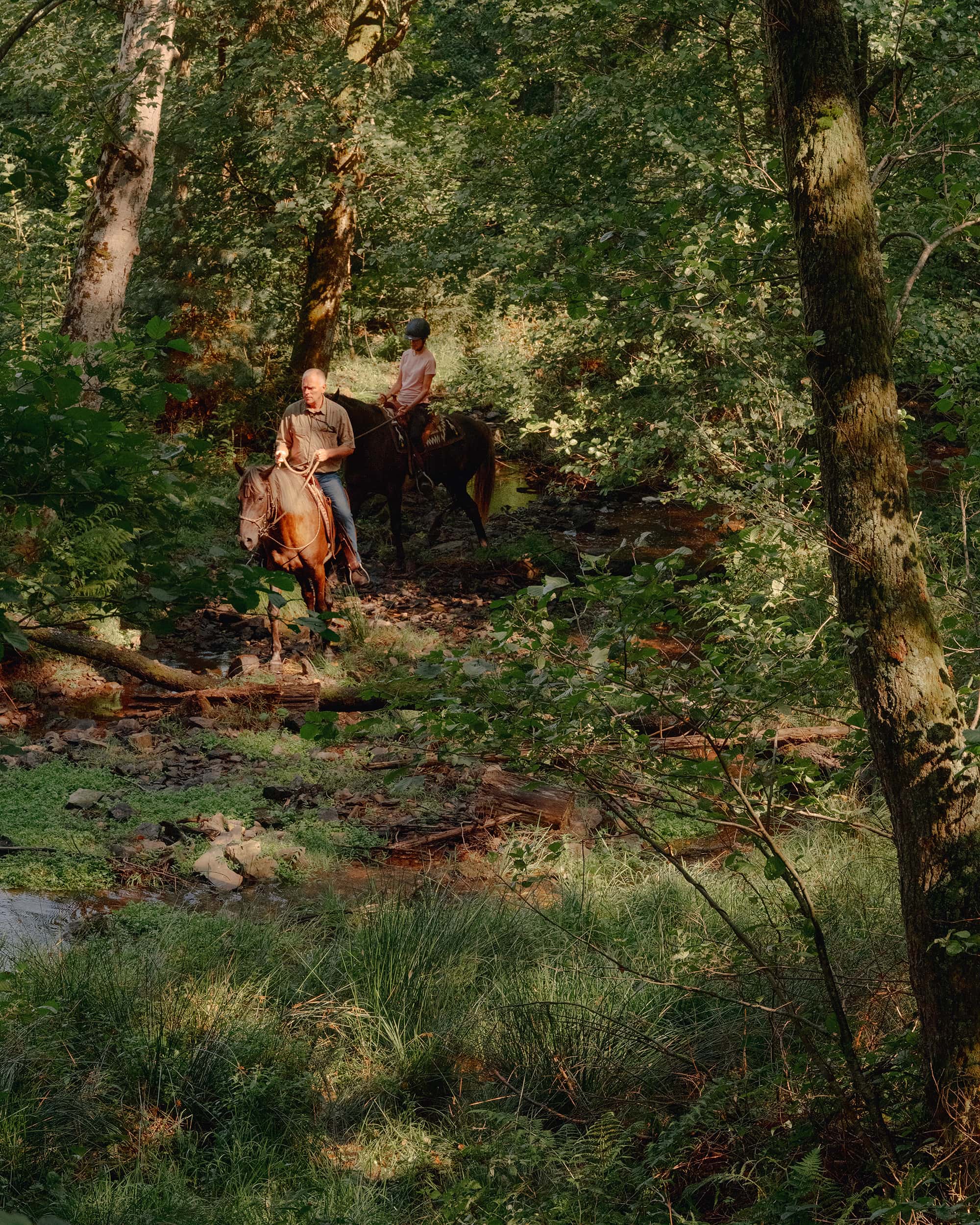
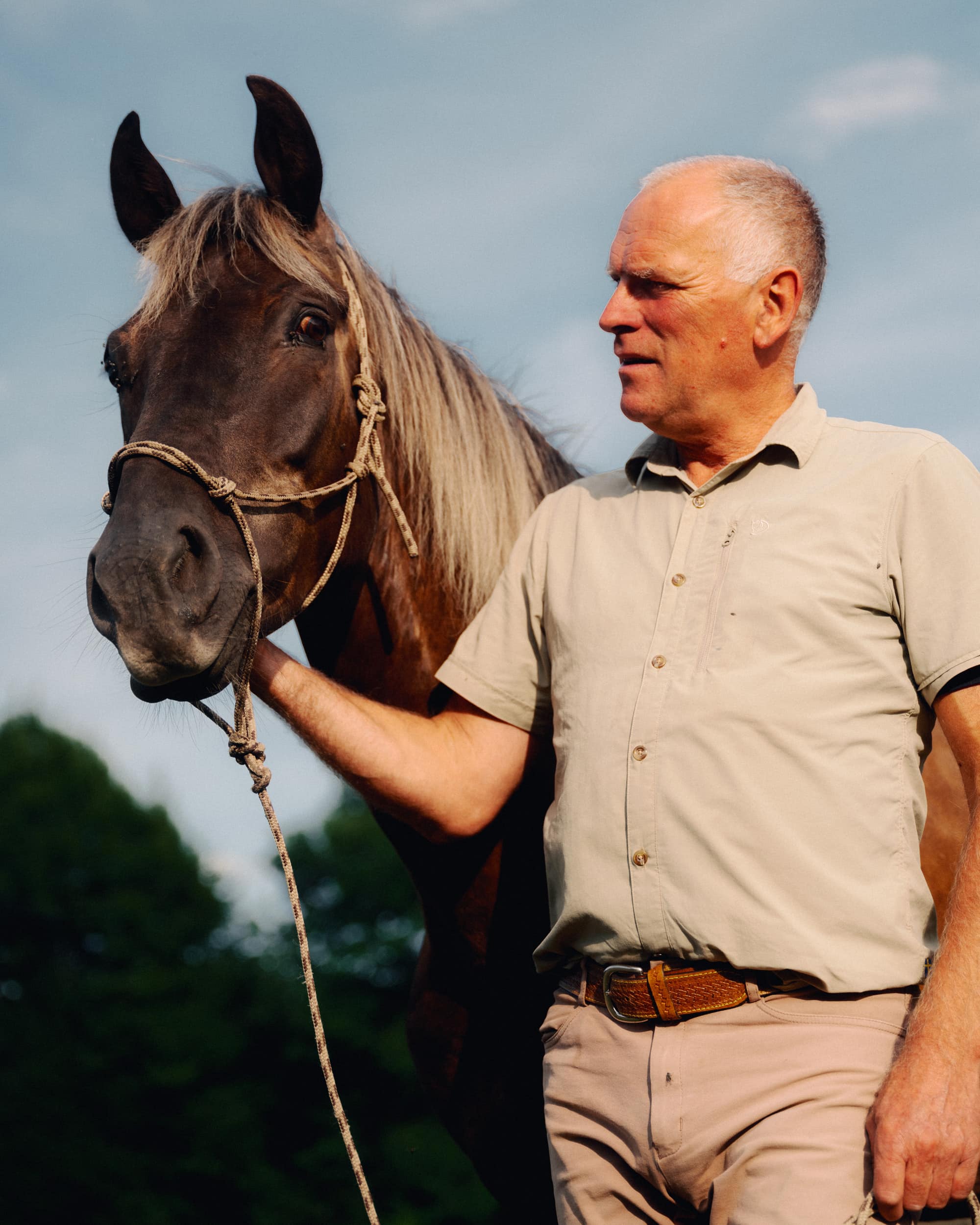
The trail’s terrain may be challenging at times, but de Ridder works with Rocky Mountain horses, a breed that was originally developed for farms in the Appalachian foothills and that is said to be both calm and courageous.
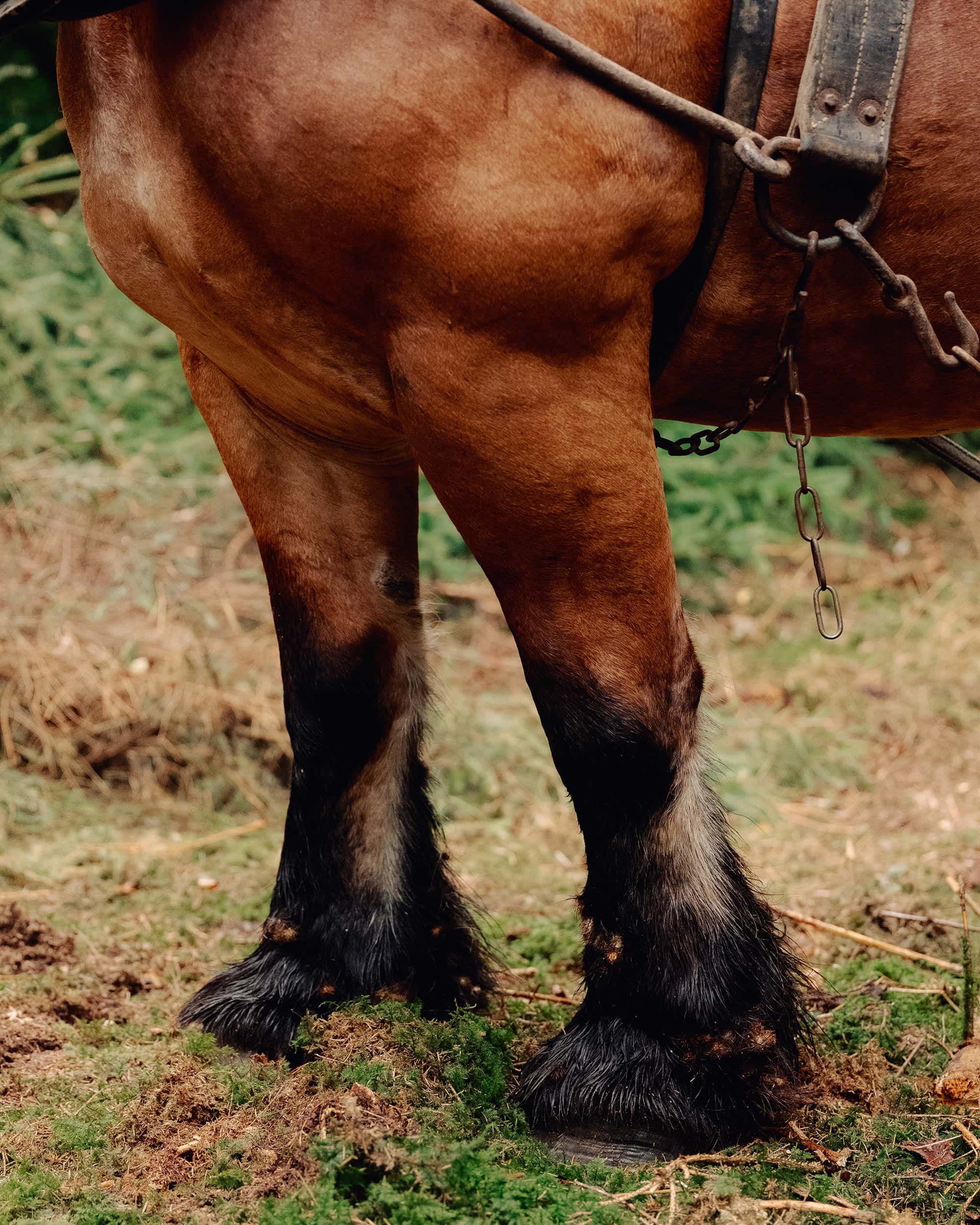
The sturdy front legs of an Ardennais horse, one of the oldest European breeds. In this region of the Ardennes, the horses are still deployed for farm work and heavy drafting, such as logging.