Adobe Acrobats Made for the moon, built in Iran.
Adobe Acrobats Made for the moon, built in Iran.
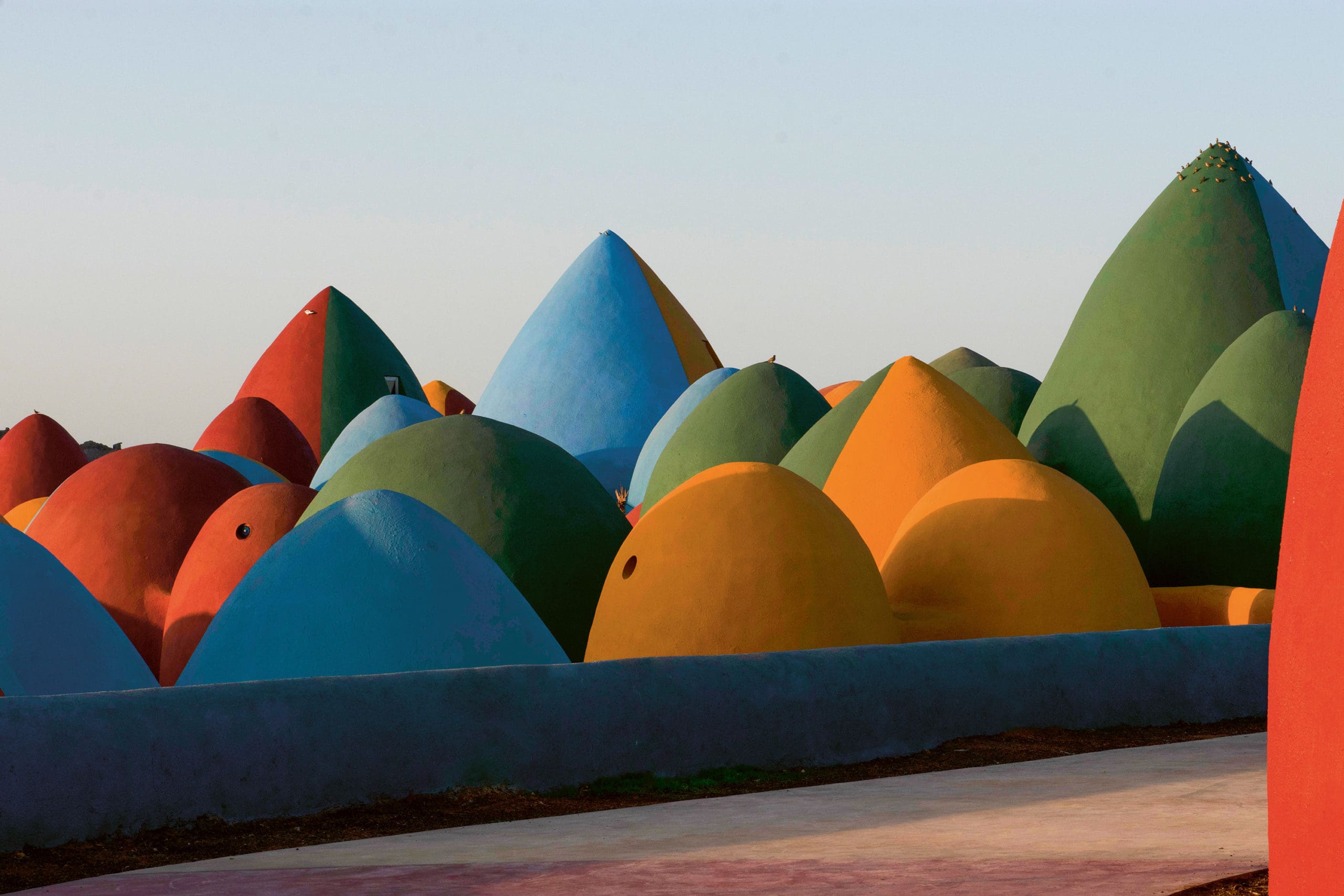
Colorful organic forms have begun to appear on the sparsely populated western shore of Hormuz Island in Iran, rising up out of the island’s distinctive red sand. The initiative of Tehran-based ZAV Architects, the clusters of domed structures—vacation homes, restaurants, cafés and shops—are part of an ongoing project to empower the island’s community while encouraging tourism and investment.
Central to the scheme is superadobe, an innovative building technique that uses local resources and that can be carried out by unskilled workers. Pioneered by the late Iranian architect Nader Khalili in the 1980s, superadobe was developed in response to a call from NASA for proposals for settlements that could be built on the moon. Khalili came up with the idea of filling polypropylene sacks with moon dust, which could be stacked in coils to create walls and domed ceilings. The technique has since been employed everywhere from Nepal to refugee camps in Jordan, using whatever is available locally in the place of moon dust. Plastered and made watertight, the structures have survived earthquakes and hurricanes.
In Hormuz, the superadobe project promises not only to generate new sources of income, it has also given the people there a central role in creating a sustainable future for the island. Though Hormuz shares its name with the strait through which around a quarter of the world’s oil passes—and which has often been a flashpoint between Iran and the West—the small volcanic island has historically been cut off and economically deprived. Now, using sand dredged from the Hormuz dock and the efforts of local people, the project has become a striking and vibrant new archetype for community-led architecture.