BALMING TIGER
- Words Haeryun Kang
- Photo Nikolai Ahn
An hour with the alternative K-pop group.
- Words Haeryun Kang
- Photo Nikolai Ahn
- Stylist Hwayoung Kim
- Hair & Makeup Mahito Ohtani
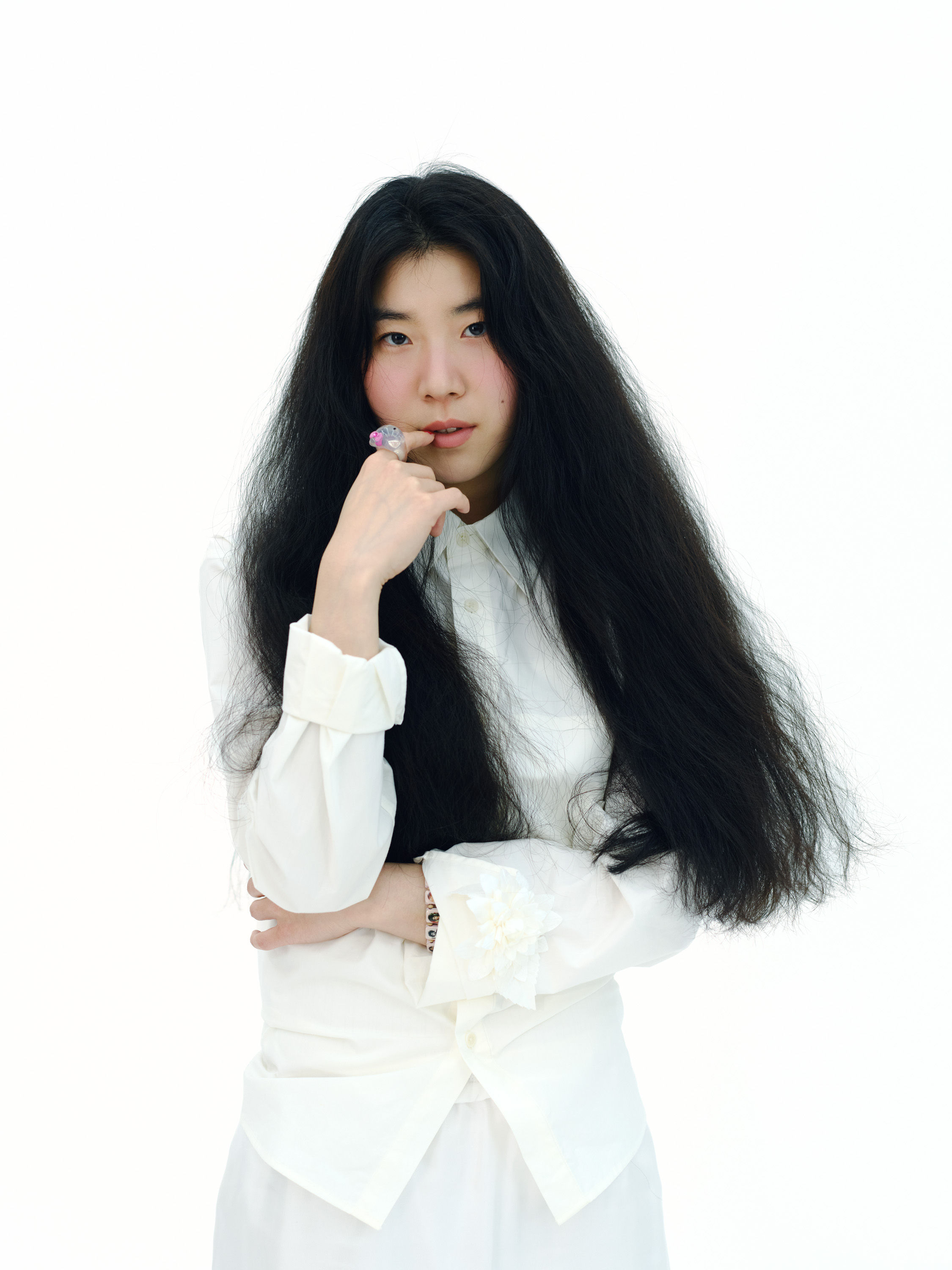
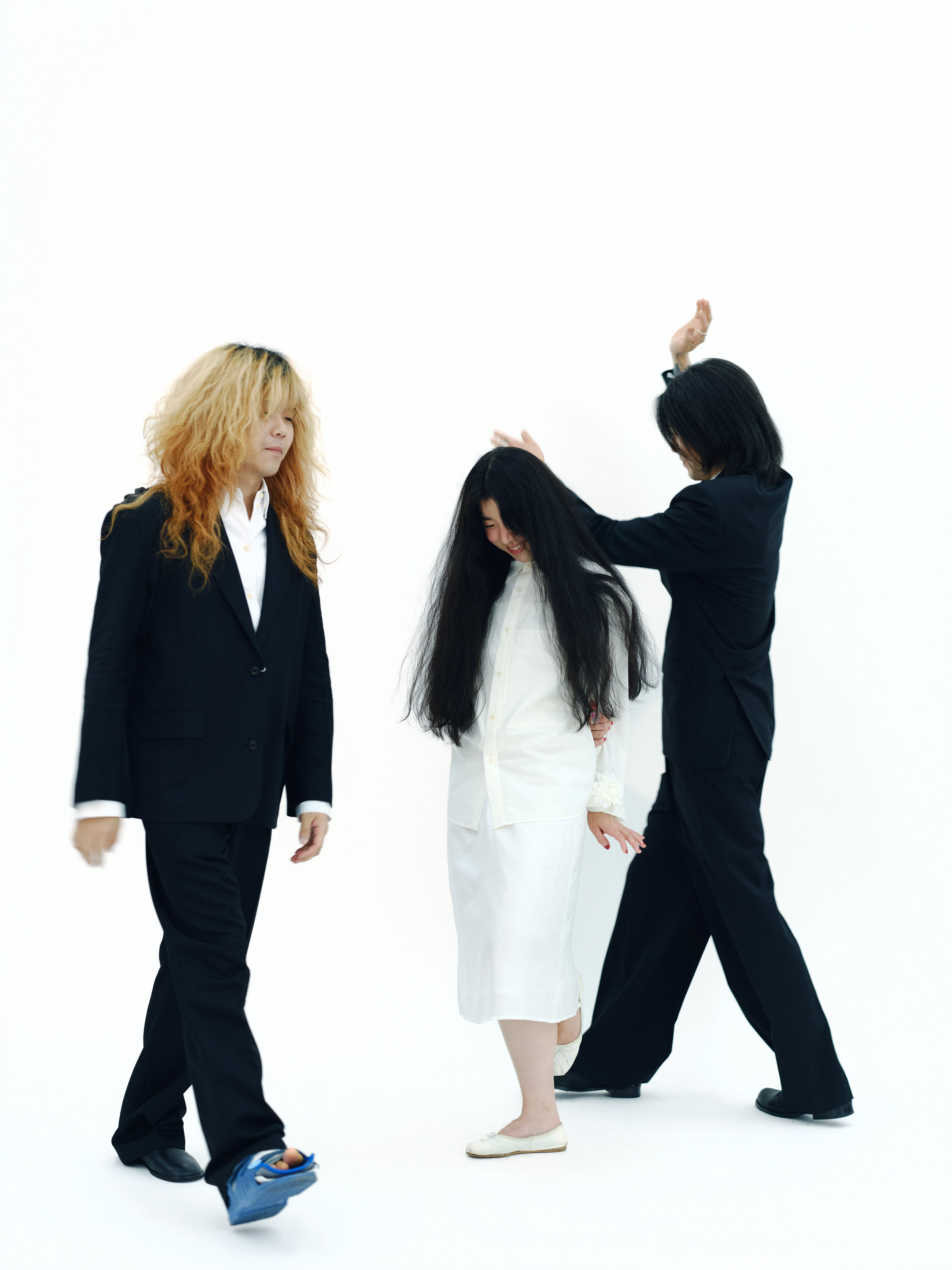
Sogumm wears a shirt by AMOMENTO and a skirt by MEMORY.NYC.
My Zoom interview with Balming Tiger is chaotic. Five of the eleven members are on the call, each in a different location in Seoul. Omega Sapien is at a salon, dyeing his hair green for a music video. Leesuho is munching on a snack with a soda. Unsinkable is strumming a guitar, on mute. bj wnjn is lying in bed in sweatpants. Mudd the Student sits calmly, his long wavy hair dyed like a lion’s mane. There are multiple conversations all happening at once as we wait for the other members, some of whom never show up.
When the interview starts, however, the group is focused and attentive. A self-described “alternative K-pop group” from South Korea, Balming Tiger is composed of two women and nine men. They’ve been described by critics and fans as pioneering, experimental, an artist collective beyond music and, last but not least, “a group of hairstyles that elderly Koreans would definitely hate,” a running joke among fans online. In their two studio albums and a debut mixtape, released in 2018, they sing about alienation, absurdist humor, friendship and love, pigeons and frogs.
“We want Balming Tiger to be its own genre,” says Omega Sapien, a rapper and singer-songwriter, holding up the phone as his hair, now fluorescent green, is being rinsed out in the sink.
Ironically, Balming Tiger’s alternative identity depends on its proximity to South Korea’s best-known cultural export. K-pop, literally Korean popular music, is itself less of a distinctive genre than a cultural phenomenon. Within South Korea, it can refer to a wide variety of styles including ballads, EDM and hip-hop. Abroad, K-pop most often means idols: entertainers whose music and image are strictly produced by massive entertainment conglomerates, such as mega-groups like BTS and Blackpink, or soloists such as Somi and G-Dragon. However you define it, K-pop is a glittering symbol of Korean soft power. The stratospheric success of different Korean musicians in the past decade—especially BTS on the US charts—has catapulted K-pop into a household name everywhere.
“Honestly, we don’t really think about what genre we are, other than during interviews,” says Leesuho, one of Balming Tiger’s producers and video directors.
True as that may be, the label they have chosen—alternative K-pop—is a strategic choice, devised by the group’s founder and creative director, San Yawn. With K-pop’s international popularity, Balming Tiger has smartly positioned themselves as adjacent to something familiar to the global audience—giving themselves a wide playground to try anything and everything.
“It’s always more fun when the possibilities are open,” San Yawn later explains over email. “Whatever we are now won’t be ‘the final version’ of us. We have no idea what we’ll be in the future, but we want to continue to express the little joys of the world in our own language.”
It’s true that the structure of Balming Tiger is wildly different from a conventional K-pop idol act. Idols are usually conceptually defined by an agency, with clear roles differentiating members, for example “lead vocalist” or “lead dancer.” Idol wannabes train, sometimes for years, to audition for a role. Once the group is formed, the performers are the faces of a much larger and more intricate corporate structure.
There were no trainees in Balming Tiger. And no auditions—think more “Wanna join?” conversations at waffle houses and barbecue joints. Nor are all of Balming Tiger’s members performers—their 11 members include producers, photographers, music video directors, A&R managers and DJs. Some faces are more familiar, like those who sing, rap and dance in the music videos (usually Omega Sapien, bj wnjn, Mudd the Student and Sogumm, with cameos by others), but behind the scenes, everything is more collaborative and collective.
Balming Tiger can be seen as less a band with a signature sound than a creative universe, a rainforest of different species colliding and coexisting with each other. From their critically acclaimed debut mixtape, Homie304, to their first studio album in 2023, January Never Dies, to the 2026 album, Gongbu, Balming Tiger’s music defies classification—as does their creative direction. Their videos embrace Hong Kong noir (“SOS”), a ’90s boy band parody (“Big Butt”), and the industrial-era alleyways of the Euljiro neighborhood in Seoul (“Sexy Nukim,” featuring BTS member RM). Their sounds traverse old Korean pop, EDM, psychedelic rock and—of course—hip-hop, many of the members’ first love and forays into music.
“We have our own thing: We’re Balming Tiger, young people living in South Korea, exploring our identities. Doing this is what’s Korean, what’s true to ourselves.”

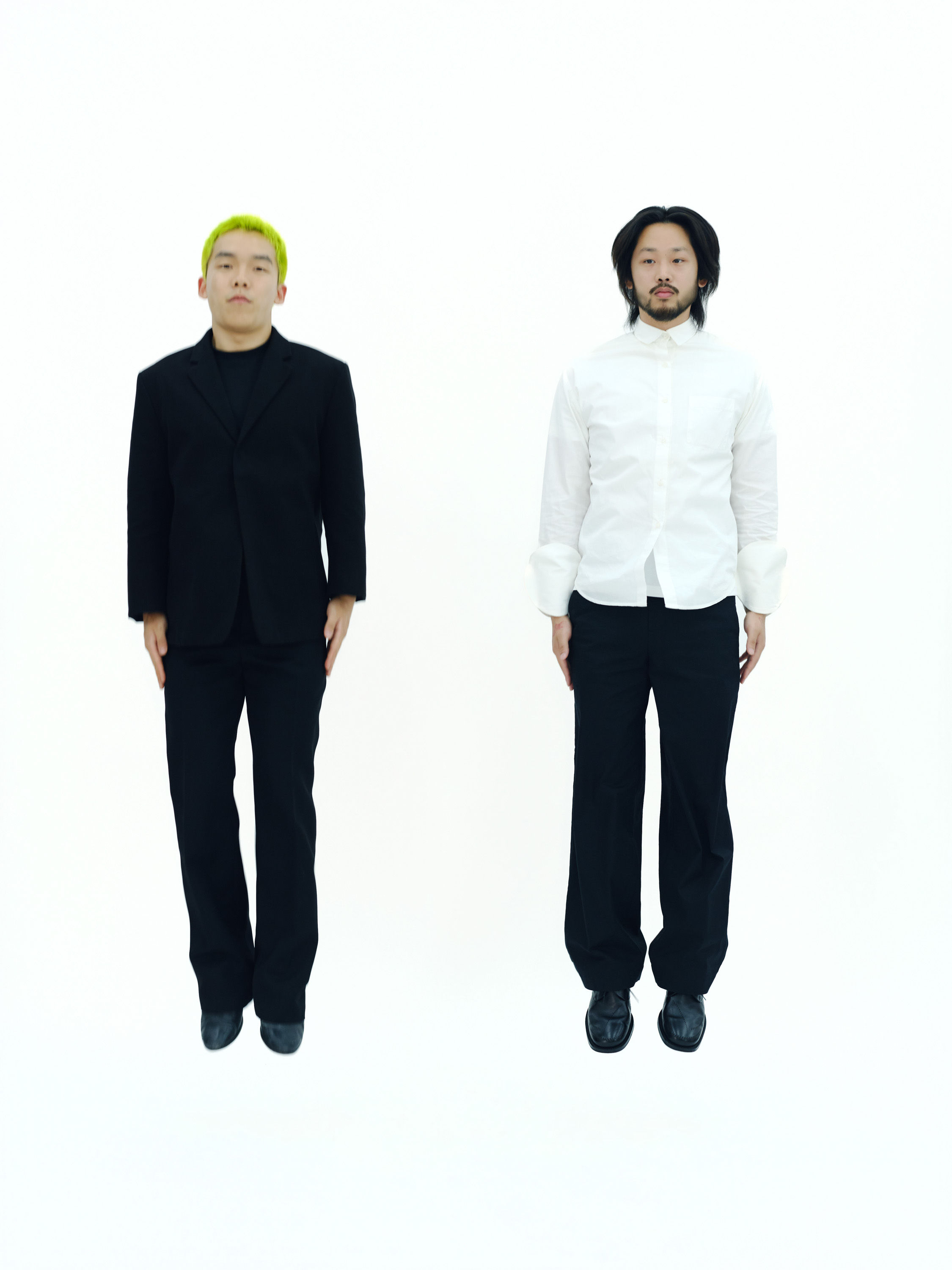
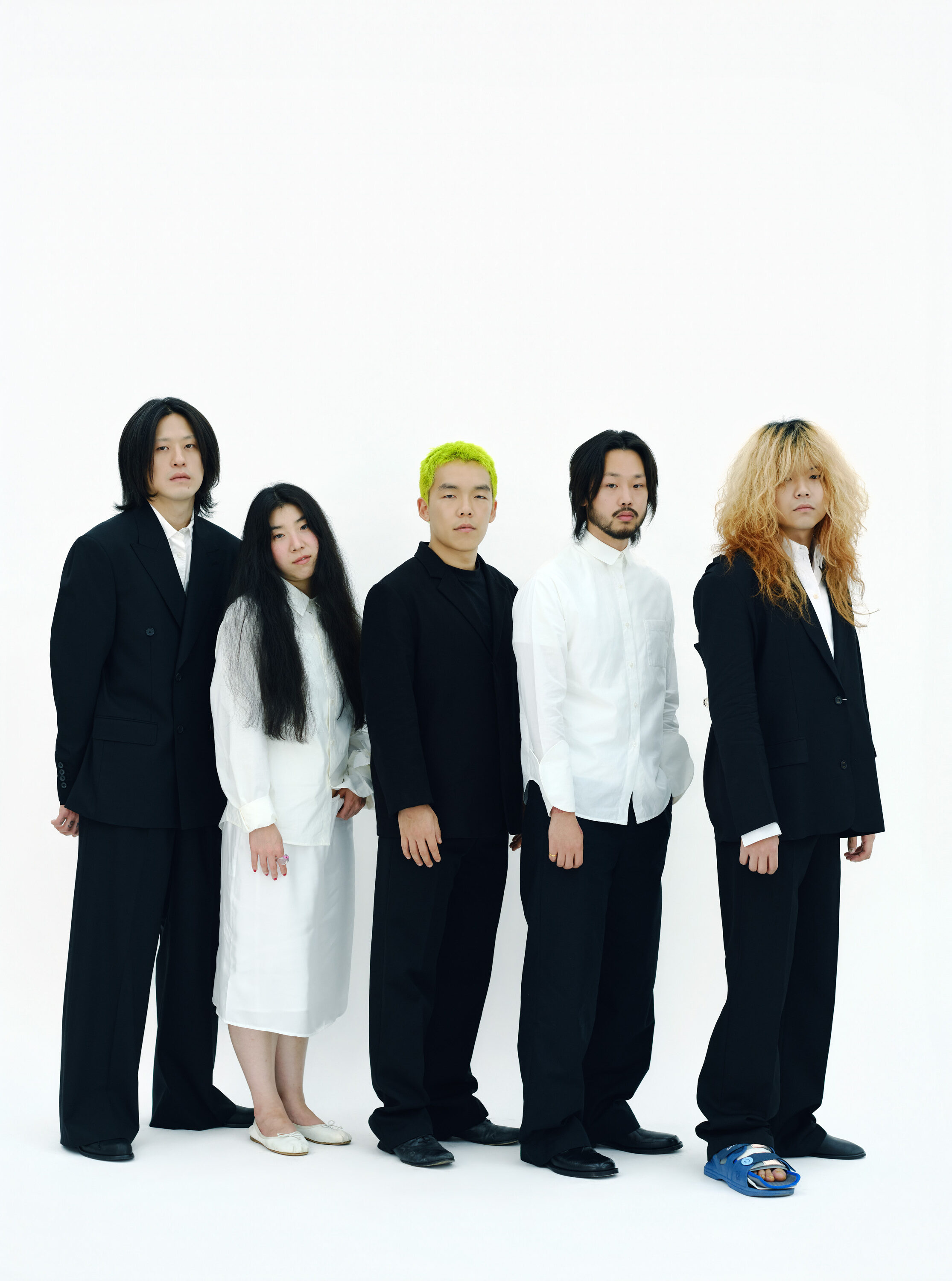
Omega Sapien (left) wears a jacket by POST ARCHIVE FACTION, the stylist’s own T-shirt, trousers by COMMISSION and shoes by ATHOCE. Leesuho (right) wears a shirt by JACQUEMUS, trousers by COS and shoes by POST ARCHIVE FACTION.
The origins of Balming Tiger can be traced to Itaewon, one of the most culturally diverse neighborhoods in Seoul. It’s a place where the city’s only mosque towers over a hill, next to mom-and-pop stores and cockroach-filled villas, the US military base and ritzy alleyways that are home to the Samsung family and BTS members.
“Balming Tiger is basically a meeting of people that are full of holes,” San Yawn once said on the Korean talk show Moneygraphy. These “holes”—loneliness, for instance, and the desire to fill them through music and art—were what brought together this cacophonous collective through a random series of events starting in 2017, when San Yawn began looking for a crew.
They met at San Yawn’s home in Itaewon and spent much of their time together at Trans 201, on the second floor of a run-down villa in an area popularly known as Transgender Hill. The members started connecting in various ways: through friends of friends, an Instagram message, a chance listening to a future member’s SoundCloud account. “Trans 201 was Omega Sapien and bj wnjn’s house,” recalls Mudd the Student. “The space was very damp and full of dark energy.”
“After a heavy rain, the ceiling in my room was bulging with water, like a giant pimple,” Omega Sapien adds. “We had horrible mold problems. bj wnjn and I split the rent, which was like 600,000 won [approximately $400], and I didn’t even have that money, so my older sister helped pay half of my 300,000. It really was an awful time.”
“Not for me,” says bj wnjn, a vocalist, singer-songwriter and producer. “That space is one of the most memorable moments of my youth. Even with the cockroaches and all that noise from the clubs outside, there was a joy particular to that time.”
Memories like this are specific to Balming Tiger, to Seoul, and permeate their art in ways that can’t be manufactured. The evolving members remain consistently curious about their own experiences and the world around them. There have been some member changes over the years, including the exit of Byung Un, a beloved front man in the early years. But the joy—and the DNA—from that early, formative period is still alive, holding everyone together 10 years later. “There’s a childlike attitude that we never lost as a group,” Sogumm, a singer-songwriter and vocalist, says in an email. “A simplicity that feels honest.”
Often, Balming Tiger’s childlike experiments feel much deeper than mere fun and play, resonating like a sharp resistance against the norms imposed by others. Sometimes this critique feels particularly Korean—like in the 2023 music video of “Kamehameha,” where exhausted office workers are forced to drink with their superiors at a hoesik, an after-work company gathering notorious for heavy alcohol consumption. And at other times it feels fantastically delocalized, like in “UP!” where a cashier at a mega supermarket climbs up the mountain of objects he must clear, reaching for the sky.
“It’s different for me,” says Omega Sapien, who grew up in Korea, China, Japan and the US. “I’m not trying to be rebellious. But I do like provoking a sense of discomfort in others. I like creating differences of opinion through what we do.”
“I’m less interested in making others uncomfortable than in creating a sense of wonder,” says Mudd the Student, who is from Busan, down south. “I love art that makes me feel things for the first time. I suppose that can sometimes make people uncomfortable.”
Despite their almost tongue-in-cheek label as alternative K-pop, Balming Tiger is grateful to the K-pop industry for opening doors for other Korean musicians. The group has performed at major music festivals including SXSW in the US, Primavera Sound in Spain and Fuji Rock Festival in Japan. Their creative orbit is similarly wide-ranging: they’ve collaborated with artists including Japanese girl group ATARASHII GAKKO! and RM of BTS, while independently creating content celebrating figures they admire, such as Korean artist Lee Bul and Thai filmmaker Apichatpong Weerasethakul. Their music video with RM, “Sexy Nukim,” remains Balming Tiger’s most viewed, with 20 million views.
“People often think of idols as these puppets, who only do what they’re told,” says Omega Sapien. “But creative languages within the idol industry are changing too. I really love groups like CORTIS. I think their work is raw and fantastic.”
“I’m really interested in girl groups,” says Unsinkable, a producer and DJ. “These days we see groups that are more like crews, with more creative independence from their company. I sometimes wonder if new idol acts are inspired by what we do.”
In Gongbu, Balming Tiger explores themes of Korean and Asian identity. The single “Home” is absurdist and nostalgic, evoking Korean folk music while mixing synthesizers, rap and ritualistic chants. The music video is black and white, reminiscent of a Park Chan-wook film or a Lee Gap-chul photo. It’s inspired by the architecture of Kim Chung-up and the traditional marriage ritual hamjinabi.
“What does it mean to be Korean? To be Asian? When we were younger, we looked up to American hip-hop,” says Omega Sapien. “I wanted to be like J. Cole. But now I see that that’s his thing. We have our own thing: We’re Balming Tiger, young people living in South Korea, exploring our identities. Doing this is what’s Korean, what’s true to ourselves.”
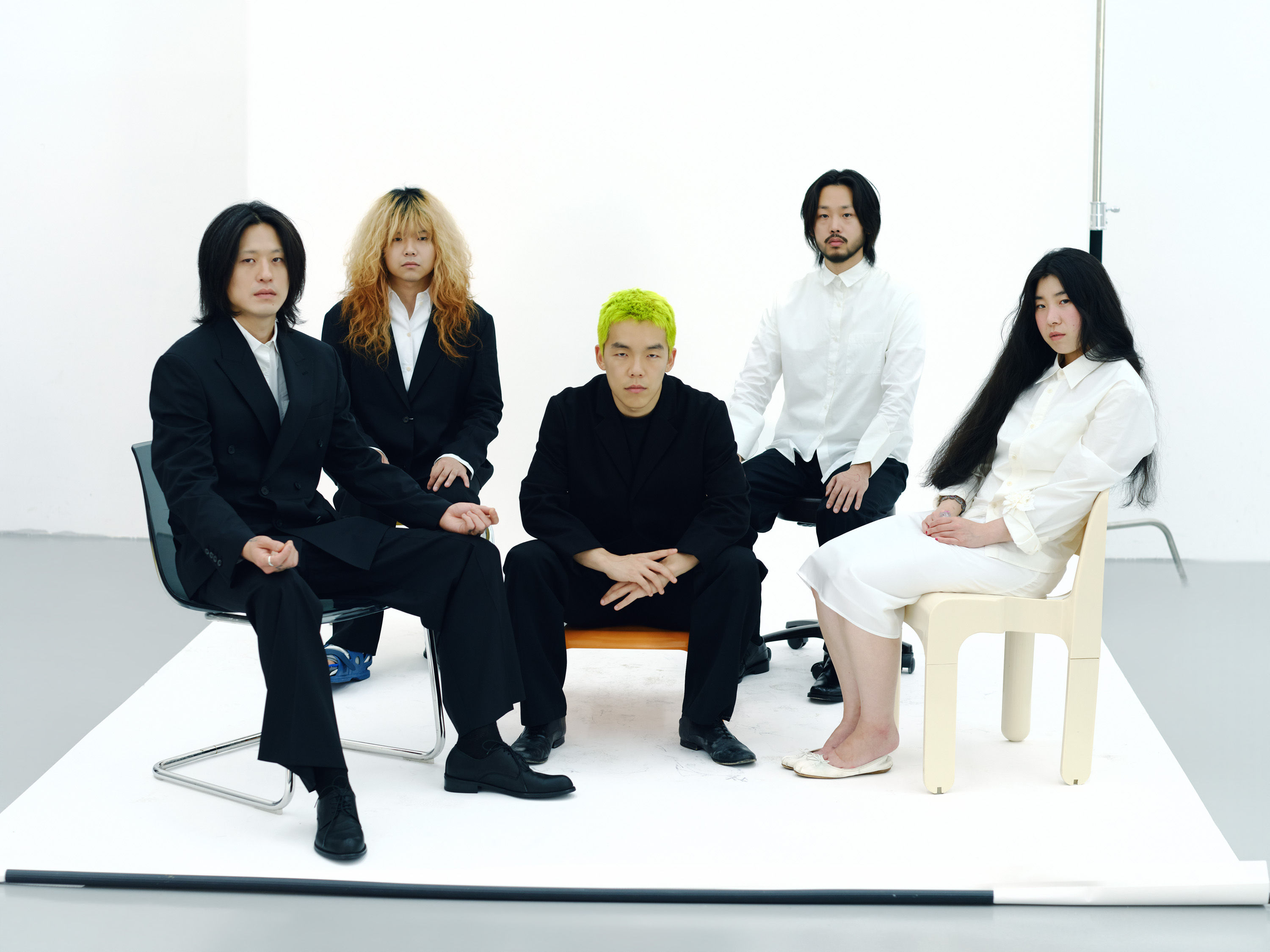
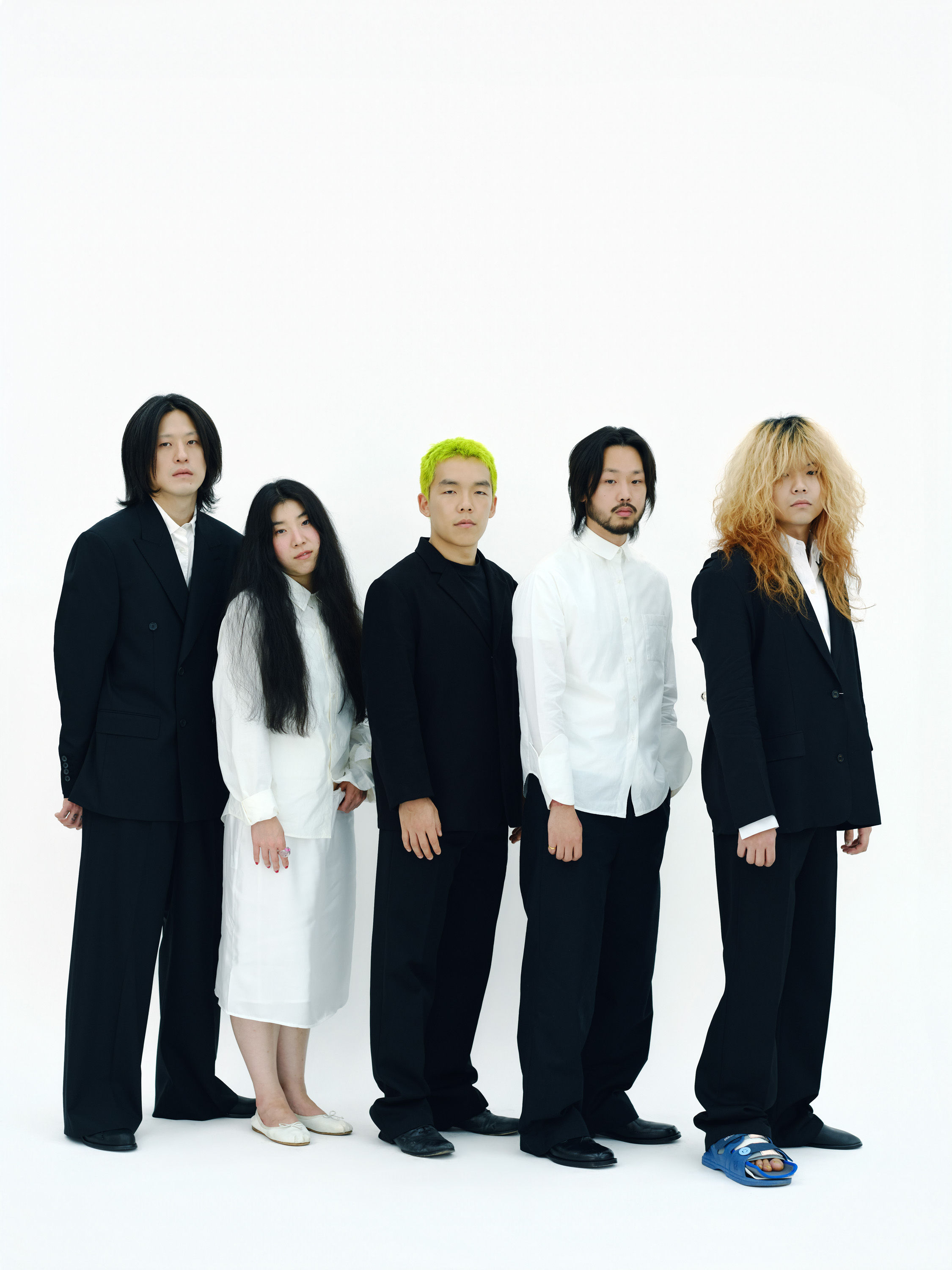
Left to Right: bj wnjn wears the stylist’s own jacket and shirt, trousers by MAISON MARGIELA and shoes by YUJI. Mudd the Student wears a jacket and shirt by YUJI and trousers by PRADA. Omega Sapien wears a jacket by POST ARCHIVE FACTION, the stylist’s own T-shirt, trousers by COMMISSION and shoes by ATHOCE. Leesuho wears a shirt by JACQUEMUS, trousers by COS and shoes by POST ARCHIVE FACTION. Sogumm wears a shirt by AMOMENTO, a skirt by MEMORY.NYC and shoes by MIU MIU.