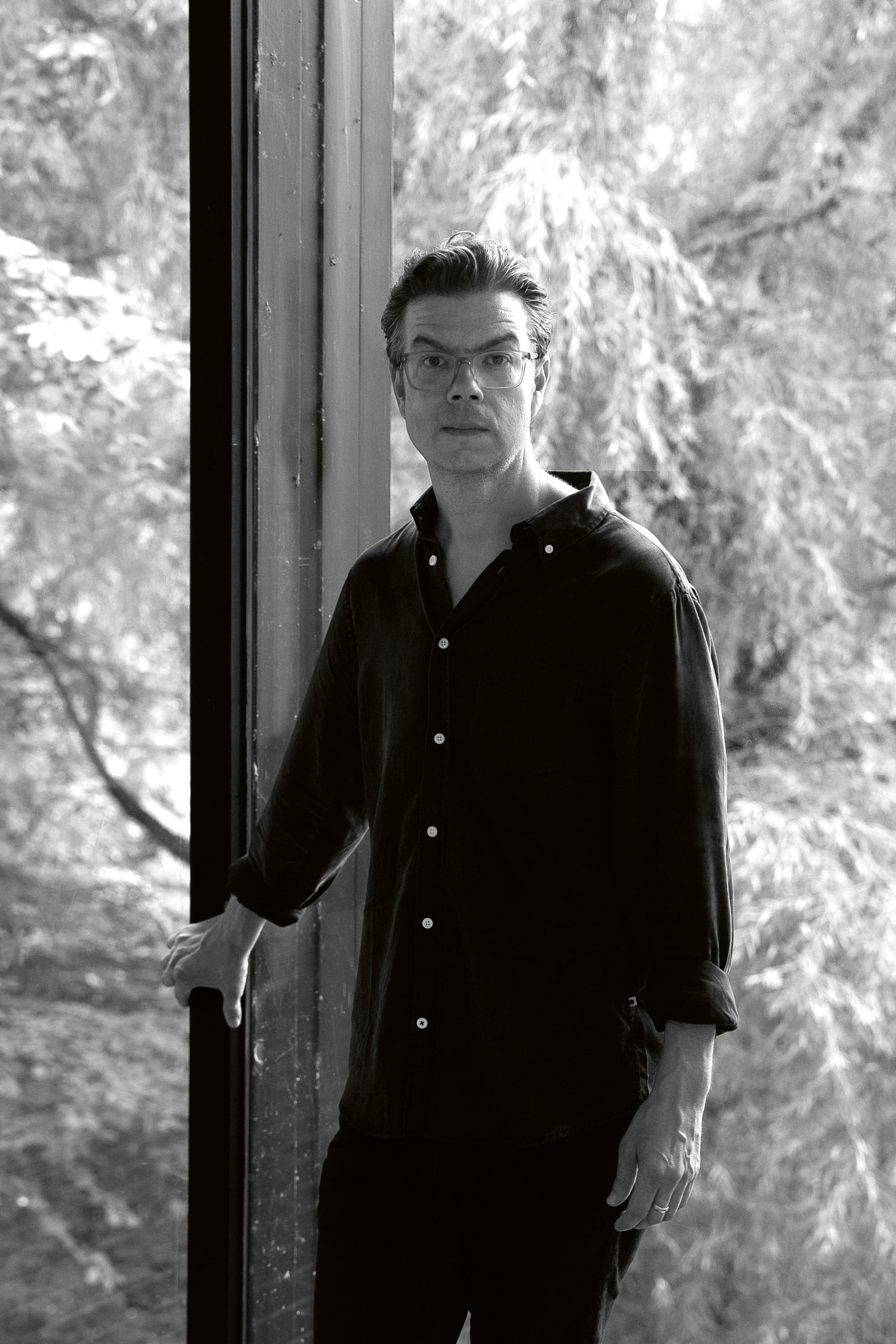
BooksNovelist Ben Lerner reflects on the art—and artifice—of the interview.
BooksNovelist Ben Lerner reflects on the art—and artifice—of the interview.
Ben Lerner—the poet and author of Leaving the Atocha Station, 10:04 and The Topeka School—has long been interested in the blurred lines between fact and fiction. His fourth novel, Transcription, opens with a deceptively simple premise: The narrator drops his phone in the sink, leaving him without a recording device for an interview with his mentor, Thomas, a 90-year-old writer, theorist and filmmaker. What follows is a metafictional, midlife exploration of how our identities and experiences are mediated through art, technology and family.
Natasha Stallard: You’ve described yourself as an “accidental novelist,” and how generative it can be to write in one form and then find it belongs to another. Transcription starts with the form of the interview. Where did the novel emerge from?
Ben Lerner: There’s a moment in the dialogue with Thomas where they interrupt each other and the lines almost start to form a poem out of the fragments of their speech. I had written a few experimental dialogues, and I was interested in that phenomenon—the way a poem could form out of the rapid juxtaposition of two speakers.
But there are many different points of origin. I interviewed a hero of mine, the poet Rosmarie Waldrop, for The Paris Review. As with many publications, you have a long conversation and it’s edited a lot—you move things around and you add things later. I was struck by how I’d had this emotionally intense experience of interviewing this elder woman who I love, and then there was this document. The document had its own kind of authenticity, but it was less and less an actual transcript of the experience.
NS: The Paris Review format is interesting because they’re quite open in the introduction about how interviews take place over various conversations and have been edited and revised.