- Words Ali Morris
- Photos & Set Design Fei Yang & Weiyu Lin
Clean Surfaces
- Words Ali Morris
- Photos & Set Design Fei Yang & Weiyu Lin
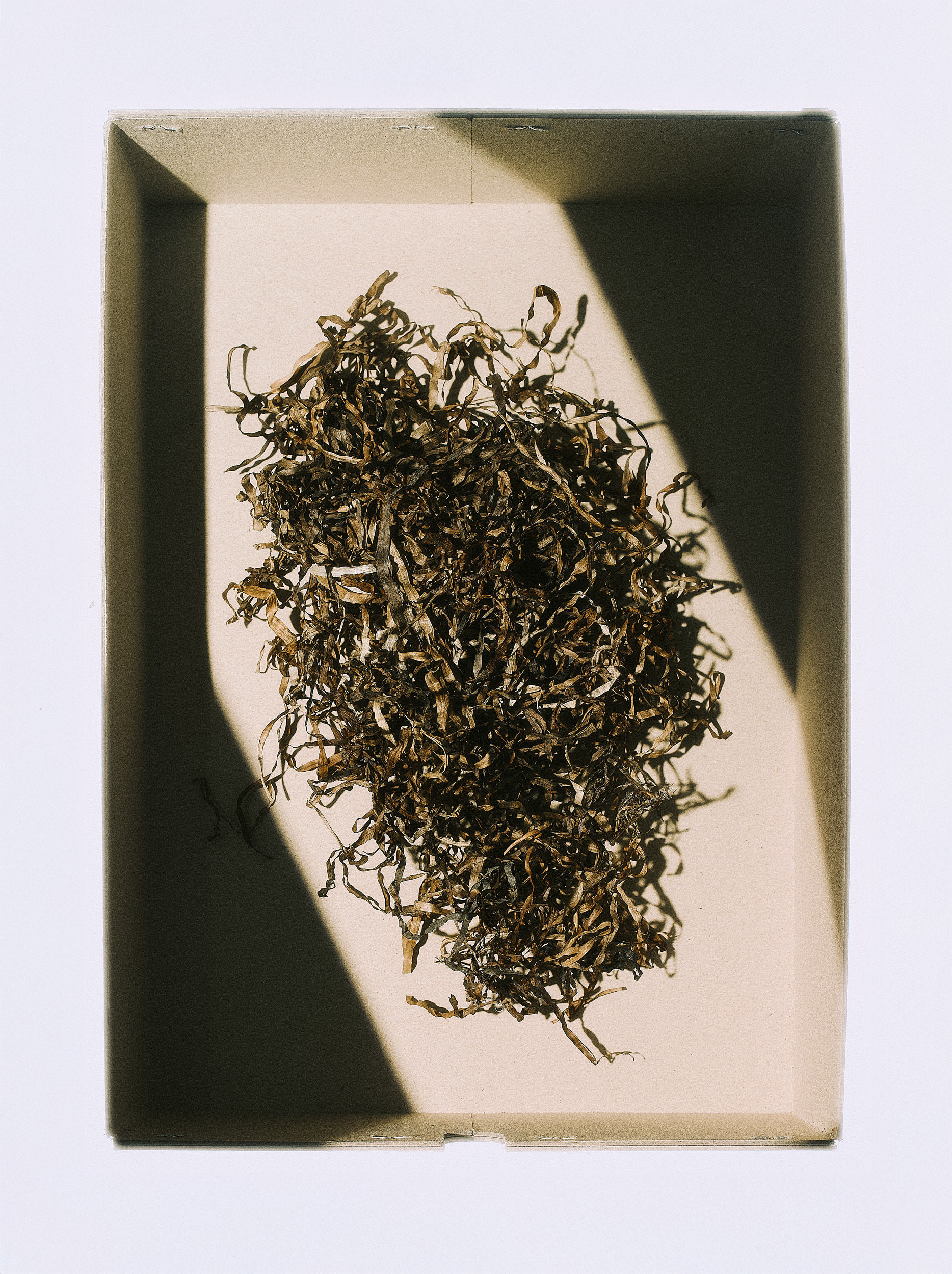
Søuld is a portmanteau of the Danish words for “sea" and “wool." As Øhrstrøm explains: “I often say that our material should feel like petting an animal. After all, why should a material be hard and unpleasant to approach? And at the same time, our material maintains a strong connection to where it comes from—so Søuld."
Søuld’s panels are used for acoustic control, insulation, regulating humidity and fire-resistant cladding. Rather than being a “brown mass" like many bio-materials, Søuld's panels keep the texture of the eelgrass visible.
SØULD:
EELGRASS PANELS
INSPIRED BY DENMARK'S
THATCHED ROOFS.
On the Danish island of Læsø, 12 miles off the northeast coast of Jutland, stand black-and-white timber-framed houses with thick thatched roofs that look as though they’ve been lifted from a Tolkien novel. On closer inspection, the thatch isn’t straw but silvery eelgrass gathered from the island’s shores and piled high to form the distinctive roofs. The technique, which has existed for more than 300 years and is unique to the island, was nearly lost after a fungal disease wiped out much of the island’s eelgrass in the 1930s. Today, just 36 seagrass-roofed houses remain.
Søuld is a portmanteau of the Danish words for “sea" and “wool." As Øhrstrøm explains: “I often say that our material should feel like petting an animal. After all, why should a material be hard and unpleasant to approach? And at the same time, our material maintains a strong connection to where it comes from—so Søuld."
Søuld’s panels are used for acoustic control, insulation, regulating humidity and fire-resistant cladding. Rather than being a “brown mass" like many bio-materials, Søuld's panels keep the texture of the eelgrass visible.