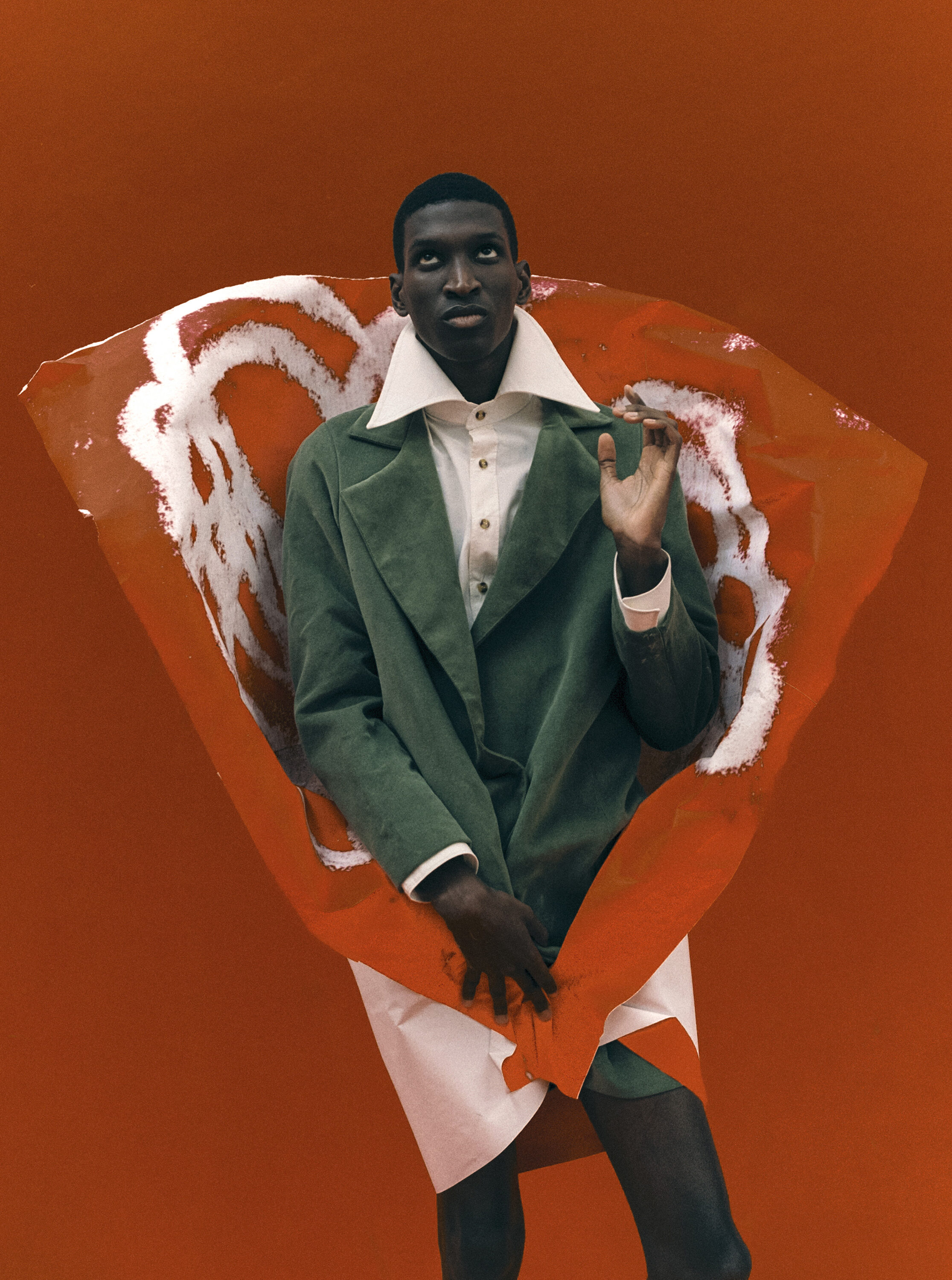
Eric Nam A reeducation in K-pop from one of its brightest stars.

Eric Nam A reeducation in K-pop from one of its brightest stars.

  • Words Gabriele Dellisanti

1. The global image of K-Pop is maturing. BTS, arguably the biggest boy band in the world, announced a surprise collaboration earlier this year with renowned British artist Antony Gormley. As part of Connect BTS, a global art initiative, the band commissioned Gormley’s work New York Clearing—an immersive installation of tangled aluminum tubing on New York City’s Pier 3.

2. A recent spate of suicides among South Korean musicians has brought the spartan regimens and dark underbelly of the K-pop industry to light. “Theirs is a profession especially vulnerable to psychological distress,” Lee Hark-joon, co-author of K-Pop Idols: Popular Culture and the Emergence of the Korean Music Industry, told The New York Times in 2019.

Before debuting his first single in 2013, Atlanta-born Eric Nam worked in New York City at a local consulting firm. Scared by the prospect of settling down, he decided to give singing a go. “I kept thinking, Can I be experimental and pursue my passions and dreams? So I took a year off,” he says. When he made it to the top five in one of South Korea’s leading talent shows, he moved to Seoul where he was hailed as one of K-pop’s most promising solo acts. On the phone from his apartment, he explains how a lack of Asian stars in the US brought him to South Korea, and what it means to be a solo K-pop artist in an industry dominated by sharply choreographed groups.

Did you grow up knowing you wanted to become a singer?
I think it’s one of those things you always know you want to be, but to me, probably like to many others, it always felt like a naive aspiration. I never really thought that it could happen.

Why were you doubtful that you could make it?
I grew up never seeing an Asian face on TV or film, so why would it be acceptable for me to do music? I think people only dream of what they can really envision. For music in particular, the only place I saw any Asians was in Korea or when I would rent VHS tapes to watch Korean TV shows. 

Do you think the situation has improved since?
Even to this day, there are very few Asian acts in the US. I hope that when the next 13-year-old Asian Justin Bieber looks at the world and asks if they can do this, they can see people like me or bands like BTS and think, Yes, let’s give it a shot.1

Do you define your music as K-pop?
If you look at the definition of K-pop, it is popular music that is made in Korea. But the Western perception of it is 13 guys with purple hair wearing pink jackets, all dancing and looking the same. And it’s funny because I think my music is nothing but American pop sung in Korean. Here people listen to my music and would never call it K-pop—they just say it sounds incredibly American! [When I first moved here] I could barely speak Korean, meaning that I spent a good half of my time feeling like an idiot because I didn’t know what was going on.  

What’s your experience of the industry been like?
Unfortunately, in the West there is a negative perception of the industry as a machine. It is not perfect, but in my experience in Korea the craft is taken incredibly seriously; [there’s] a work ethic that is part of the culture. And it is this work ethic that has oftentimes been characterized as very negative.2 [But] I know for sure that for my friends in the US music industry, the reality isn’t any better.

1. The global image of K-Pop is maturing. BTS, arguably the biggest boy band in the world, announced a surprise collaboration earlier this year with renowned British artist Antony Gormley. As part of Connect BTS, a global art initiative, the band commissioned Gormley’s work New York Clearing—an immersive installation of tangled aluminum tubing on New York City’s Pier 3.

2. A recent spate of suicides among South Korean musicians has brought the spartan regimens and dark underbelly of the K-pop industry to light. “Theirs is a profession especially vulnerable to psychological distress,” Lee Hark-joon, co-author of K-Pop Idols: Popular Culture and the Emergence of the Korean Music Industry, told The New York Times in 2019.

You are reading a complimentary story from Issue 38

Want to enjoy full access? Subscribe Now

Subscribe Discover unlimited access to Kinfolk

  • Four print issues of Kinfolk magazine per year, delivered to your door, with twelve-months’ access to the entire Kinfolk.com archive and all web exclusives.

  • Receive twelve-months of all access to the entire Kinfolk.com archive and all web exclusives.

Learn More

Already a Subscriber? Login

Your cart is empty

Your Cart (0)