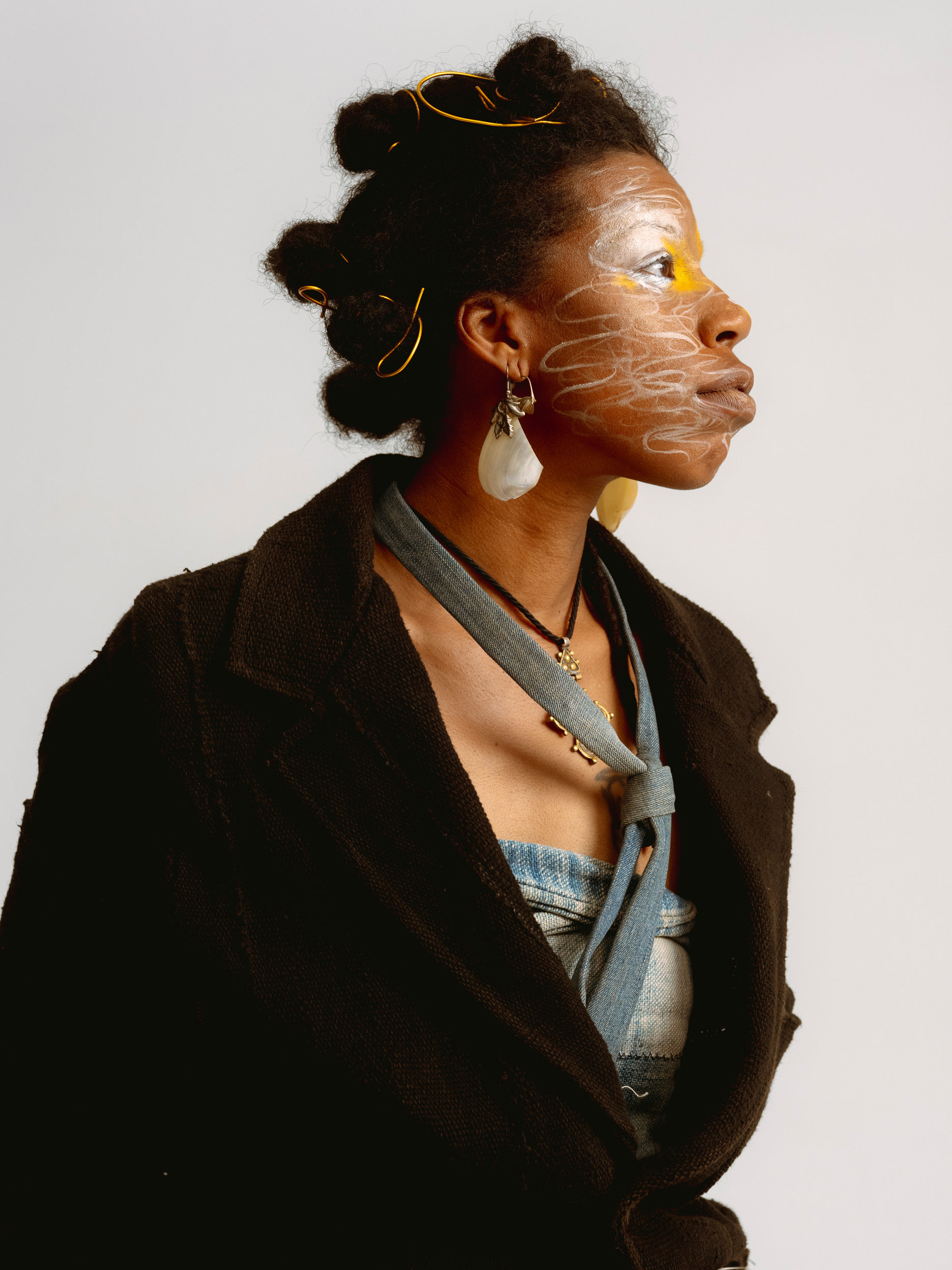
- Words Sala Elise Patterson
- Photos Julien Sage
- Styling Bebe LaMonica
GEORGIA ANNE MULDROW
Some appreciation for a musical superpower.
- Words Sala Elise Patterson
- Photos Julien Sage
- Styling Bebe LaMonica
- Hair & Makeup Risha Rox
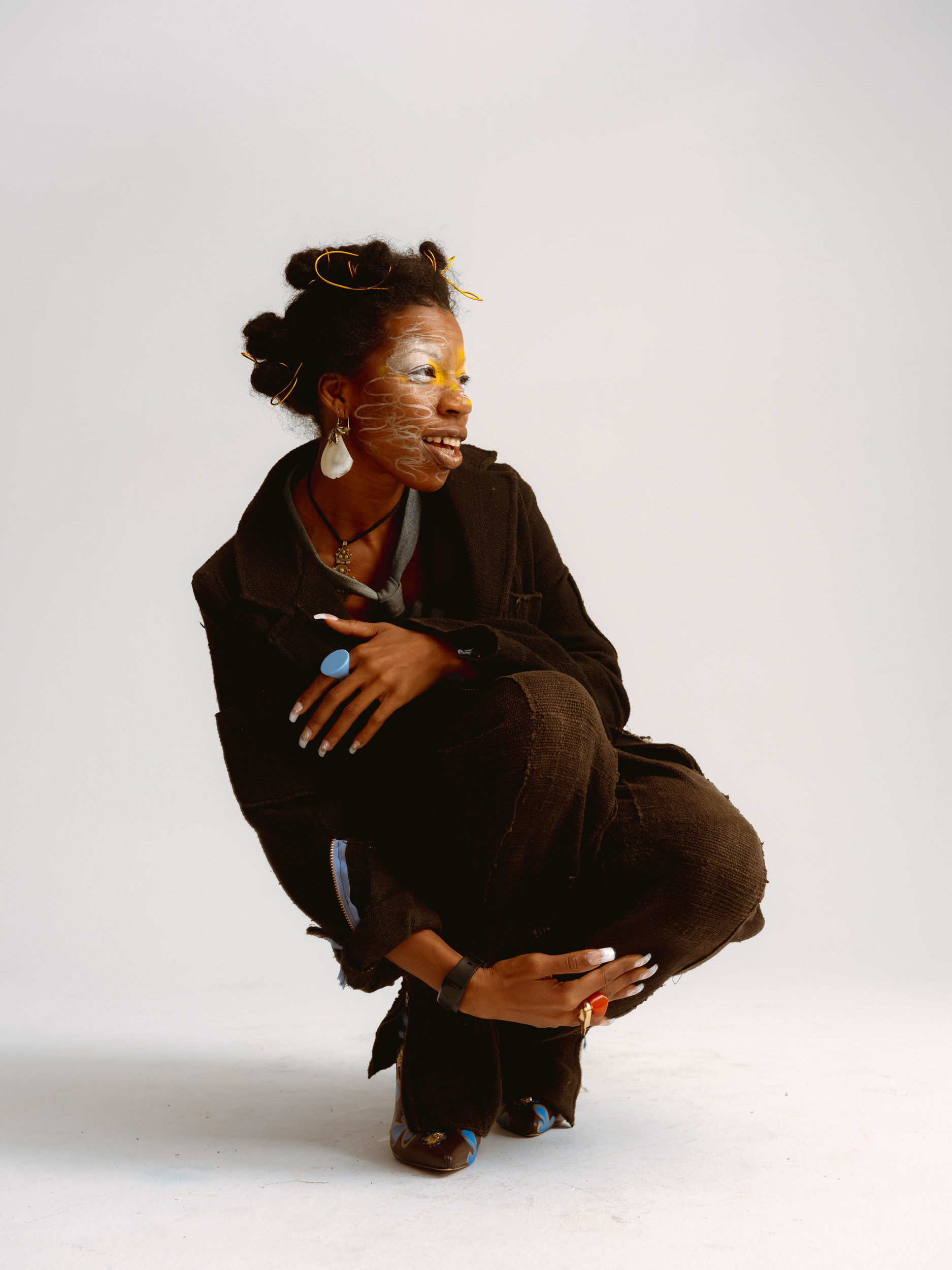
Muldrow wears a suit and trousers by NEHEMIAH DAVIDSON, a vintage kimono and bespoke boots by LONDYN KYLE.
Even if you’ve never heard of vocalist and producer Georgia Anne Muldrow, you’ve probably heard her music. Perhaps on one of the collaborations she’s done with Erykah Badu, Blood Orange, Robert Glasper or Mos Def; or maybe a track from one of the 21 albums released since her daring debut, Olesi: Fragments of an Earth in 2006; or else one of the many albums she produced for SomeOthaShip, the independent record label she created with her former husband, Dudley Perkins, in 2008.
Born and raised in 1980s Los Angeles, Muldrow is the daughter of vocalist Rickie Byars and guitarist Ronald Muldrow. Every morning as a child, she woke to her father interpreting John Coltrane’s “Giant Steps” in a way that matched his mood that day. By the time she was a teenager, she was revered in LA’s progressive underground scene for doing her version of the same: constructing vibes and whole universes with her music.
Since then, she has built a practice that glides between genres (soul, funk, R&B, hip-hop, free jazz) and roles (beatmaker, instrumentalist, singer, rapper, label owner, songwriter). Fellow musicians respect what’s been called her “abstract production and writing style.” Listeners love her heavy-hitting beats and zest for life. She has become a beacon of positivity in an often-dark industry, even more so after finding God and being, as she says, “saved and delivered onto the path of a surrendered life” in 2020.
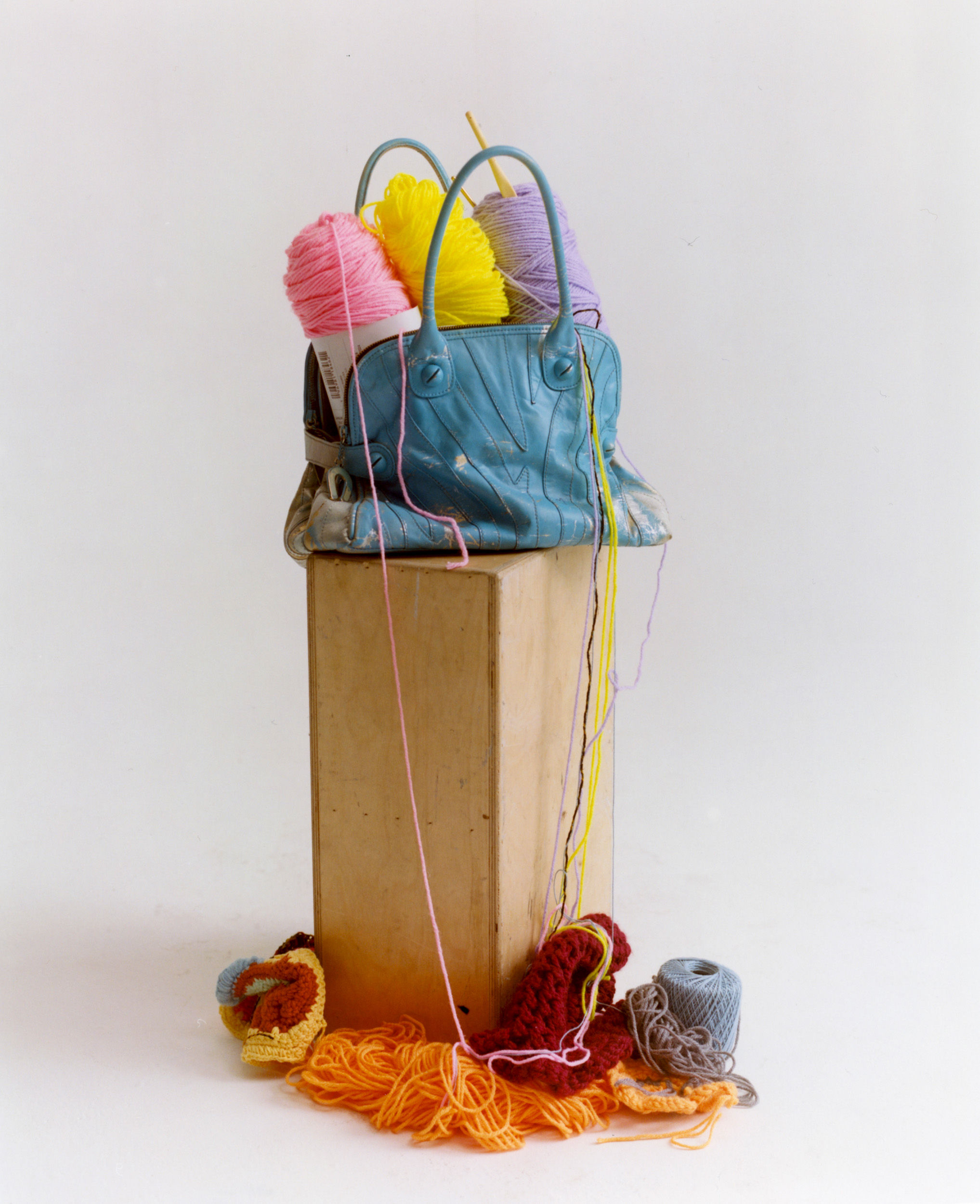
Earlier this year, Muldrow took a break—surrounded by skeins of yarn, records and books—to talk about her beloved hometown, its Black community and the music that flows through her as a “child of God.”
Sala Elise Patterson: How did you become the creative force you are today?
Georgia Anne Muldrow: Through my community. In my childhood, I was keyed into really hard by the Garveyites of LA. The first time I ever had honeydew melon was sitting on Queen Mother Moore’s lap. She was good friends with Sister Lola Coleman, the midwife who birthed me; I first heard rap music at a children’s program she ran called African Minds United. I learned how to be a poet through the Anansi Writers Workshop in Leimert Park. And I learned how to be a confident performer from playing at church and going to jam sessions with my big brothers. That care and community is very potent.
SEP: Spiritually, you have talked about drawing on God’s love. What do you draw on musically?
GAM: I am a diaspora nerd. I can go from singing a phrase from Larry Blackmon to one that is Celia Cruz and in the next bar I’m singing like Busta Rhymes: I can be inspired by loving all my people. It brings a new sound out of me. It’s not me being in control, it’s me being a hopeless romantic about our culture, about our institution, about our village.
SEP: Your parents are musicians—was it inevitable that you would become one?
GAM: It’s got everything to do with them, even though I had to turn a certain age before my father and I could have a conversation about music. The same thing with my mom. I had to live some life first. I didn’t get my first vocal lessons until I was 32. But because both of my parents are musicians, music is my first language.
SEP: Besides “Giant Steps,” what music made up the soundtrack to your childhood?
GAM: At my mom’s house, it was Salif Keita, Djavan, Dianne Reeves, James Brown, Mahalia Jackson, Curtis Mayfield’s The Anthology, Quincy Jones’ Back on the Block. That record made me say, I want to do that.
SEP: What was it like growing up in LA?
GAM: Beautiful. I am a big walker. I even hike up La Brea where it looks like a freeway, going to the music stores, buying local music, selling my music. But my favorite thing about LA is the trees and how vocal they are. I have lived in New York and Vegas, but I love LA because it’s home.
“I hope in my lifetime that my music sounds like people being fed, like shelter, like healing.”
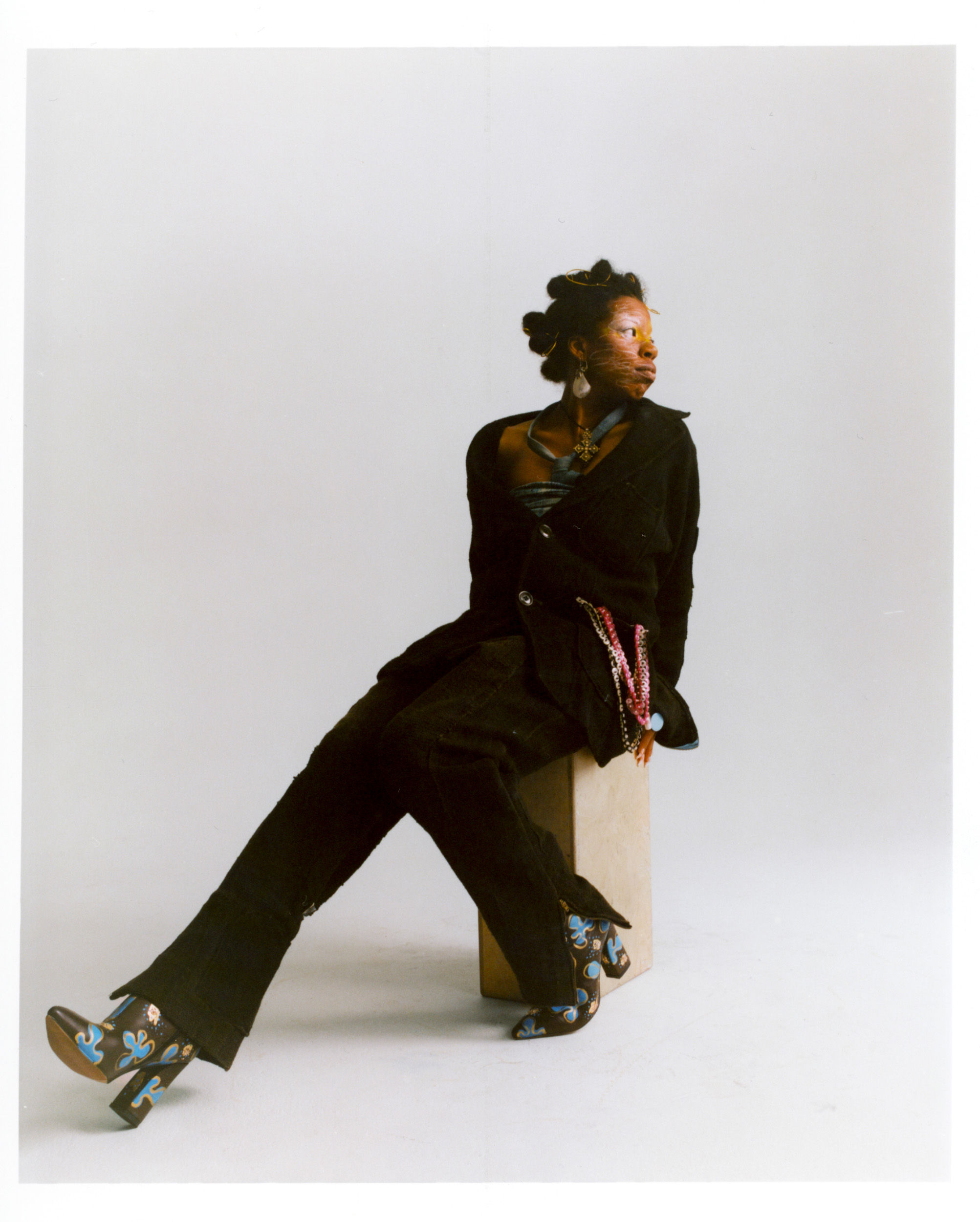
Muldrow wears a suit and trousers by NEHEMIAH DAVIDSON, a vintage kimono and bespoke boots by LONDYN KYLE.
I’M STRETCHING TOWARDS A HIGHER STANDARD OF MUSICIANSHIP.
SEP: What are you most excited about in the music scene there right now?
GAM: The best things are happening with those who understand that we’ve got to contend with our mastery as musicians, and one way to do that is by fiercely loving and spiritually supporting each other—cooking for one another, breaking bread, being in community, finding small excuses to get together and share ideas, and being in fellowship together. I’ve been able to enjoy the most earnest, heartfelt, sentimental discussions about what’s actually still possible, about how it’s not over till it’s over.
SEP: It seems like collaboration is baked into your approach to making music even though that’s not the norm in the music business.
GAM: I don’t understand that. I’m like, Ain’t you ever heard Wu-Tang? If you’ve ever heard a group of people float and dance over a song with their lyrics, it’s because everybody’s holding a piece of the thing. It makes the structure stronger. It makes the words more potent.
SEP: What is your creative process?
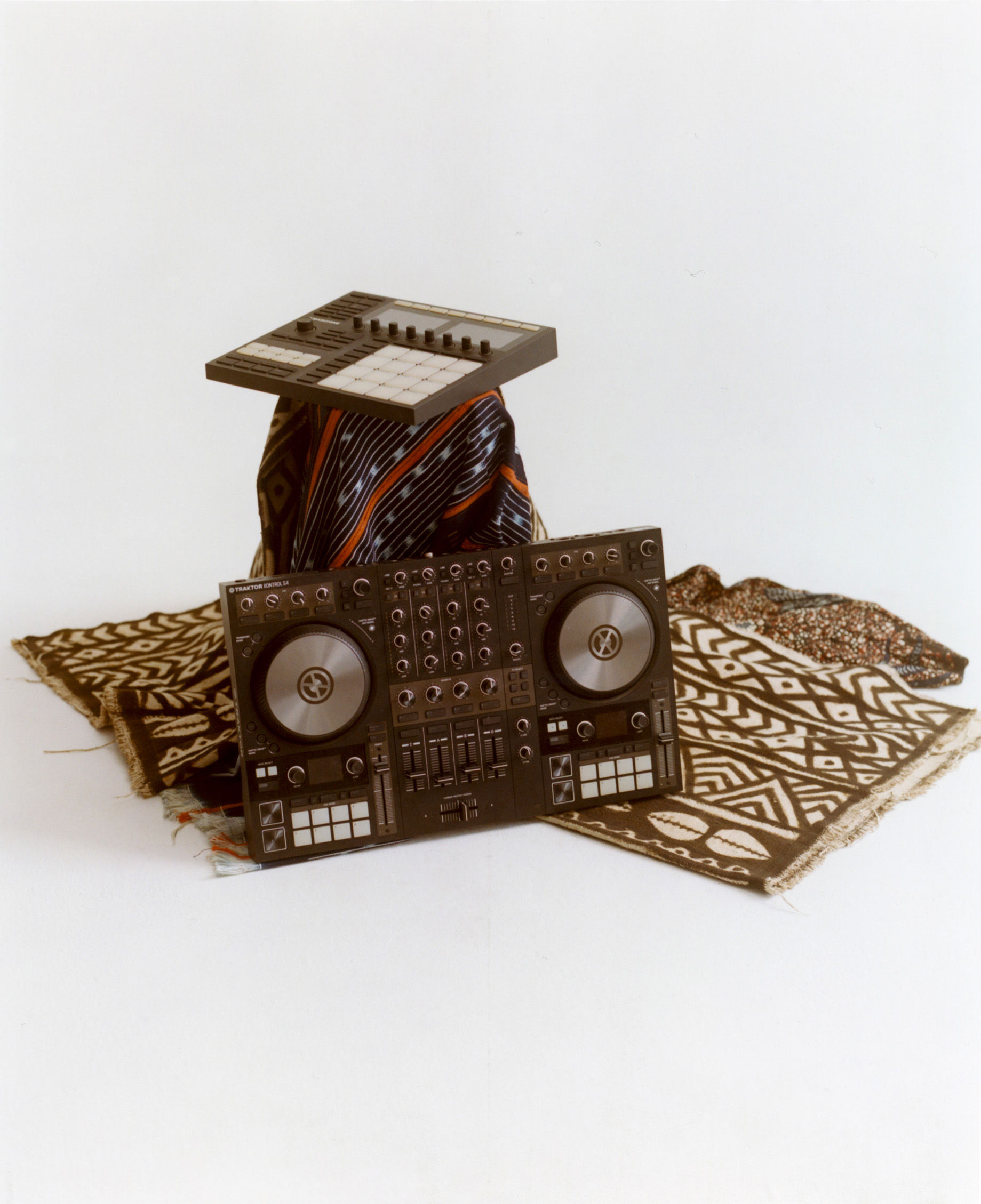
GAM: My whole relationship with music production is like tracing paper. The songs are complete, it’s just God coming through me and my computer. It’s me in a trance, looking at heaven, hearing finished music and then tracing it to the song. It’s such a generous gift, and I feel blessed to be able to explore those terrains, to study what’s coming through instead of thinking about what works commercially.
SEP: How do you know when a song is complete?
GAM: I know when I start to turn a knob and the music sounds worse. It’s like, Why did you turn that? Just stop before you oversalt the food. The song is done when the toil introduces itself.
SEP: Which living musicians do you admire?
GAM: My mom is my number one inspiration. Saul Williams is an apostle—he helped me as a teenager to be confident in my punk rock. Meshell Ndegeocello. Marshall Allen, who put out his debut record at 100 years old. Bilal, another big brother of mine. Joan Armatrading—I love her latest record; there’s stuff on there that’s absolutely brilliant. She’s always stretching towards something.
SEP: What are you stretching towards?
GAM: I’m stretching towards a higher standard of musicianship. If you are watering the seeds of potential within our community, then the music will have more in it than what capitalism has to offer. The reason I take breaks from the conventions of the music business is because the transactional aspect of it cheapens it. I love music. I love to perform music. But I don’t want to just go play the concert and leave. I want to leverage that airplane ticket to go do something free in a city. I hope in my lifetime that my music sounds like people being fed, like shelter, like healing. Because that is what I belong to—the tone of the sum of life, with love as the navigational equipment. Ultimately, I am stretching for maturity.
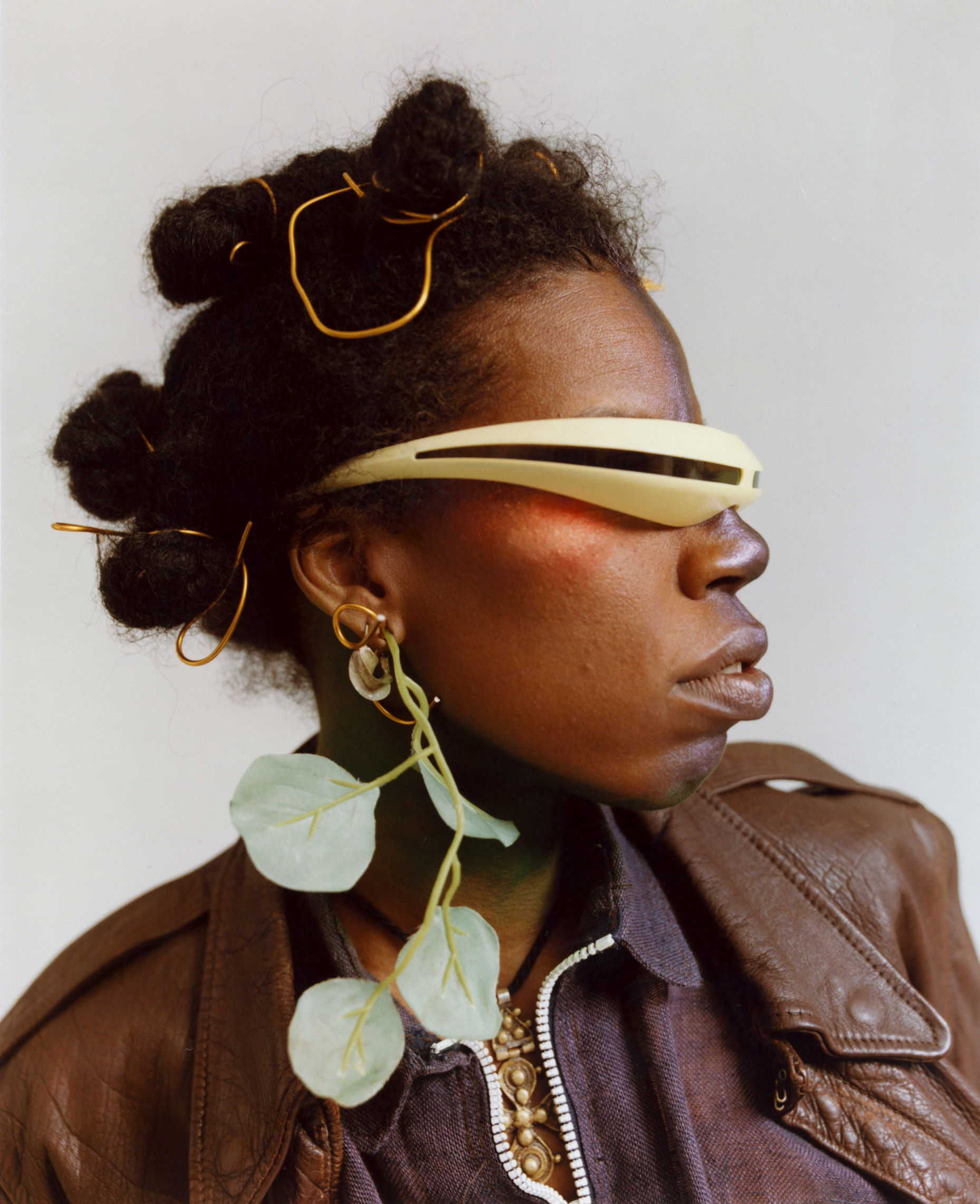
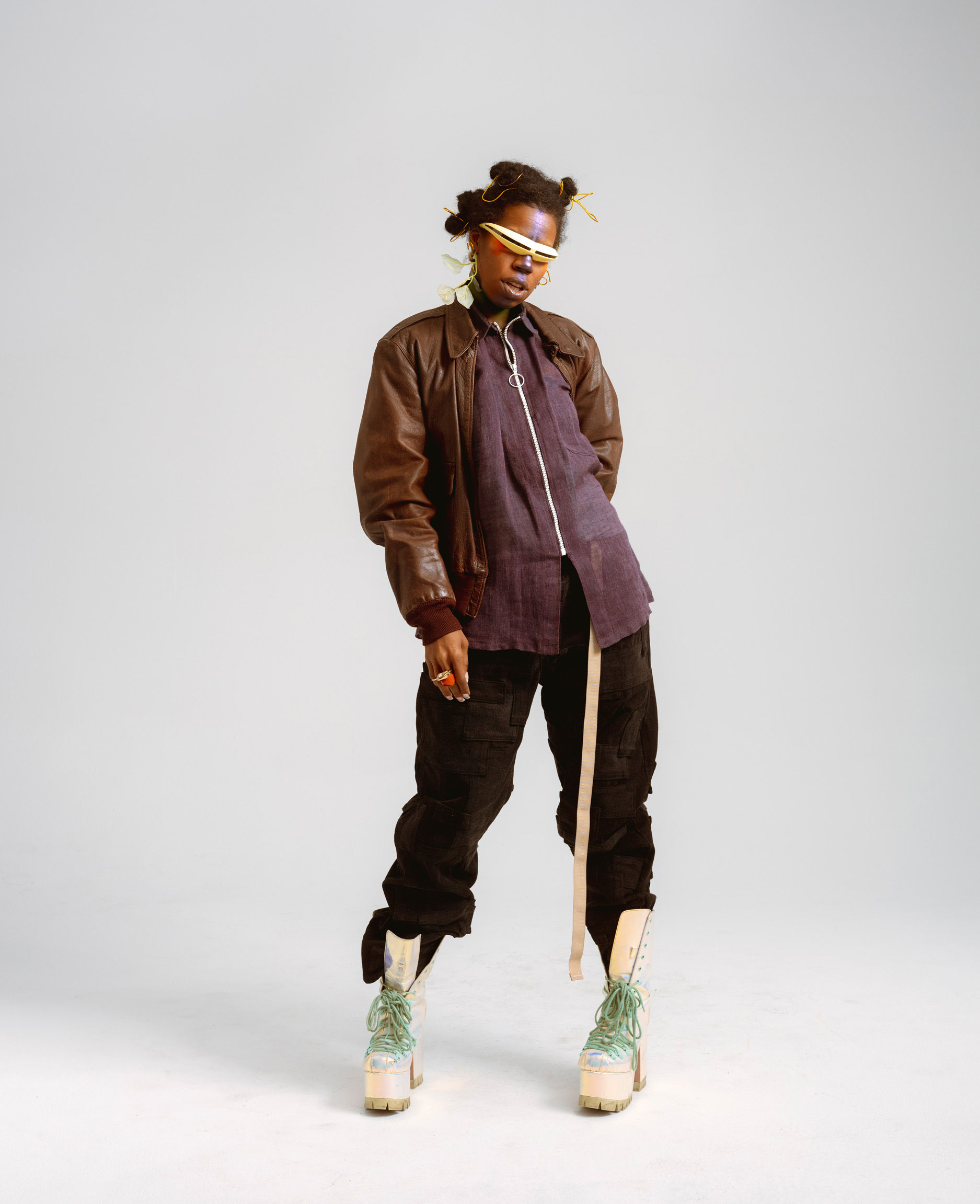
Muldrow wears a vintage jacket, a shirt and trousers by NEHEMIAH DAVIDSON, boots by DOLLS KILL and vintage sunglasses.