Hella Jongerius The industrial designer on style at every scale.

Hella Jongerius The industrial designer on style at every scale.

  • Words Nana Biamah-Ofosu
  • Photography Nick Ballón

( 1 ) Jongerius’ work as Vitra’s director of colors and materials is part of a concerted effort to step off the design conveyor belt of constantly manufacturing new objects. As she told Dezeen in 2014, “Why make new stuff every year?… Vitra has great stuff. It needs me on another level, and that is what I find interesting.”

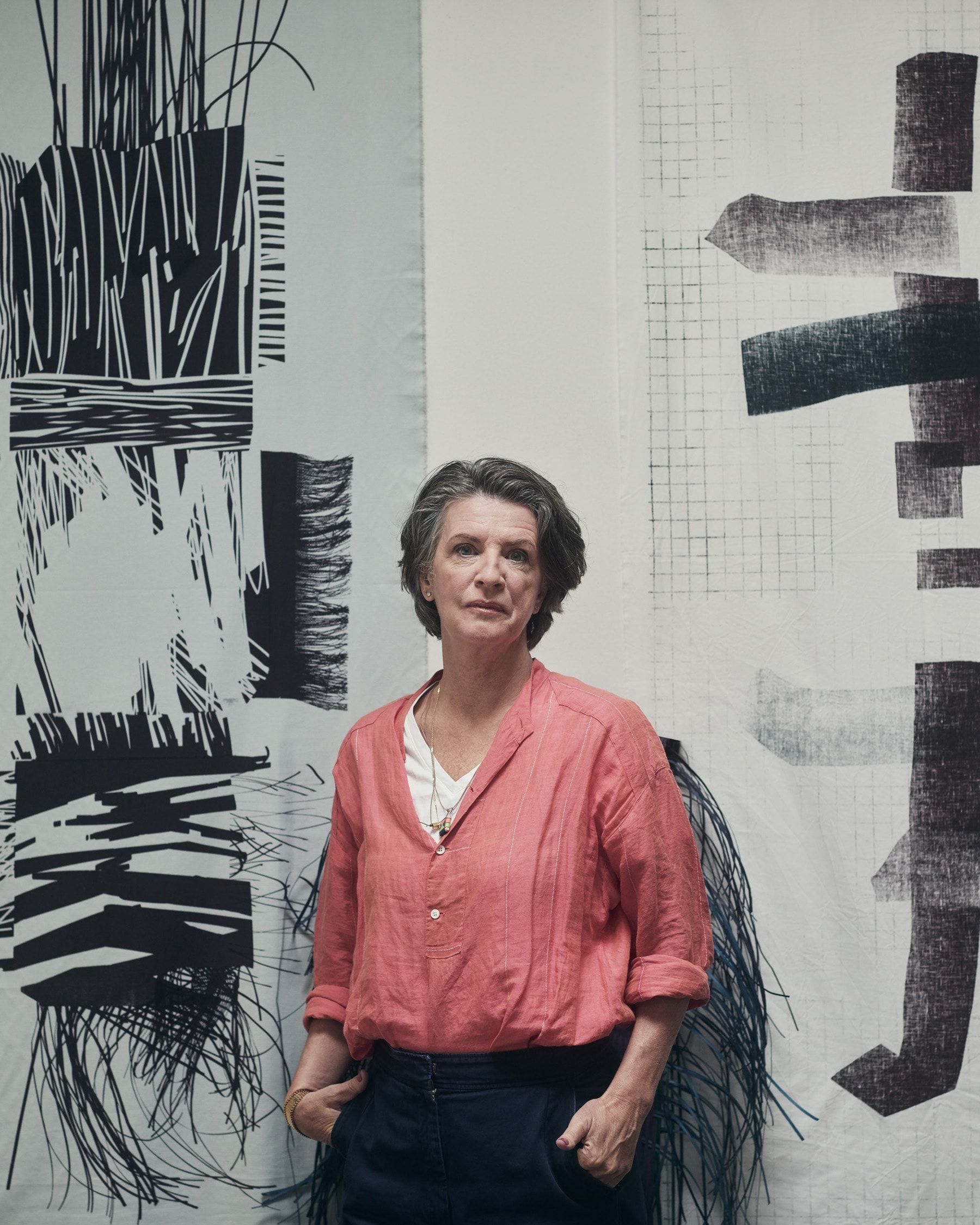
For over 30 years, Hella Jongerius has been combining traditional craft techniques with contemporary processes, looking to the past to seek out innovative ideas. With her design studio, Jongeriuslab, she has worked at every scale imaginable, from designing Vitra’s tiny yet iconic Coat Dots to the cabin interiors of the airline KLM. She is also an influential color theorist and the author of  I Don’t Have a Favourite Colour: Creating the Vitra Colour & Material Library. 

For Jongerius, who lives in Berlin, design is rooted in the sort of personal inquiry that is also relevant to urgent societal questions, tackling the economy, culture, manufacturing and the human condition. Her most recent exhibition, Woven Cosmos at Berlin’s Gropius Bau, asked questions about design in an age in which we must rapidly rethink our production and material consumption.

Nana Biamah-Ofosu: How would you define your ethos as a designer given the breadth of your practice?

Hella Jongerius: I became a designer because I wanted to instigate change from within and push boundaries established in industrial design. I would describe my methodology as encompassing the process of an artist [but] with a strong social and political agenda, challenging the use of materials and production systems. I have my own questions as a designer so I am not interested in industrial design as just a service; I want to change something in the world using industrial design as a resource. 

NBO: How are these questions generated? I’m interested to know whether there were objects in your childhood that made you question the role of design in everyday life.

HJ: I was raised on a farm with very little design or art around me, but this was also in the 1970s when as children we spent our free time making things. Activities such as knitting, embroidery and pottery were my way into becoming interested in materials. When it came to deciding what to study, I knew I wanted to pursue a creative discipline, but I wasn’t comfortable with the lack of boundaries that come with art practice. Studying industrial design offered a creative outlet with a rigorous process. 

NBO: How did your early career at Droog, a studio famed for its conceptual work, influence your practice?

HJ: When I started studying, I was confronted with a discipline still very much following modernist traditions, prioritizing form and appearance over what objects communicated. Through my education and early career, I found mentors who challenged these traditions and offered a way of stepping out of established design silos. This was incredibly liberating. The notions of perfection and imperfection became very important to me and I was intrigued by how imperfections could describe individuality within an industrial process. My questions have evolved and they are now focused on moral issues, artistic approaches and questioning the transformative and healing power of tactility. 

NBO: I’d like to talk a bit about design as an art and a science. Your work seems to approach it as both things at once. 

HJ: The boundaries between art and science in my work are fluid. The duality is important because it is about understanding the sensory experience of an object while having the material knowledge to produce the desired effect.

NBO: How do you approach color in your work?

HJ: Color for me is a material. It is related to context—the object, its materiality and texture, as well as source of light and time of day. My work at Vitra has centered around creating a common library for material and color by understanding how designers use it in a contextual way—looking at their archives, understanding their surroundings and influences.1

NBO: You have previously said that “A color only becomes a color because it has neighbors.” Can you describe how you developed your Colour Catchers as a response to this?

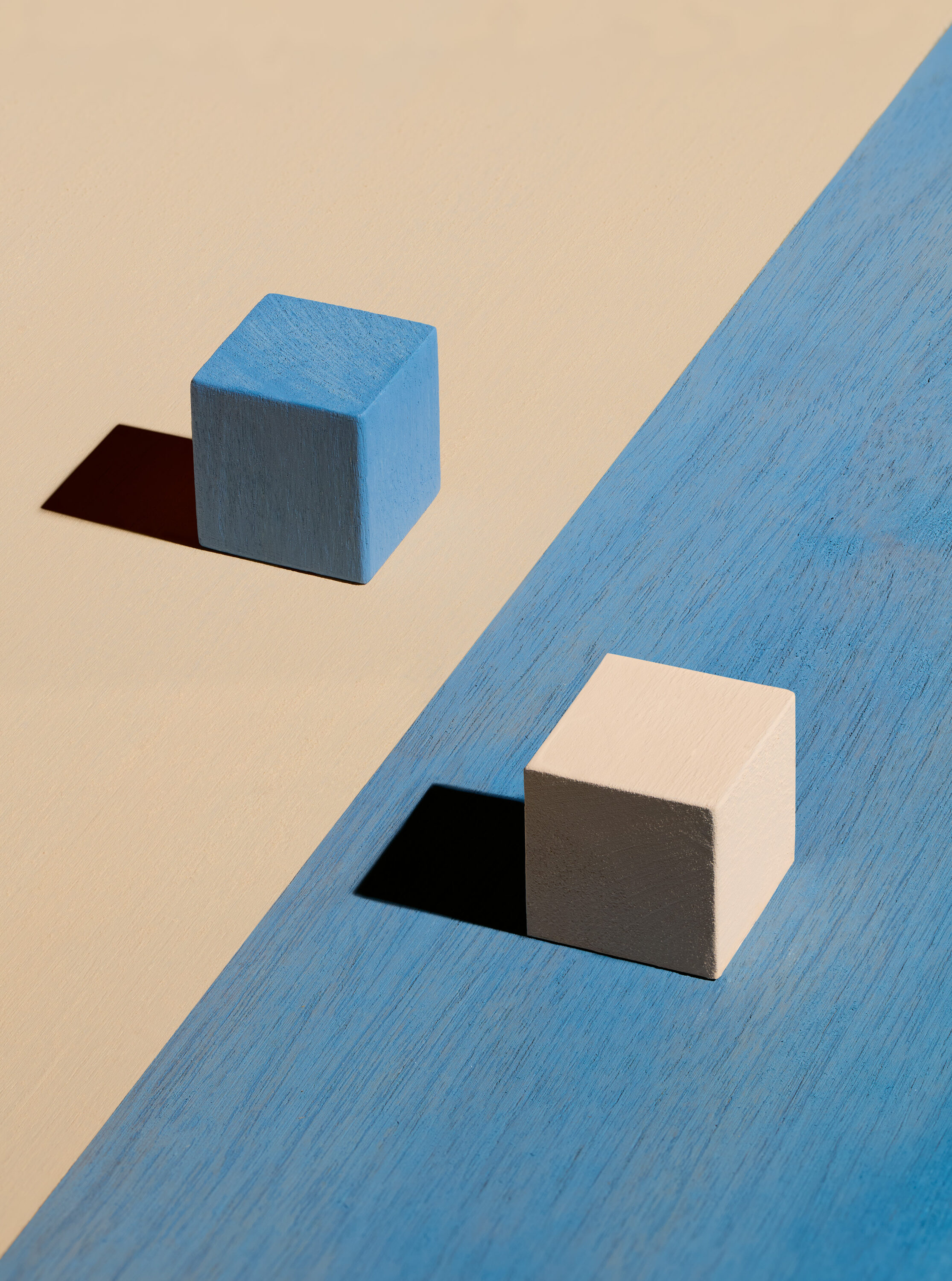
HJ: The Colour Catchers are multifaceted objects that we shaped from paper and painted in intensely rich pigments. They can catch light at different angles and are very useful in studying how colors look and feel in various conditions. I have always found the industry standard flat-surfaced color swatches incredibly limited and ridiculous. You can’t truly understand the depth of a particular color unless it is seen in different instances and with shadows.

NBO: Your work is marked by its engagement with new technologies, but also with age-old craft techniques. What do these ideas offer in your work?

HJ: Let’s take an example: weaving. Weaving is a coded process; you only have zero [a warp thread] and one [a weft thread]. Essentially, it is a digital process rooted in a very slow craft. It is a technique that has evolved within the industrial space and is now very efficient. However, the element of craft has been sacrificed and as a designer I see weaving as a craft rather than purely a process—it is a cultural topic, embedded in our language. This drive towards efficiency is why I started making my own looms—to dive into a new, innovative way of looking at weaving and making it about creativity again.

We did this first at the Lafayette Anticipations foundation in Paris where we installed a loom that rose between the multi-story levels of the building and over three months produced a 3D woven shape. [My recent] exhibition, Woven Cosmos at Gropius Bau in Berlin, is asking similar questions and inviting the public to participate. My most immediate question now is: What is the future of weaving? How do we combine traditional weaving with innovative techniques and work towards making stronger but lighter materials which will have multiple uses, such as in industrial manufacturing and construction?

NBO: Have these ideas generated prototypes? How might they apply to architecture and construction?

HJ: I am not interested in quick solutions but rather in developing holistic approaches. The joy of working with cultural institutions is that you have the luxury of getting lost—working for a commercial client doesn’t always give you that opportunity. It is interesting to see where this work leads and what new innovations it may bring; I’m very much enjoying that.

NBO: It’s also interesting to see design and efficiency as ideas related to the cosmos, as the title of the exhibition suggests. How do we retain the human scale as we rapidly innovate toward more digital technologies?

HJ: It is important that we maintain the human scale in our ways of production. This is how we continue to develop circular economies that can support reuse. We should only design or produce what the earth can handle. We’ve ruined our planet but we can also design our way out. This is now a much more urgent premise for designers than it was 20 or 30 years ago. In essence, I see the loom as cosmic, connected to weaving a new texture for the world; we can change our fate by choosing what we spin in this opportune world. It is about the human scale and maintaining our traces of humanity within design.

( 1 ) Jongerius’ work as Vitra’s director of colors and materials is part of a concerted effort to step off the design conveyor belt of constantly manufacturing new objects. As she told Dezeen in 2014, “Why make new stuff every year?… Vitra has great stuff. It needs me on another level, and that is what I find interesting.”

You are reading a complimentary story from Issue 42

Want to enjoy full access? Subscribe Now

Subscribe Discover unlimited access to Kinfolk

  • Four print issues of Kinfolk magazine per year, delivered to your door, with twelve-months’ access to the entire Kinfolk.com archive and all web exclusives.

  • Receive twelve-months of all access to the entire Kinfolk.com archive and all web exclusives.

Learn More

Already a Subscriber? Login

Your cart is empty

Your Cart (0)