Helle Thygesen The Danish antiques dealer on rare pieces and how to find them.

Helle Thygesen The Danish antiques dealer on rare pieces and how to find them.

  • Words James Clasper
  • Photography Christian Møller Andersen

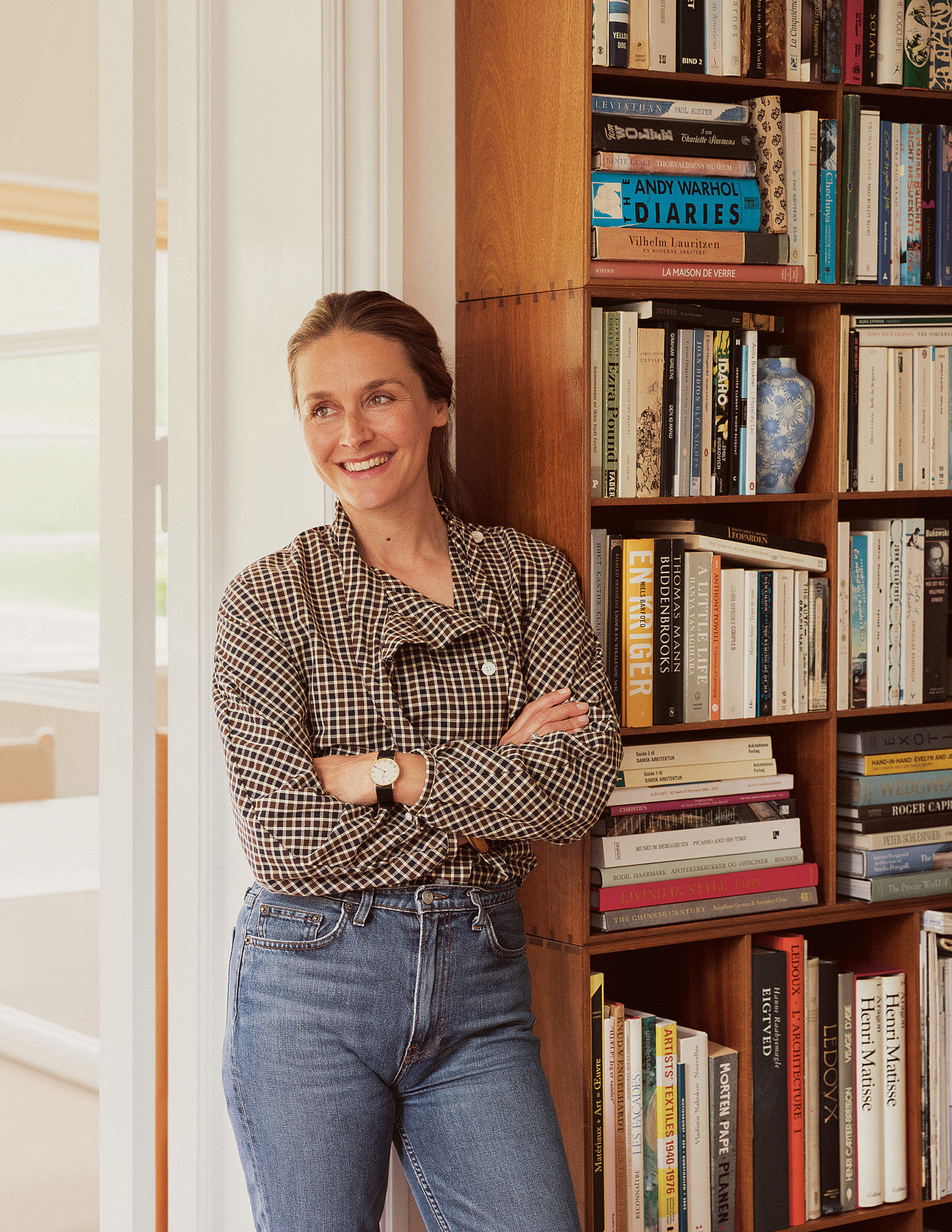
Helle Thygesen is a Danish art and antiques dealer. Having grown up in a family that was “very much into art,” she studied art history at university and worked at the Copenhagen gallery The Apartment from 2012 to 2014. The following year, she launched her eponymous website, where she sells a handpicked selection of modern and contemporary art and decorative objects. She lives in Copenhagen’s leafy northern suburbs.

How do you work?
I browse online all day, every day. I tend to buy mostly from French and English auction houses. Now that I’ve been around for about five years I have a very good network of dealers who contact me when they have pieces they think I’ll find interesting.

What kind of pieces are you drawn to?
Well, I like many different things. Abstract paintings. Vintage Picasso posters. Eighteenth-century Japanese wood-engraving prints. But I’d say I specialize in art from the 1920s to the 1970s.

How would you describe your taste?
There’s no question it comes from my father’s side of the family. This whole way of mixing antiques with contemporary pieces is very much what I grew up with. My father ran an auction house, my grandparents were collectors and my great-grandfather was the sculptor Einar Utzon-Frank. To me, art was never something I couldn’t touch, it was just part of our lives, and that’s a good starting point when you’re working in this business.

Can you describe a recent piece you’ve acquired?
Last week, at a Scottish auction house, I successfully bid on a beautiful set of 19th-century architectural studies in watercolor. Most of my pieces are from the 20th century, so I love it when I find something older that I think my clients will understand and love as well. I think it makes a collection that much more beautiful if you have some older pieces to contrast with the newer ones.

Do you have any rules for what you buy or sell?
I tend not to buy pieces I’ve seen elsewhere. I like having pieces you don’t just see everywhere.

Speaking of which, mid-century modern design still casts a long shadow.
Yes—and, speaking as a Dane, it’s just such a dominant part of our design DNA and how everybody lives. I have to admit that sometimes when I open a Danish design auction catalog, I can’t help but think, “Can this really go on with the same Arne Jacobsen or Hans Wegner? Can people still get excited about it?” At the same time, I recognize its very obvious quality and craftsmanship and the simplicity of the design. So I don’t think its place is undeserved, but I do think that it becomes more interesting when you mix it up with more contemporary pieces.

Since you started out, have you seen more people interested in buying at auction?
Definitely. Within the past five to 10 years, people have really discovered that you can get some fantastic pieces at auction, and perhaps they also recognize that those are pieces they’ll probably hold on to forever. A lot of people buying at auction are inspired by pieces they see on websites such as mine and they want to see if they can find them for themselves. That’s certainly an incentive for me to find pieces that aren’t around that much.

Has your clientele changed much?
I’m 43, and when I started out, many of my clients were like me, in their late 30s, perhaps having just bought their first home and wanting some nice pieces to fill it with. They’ve grown up with me. Whereas before they might have looked for a poster, today they might prefer rare ceramics. At the same time, I have a lot of younger clients, people in their mid-to-late 20s who, instead of going and buying four nondescript items, are willing to save up and buy one thing they think, or hope, they will love forever.

What advice do you give people who want to start collecting art or antiques?
Bargains are hard to come by today because everything is online, but if you put in the time and know a little bit about what you’re looking for, it’s still possible to find a rare gem. I’d also advise you to read a lot about art history and to establish good relationships with dealers that you know have pieces you like, because all dealers love a passionate client.

Finally, what’s in your own collection?
It’s a mix of pieces I inherited from my father, pieces I bought with my husband and pieces I bought myself. It’s quite eclectic: like an 18th-century baroque table with a 20th-century French chair. I love the fact that when I look around my home, the reason that each piece is there is that somebody, maybe 100 years ago, loved it enough to take care of it and preserve it for future generations, and then somebody else did the same, and now I’m doing the same.

You are reading a complimentary story from Issue 37

Want to enjoy full access? Subscribe Now

Subscribe Discover unlimited access to Kinfolk

  • Four print issues of Kinfolk magazine per year, delivered to your door, with twelve-months’ access to the entire Kinfolk.com archive and all web exclusives.

  • Receive twelve-months of all access to the entire Kinfolk.com archive and all web exclusives.

Learn More

Already a Subscriber? Login

Your cart is empty

Your Cart (0)