Photo: James O Davies / Historic England
HOME TOUR: SPHINX HILL
- Words Emma Moore
John Outram’s postmodern Egyptianate fantasy.
Photo: Phil Sayer / C20 Society
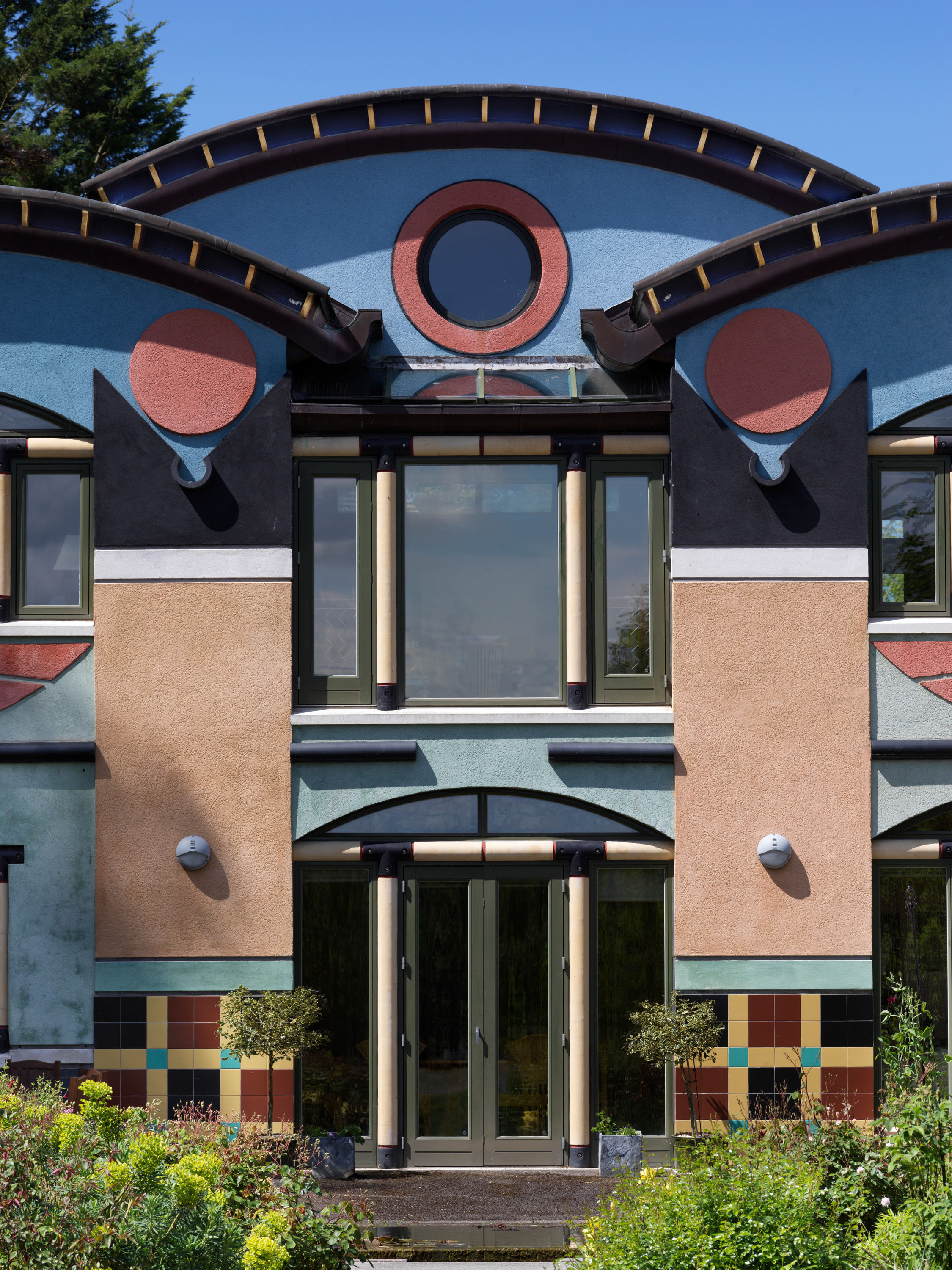
Walking the Thames Path near the English village of Moulsford, there’s a moment when the pastoral harmony of riverside meadows and well-mannered Victorian and Edwardian villas is broken. Suddenly, from behind the trees, appears a roofline of three sky-blue colliding arcs. Ocher pilasters rise between walls of willow green, terra-cotta discs hovering at their summits. The whole building sits long and low, its symmetrical facade facing the rising sun and the River Thames, which here in Oxfordshire goes by another name: the Isis. It may derive from the river’s Roman name, Tamesis, rather than the Egyptian goddess of magic and motherhood, but it’s nevertheless fitting as the watery border to Sphinx Hill, a masterful piece of Egyptology-infused postmodernist architecture.