HOME TOUR: Vila Volman
- Words Mark Baker
- Photos Marina Denisova
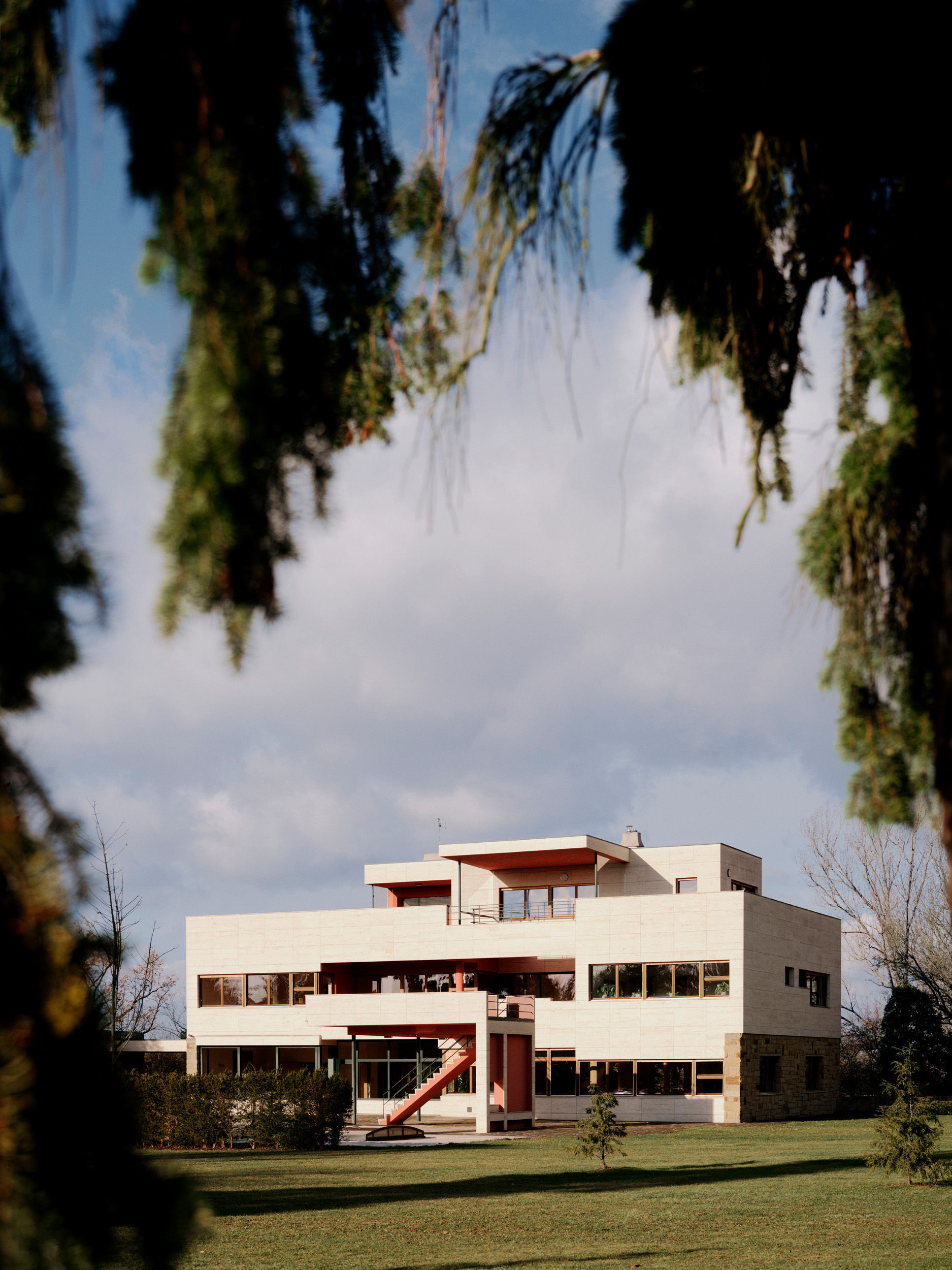
Commissioned in 1938 by industrialist Josef Volman in Celákovice, a town 15 miles east of Prague, Vila Volman is a pioneering example of Czech functionalism and shows the influence of the daring artistic avant-garde of the time. Yet its groundbreaking architecture was quickly overshadowed by the invasion and occupation by Nazi Germany in 1939, the year the house was finished. Repurposed during the communist period that followed and then abandoned, the home was nearly lost; it is only now, after years of painstaking reconstruction, that Vila Volman is being recognized as a key part of Czechia’s modernist legacy.
The antecedents of the villa’s design can be traced back to the Bauhaus school in Dessau, Germany, almost two decades earlier. There, the overriding impetus had been to simplify architectural design to the point where a structure’s aesthetic merit was judged chiefly on its ability to articulate function, its form pared back to the essentials. By the time Volman began thinking about building a residential villa befitting the founder of a successful machine tool company, functionalism had become the reigning architectural style in what was then Czechoslovakia.
Socially conscious planners of the era were quick to seize on functionalism’s promise to deliver aesthetically pleasing, high-quality buildings at scale and lower cost. For open-minded wealthy industrialists like Volman, functionalism also offered the opportunity to acknowledge this social imperative while building eye-catching houses that met new, emerging standards for style and beauty.
Vila Volman is true to these functionalist roots. Designed by two young, inexperienced architects, Karel Janu and Jirí Štursa, the house bears an uncanny resemblance to Villa Stein de-Monzie—a modernist icon built for the brother and sister-in-law of writer Gertrude Stein near Paris in the mid-1920s. In fact, Villa Stein de-Menzie was designed by the Swiss-French architect Le Corbusier as he was formulating the tenets that would come to define modern architecture.
Both Janu and Štursa admired Corbusier, and at Vila Volman his influence is evident at first glance: the horizontal orientation; the thin strip of windows running across the second level; the facade that functions independently of the house’s internal structure; the garden setting (here overlooking the Elbe River at the back of the house) and rooftop terrace. Inside, the interior unfolds freely. In Corbusier fashion, supporting pillars have replaced the traditional load-bearing—and sight-blocking—walls. The result is an airy, oversized ground-floor living and dining room, warmed by sunlight streaming through a long bank of windows on the house’s southern side. It functioned as both a venue for Volman to entertain clients and as a place for dinner and after-dinner amusement. The room’s sheer size was pioneering.
As with the Villa Stein, the living space was confined to the upper levels, where there were bedrooms and bathrooms for Volman and his daughter, Lud’a, as well as a guest room and study. The rooftop space above this, the “Belvedere,” afforded pretty views over the river and surrounding countryside, and space for a Corbusier-inspired rooftop garden.
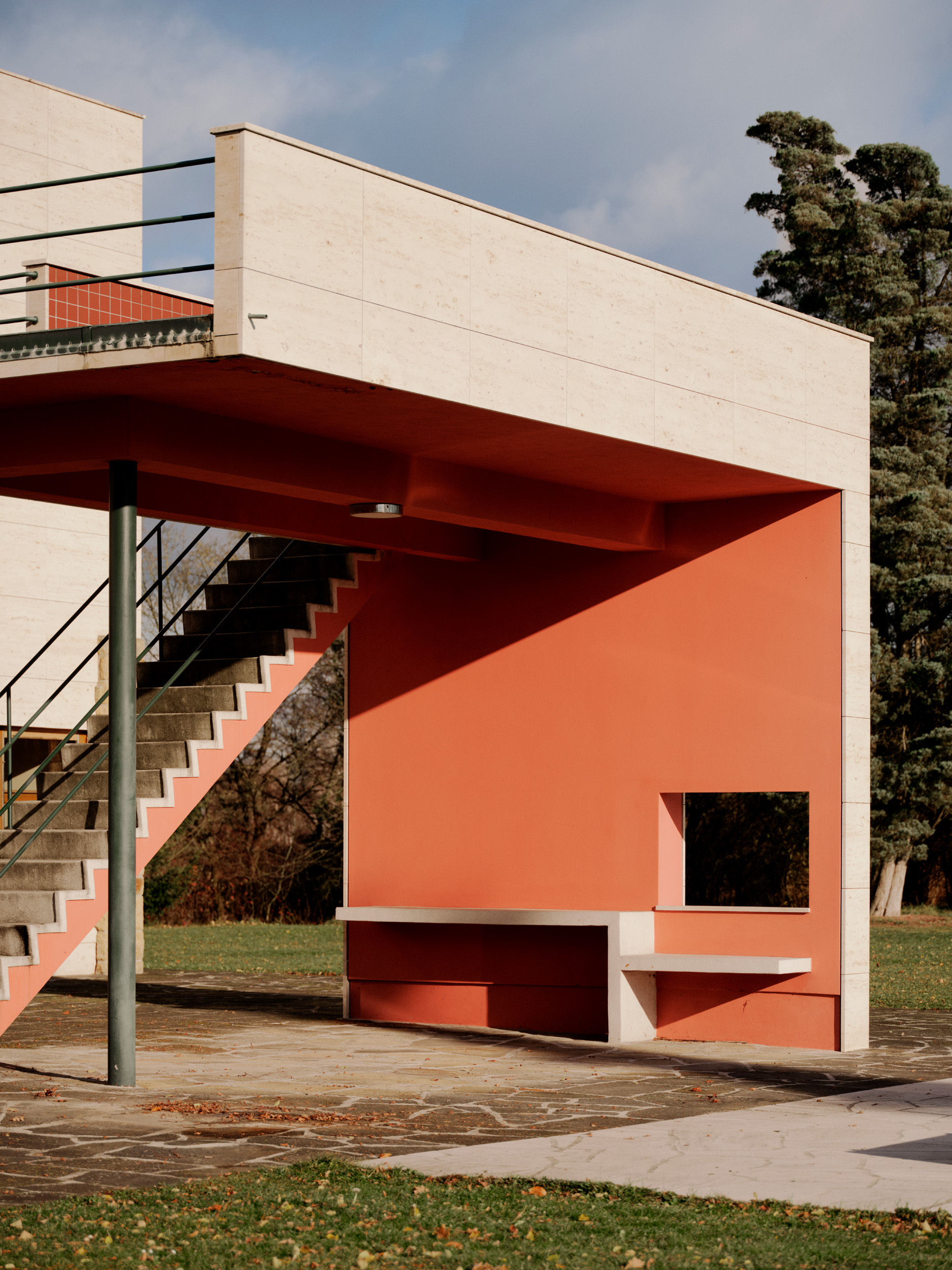
The exterior of Vila Volman features intersecting balconies, staircases and walkways.
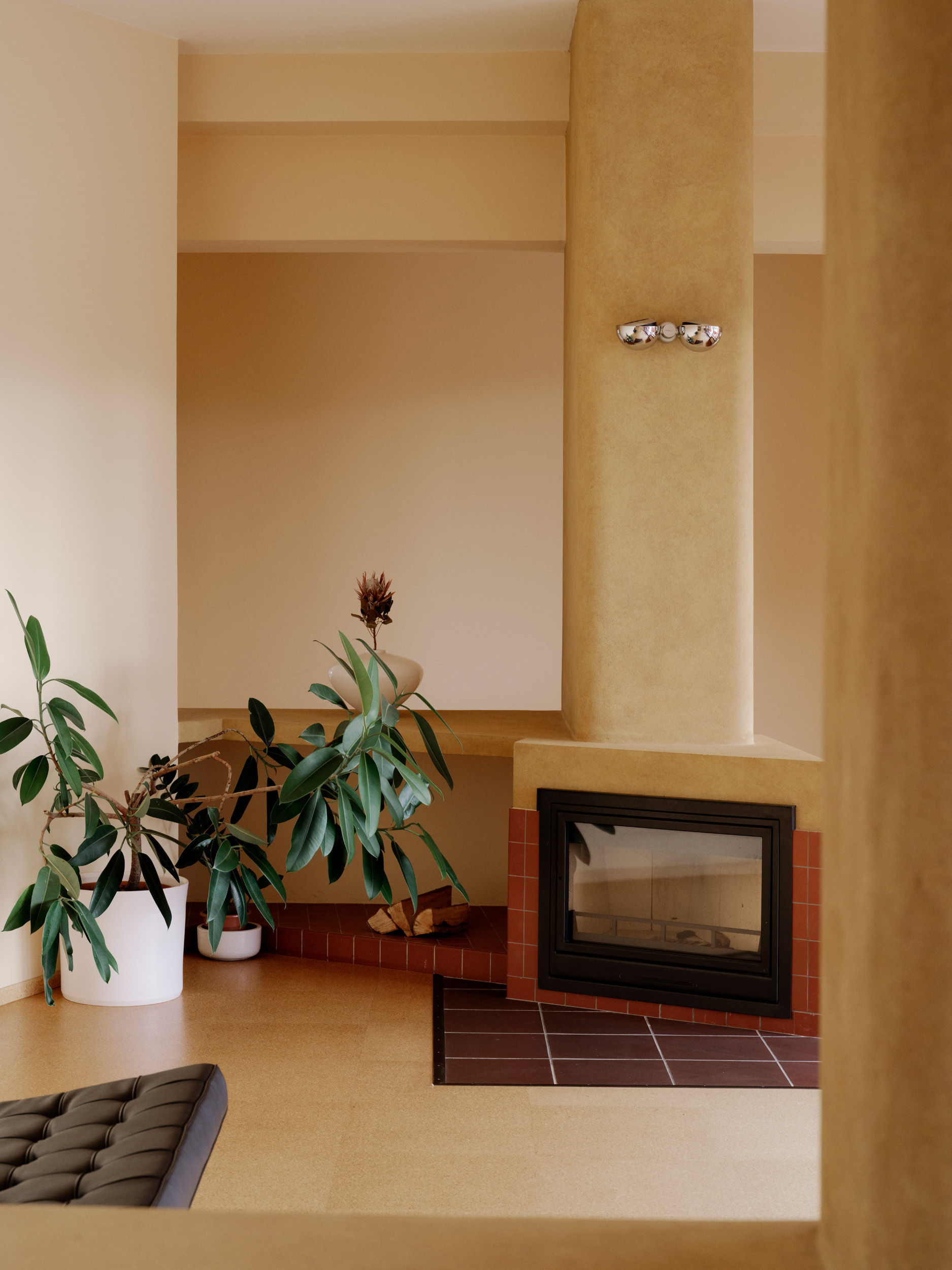
What separates and elevates Vila Volman, however, is the way the house’s design subtly evokes then-fashionable aesthetic trends, drawing on Cubism, Constructivism and surrealism. By the 1930s, luxury materials such as expensive stone, marble and wood paneling—promoted by architects including Adolf Loos and showcased in Mies van der Rohe’s celebrated Tugendhat Villa in Brno—had already become de rigueur in Czechoslovakian mansions. The Volman villa was no exception, with high-quality Italian marble used for the first-floor fireplace and bathrooms.
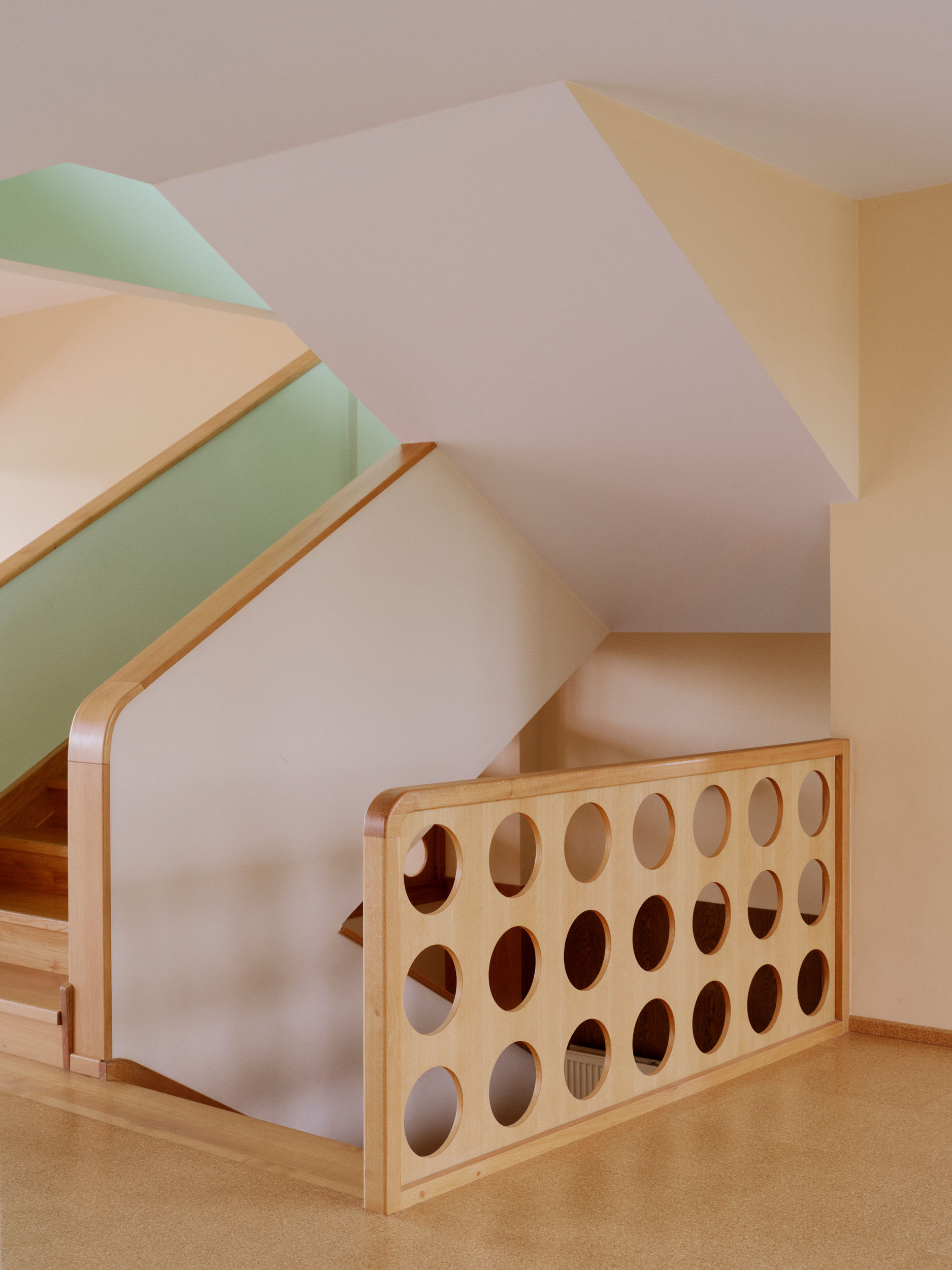
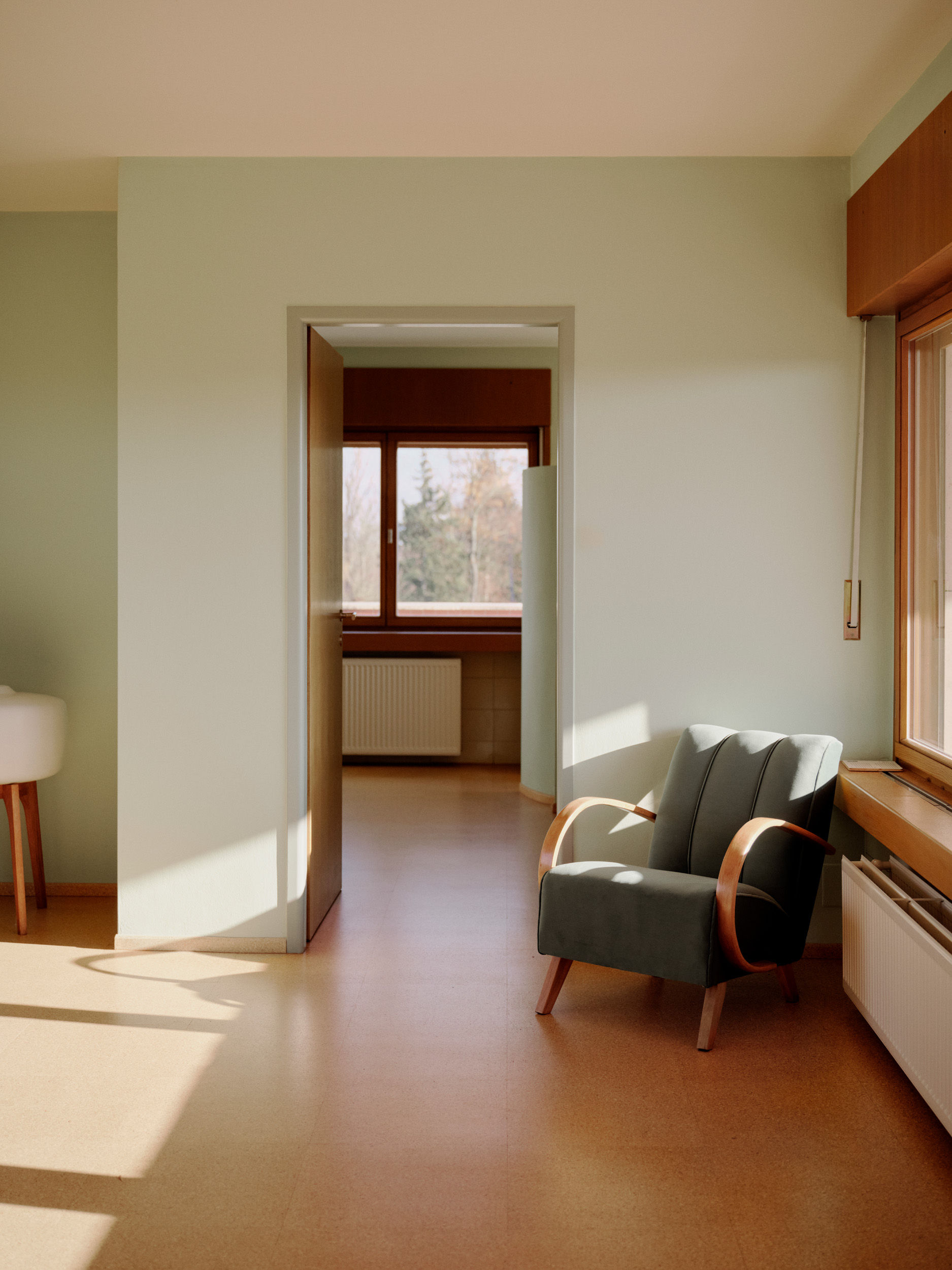
But Janu and Štursa’s design took functionalism a step further, gently suggesting the influence of Czech artists, photographers and graphic designers who were then in thrall to the Europe-wide avant-garde. The playful colors on the walls—pastel greens and a deep salmon pink—seem pulled straight from the canvases of surrealist painters like Josef Šíma or Toyen. The angle of the main staircase to the living quarters plays tricks on the eye—squint and one might be looking at an arty, abstract photograph from the period. The villa’s overall shape resembles a luxury ocean liner, a cherished object for Czech modernists.
Adam Štech, an architectural researcher, cites the influence of the Czech writer and critic Karel Teige, under whom Janu and Štursa studied. Teige himself was a strong proponent of orthodox functionalism, what he called “scientific functionalism,” but is better known in the collective imagination for his bold graphic design and collage art. His work typically juxtaposes geometric shapes and lines with subtly sensualized photographic images that almost seem able to penetrate the subconscious mind.
Štech says Teige’s work encouraged the architects to introduce a more expressive aspect to the design—an “emotional functionalism.” “There’s a visual joy to the villa,” he says, pointing to details like the playful circles carved into the main stairway banisters and the unusual, organic angles formed by the ground-floor walls. Stare long enough at the external staircase at the front of the house—particularly the striking way in which the horizontal and diagonal lines intersect—and it could easily feature on one of Teige’s book covers.
Volman was not able to appreciate the house for long. He died in 1943, his machine tool company having been partially co-opted for the German war effort. His daughter and son-in-law, Jirí Ružek, continued to live in the house, but with the Beneš decrees of 1945—which placed Volman’s company under state ownership—and the coup in February 1948 that brought the communists to power, Lud’a and her husband chose to emigrate to France. Lud’a succeeded; Ružek was arrested and imprisoned. The two would be separated until 1968, when Ružek was finally permitted to leave. Lud’a passed away in 1982, while Ružek lived until 2010.
During the communist period, Vila Volman functioned as a kindergarten, but despite being added to the Central List of Immovable Cultural Monuments in 1979, the house fell into neglect following the 1989 Velvet Revolution. During the 1990s, the abandoned villa was frequently looted and nearly torn down. Efforts to save it began in the latter half of the decade when a group of local businessmen purchased the house and began searching for a design firm that could restore the villa while respecting its immense design heritage. They eventually selected TaK, a Prague-based architectural studio led by Marek Tichý.
Their careful renovation took nearly two decades to complete and Vila Volman reopened to the public as a cultural center in 2022. That same year, the villa joined the global network of Iconic Houses, linking the most important 20th-century homes around the world. It is now beginning to reassert its place as a landmark of Czechoslovakian modernist architecture and a monument to that heady time in the 1930s when orthodox functionalism flirted with the avant-garde to fascinating effect.
“It’s a monument to that heady time in the 1930s when orthodox functionalism flirted with the avant-garde.”
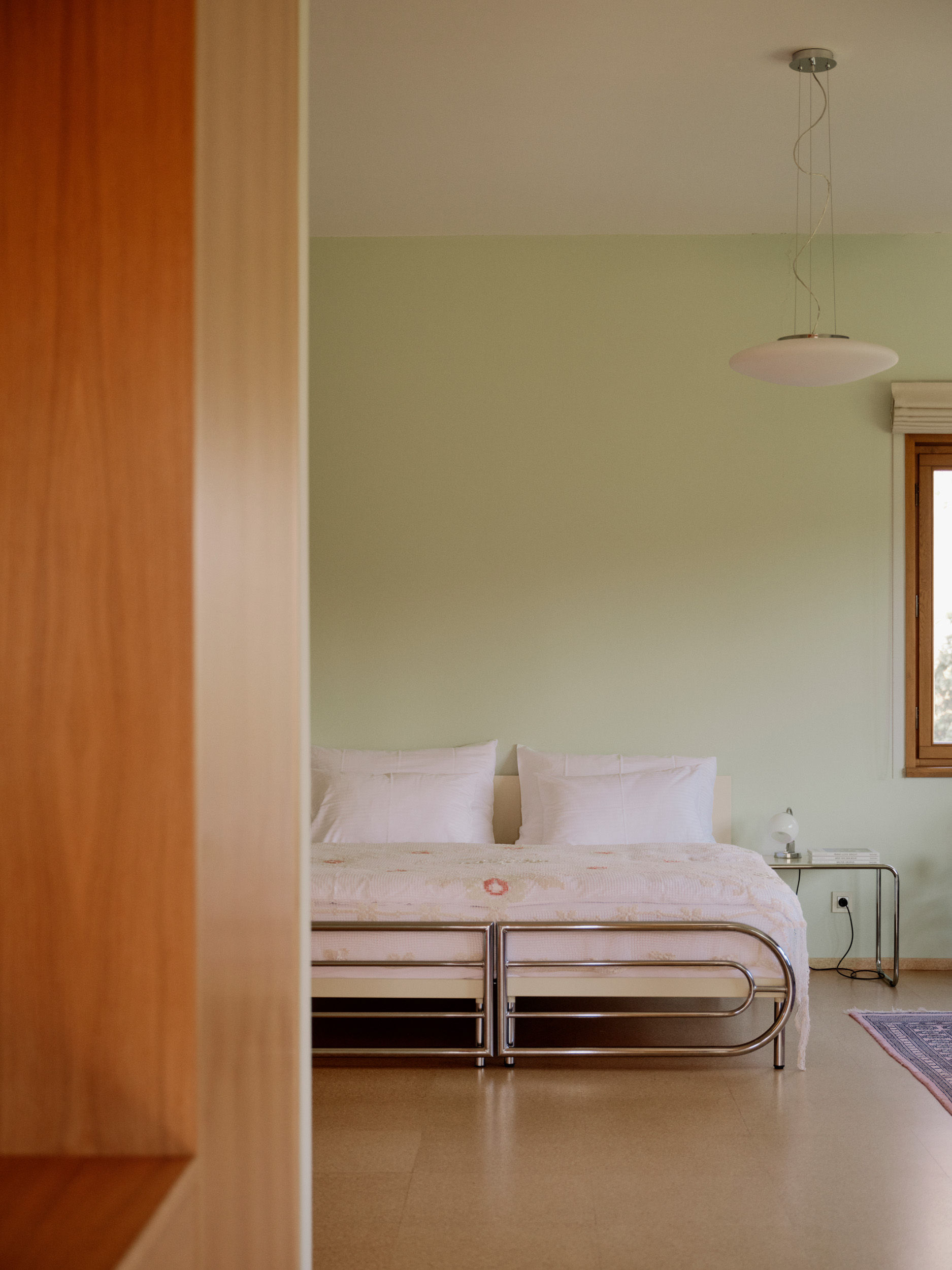
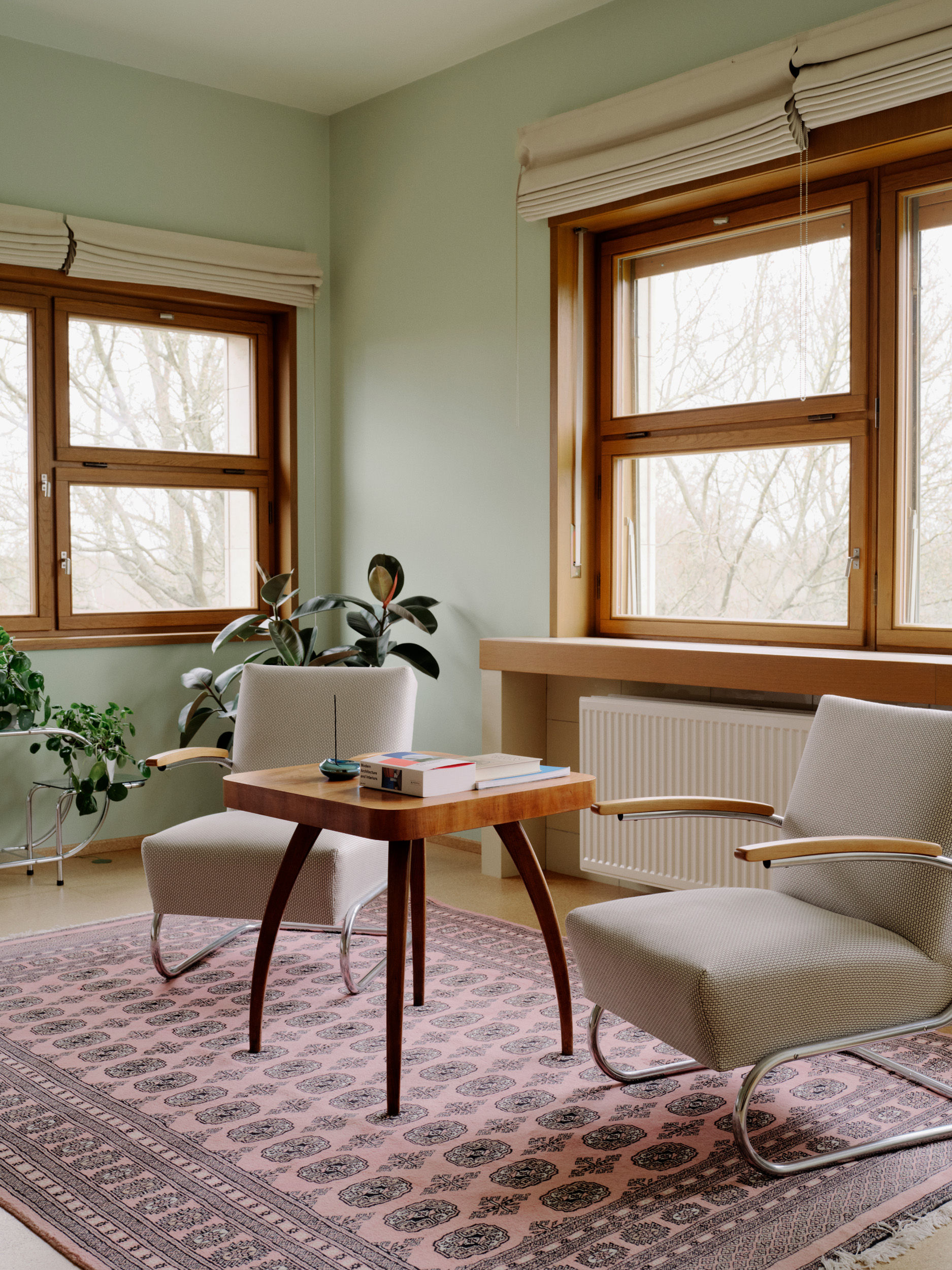
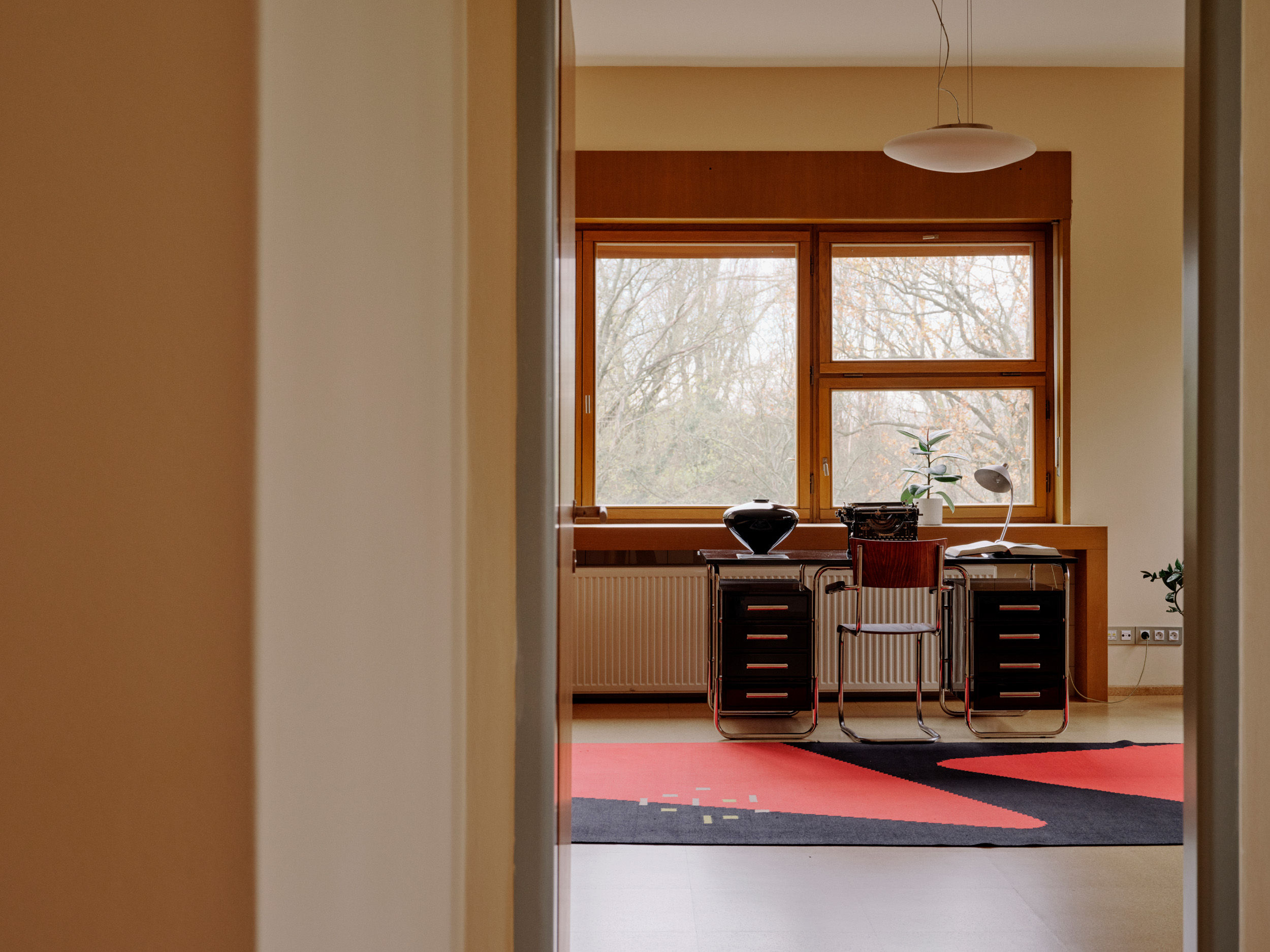
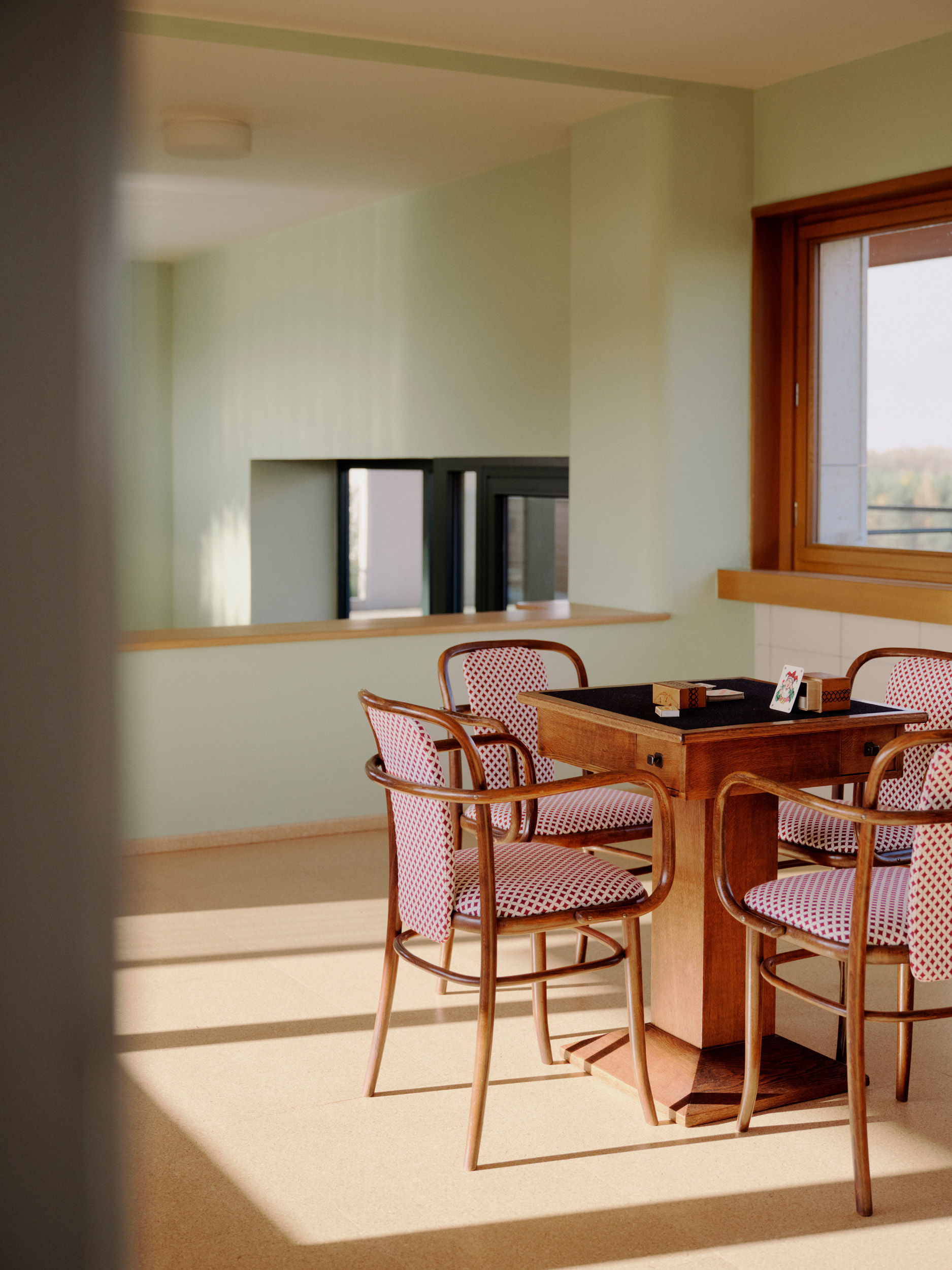
The villa has been furnished with pieces by Czech functionalist designers Jindrich Halabala and Robert Slezák.