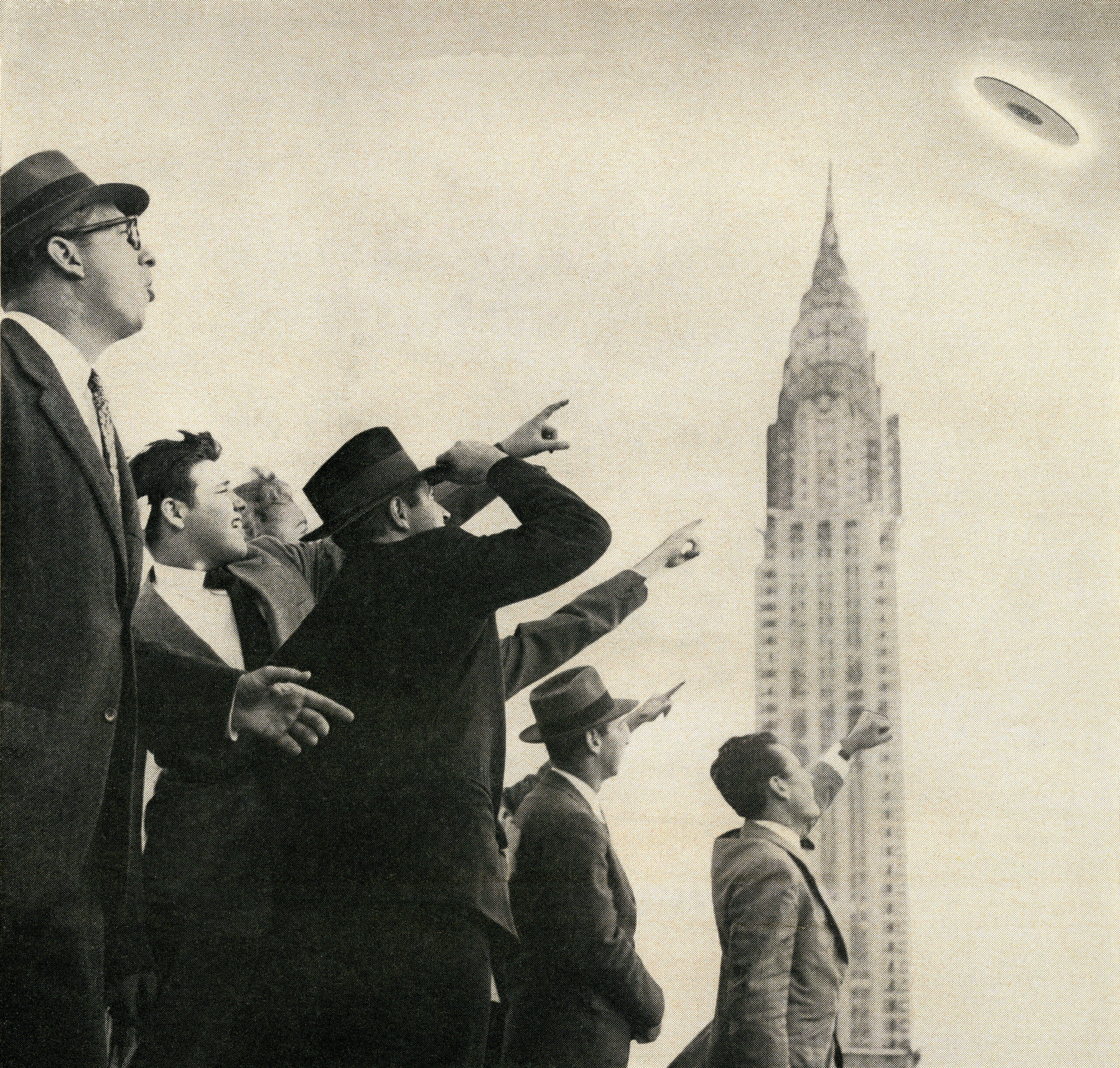
In Search of the Lizard People Behind the bent logic of conspiracists.

In Search of the Lizard People Behind the bent logic of conspiracists.

  • Words Pip Usher
  • Photograph GraphicaArtis/Getty Images

Depending on who you talk to, Paul McCartney is either alive and well or he was brutally decapitated in a car accident decades ago. In 1966, McCartney’s decision to retreat from the public eye—coupled with a series of cryptic messages in The Beatles’ music that fans claimed to decode—resulted in the theory that Paul was dead and the rest of the band was covering it up. Should you be wondering who has stood in for McCartney all these years, it’s an orphaned Scottish look-alike named Billy Shears who was trained to impersonate him.

When a monumental event happens, there’s usually a conspiracy theory to explain it. The mass shooting at Sandy Hook Elementary School was staged so that the US government could clamp down on guns; global warming is a hoax hatched by scientists; reptilian overlords masquerading as humans were responsible for the Holocaust. Psychological research into the popularity of such theories suggests that people are drawn to them as a way to preserve their belief systems in the face of rapid social change.

Disenfranchisement, distressing feelings of uncertainty, and dissatisfaction with the mundane explanation attached to a large-scale and impactful event lead people to seek control in theories underpinned by negative and distrustful ideology.

The “Paul is dead” conspiracy bloomed in an environment ripe with suspicion and paranoia. President John F. Kennedy had been assassinated in what some believed was a coup. America’s youth-led cultural revolution saw skepticism toward the mainstream media gain traction as the Vietnam War raged on. For Beatles fans, poring over song lyrics and album covers, it was easy to find subliminal messages that explained why the star had gone quiet. In a society upended by seismic changes, their feverish speculation fit within a broader malaise.

Even after McCartney appeared on the cover of Life magazine in 1969, accompanied by the headline “Paul is still with us,” the rumors persisted. So if evidence won’t persuade a conspiracy theorist, what will? Based on a study by Kellogg School of Management professor Cynthia Wang, the best approach is probably to change tack. Because people turn to false narratives as a coping mechanism for feelings of alienation and anxiety, Wang asked participants in her study to write about their ambitions instead. As their attention shifted from the abstract to the concrete, the propensity to grasp at outlandish explanations diminished. Encouraging an increased sense of control, it turns out, is the most effective intervention for a conspiracy theorist: The world feels less daunting when attention is focused on the parts of it that can be controlled.

You are reading a complimentary story from Issue 35

Want to enjoy full access? Subscribe Now

Subscribe Discover unlimited access to Kinfolk

  • Four print issues of Kinfolk magazine per year, delivered to your door, with twelve-months’ access to the entire Kinfolk.com archive and all web exclusives.

  • Receive twelve-months of all access to the entire Kinfolk.com archive and all web exclusives.

Learn More

Already a Subscriber? Login

Your cart is empty

Your Cart (0)