INGA SEMPÉ
- Words Daphnée Denis
- Photos Ludovic Balay
“Minimalism is boring as hell, and on top of that, it’s preachy.”
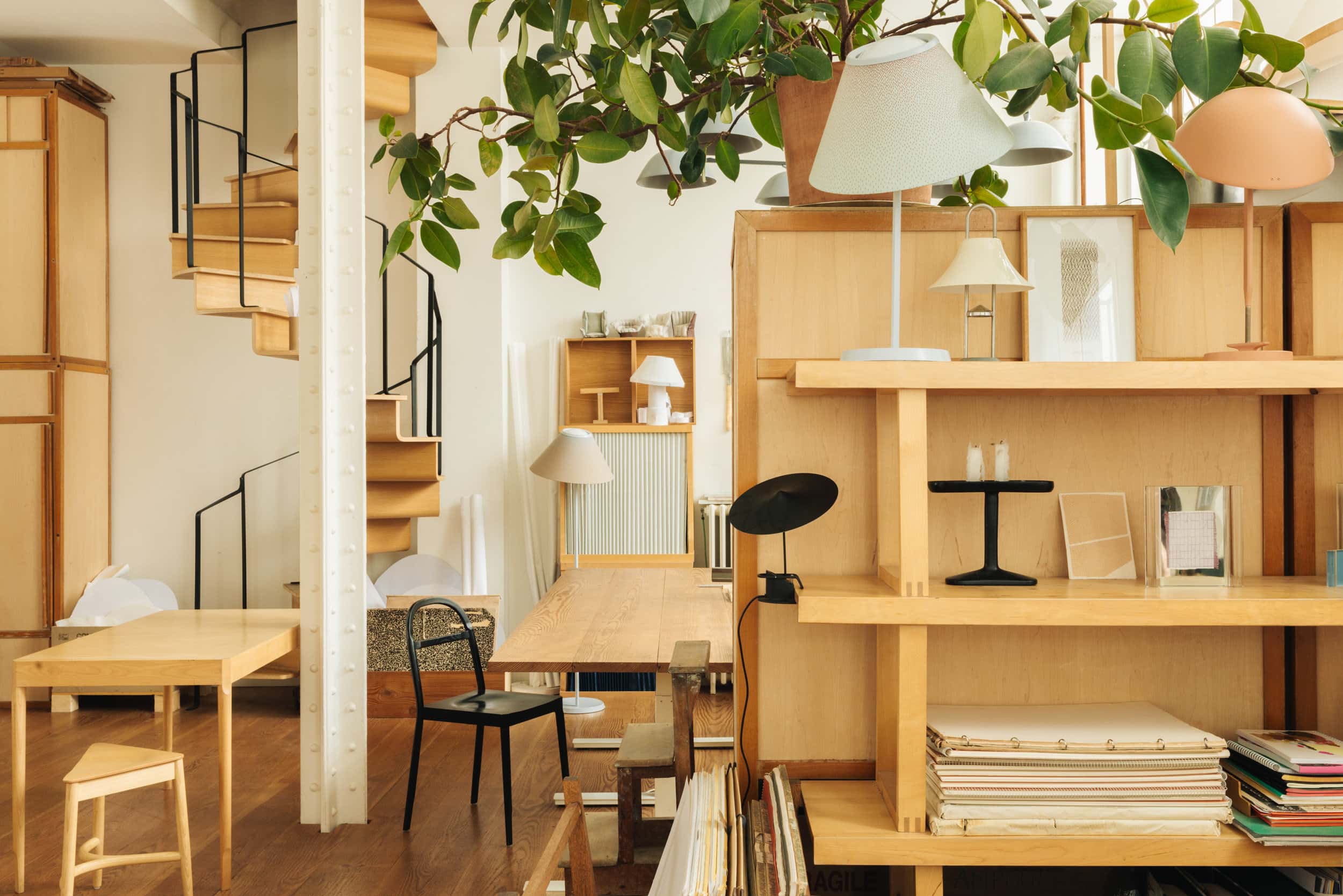
Mousqueton is a portable lamp that Sempé designed for Danish brand HAY, and one of her favorite projects. Named after the French word for carabiner, the lamp features a hook at the top that creates multiple hanging possibilities.
( 1 ) Jean-Jacques Sempé, Inga’s father, was largely unknown in the English-speaking world until The New Yorker commissioned him to produce a cover illustration in the late 1970s. He would go on to produce 106 of the magazine’s covers in subsequent decades—more than any other artist.
The design industry often values artistic expression over the functional and practical. In creating playful, useful and, crucially, popular objects, INGA SEMPÉ proves that selling well doesn’t always mean selling out.
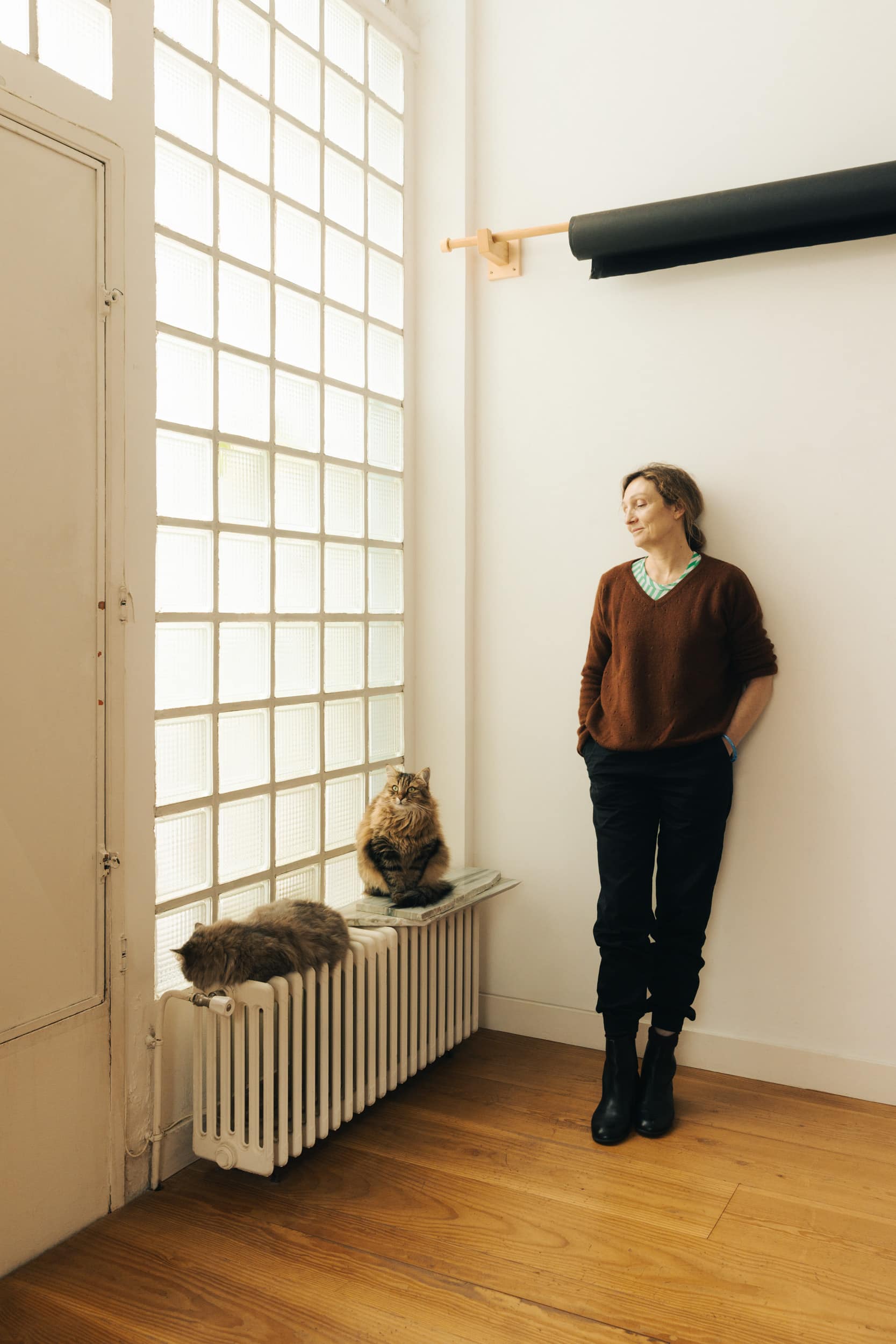
For designer Inga Sempé, minimalism is a cop-out. “I find it pretentious,” she says over a cup of tea at her studio in the 10th arrondissement of Paris. “It’s boring as hell, and on top of that, it’s preachy. I prefer maximalism, even though I’m neither.” In front of her is a sketchbook with ink drawings, pencil sketches and random words scribbled on page corners—all part of the “really terrible stuff” she comes up with when working on an idea for a piece.
Sempé is not one to sugarcoat her words, regardless of whether she’s talking about her drawings, the industry or the role design should play in people’s lives. The French designer is known for her simple and poetic work for brands including Ligne Roset, HAY, Edra, Cappellini and Iittala. Most recently, Sempé designed a modular kitchen for the Danish brand Reform—an elegant concept with soft, curved edges and column-like central handles. In France, a country obsessed with the luxury industry, she stands out for her resolutely down-to-earth approach. Sempé likens her love of functional, mass-produced pieces over high-end and conceptual items to preferring Italian food like pizza and pasta over overpriced French gastronomy. “I don’t care much about high cuisine,” she says.
As it happens, Italy—which has traditionally placed importance on the design of everyday objects—is where she feels most at home professionally. “In Italy, I have been asked to make cutlery and floor tiles, but that’s never happened in France,” she says, referencing her work for ceramics brand Mutina and cookware brand Alessi.
Sempé was raised in a family of artists. Her father, Jean-Jacques Sempé, was a beloved French cartoonist and her mother is the Danish-born painter and illustrator Mette Ivers.1 Neither of them cared much about design, she says, but growing up, her mother would take her to flea markets, where she learned to appreciate the pieces there and tried to understand how they worked. “Some of them might have gone out of use or out of fashion, but you keep seeing them on stands, and you know that they used to be part of people’s daily lives. That’s what interests me,” she says.
As a teenager, before taking on industrial design studies at the prestigious École Nationale Supérieure de Création Industrielle in Paris, Sempé had confused design with being about product packaging. No one around her knew that there was any difference. “It’s not like Charlotte Perriand and all the other designers were super fashionable at that time; it was a tiny world that only collectors knew about,” she says. She remembers that some of her friends were able to get furniture by Jean Prouvé for free after the Cité Universitaire campus in Paris was refurbished (today, Prouvé’s pieces sell for tens of thousands of euros).
Sempé’s degree taught her to be a technician: She built her own models and learned to work with plastic and metal. “You have to be practical to do industrial design,” she says. “Otherwise other people will be practical for you and remove things from your designs without you knowing why.”
Sempé prefers designing objects over furniture and is particularly fond of working on lamps. She finds seating—especially couches—on the other hand, frustrating. “I love making lamps because there is no scale; you can make tiny ones and huge ones,” she says. “With couches, you have to make models that are maybe a fifth of the actual size, and it’s hard because models are cute even if the real thing is ugly. The first prototype of a couch is always awful: Too big, too heavy; it always makes me want to give up.”
Among her favorite designs is Mousqueton, a small, portable LED lamp that she designed for Danish brand HAY. An integrated carabiner makes it easy to suspend outdoors (mousqueton means “carabiner” in French). “It took me six months to find the idea,” she says as she demonstrates how it works.
For Sempé, the goal is to have a day-to-day impact on customers’ lives; she is ambivalent about institutional recognition. She might be excited about an upcoming show at the Milan Triennale in April 2024, but is puzzled when people congratulate her on being shown in a museum—like when the Centre Pompidou in Paris exhibited her playful Brosse storage units for Edra, which use a layer of bristles, rather than drawers, to hide the contents. “For me, an object selling is a consecration,” she says. “There are so many unsellable pieces in museums, but if a store keeps your design for a long time, it means people actually like it, that it’s useful to them. For me, that’s the real feat.”
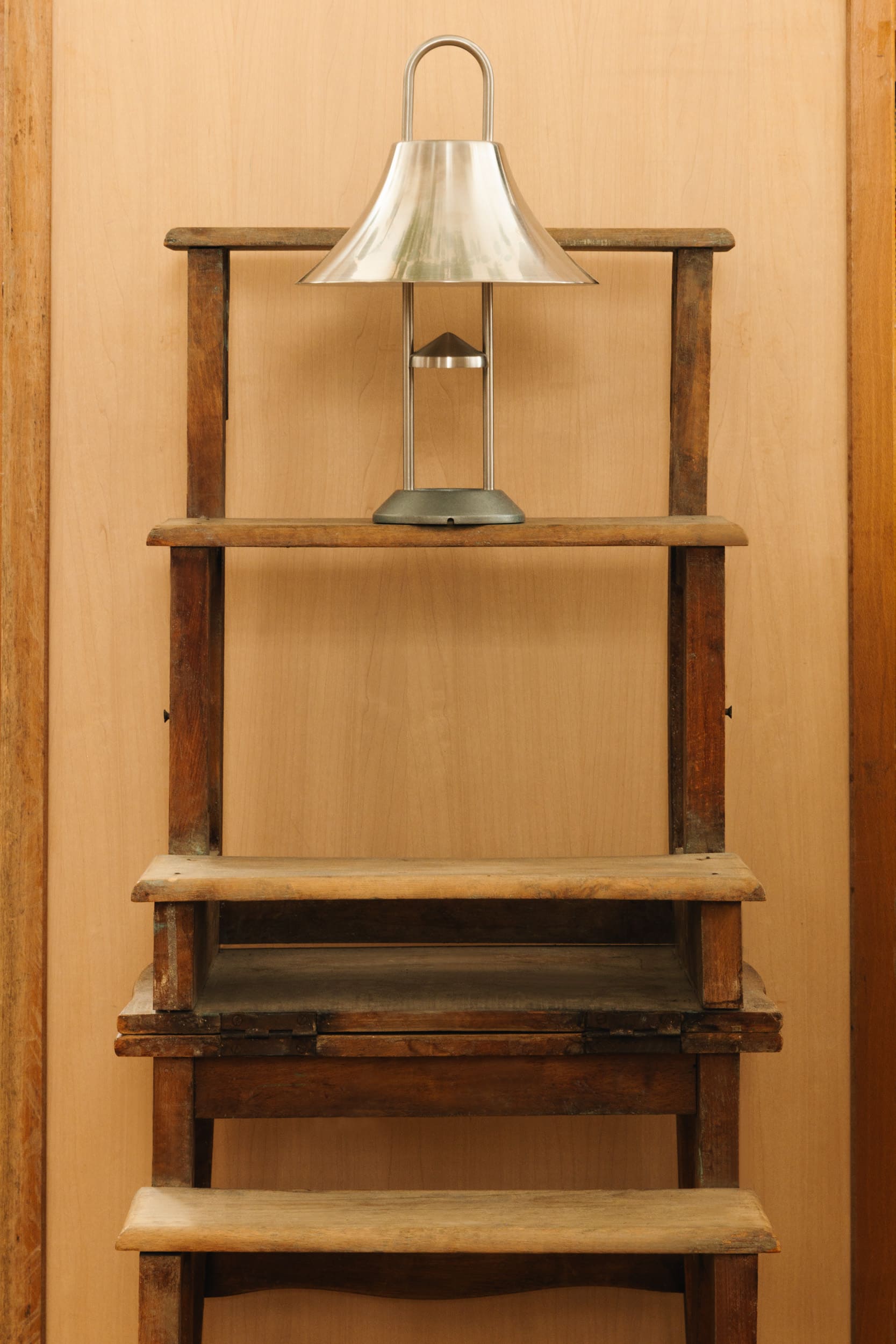
Mousqueton is a portable lamp that Sempé designed for Danish brand HAY, and one of her favorite projects. Named after the French word for carabiner, the lamp features a hook at the top that creates multiple hanging possibilities.
( 1 ) Jean-Jacques Sempé, Inga’s father, was largely unknown in the English-speaking world until The New Yorker commissioned him to produce a cover illustration in the late 1970s. He would go on to produce 106 of the magazine’s covers in subsequent decades—more than any other artist.
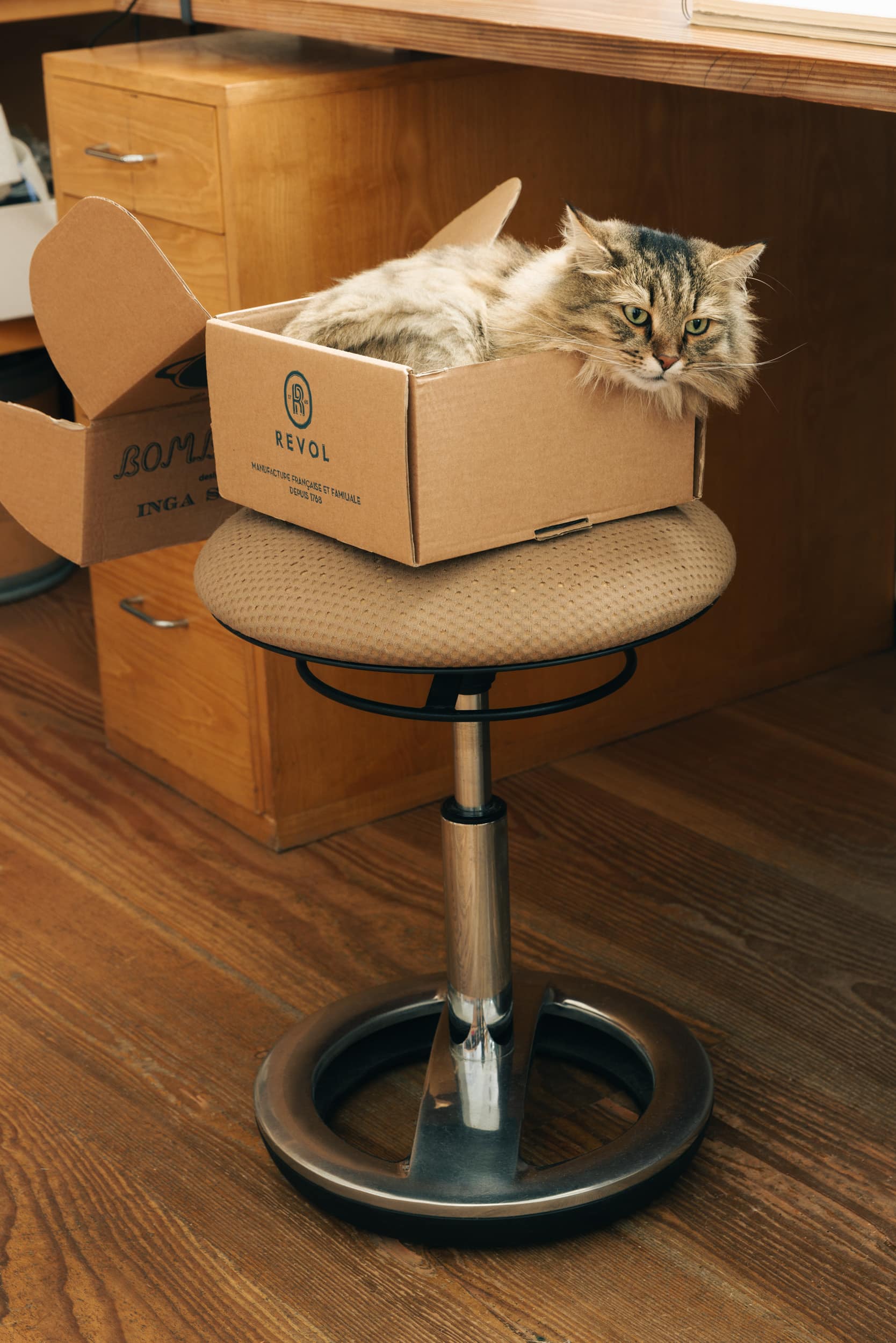
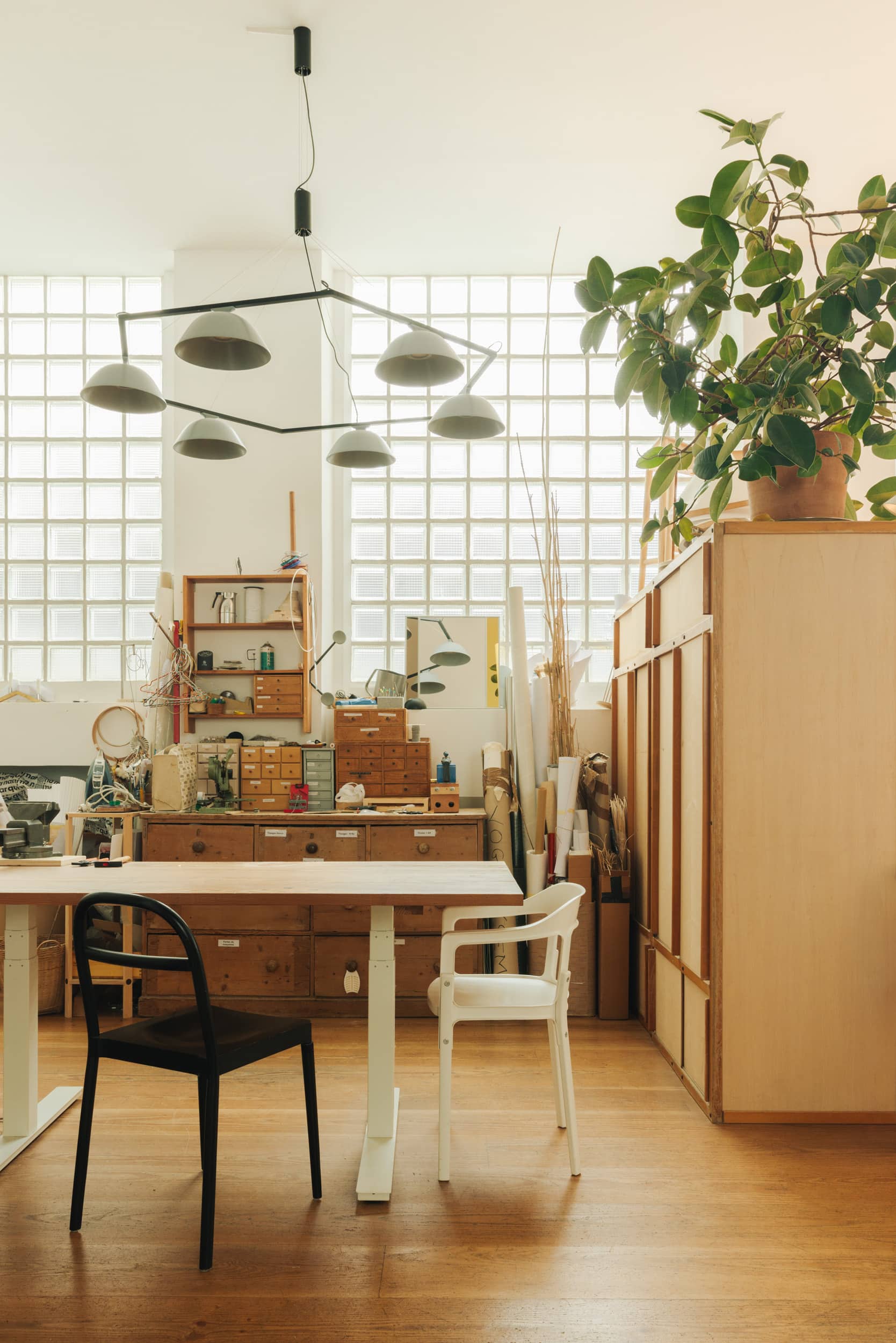
Sempé’s studio in the 10th arrondissement of Paris.