INTERPLAY
- Words Agnish Ray
- Photo Silvia Conde Oliván
Inside Expormim—the Spanish furniture company preserving the art of rattan.
There’s a before and an after,” says Paco Melió, comparing a freshly sanded stick of rattan, smooth and pale brown, with a raw, unworked equivalent. The seasoned craftsman is in the furniture factory where he’s worked for over 50 years, and where his mother worked before him, making the wicker baskets once widely used in this rural corner of southeast Spain. Now 67, Melió is delaying retirement as long as he can: The factory feels too much like home.
The factory in question belongs to Expormim—a familiar name here in Moixent, a town an hour’s drive inland from the coastal city of Valencia. Founded in 1960, the company started out by using wicker to produce baskets, trays, bread bins, wine holders, room dividers and decorative items. In the 1970s, they switched to rattan, a vine-like palm species native to tropical climates. Its firm, resistant quality lends itself to sturdier structures required for furniture design, which is now the company’s mainstay.
“Originally, rattan was used with the skin,” says Melió, explaining how Expormim has refined its approach to working with the material over time. “Now, all the rattan in this factory is calibrated and peeled.” He shows where the long sticks of the peeled bark are stacked upright by the hundreds; the bunches are organized according to diameter, as well as their natural hue, which determines what color they can be painted.
Expormim thrived through the 1980s and ’90s, expanding its technical and industrial capacities and producing straightforward, good-quality household furniture with wide appeal. At the turn of the century, however, cheap imports and e-commerce challenged the company’s business model. Expormim had to decide between targeting the middle- and high-end markets, and design collaborations have helped them pivot toward the latter. The Fontal chair, designed by Oscar Tusquets in 2012, for instance, celebrates rattan’s flexibility through components molded into curved, continuous shapes and woven seamlessly together; small details in the finish elevate the chair into something refined and elegant.
Today, external designers make up around 90% of Expormim’s catalog, from the late Miguel Milá—among the first independent designers to create signature pieces for Expormim—to Norm Architects, whose Brae outdoor sofas have a gently curved shape, and Roberto Lazzeroni, who has used sapele wood in the frames of the recently released Meridies sofas. New for 2026, Javier Pastor’s Leku collection of tables and chairs was inspired by Basque sculptor Eduardo Chillida.
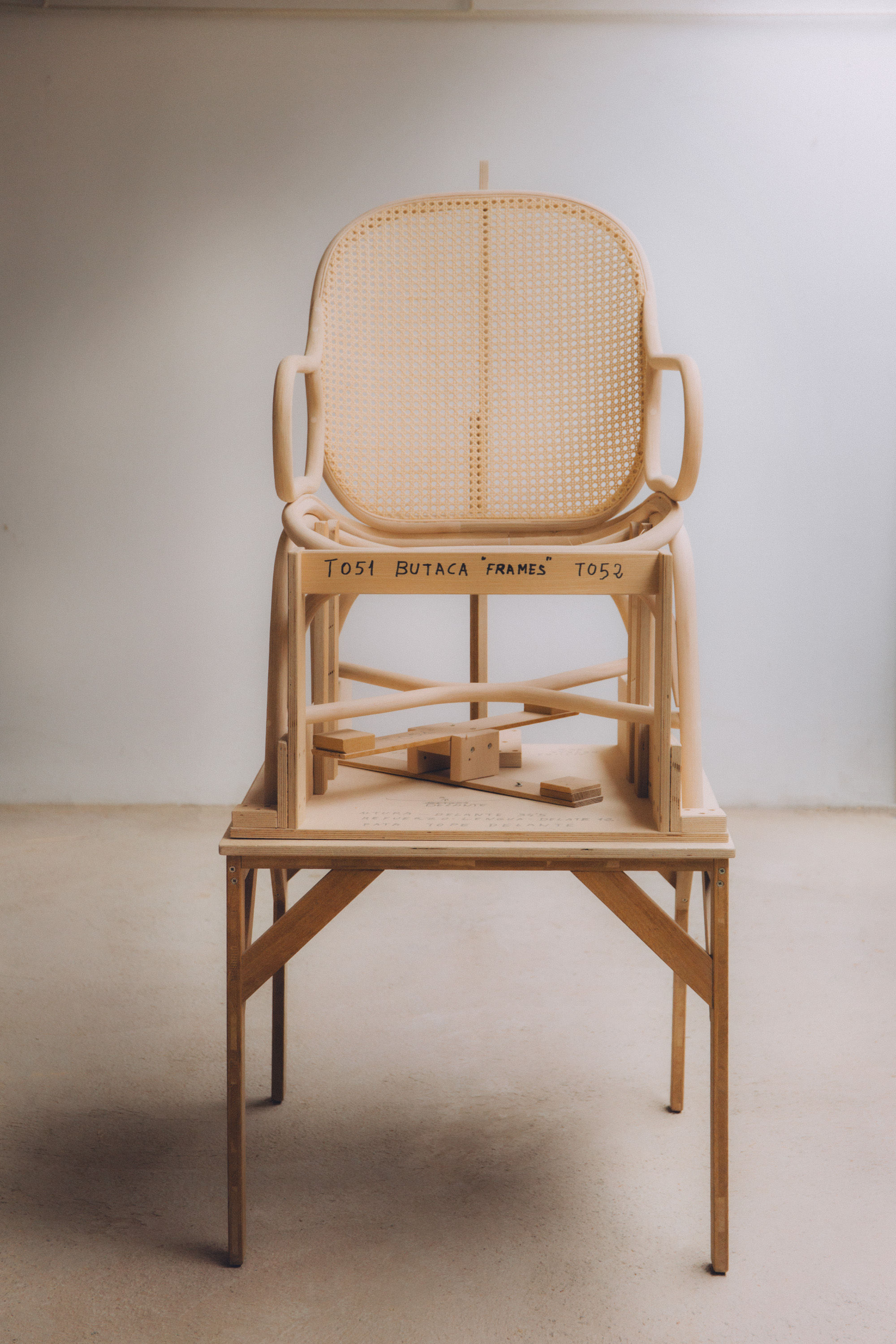
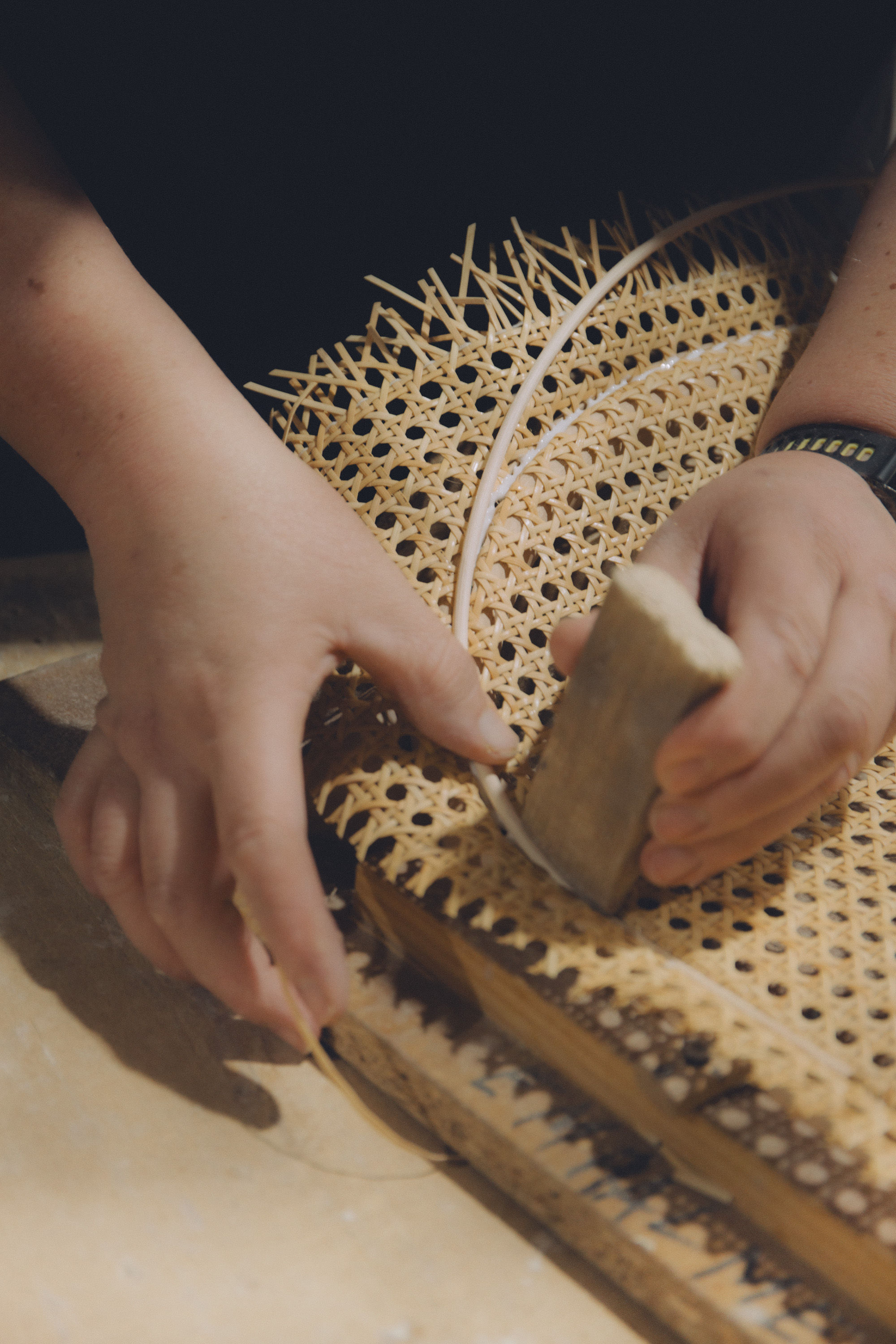
Celebrated Valencia-based designer Jaime Hayon, who designed the Frames collection in 2014, was drawn by Expormim’s expertise in rattan. The five chairs in the collection feature peeled, tinted rattan frames with upholstered seats and backs made of latticed octagonal wicker; a footstool, a room divider and two coffee tables complete the collection. “Rattan feels human and flexible,” explains Hayon, who won Spain’s national design award in 2021. “It allows fluid, lightweight shapes. It also conveys optimism and approachability—something that rigid materials rarely achieve.”
While Hayon’s studio is known for explosive color combinations, whimsical shapes and vivid imagery, he channeled Expormim’s more muted style with Frames. “It was important to respect their craftsmanship and historic relationship with rattan, which naturally guided the collection toward a more essential and refined expression,” he explains. “Although Frames is more restrained than some of my other works, it still reflects my design language: sculptural lines, organic curves, playful proportions.”
Expormim was in a unique position to realize Hayon’s designs—which he compares to “drawing lines in space; graphic, but warm and approachable”—with the necessary care and attention. The company is the last in Europe still producing rattan furniture by hand, with around 50 craftspeople working in teams dedicated to tasks including cutting, molding, assembly, upholstery and painting. Amidst the immediacy of mass-produced, fast-moving, machine-made goods, Expormim’s artisans champion slow, considered making.
There is one notable exception at the factory, however: the 5-axis CNC, a machine that transformed many operations around a decade ago. It punctures holes and carves grooves into the various components—whether in rattan, wood or metal—that make up each piece. Melió’s son-in-law, Moisés Miralles, is stationed here. Together, the two craftsmen represent the exchange of skills and knowledge across generations at Expormim.
This intergenerational community of craftspeople forms Expormim’s heart and soul, mirroring the company’s ownership, which has remained with the same family since its founding. “There are people here who have worked with my grandfather, with my father and with me,” reflects Mercedes Laso, the CEO, who is actively nurturing the region’s next generation of makers to secure the company’s future. “We’re collaborating with a vocational training center that teaches upholstery and carpentry, exploring workshops and other ways for students to better understand what it means to work at a company like ours,” she explains. “It’s a way of encouraging people to see Expormim as a place where they can do their very best work.” Only through these learned, patient hands can the company continue to mediate between the industrial and the artisanal—and flourish.
This story was produced in partnership with Expormim. | expormim.com
“Rattan feels human and flexible. It conveys optimism and approachability.”
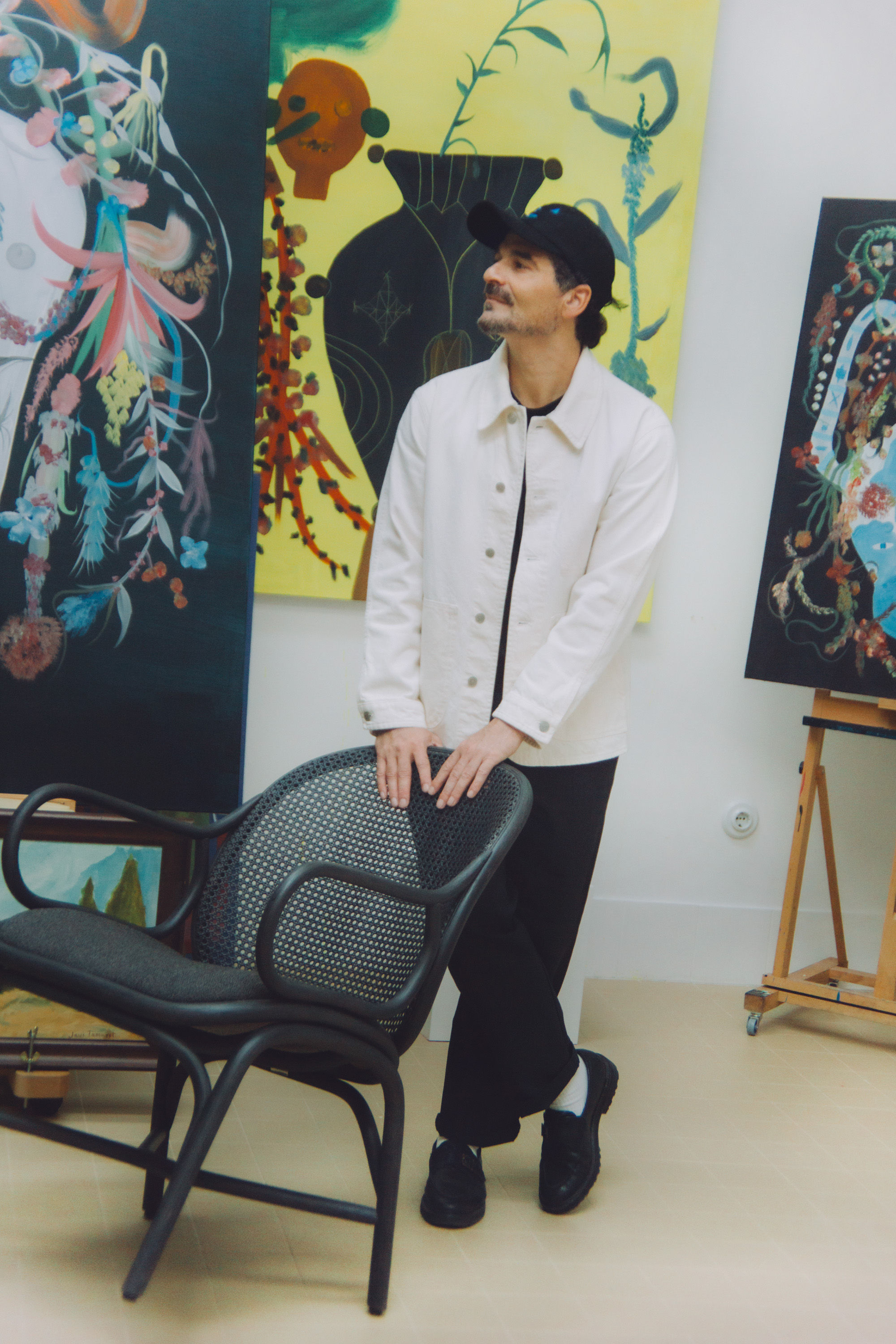
Designer Jaime Hayon, photographed at his Valencia studio.
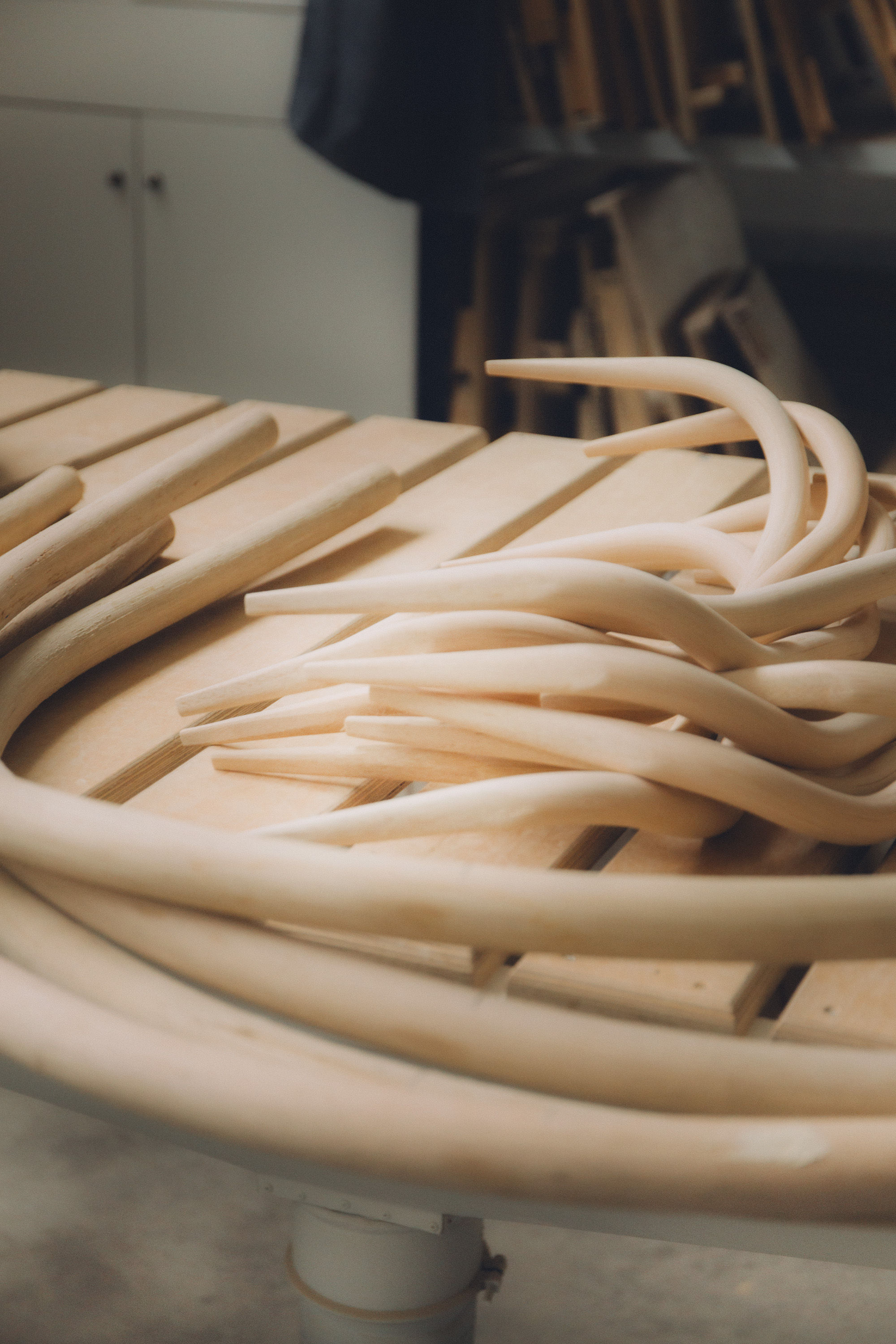
Components of the Frames low-back armchair before assembly.