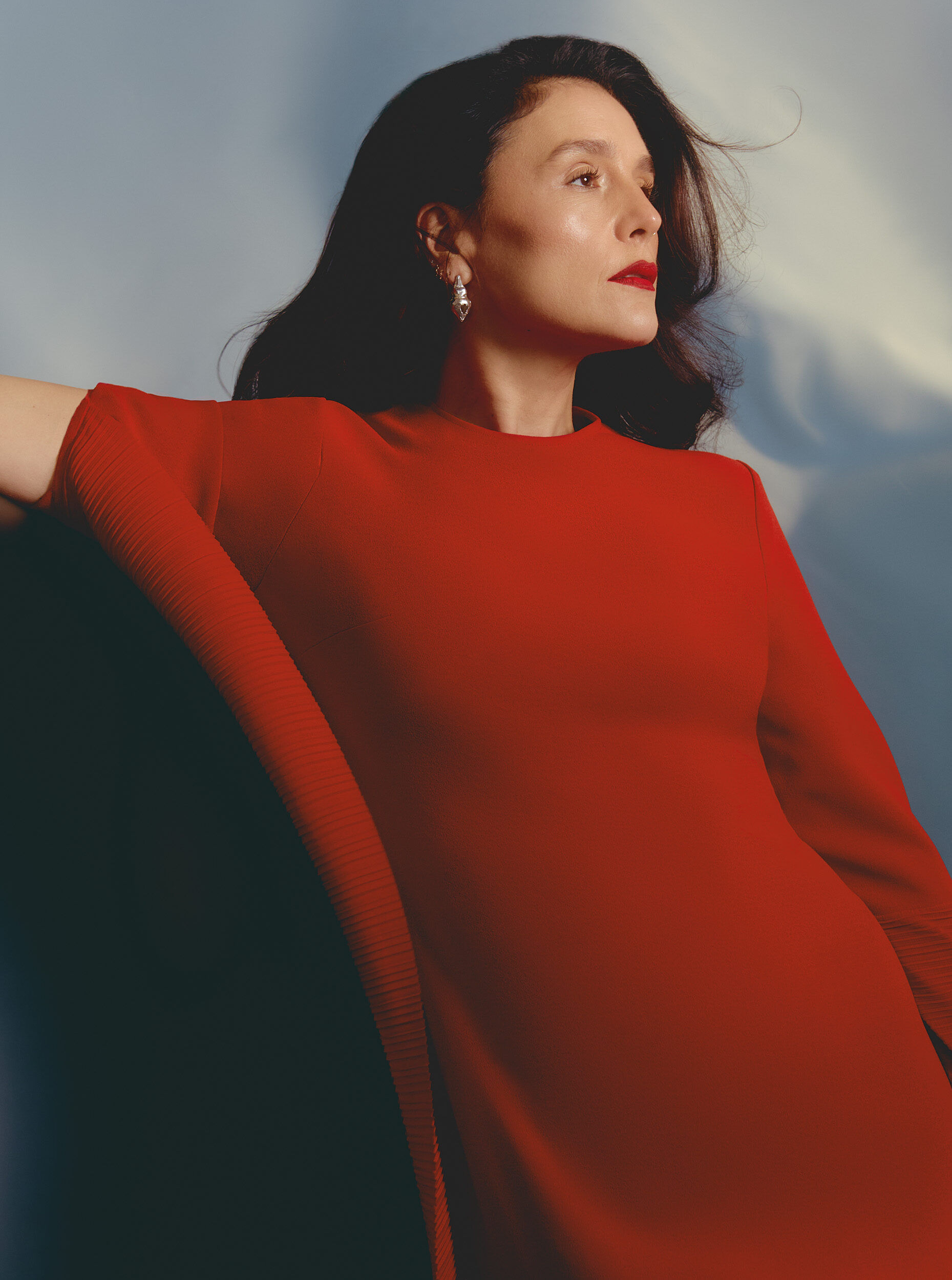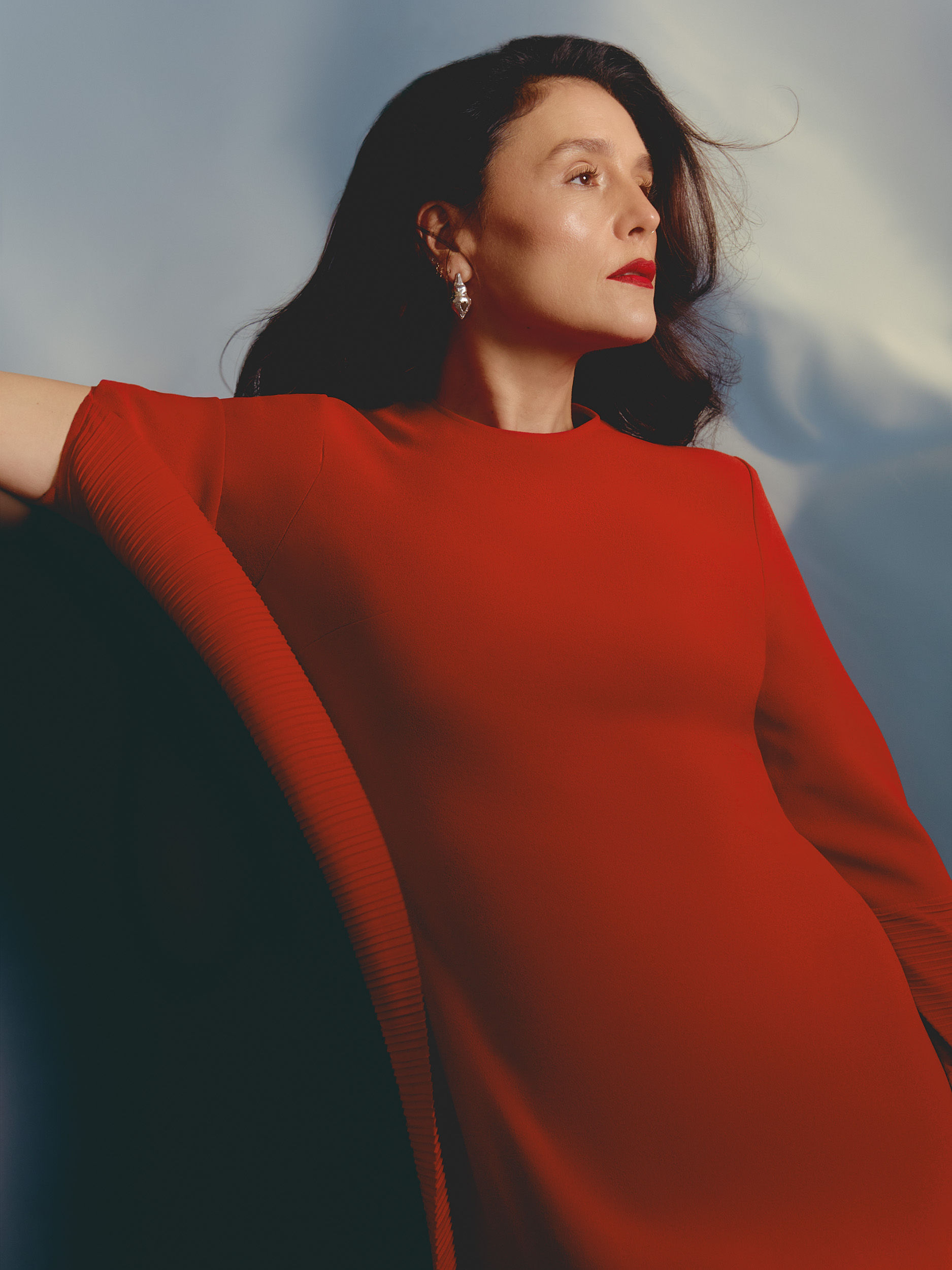
She wears a dress by SOLACE LONDON and earrings by ALIGHIERI.
JESSIE WARE
- Words Tara Joshi
- Photos Raphaëlle Orphelin
- Styling Aartthie Mahakuperan
Music. Podcast. Cookbook. Family: Inside the orbit of an artist in perpetual motion.
- Words Tara Joshi
- Photos Raphaëlle Orphelin
- Styling Aartthie Mahakuperan
- Set Design Chloe Rood / One Represents
- Hair Patrick Wilson / The Wall Group
- Makeup Alex Reader / One Represents
- Producer Meghan Willcox.
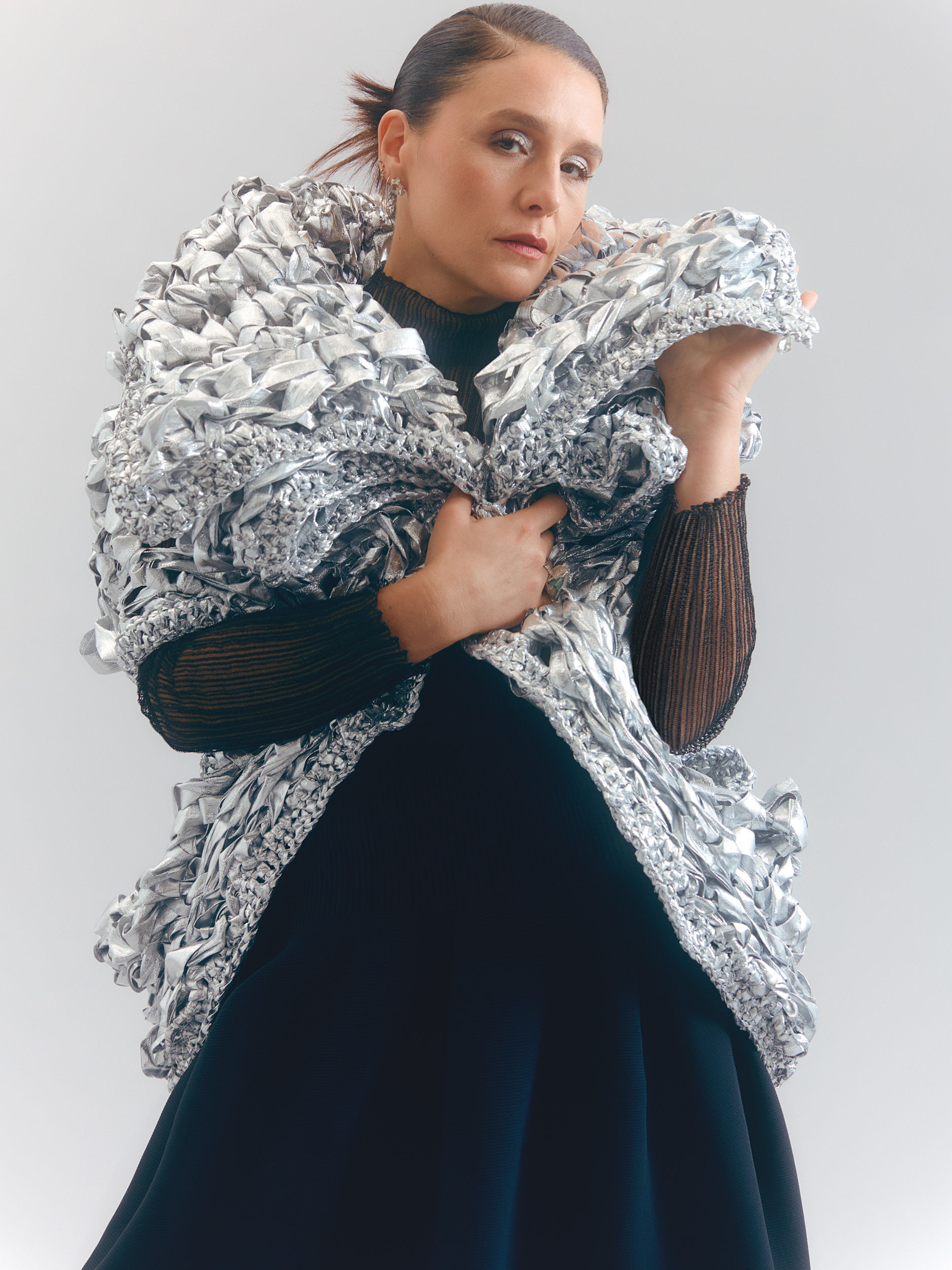
Ware wears a jacket by MAXIMILIAN RAYNOR, a skirt by CFCL and jewelry by JAYNE FOWLER.
Jessie Ware’s cover shoot is a whirlwind of glamour: hair, makeup, gowns, a table strewn with gold and silver jewelry. There’s a leaf blower in lieu of a wind machine, and Everything but the Girl throbbing from a speaker. Ware, however, rolls her eyes and brings it all back down to Earth. “I’m playing fucking dress-up before I have to go to parents’ evening,” she laughs.
The 41-year-old is a mother of three, and as soon as things have wrapped up here, she’ll be heading straight to her kids’ school to meet with their teachers. It’s the sort of domesticity that sits hand in hand with the sensual, sparkly allure of her music: Ware is simultaneously celebrated as a singer-songwriter who has twice been nominated for the Mercury Prize, and as the co-host (or “supporting actress” as she puts it) of Table Manners, a much-loved podcast where guests are invited to discuss food and family with her mother, Lennie, at home in London. The series has even led to a Table Manners cookbook, in which the duo suggest hearty meals for feasts and gatherings.
Appetite and abundance are central tenets of Ware’s oeuvre. “I think I’m just greedy,” she says, laughing. “Greedy in life, greedy in food, greedy in everything.…” It’s Ware’s craving for more—more bliss, more joy, more pleasure—that fizzes through her back catalog, and now her effervescent sixth album, Superbloom: a gorgeous, maximalist affair that nods to groove, soul, psychedelia, dance and her love of disco. Her voice feels bigger than ever, as if untethered at last. This, she explains, is not a coincidence. “It shows my growth,” she says. “I’ve always wanted to shrink myself slightly, be lower in the mix, that’s just how I’ve enjoyed it. But I think I was ready to sing.”
We’re chatting while she’s waiting for her lunchtime tuna poke bowl to arrive and, as her makeup is being removed, she begins to explain how she got to this point in her career—finding confidence in herself as a solo artist, when she once enjoyed being in the background. In the early 2000s, Ware was at school in South London with singer-songwriter Jack Peñate, Felix White of The Maccabees and Florence Welch. (She appeared alongside the Florence and the Machine singer in a school production of Guys and Dolls.) At that time, social media and new music were coalescing for the first time, with platforms like MySpace and a healthy blog scene allowing artists to build fan bases away from the traditional label model (“I remember I had Lily Allen in my ‘Top Friends’ on MySpace,” Ware says).
After graduating from the University of Sussex with a degree in English literature, Ware decided to defer pursuing a career in law to have fun with her friends in the emerging indie scene, becoming a backing singer for Peñate on his tour across the US. “I was going on tour with my mates, staying in motels,” she says. “For me it felt like I was part of Almost Famous or something. I was just doing it for the memories, so that one day, when I had a proper job, I could tell my future kids that ‘Mum went around the world with her best mates!’”
Now, 15 years later, her children make a brief appearance on “Love You,” a tender piano track on her new album (a process that she likens to bringing your kids into the office). But back in 2009, before they were born, Ware says she was not considering releasing music by herself. That she did was due to friends’ support and encouragement, nudging her to pursue her own path until she became the buzzy vocalist who featured on tracks by Sampha and electronic musician SBTRKT. In 2010, she put out her first single, the aptly titled “Nervous.”
By 2012, Ware had released her highly acclaimed debut album, Devotion. It was a record of woozy, slinky soul vocals steeped in a long-standing love for Chaka Khan, Sade and Aaliyah, and her passion for British dance music. “I had a lot of lucky breaks, but also there was this beautiful synergy,” she says. “I was clubbing, I was out, there were lots of South London people, it was very exciting. Maybe it’s kismet that I was in the room with these brilliantly talented people and that I learned a lot from them.”
If you watch her music videos from that period, Ware looks somber, almost stern; a far cry from the woman at the shoot today, her easy warmth filling the room as she natters away and refers to everyone as “babe.” “I was so nervous and shy,” she recalls of that time. “It all came very quickly; the Devotion era was mad and I don’t know if I was particularly ready for it. I look back at the videos of me, and I look terrified—I was terrified that it was all going to fall apart.”
Her subsequent albums, 2014’s Tough Love and 2017’s Glasshouse, were both well received, though not as lauded as her debut. Ware has spoken of how jaded and uncertain she felt by the time she made Glasshouse: She had lost sight of the kind of music she was meant to be making and frustrated with the prospect of touring now that she and her husband, her childhood friend Sam Burrows, had had their first child.
Later that year, however, she and her mother launched Table Manners; a riff on the Jewish Friday night dinners that Lennie had been preparing for Jessie and her siblings’ friends since childhood—only now, Jessie and those friends were famous. The podcast would play an integral role in Ware truly finding her voice. Where her music had been shrouded in self-described seriousness, all lyrical mystery and metaphor, Table Manners allowed her to relax and be herself: radiant, welcoming, caring, chatty, funny.
“I always found with music that I could go behind the curtain,” Ware says. “I was this melancholy singer and I don’t think I was being particularly honest. [The podcast] gave me license to have a bit more fun.”
The podcast’s success—it has 60 million downloads worldwide—meant that music didn’t have to be her bread and butter, and allowed a more mischievous, joyful artist to take center stage. And so began the sumptuous era of Ware’s work that we’re in now, starting with What’s Your Pleasure?, the record that helped give 2020 some much-needed escapist, sexy, euphoric disco, followed by 2023’s equally transcendent That! Feels Good! “I really feel like I understand myself more as an artist since What’s Your Pleasure?,” she explains. “It’s kind of a nod to theater and performance: I started to step into characters, and I felt allowed to have playfulness within the music.”
Ware clearly enjoys theatricality—often to the point of camp. She’s appeared on stage with the likes of Trixie Mattel and Real Housewives’ Erika Jayne, and has been a judge on RuPaul’s Drag Race UK. This current era is so coquettish that Ware’s live shows feature a microphone that doubles as a whip. “The whip! I mean the whip must stay, the whip must stay,” she says, laughing, “But I wish I could be a bit more Gaga about it. I accidentally whip myself and break character—Gaga would not break!”
Relatability is part of Ware’s charm; there’s a joy in witnessing someone finding their confidence in real time and having fun while doing it. “After What’s Your Pleasure? was really celebrated, I was like: I know what I’m doing,” she says, “I gave myself permission to take control. I’m enjoying this world that I’ve been allowed to create, and taking people along for the ride.”
“I’m just greedy. Greedy in life, greedy in food, greedy in everything.”
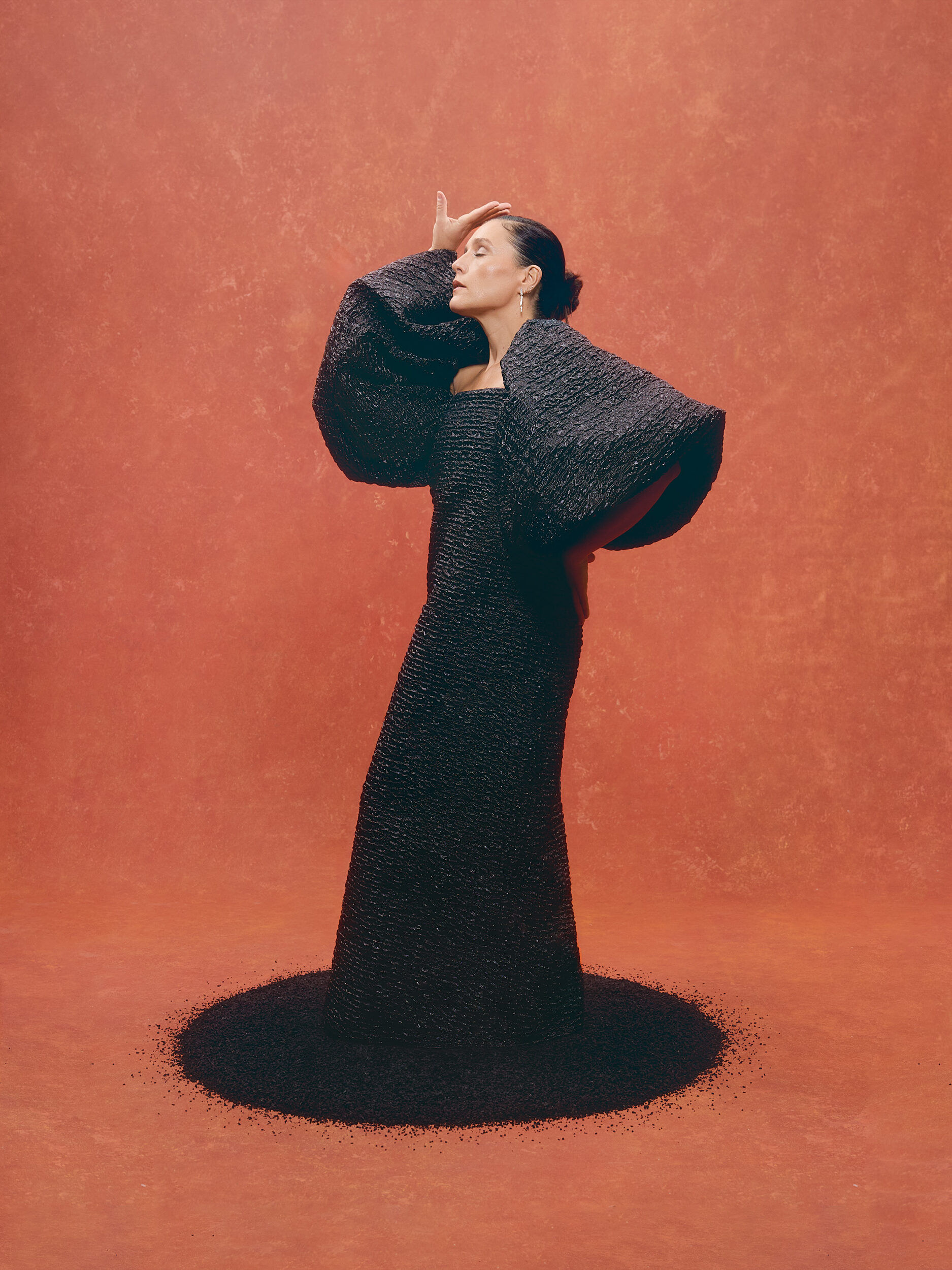
Ware wears a dress by DIMA AYAD and earrings by JAYNE FOWLER.
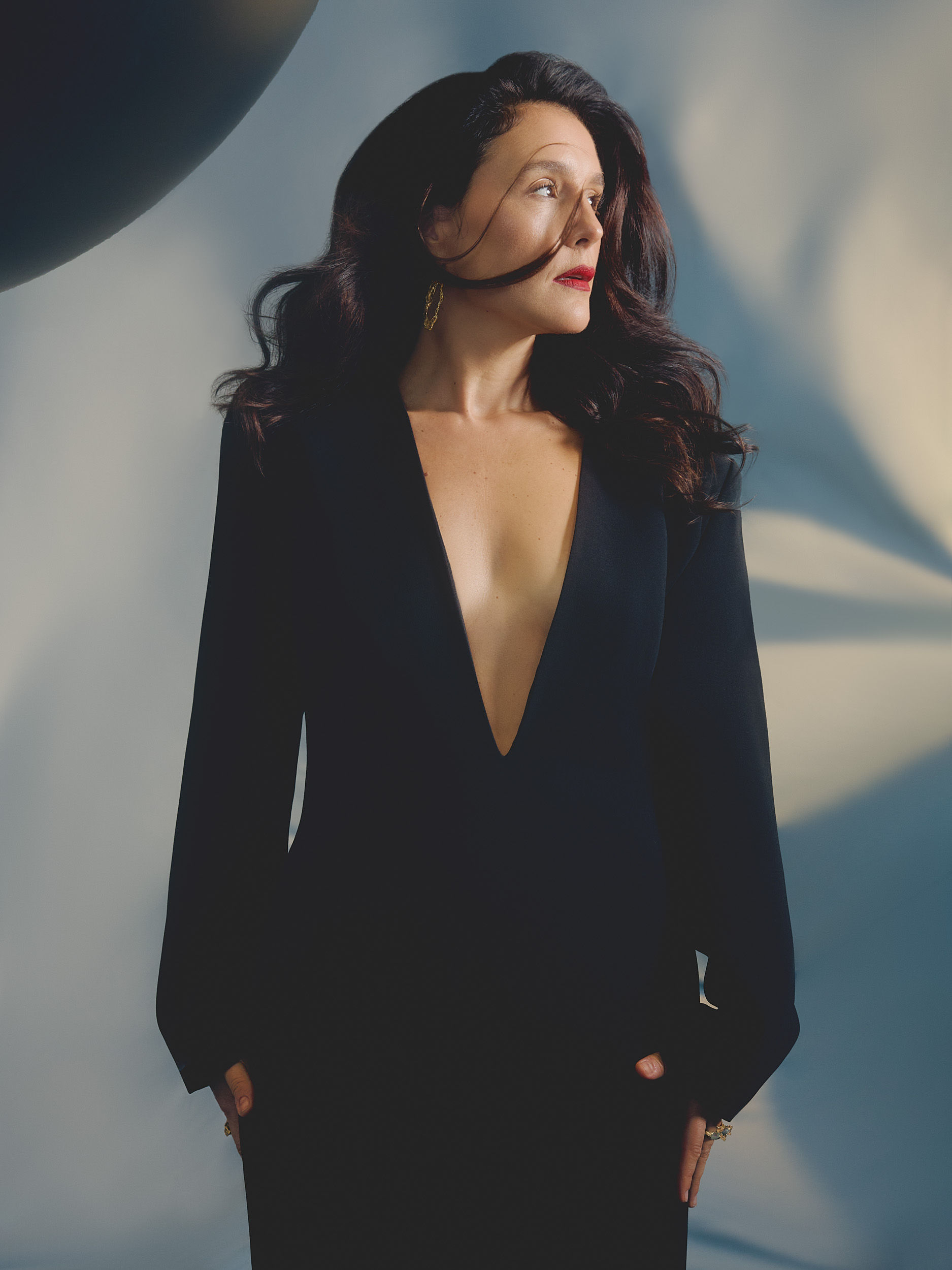
She wears a dress by SOLACE LONDON and earrings by LOVENESS LEE.
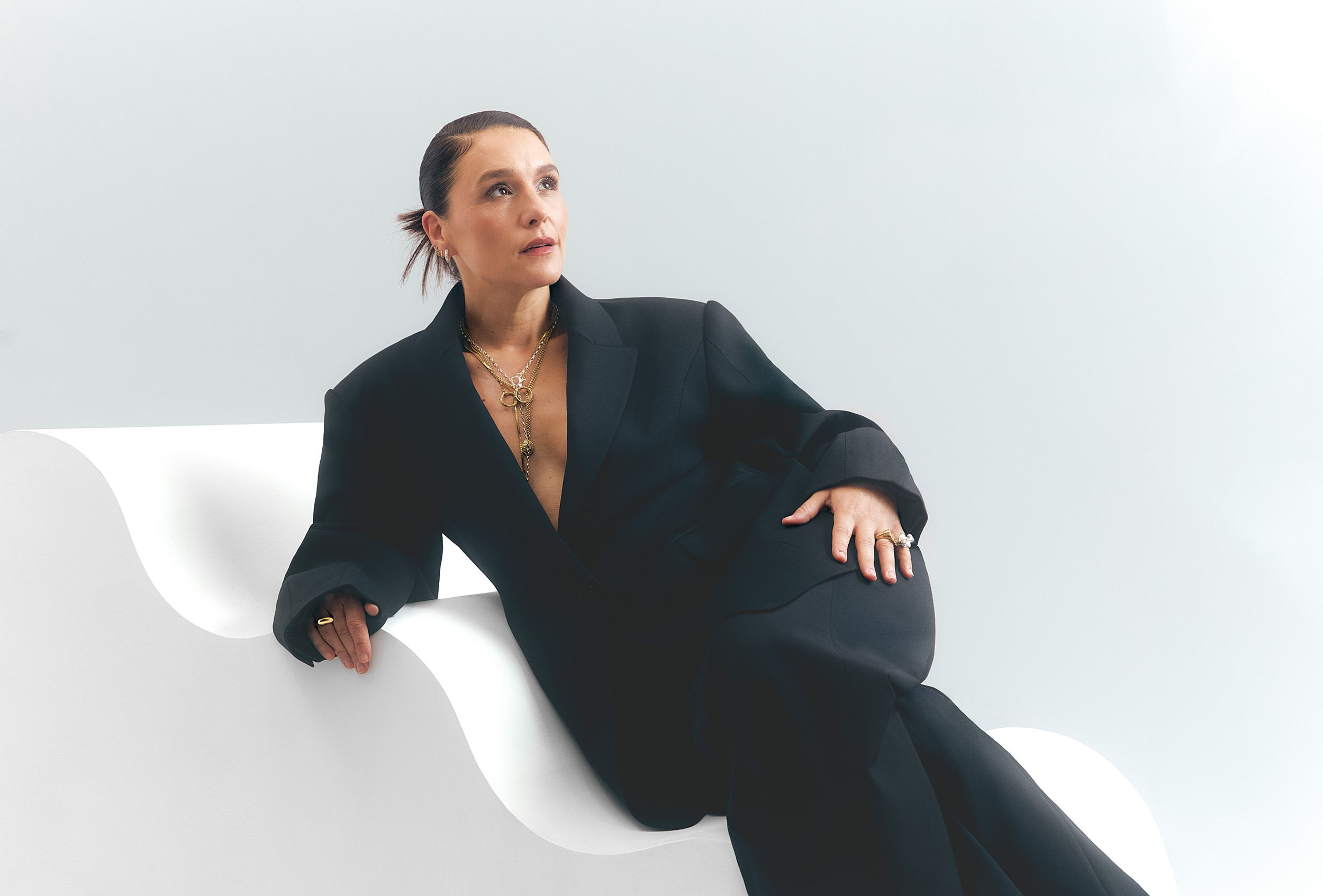
She wears a suit by REBECCA VALLANCE and jewelry by JAYNE FOWLER.
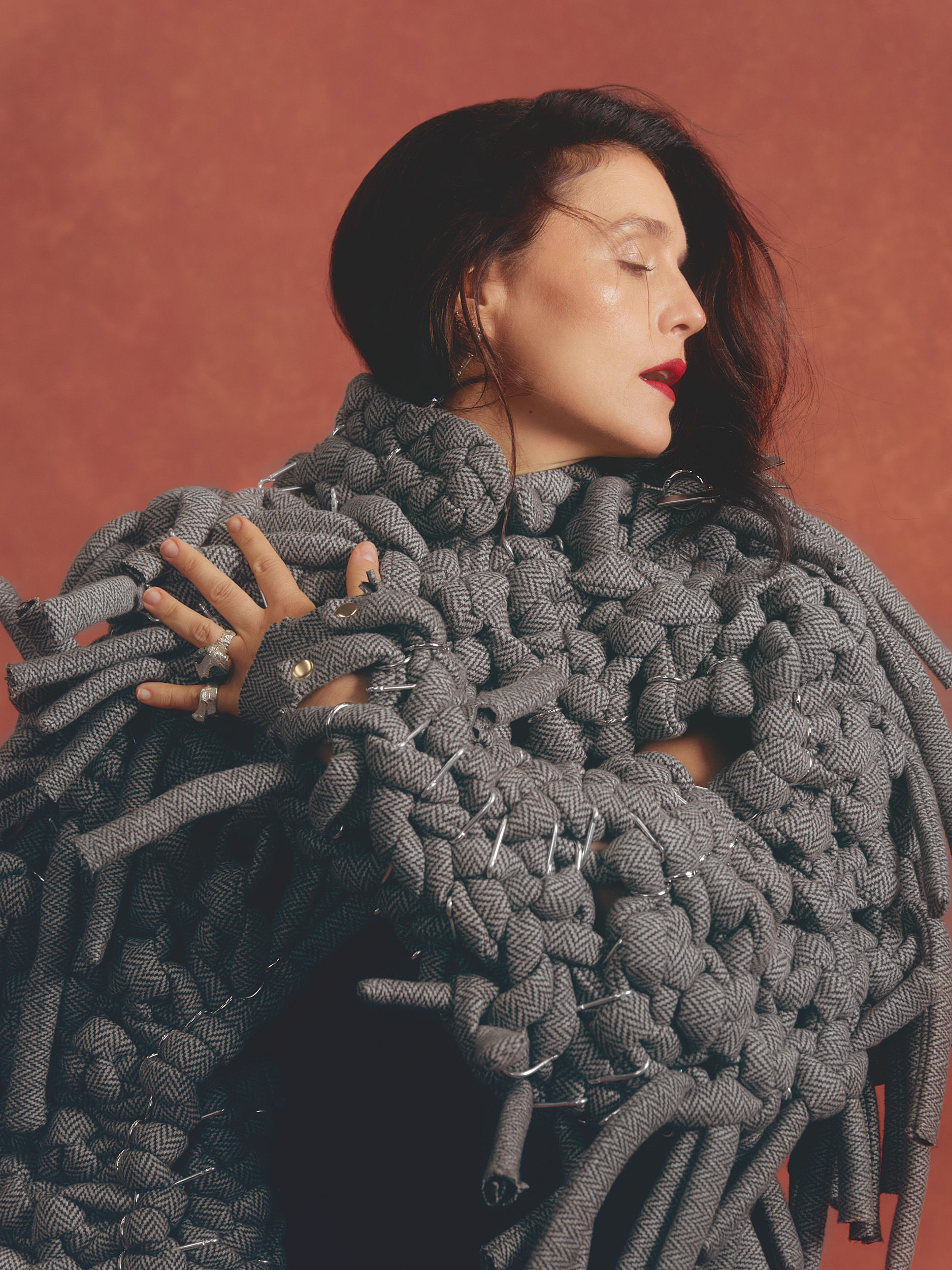
She wears a cape by MAXIMILIAN RAYNOR and rings by JAYNE FOWLER.
It’s what makes Superbloom feel so special; yes, there’s the raunchy fun—notably on “Ride,” which interpolates the theme from The Good, the Bad and the Ugly into a brash, clubby earworm, and “Mr Valentine,” where she commands a lover that she wants “it all the way up, up, up!”—but it also sounds like an artist stepping up a level. This is cosmic world-building through a rich orchestration of flutes and strings, taut, glossy bass lines, huge, celestial vocal harmonies (“I’m always layering an extra vocal—there were points where we’d already have like 80 backing vocals, and I’d say, ‘Let’s have another one!’”) and Ware’s formidable, at times almost operatic voice. “I love all my records, but I wanted to be a vocalist on this one, and for people to understand that I take my job as a singer quite seriously,” she says.
Ware explains that she took inspiration for the album from Juno, the Roman goddess of childbirth and fertility, who wielded great power but was still surrounded by chaos. In Ware’s experience, appetite, ambition and abundance are not without their costs, especially for women who want both a career and children. “16 Summers,” an unusually raw moment on the album, sees Ware wishing she could have more time with her kids: “I know what it means when all my dreams are keeping me away,” she sings.
“I think mothers struggle with this ingrained sense of guilt,” Ware reflects. “I struggled with it, and I tried to express it in the song. It isn’t just for parents—it can just be about wanting more time with someone and time slipping away. But I’m always…” She pauses, before starting over. “I have ambition and I have appetite; I have goals. I like the fact that I push myself and I want to be proud of that. However, I do have to acknowledge that there are sacrifices as well. Lots of people think that I present as somebody that has it all and is having a wonderful time, but there is mess.” Still, she is conscious of not wanting to take herself too seriously. “I don’t think that I should be patted on the back for doing the school run because I’m a pop star, you know?”
Ware cuts an unusual figure in the world of celebrity: She is cozily entrenched in her family life, be that spending time with her husband and kids, or chatting with her mother and A-listers on her podcast. And at the same time, she’s an artist whose dazzling work pulses with humid lust and coy desire; no mean feat in an industry renowned for ageism and misogyny. And where women artists are typically rewarded for diaristic candor, there is something refreshing about Ware’s version of vulnerability—one that is self-deprecating but honest about desire, and trying to find gratitude, brightness and imagination in life’s ordinary moments. “I’m appreciative of what’s happening and I don’t take it for granted,” she says. “I can be quite ‘glass half-empty’ sometimes, but I’ve surrounded myself with ‘glass half-full’ people, which has been really helpful.”
On Superbloom, we find a boundless artist at the height of her powers, thriving and celebrating her relationships with her husband, her family, her friends, her audience and with herself. Coming after years of uncertainty and shyness, the album is a sublime celebration in the face of the world’s heaviness—the culmination of what she considers to be a trilogy with What’s Your Pleasure? and That! Feels Good!—that seeks to entertain and implore people to dance. It’s a pleasurable, freeing escape that Ware needs as much as anyone listening.
“It’s about highlighting the imperfections, but also enjoying the abundance and enjoying where I’m at,” she says. “I’m enjoying doing the most on a vocal, I’m enjoying getting that flute player that I’ve always said I wanted; I’m enjoying that I can revel in all this, because I’ve earned this world that I’ve created.”
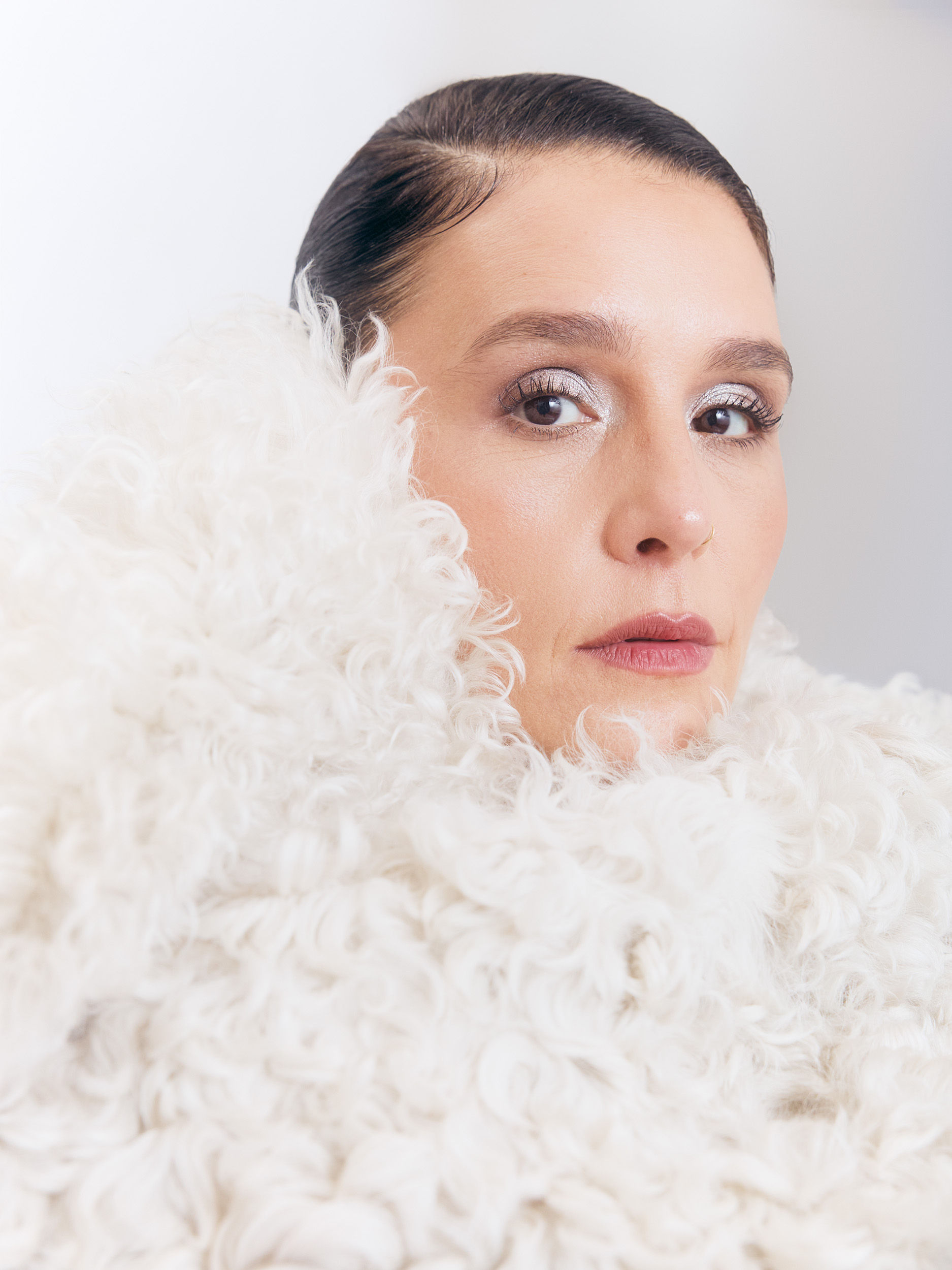
Ware wears a collar by NAYA REA.
“I present as somebody that has it all and is having a wonderful time, but there is mess.”
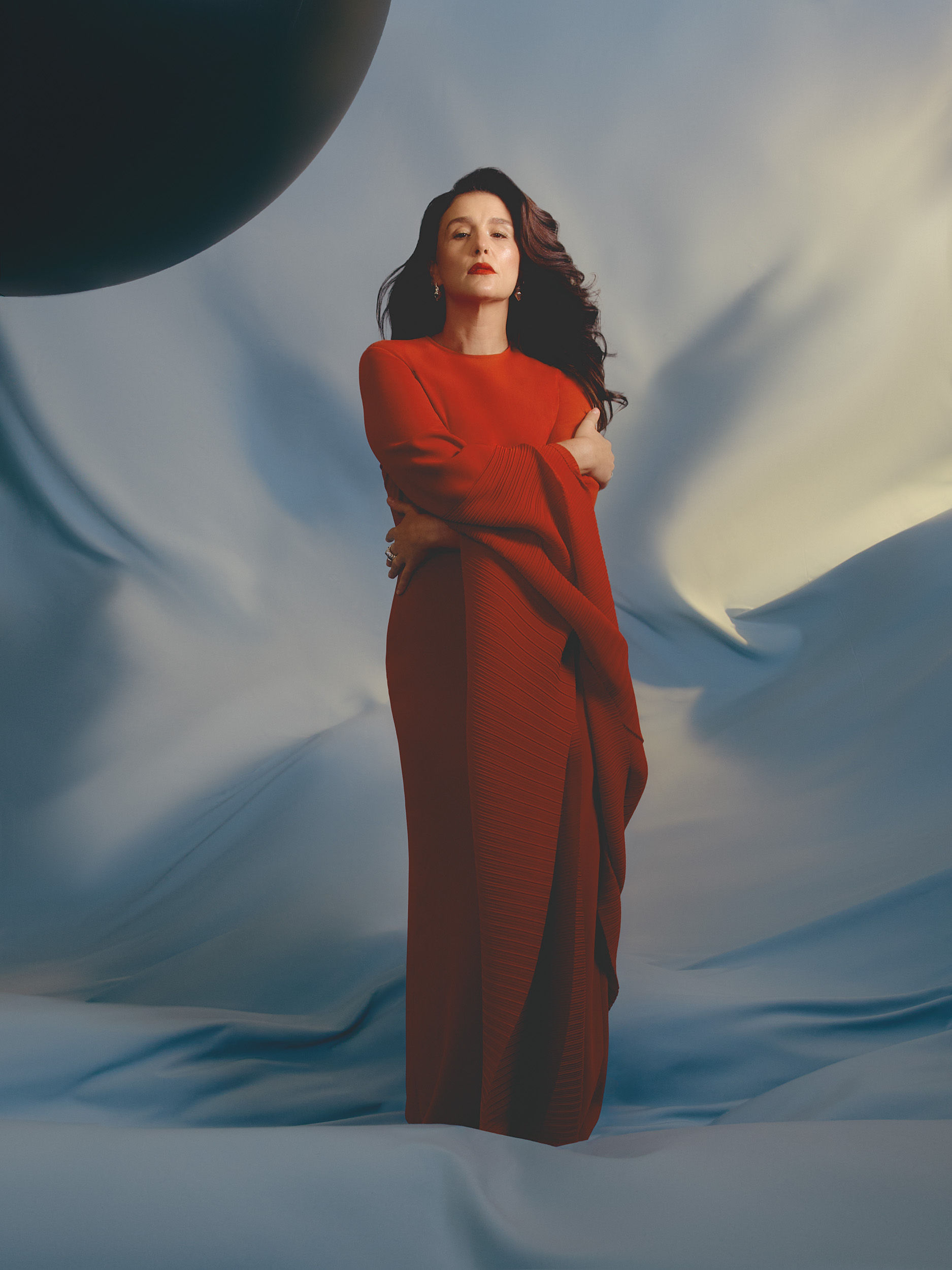
Ware wears a dress by SOLACE LONDON and earrings by ALIGHIERI.
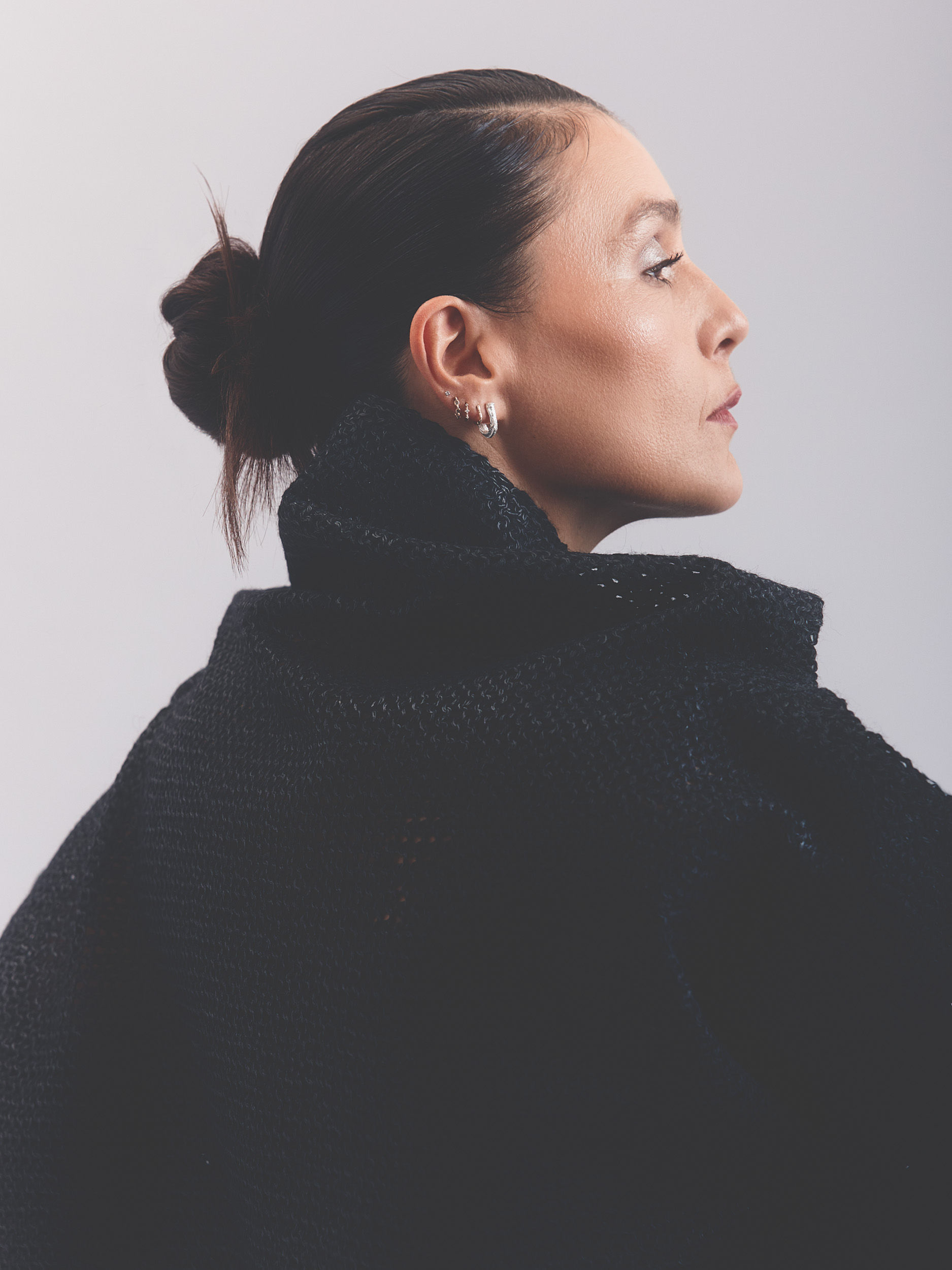
She wears a top by ISSEY MIYAKE and earrings by JAYNE FOWLER.