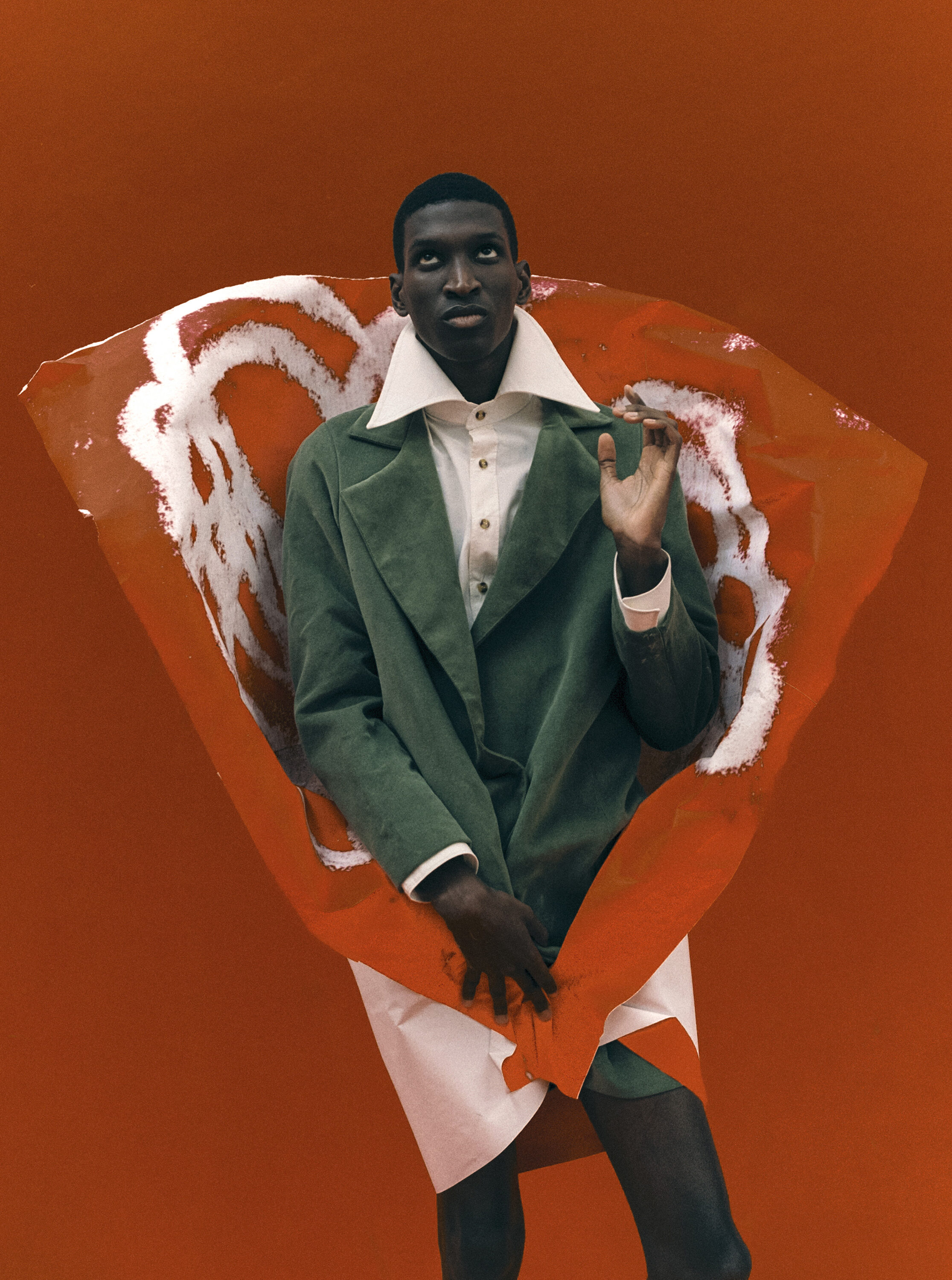
To encourage her son's aptitude for math, Urschel's mother would allow him to keep the change from shop visits if he could calculate it faster than the shopkeeper.
What’s the likelihood of an NFL player quitting football to pursue a PhD? In Somerville, Massachusetts, Robert Ito speaks to the offensive lineman-turned-mathematician who could calculate the exact probability—and hears about what it’s like when your career goal switches from getting touchdowns and being picked as a first-season starter to dreams of peer review publication and a professorship.
On July 27, 2017, John Urschel, an offensive lineman for the Baltimore Ravens, announced his retirement from football. Only three years into a successful NFL career, Urschel had seen an article in The New York Times two days earlier about chronic traumatic encephalopathy, or CTE, a degenerative disease linked to repeated blows to the head. A neuropathologist had examined the brains of 111 former NFL players, and found that all but one of them had CTE, brought on by helmet-rattling concussions and an accumulation of smaller hits suffered over a lifetime of football.
This news would have alarmed any NFL player, as it did Urschel, who had suffered a concussion in 2015 so severe it left him unable to play for days. But Urschel had perhaps a greater interest in protecting his brain than most, seeing that, in addition to being a Baltimore Raven, he was (and currently is) a doctoral candidate in mathematics at MIT. This was a guy who had a vested interest in having his brain working right, and a six-month-old daughter to think of besides.
While outlets reporting the news of his retirement focused on what Urschel was giving up (“He quit the NFL for a career in math,” The Washington Post headline read), the act was one of love as much as sacrifice. Because, make no mistake about it, Urschel loves math, in ways few of us can fathom, and always has. But then, he really loves football too—the friendships and camaraderie most of all. How do you leave one love for another, particularly for someone like Urschel, who had been wooing both since he was a child?
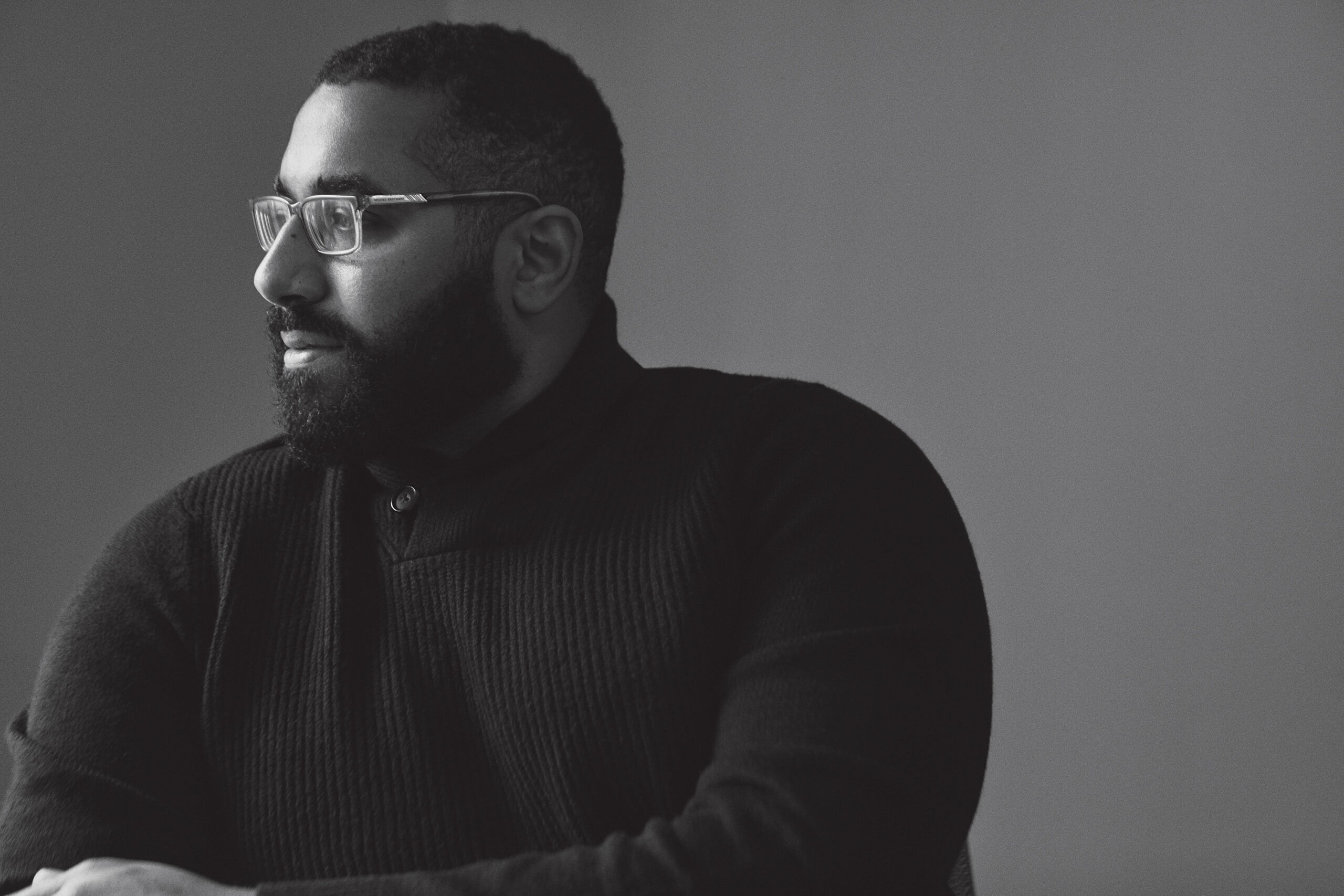
On a recent afternoon, Urschel was in his home office in Somerville, Massachusetts, describing how he traded life in some of America’s most storied sports stadiums for the admittedly more intimate confines of an MIT classroom. Bespectacled, wearing a black hoodie, Urschel smiles often, and thinks about things very methodically, so when he’s asked about his decision to leave football, he explains it in terms of a series of goals. There were things he wanted to do, say, five years ago; today, there are other things. With football, there were clear benchmarks: play for Penn State (check); get drafted into the NFL (check); make it into the postseason (check). With math, it’s publishing in peer-reviewed journals (in one paper, he proved a theorem that the American Mathematical Society later named after him and his colleague), earning his PhD, and, as he says, the more general goal of “being the best mathematician I can be.”

In Mind and Matter, Urschel describes learning calculus as akin to "learning a secret code": The key to understanding everything from the movement of planets to the arc of a football.

Although college athletes are tech-nically students, they're under such time pressure (not to mention performance pressure from the school funding their degree) that many graduate with few skills outside their sport.

“When you ask something like, ‘your favorite...’ the mathematician comes out in me, because I want to tell you the true answer.”
Urschel has the mathematician’s love for the precise. A question about his favorite movie elicits a very long pause. “I like movies, so it’s a hard question,” he says. Before Sunrise, maybe? Another pause. “It’s hard when you ask someone their favorite movie,” he says. “When you ask something like, your favorite, the mathematician comes out in me, because I want to tell you the true answer.” Yet another long pause. Can he come back to that one? “I will say my favorite short story is ‘Going for a Beer,’ by Robert Coover,” he offers. It’s an interesting choice for someone as driven and goal-centered as Urschel is, with a “hero” who (spoiler alert) muddles through life, gets his ass kicked in a bar, has his wife leave him for the guy who kicked his ass in the bar, and then dies—unheralded and unloved and a drunkard—all in the space of one (admittedly long) paragraph. “It sort of reminds you that things are fast moving,” he says.
Things have certainly moved fast for Urschel. At Penn State, he played for one of the most celebrated teams in collegiate sports, before the Jerry Sandusky scandal swept all that away; despite offers to play elsewhere, like Stanford, Urschel stayed with the team because “I absolutely love Penn State.” With the Ravens, he went from a fifth-round draft pick (he was the 175th player chosen) to a starter in his first season; to celebrate, he bought a used 2013 Nissan Versa hatchback. Now, he visits classrooms across the country talking about math, and twists his brilliant head around problems that he can’t tell me about, on the very real chance that some rival mathematician might think about poaching his ideas.
Urschel is “all about looking forward,” but football is still very much a part of his life. His best friends in the world are the ones he made at Penn State. “These are the people I’m going to be hanging out with for the next 40 years,” he says. Some of them are still in football, like best friend and former college roomie, Ty Howle, who’s the offensive coordinator at Western Illinois University. “I watch two games, Penn State and Western Illinois,” Urschel says. “Those are my two teams.”
In his memoir, Mind and Matter: A Life in Math and Football, which he co-authored with his wife, the New Yorker writer Louisa Thomas, Urschel describes the opportunity he has to reach out to African American kids who might otherwise never consider a future in math. “If you look at the top mathematicians just in the United States, they tend to be male, and they tend to come from higher socioeconomic backgrounds,” he says. “Now, it’s ridiculous to think that all the really smart babies in this country are being born male and very rich and often Caucasian. So we’re left with the sobering realization that there are a lot of really smart people in this country who are being underserved by their educational system and social situation.”
As for the black role models he himself had growing up, he talks about his mother, a single mom who played endless hours of games with him—Battleship and Connect Four and Monopoly and chess—and watched as he plowed through math and science workbooks written for kids years older than him. She’s also the one who encouraged him to pursue a career in aerospace engineering when he was growing up, since, given the size of the galaxy, the work would presumably never be done. “NASA will always be hiring,” he says. “Those were her words.”
In spring 2021, Urschel will receive his PhD from MIT. He plans to teach, which will mark a whole new chapter of his life. But his biggest concern at this point has nothing to do with mathematics, or securing a professorship. “One of my biggest fears in life, period, is not being a good dad,” he says. “I think that’s my single biggest fear.” He wants to be a good mathematician, but most of all, he wants to be a good dad.
There’s a knock on the door, and in comes Urschel’s daughter, Joanna, aka Jojo, who goes right for dad’s lap. She soon learns that her father isn’t doing anything particularly fun right now, so she begins fiddling with a knickknack on his desk. This weekend, mom is going to be out of town, so the two will have a father-daughter weekend, which Urschel is looking forward to. He’s also looking forward to teaching, expanding and challenging young minds, and “trying to solve problems I really care about.” As if that weren’t enough, he still hopes to become a titled chess player someday, although right now, it’s more of a mild hobby, he says. “Fatherhood keeps me really busy, math keeps me really busy, so I have pretty much no time for chess. But maybe when I’m older. Like, maybe in a decade when she doesn’t like me so much, I’ll have time for chess.”