Kali Malone
- Words Tom Faber
- Photography Luc Braquet
Meet the musician reimagining organ music.
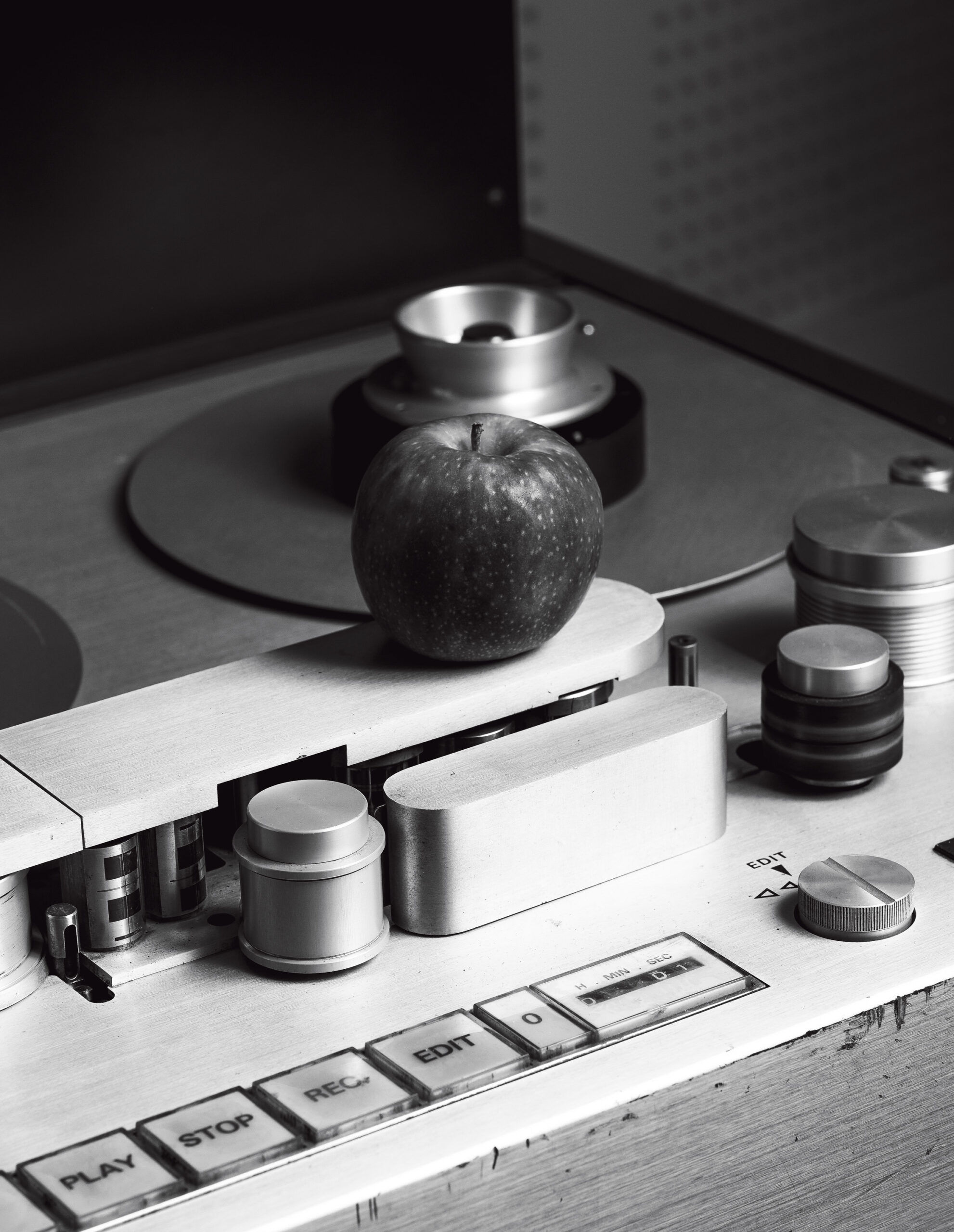
1. Musique concrète uses preexisting sounds as its raw material. Pioneered by French composer Pierre Schaeffer in the late 1940s, the technique involves collaging together small bits of tape—often sped up, looped or reversed—to create entirely new compositions.
2. Many organs have pipes that emit low noises inaudible to the human ear. In controlled experiments, the presence of these bass notes has been found to elicit strange feelings—such as shivers down the spine—in a significant number of participants.
According to Kali Malone, it’s when her own compositions send her to sleep that they’re ready for the public. But while her music is certainly meditative, some may struggle to drift off to the massive slabs of sound, austere drones and minimal melodies that bloom from the speaker and slowly take over the whole room.
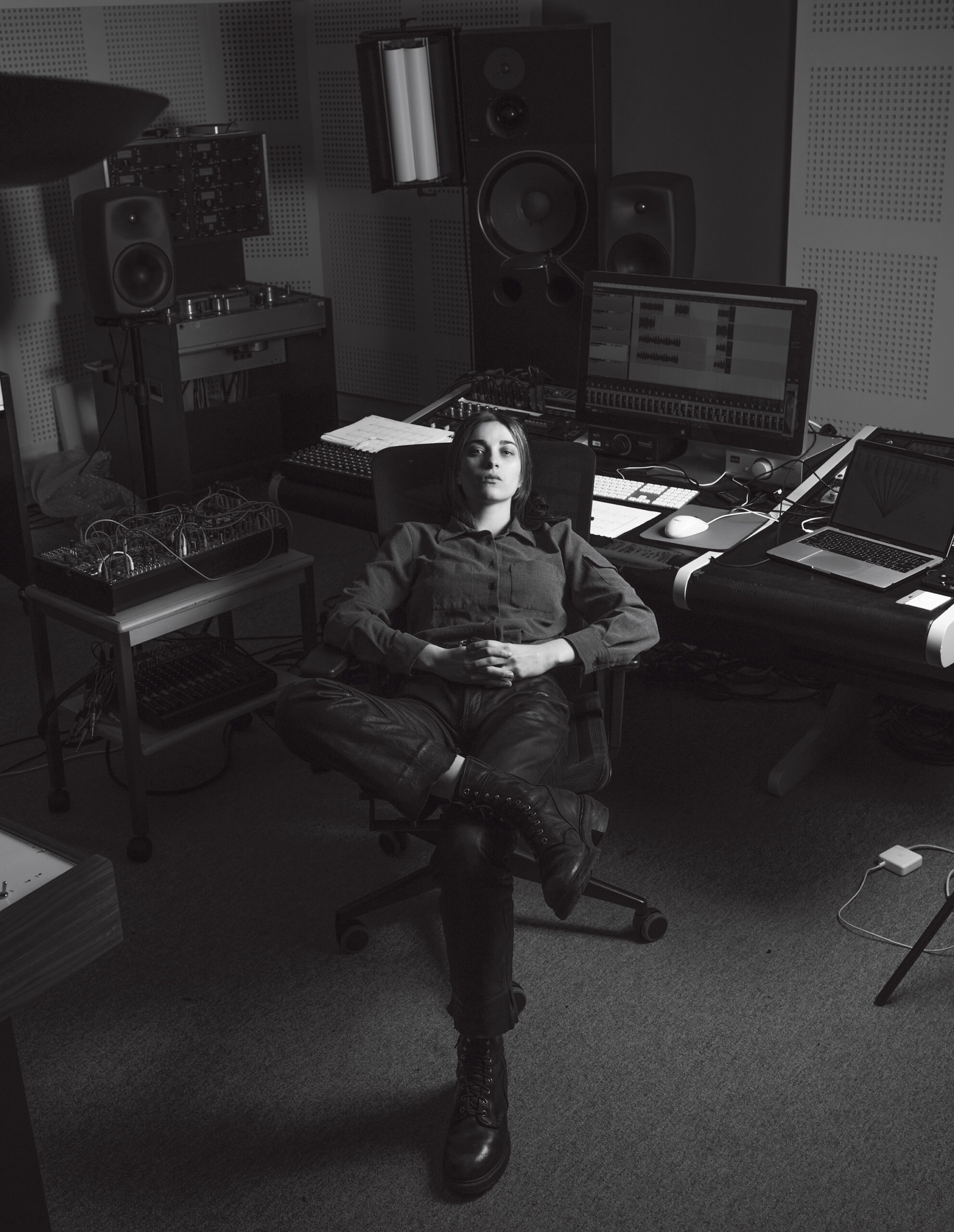
After growing up in Colorado, Malone moved to Stockholm at 18 and studied electro-acoustic composition. Now 26, she has quietly taken the experimental music world by storm with her 2019 album, The Sacrificial Code—a two-hour-long series of mournful pipe organ compositions. When we speak on the phone, she’s in Paris, where she’s spending a few weeks recording in her dream studio.
Where are you working exactly?
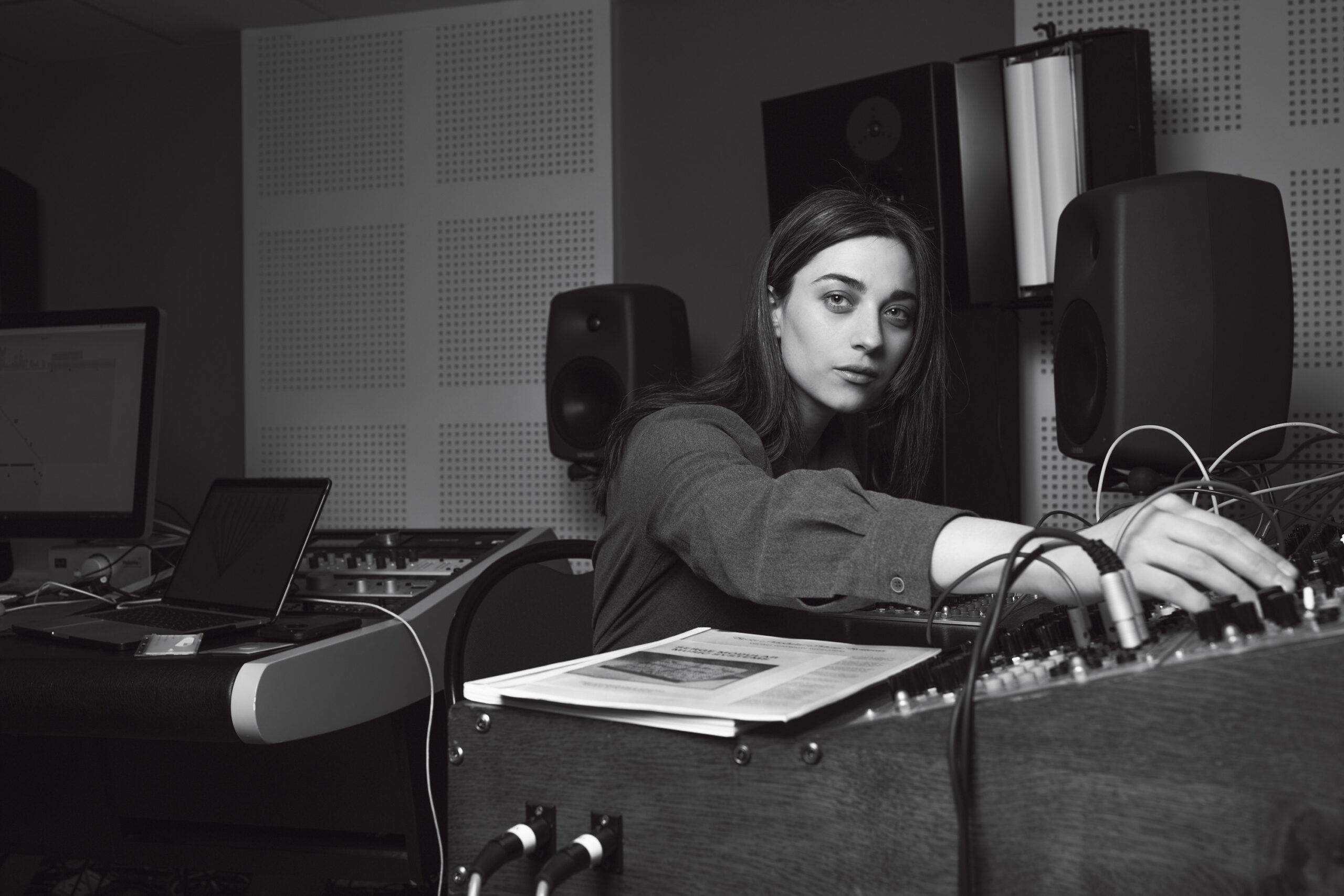
Ina GRM is a legendary studio that’s part of Radio France. A lot of musique concrète and early electronics were made here.1 They set me up for two weeks with a bunch of amazing old synthesizers that my idols once used. I feel very connected to a historical lineage working here. It’s an honor.
Is this the experimental music you grew up on?
Not quite. I grew up in Denver’s vibrant underground, where there are lots of warehouse shows. I was exposed to a lot of experimental electronic music, punk and metal, but I didn’t realize it all had an academic history until I moved to Sweden.
I don’t immediately think of “punk” when listening to your music.
Oh really? I think I have a punk attitude. For music to be transgressive or punk it doesn’t necessarily have to have thrashing, aggressive timbres in it. Punk is a social context. Music isn’t just the organization of sound, it’s a lot of complex social interactions piled on top of each other.
1. Musique concrète uses preexisting sounds as its raw material. Pioneered by French composer Pierre Schaeffer in the late 1940s, the technique involves collaging together small bits of tape—often sped up, looped or reversed—to create entirely new compositions.
2. Many organs have pipes that emit low noises inaudible to the human ear. In controlled experiments, the presence of these bass notes has been found to elicit strange feelings—such as shivers down the spine—in a significant number of participants.
GROUPE DE RECHERCHES MUSICALES
by Harriet Fitch Little
The GRM (Groupe de Recherches Musicales) was founded by Pierre Schaeffer in the early 1950s to further composers’ explorations of musique concrète. The GRM’s Paris studio became a mecca for experimental musicians such as Karlheinz Stockhausen and Iannis Xenakis, who were keen to use its abundance of newly available audio and recording technology to manipulate sounds and create experimental compositions. In the 1970s, the studio embraced electronic music and attracted a new wave of musicians using early computer software to make their recordings. Today, the GRM continues to support cutting-edge artists such as Kali Malone.
When you moved to Sweden, your social context must have shifted. Did your music change?
I was 18 when I moved—every part of me was changing. Sweden is easier for musicians, there’s more state support. It’s different than America: There, you have to kick and scream just to do your thing, cops take away your community venues, the city’s gentrifying and nobody can afford rent. You actually need each other to survive and that’s often the grounds for creativity. In Sweden, you can be a freelance musician and have a semi-stable future. I never knew that was even an option in the States.
Your compositions are governed by strict rules. Why do they still sound so emotional?
A lot of my music is inspired by the compositional structures of early church music, which is basically like algorithms. The reason that music is so powerful is because of its pattern structure and specific harmonic values. The church understood how to press the buttons in our brains that recognize extreme, beautiful proportions and manipulate us.2 It’s like grabbing a cat by the neck—we go all limp.
How do people outside the experimental niche respond to your music?
I didn’t think they heard my music until my last record, which even my grandma and five-year-old cousin liked. This is the first time people outside my circuit have said: “Oh yeah, this is music,” rather than: “What are those weird sounds?” I think it’s because of the harmonies.
Not because of you?
I tend to push away magical thinking: I’m not sure that composers imbue their work with some special essence. No, it’s just harmonic science: It’s proportions and air that is wiggling. If you do that tastefully, it will reach people.
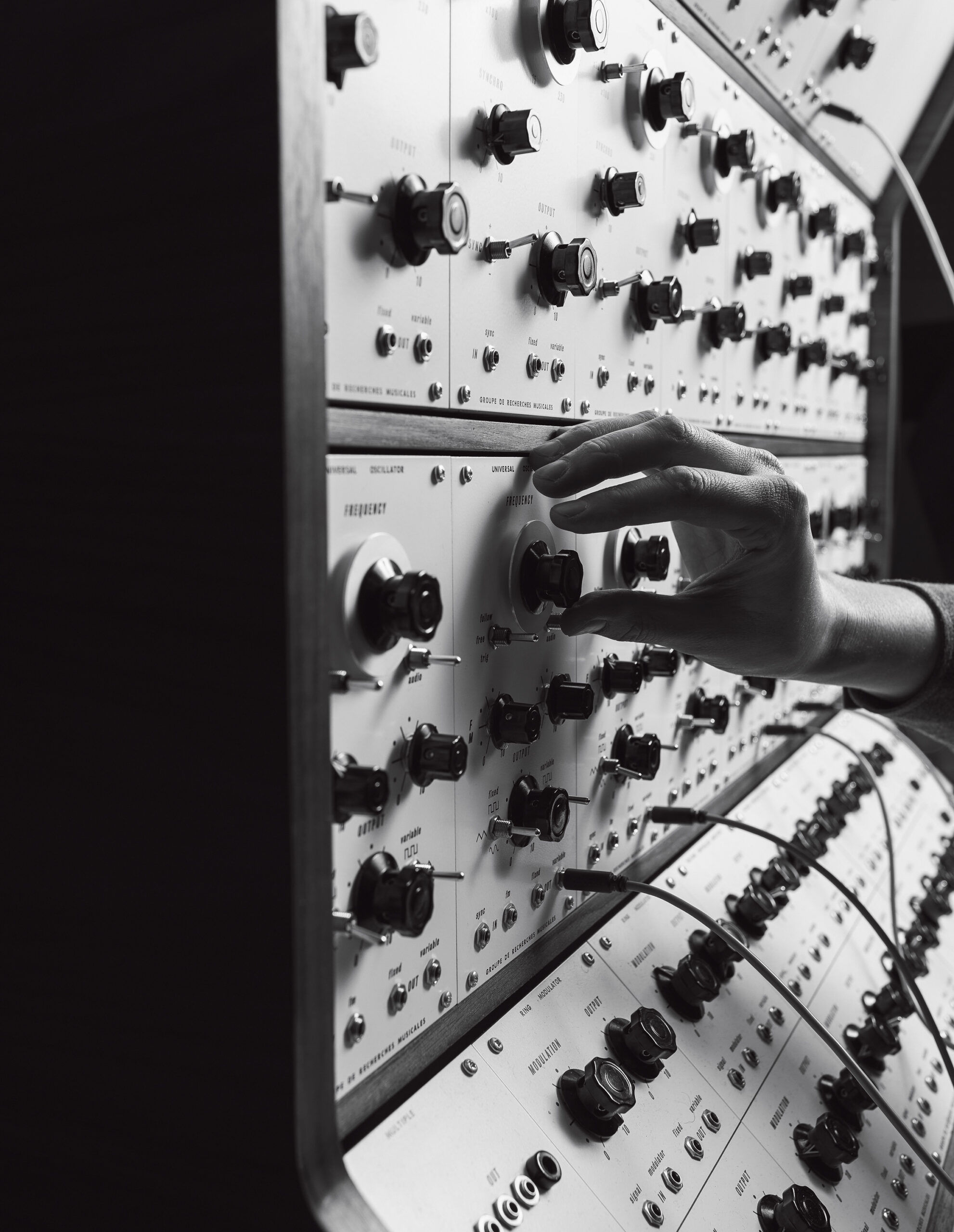
GROUPE DE RECHERCHES MUSICALES
by Harriet Fitch Little
The GRM (Groupe de Recherches Musicales) was founded by Pierre Schaeffer in the early 1950s to further composers’ explorations of musique concrète. The GRM’s Paris studio became a mecca for experimental musicians such as Karlheinz Stockhausen and Iannis Xenakis, who were keen to use its abundance of newly available audio and recording technology to manipulate sounds and create experimental compositions. In the 1970s, the studio embraced electronic music and attracted a new wave of musicians using early computer software to make their recordings. Today, the GRM continues to support cutting-edge artists such as Kali Malone.