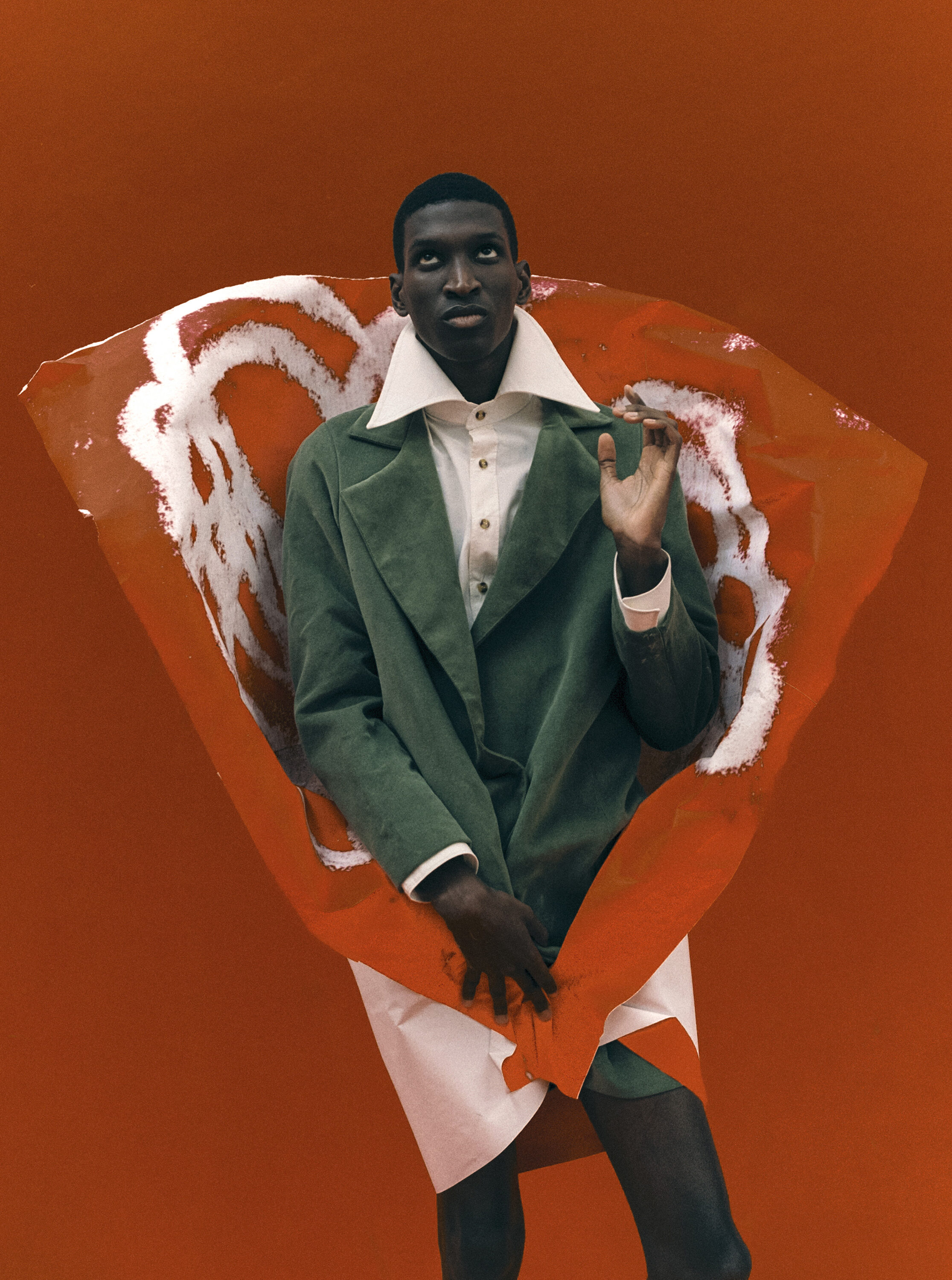
Kentaro YamadaAn artist’s tip for falling short: Get back on the horse that threw you.

Kentaro YamadaAn artist’s tip for falling short: Get back on the horse that threw you.

Mastering Mistakes

When jazz pianist Keith Jarrett arrived at the Cologne Opera House in 1975, he was greeted by a piano that was too small and poorly tuned. He nearly canceled the sold-out show but, after much desperate convincing from a young concert promoter, he performed. With an inadequate piano and a lot of frustration, Jarrett was forced to play differently that night. Concertgoers responded with zealous enthusiasm. Jarrett had turned a large mistake, albeit someone else’s, into a masterpiece. “It’s impossible to avoid mistakes,” explains journalist and economist Tim Harford. “I suppose that you can try to avoid mistakes by never doing anything, but that would be a mistake in itself. It’s much more practical to think about the ways we react to mistakes than to think about avoiding mistakes altogether.”

Both in conversation and in his new book, Messy, Harford suggests that obstacles and distractions can actually spur the most creative moments. “When pushed into the new and unfamiliar, two things happen,” he says. “One is that you become tremendously alert. Either you or someone else has made a mistake, and now you have to fix it. Second, in the aftershock of encountering an obstacle, you may find yourself trying an otherwise unexpected solution.” Harford encourages people to embrace their mistakes. “When you start from an unpromising beginning, you may find yourself at a much more interesting end point,” he says. Jarrett certainly did: The Köln Concert, a live recording of his show, remains both the best selling solo jazz and solo piano album of all time. 

“I’m often described as someone scared of jumping, metaphorically speaking,” Kentaro Yamada says from Portugal, where he is busy visiting prehistoric cave paintings and admiring the ceramics of local artisans. Although he claims prudence, Kentaro’s life—from competitive sailing to his career as an artist—doesn’t appear hampered by cowardice or indecision. The trick, he claims, has always been to let his intuition lead the way. “Whenever I’ve achieved big steps or jumped to the next step, I didn’t even know I was doing it,” he concedes. “I was simply chasing my curiosity and my instinct. It’s a good way for me to be.”

As a teenager, instinct led Kentaro from Japan to New Zealand as he pursued dreams of sailing at the Olympics. But it was there that he experienced his first, jarring introduction to defeat. After he failed to perform as well as hoped at the World Championships, sporting ambition was relinquished in favor of creative pursuits. That led him to New York and Tokyo, back to New Zealand for a second degree and then on to Chicago for a master’s in fine art. After a year of study, he burned out, overwhelmed by school’s competitive nature and bogged down in a creative quagmire.

“It felt like a big failure when I quit my master’s program at the School of the Art Institute of Chicago, where I had a scholarship,” he remembers. “I moved to London thinking maybe this was the end of my artist’s career, but after a while I realized that being an artist and being creative is not something I can escape. It’s part of me, so I continued my master’s at Goldsmiths.”

With his work driven by a relentlessly inquisitive mind, art—be it ceramics, installation, film or sculpture—continues to be an integral part of Kentaro’s DNA. “I’m interested in a long history—from the beginning of time to where we are now,” he says of his propensity for probing some of life’s colossal mysteries. “I think for most scientists and artists there’s one big lingering question: Why the hell are we here, and how do we make sense of this world?”

Take his 2015 project, a dark, smoky perfume titled Neandertal, that utilized the unfamiliar terrain of scent to address questions about humanity’s place in the universe. At face value, it’s a $250 perfume designed with human origins in mind; scratch deeper, and Kentaro is poking holes at our human confidence in our singularity.

His enthusiasm for fragrance continued in a recent workshop at London’s Victoria and Albert Museum titled Sound of Scent. Introducing participants to the centuries-old Japanese tradition of kodo, in which scent is said to be listened to rather than smelled, Kentaro encouraged them to mimic the classic poems that accompanied incense-burning by creating a narrative of their own. Blindfolded, the participants selected scents that represented their personal story and took home a bespoke fragrance at the workshop’s end.

“With scent, it’s very personal and goes directly to your memories and experiences,” he explains. “It’s a bit like a dream—the dream doesn’t have to have a story, but it has an impact. There’s a flash or experience that comes to you.”

For Kentaro, constant existential scrutiny can come at a price. He admits to having had difficult periods, when the enormity of what he wanted to create, and his fear that he couldn’t produce it, sank him into a sluggish state. But as he ages, a growing sense of perspective has left him better equipped for whenever those storm clouds hover threateningly overhead.

“If you realize this is just a phase, especially if you’re asking some big existential question, then of course you will have these moments,” he says. “I’m always trying to see things from the other side of life. If I looked back from my deathbed, what would I want to be doing? Art. That’s how I’d probably be happy. That can give a good perspective on how to deal with everything.”

Mastering Mistakes

When jazz pianist Keith Jarrett arrived at the Cologne Opera House in 1975, he was greeted by a piano that was too small and poorly tuned. He nearly canceled the sold-out show but, after much desperate convincing from a young concert promoter, he performed. With an inadequate piano and a lot of frustration, Jarrett was forced to play differently that night. Concertgoers responded with zealous enthusiasm. Jarrett had turned a large mistake, albeit someone else’s, into a masterpiece. “It’s impossible to avoid mistakes,” explains journalist and economist Tim Harford. “I suppose that you can try to avoid mistakes by never doing anything, but that would be a mistake in itself. It’s much more practical to think about the ways we react to mistakes than to think about avoiding mistakes altogether.”

Both in conversation and in his new book, Messy, Harford suggests that obstacles and distractions can actually spur the most creative moments. “When pushed into the new and unfamiliar, two things happen,” he says. “One is that you become tremendously alert. Either you or someone else has made a mistake, and now you have to fix it. Second, in the aftershock of encountering an obstacle, you may find yourself trying an otherwise unexpected solution.” Harford encourages people to embrace their mistakes. “When you start from an unpromising beginning, you may find yourself at a much more interesting end point,” he says. Jarrett certainly did: The Köln Concert, a live recording of his show, remains both the best selling solo jazz and solo piano album of all time. 

You are reading a complimentary story from Issue 23

Want to enjoy full access? Subscribe Now

Subscribe Discover unlimited access to Kinfolk

  • Four print issues of Kinfolk magazine per year, delivered to your door, with twelve-months’ access to the entire Kinfolk.com archive and all web exclusives.

  • Receive twelve-months of all access to the entire Kinfolk.com archive and all web exclusives.

Learn More

Already a Subscriber? Login

Your cart is empty

Your Cart (0)