( 1 ) Nguyen’s book explores the idea of gamification: the use of points, rankings and rewards to motivate behavior in non-game contexts. One example is the streak feature in Duolingo, which the company has said is its most effective tool for keeping users coming back. The term was coined by British programmer Nick Pelling in 2002, originally in reference to making ATM interfaces more enjoyable to use.
Mind GamesWhy keeping score doesn’t work.
Mind GamesWhy keeping score doesn’t work.
Philosophers, scientists and other intellectuals have defined the human being as a rational animal, a tool-using animal, a spiritual animal, an animal that uses language. But in many ways, it might be more accurate to say that we are an animal that likes to earn points.
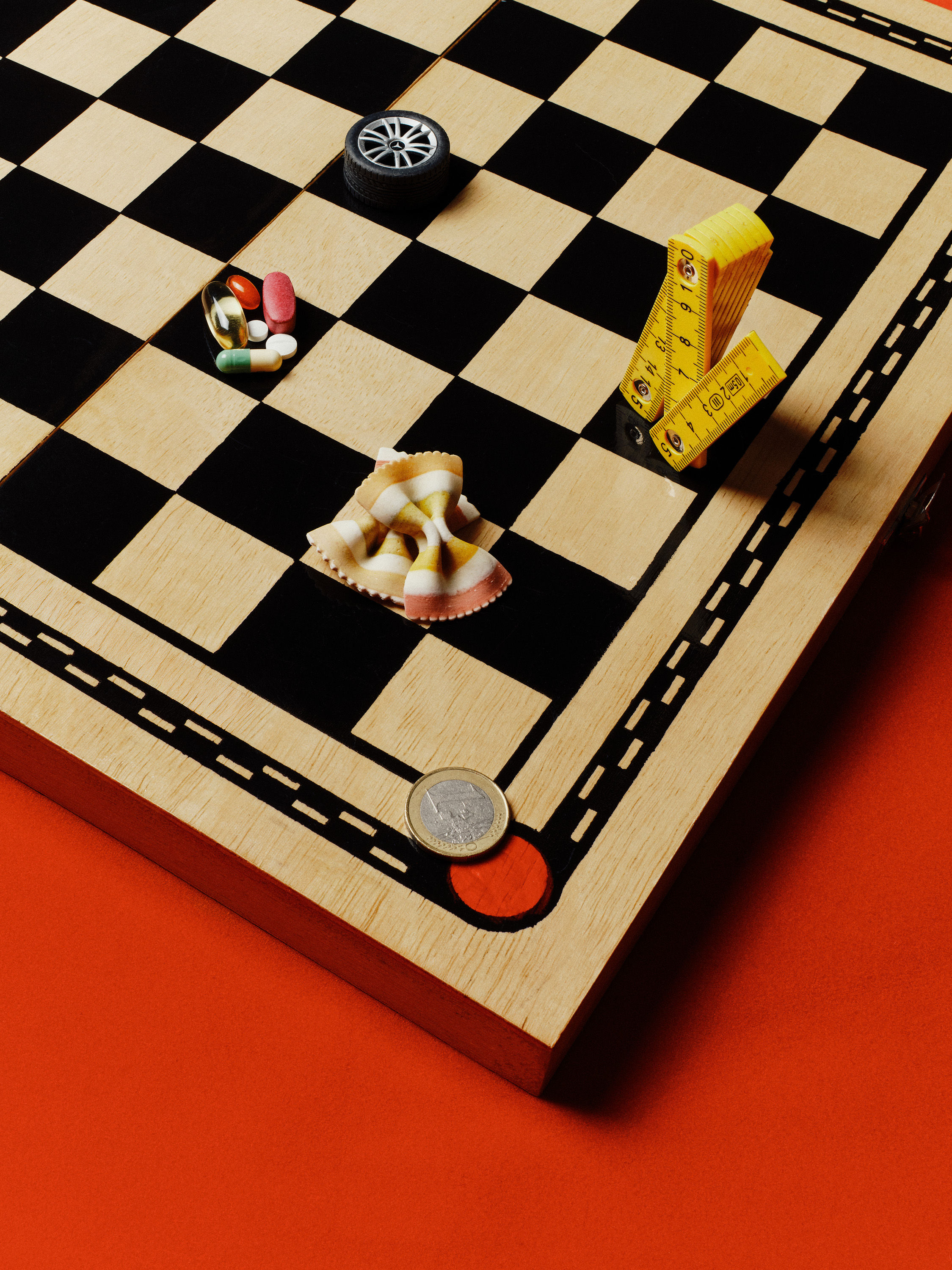
As the philosopher C. Thi Nguyen notes in his recent book The Score, metrics have gradually come to dominate our attempts to understand the world—from how to tell if we’re healthy, to how to tell if a university is any good at teaching students. Thanks to industrialization, the Enlightenment and the invention of double-entry bookkeeping, we have come to think of disinterested, quantitative data as the gold standard of truth. But whenever we carve the world into metrics, as Nguyen points out, we place a value—witting or otherwise—on the things we find important; we make a choice about the ideals we wish to foster. And when we pursue these metrics at the expense of all else, we can end up sacrificing autonomy; finding ourselves, as Nguyen says, “playing someone else’s game."1
It’s why “gamified” systems can have such a hold over us: We points-getting animals are horribly capable of dedicating ourselves to the pursuit of the same empty goal all day: I might log into Duolingo with an aim to learn Spanish, but then spend the whole time repeatedly playing the same lessons, because that’s a more reliable way to rack up points. Or I might, as Nguyen claims he once did, set out on a philosophical career hoping to think deeply about the intellectual mysteries that bother me the most, only to spend my time working on topics that will get me published in prestigious journals.
Luckily, as Nguyen argues, our very love of games can also offer us a way out of this trap. Games, after all, are in their truest sense things we play. And in play, we not only chase points but switch between roles: We try out different goals, different ways of seeing and understanding. When I play a board game, for example, I might suggest an alteration to the rules to encourage more cooperation between players. In doing so, Nguyen seems to hope, I might learn how to adopt different roles at, say, my job, and internalize something deep about the arbitrariness of metrics. To escape an increasingly gamified world, then, we must foster a more playful spirit in ourselves—starting with taking the rules less seriously.