Multiple DimensionsISSEY MIYAKE’s new Manhattan flagship.
Multiple DimensionsISSEY MIYAKE’s new Manhattan flagship.
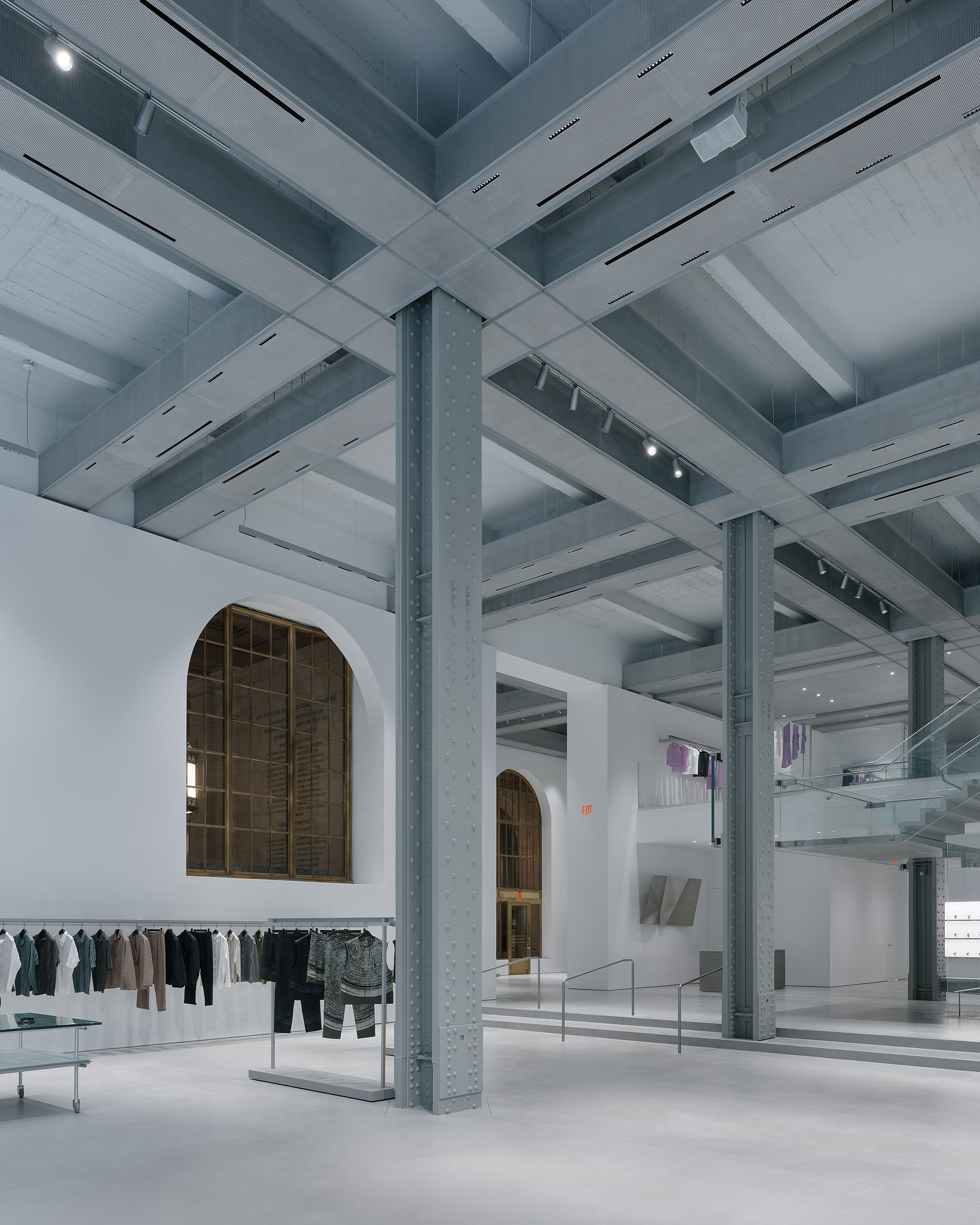
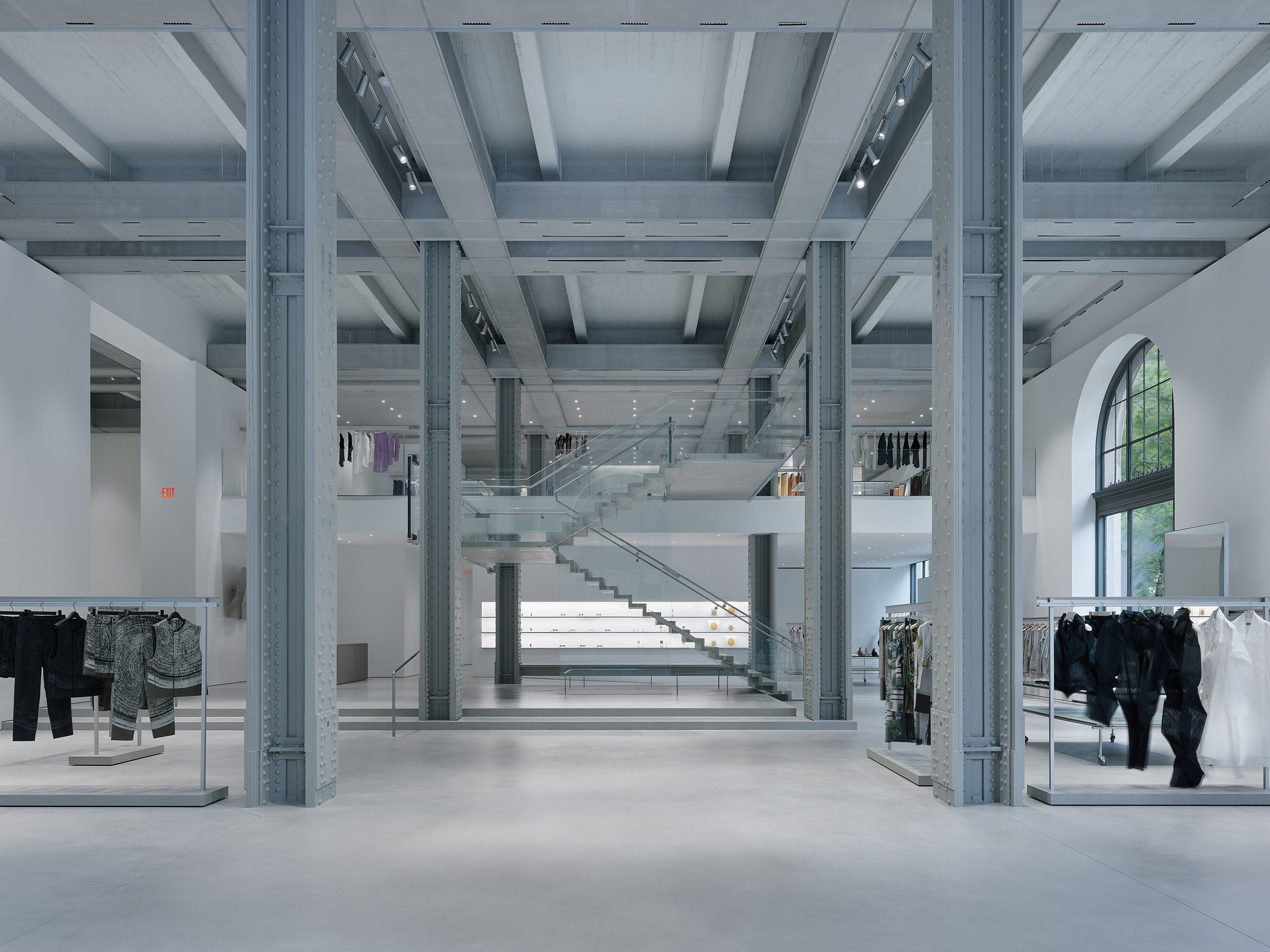
“Are you ready? Some people get nervous.” Jing Liu is guiding me onto the floating staircase at the center of ISSEY MIYAKE’s new flagship store in the New York Life Building. Liu’s Brooklyn-based firm, SO–IL, is known for its use of unexpected materials and it’s an approach that’s also evident here. The new 13,000-square-foot store houses eight ISSEY MIYAKE lines and the company’s first dedicated gallery space outside of Japan in a commanding, light-filled space overlooking Madison Square Park. The high ceilings, vast arched windows, exposed steel pillars, aluminum mesh ducts—and that staircase—form a striking response to the 1928 landmark it sits within.
Hannah Marriott: How did the historic building inform your design?
Jing Liu: We wanted to emphasize the height of the space and its light—there’s a Gothic pursuit of light that feels very present here. We also wanted to highlight how urban it is with the park outside and people moving constantly through the area. When we first arrived, it was a mess; there was dust everywhere. We stripped everything back, exposed the steel beams and pushed the ceiling as high as possible.
HM: To what extent did you look to incorporate ISSEY MIYAKE’s brand identity?
JL: Our early ideas incorporated a lot of textiles, which we often work with, but we realized the architecture shouldn’t mimic the clothing. Instead, we thought it should share the ethos behind it: craft, precision, engineering and innovation. We also wanted the architecture to disappear as much as possible. The garment rails, for example, are made from extrusions. You can’t see the supports, so the shadows remain continuous. It’s highly architectural but also practical—even heavy winter coats won’t make them sag.
HM: What else has come to characterize your approach?
JL: The store is very functional and minimal. We knew we needed a staircase to the second floor, for example, but anything too solid would block the space behind it, so we proposed glass. We’d designed a 32-foot glass staircase for a museum in Hong Kong, so I already understood what the material could do.
HM: Who inspires your work?
JL: Frank Gehry, who designed the previous ISSEY MIYAKE store in Tribeca, because of his boldness and focus on materials. Some elements from that store have been recycled here, including a titanium wall piece. I admire designers who are smart with materials and who take risks. It’s easy to do the “nice” thing; it’s much harder to do the thing that might fail.
This story was produced in partnership with ISSEY MIYAKE.