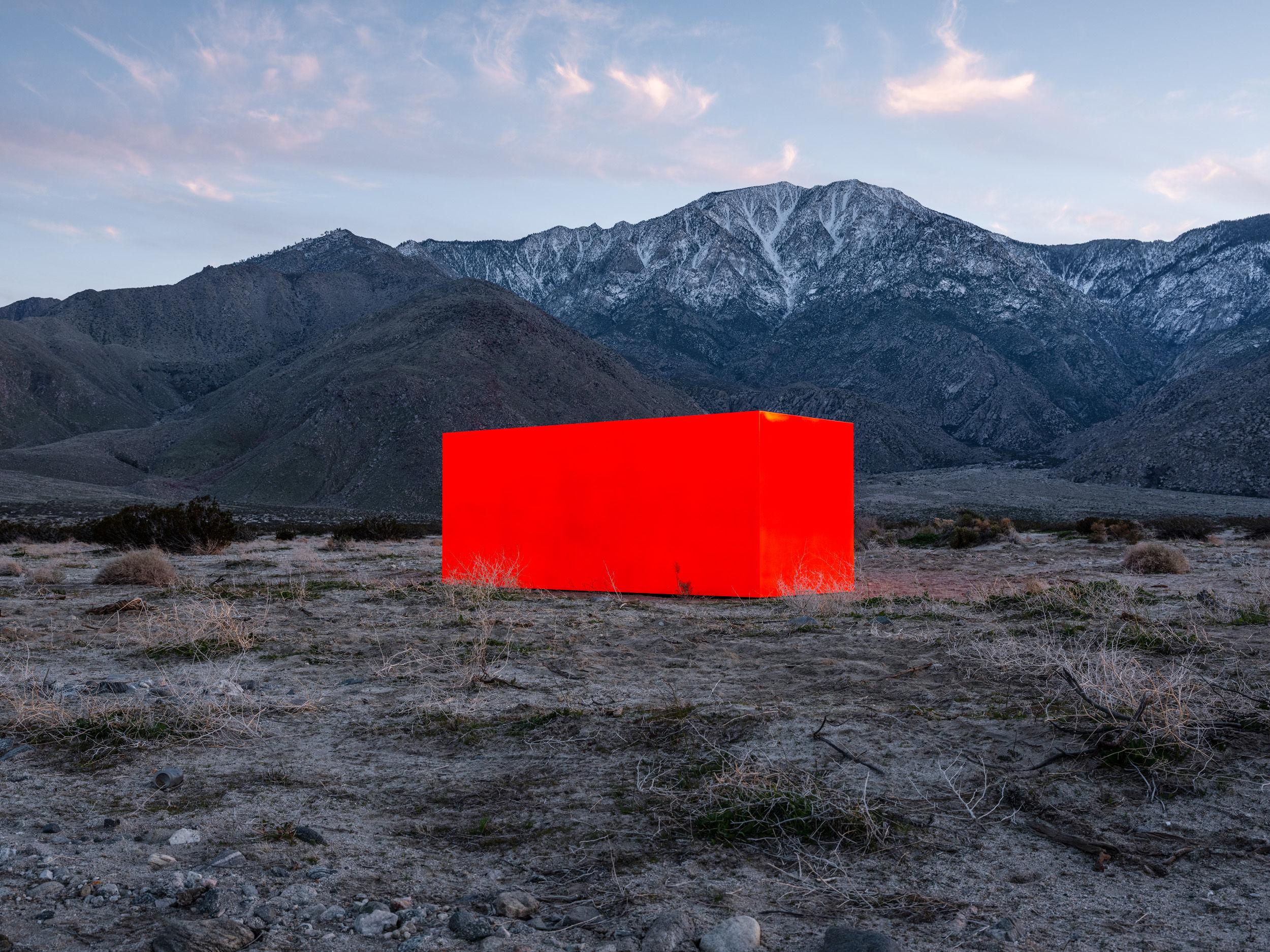
Artwork: Installation view of Specter (2019) by Sterling Ruby at Desert X. Courtesy of Sterling Ruby and Desert X.
( 1 ) Monolith Tracker —an unofficial website allowing users to report the appearance of these mysterious columns—has documented the discovery of over 200 similar, shiny structures around the world since 2020.
No WonderMaking the case for mystery.
No WonderMaking the case for mystery.
No one knows how a 9-foot mirrored slab came to stand on a mound outside a café in Bellvue, Colorado, but we know why it’s no longer there: The café’s owners—who deny any knowledge of its construction—took it down, having grown tired of the disruption caused by those who came to see it. Similar objects, dubbed “monoliths,” have cropped up all over the world since the first was discovered in Utah’s remote and appropriately martian landscape in 2020.1 Aliens are, of course, everyone’s favorite suspects; artists of diminishing originality are the more likely culprits.
The preponderance of these unclaimed monoliths mean they are no longer mysteries in any formal sense, if they ever were, and yet the phenomenon continues to intrigue us. Perhaps part of their draw is that they tend to materialize in nature. In a city, few passersby would give a polished chrome object a second glance, assuming it to be a municipal artwork; on a hill, or in a forest, however, they stand in startling contrast to their environment. And so out we trek to visit them, ready and willing to be beguiled.
Perhaps we are attracted to such mysteries because they offer space for the belief in something beyond our day-to-day experience, be it reincarnation, the existence of a loving god or aliens with a proclivity for erecting mirrored columns. Perhaps it is for the same reason that we read novels and watch films: to experience something that stands apart from our lives. Is it a coincidence that the chief plot driver in so many popular books and movies is the same question that makes monoliths so intriguing: whodunit?
Today there are increasingly fewer mysteries in our scientific, overdocumented world. So—with even shimmering monoliths now humdrum—where can we turn to find the mystery in our lives? Perhaps the best place to start is the landscape in which they appear. Touch the earth, observe the clouds, consider the extraordinary statistical unlikeliness of evolution and chance which has led you to this exact moment, on a planet spinning at 1,000 miles an hour in a mostly uncharted universe. It makes you wonder, at least.