( 1 ) To make a hospital corner, lay a flat sheet over the bed and tuck the end firmly under the mattress. At each corner, lift the sheet up and over the bed to form a neat 45-degree fold, letting the excess fabric fall away. Tuck the loose section under the mattress, lower the folded portion so it lies flat against the side of the bed, align it with the corner and tuck it in tightly. Repeat for the opposite side.
Object MattersThe joy of clean sheets.
Object MattersThe joy of clean sheets.
The crispness of clean percale against bare skin, the luxuriousness of freshly laundered linen, the scent of air-dried cotton—slipping into a freshly made bed is one of life’s great pleasures. It is a moment of reset and renewal, born of a small domestic gesture of care that seems to make the whole room lighter, calmer, momentarily perfect.
Unsurprisingly, remaking the bed can have tangible psychological benefits. Eighty-six percent of respondents to a 2012 study by the US National Sleep Foundation said that they sleep better on fresh bedding, and 73% said it was important for creating a romantic environment. Clearly, to change the sheets is to reset not only the bed, but the mind.
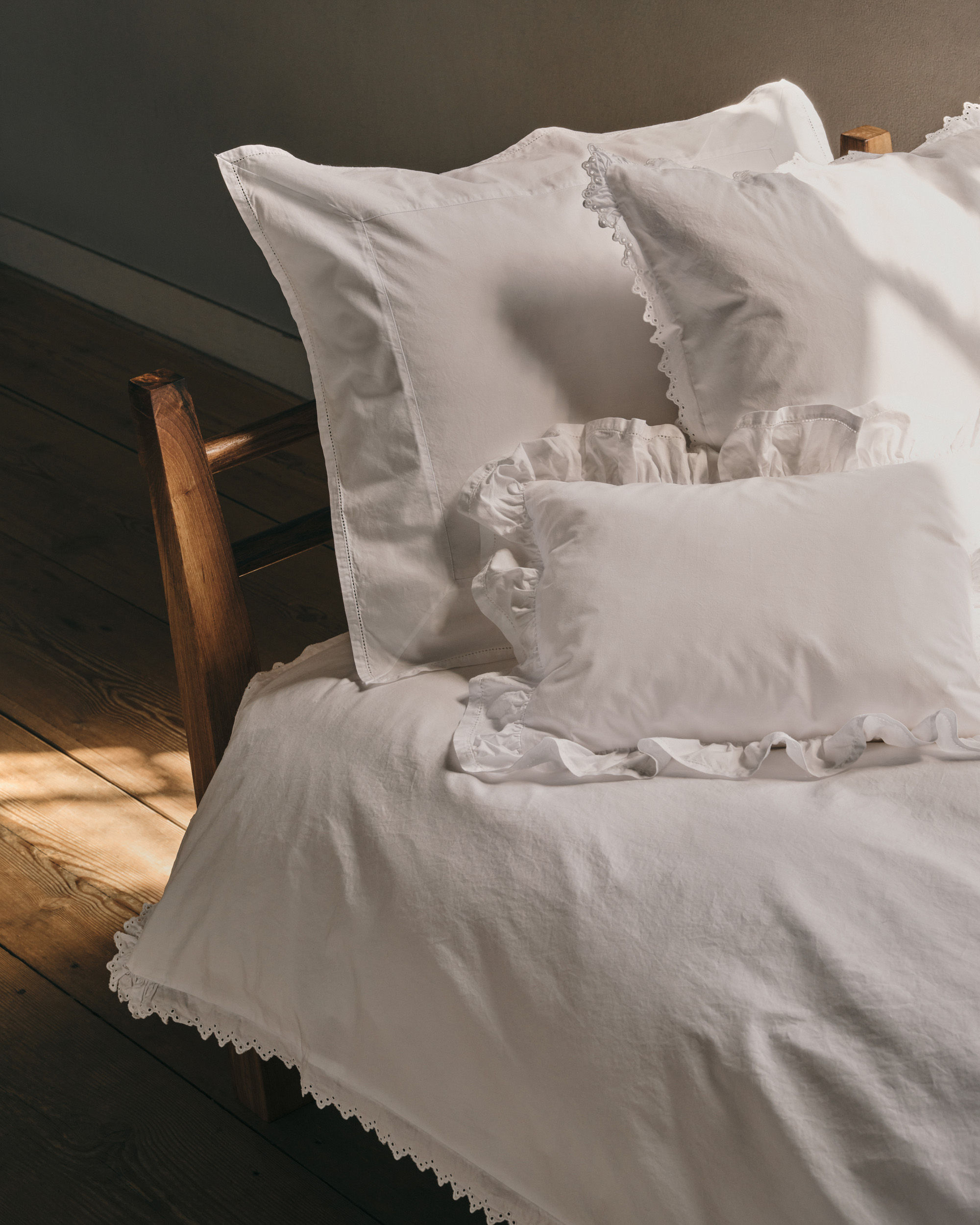
Even the humblest sheets can feel elevated by attention to detail—a hospital corner, a perfectly mitered pillowcase, a carefully chosen pattern or pairing.1 Danish homeware brand Tekla, noted for its pared-back textiles, recently introduced a broderie anglaise bedding collection. Reinterpreting traditional embroidered details such as scalloped edges and openwork cotton in a restrained, contemporary form, pieces in the collection are intended to be mixed and matched. It’s less about ornament than it is about texture and craft: a subtle reminder that care can be a kind of design. To make the bed is to curate a small corner of the world—to say, if only for a night, that everything is in its place.


