On the BalconyA view from the inside out.
On the BalconyA view from the inside out.
Balconies allow public figures to be seen but not touched. In the UK, Buckingham Palace’s sweeping Royal Balcony has long been a focal point for national celebrations.
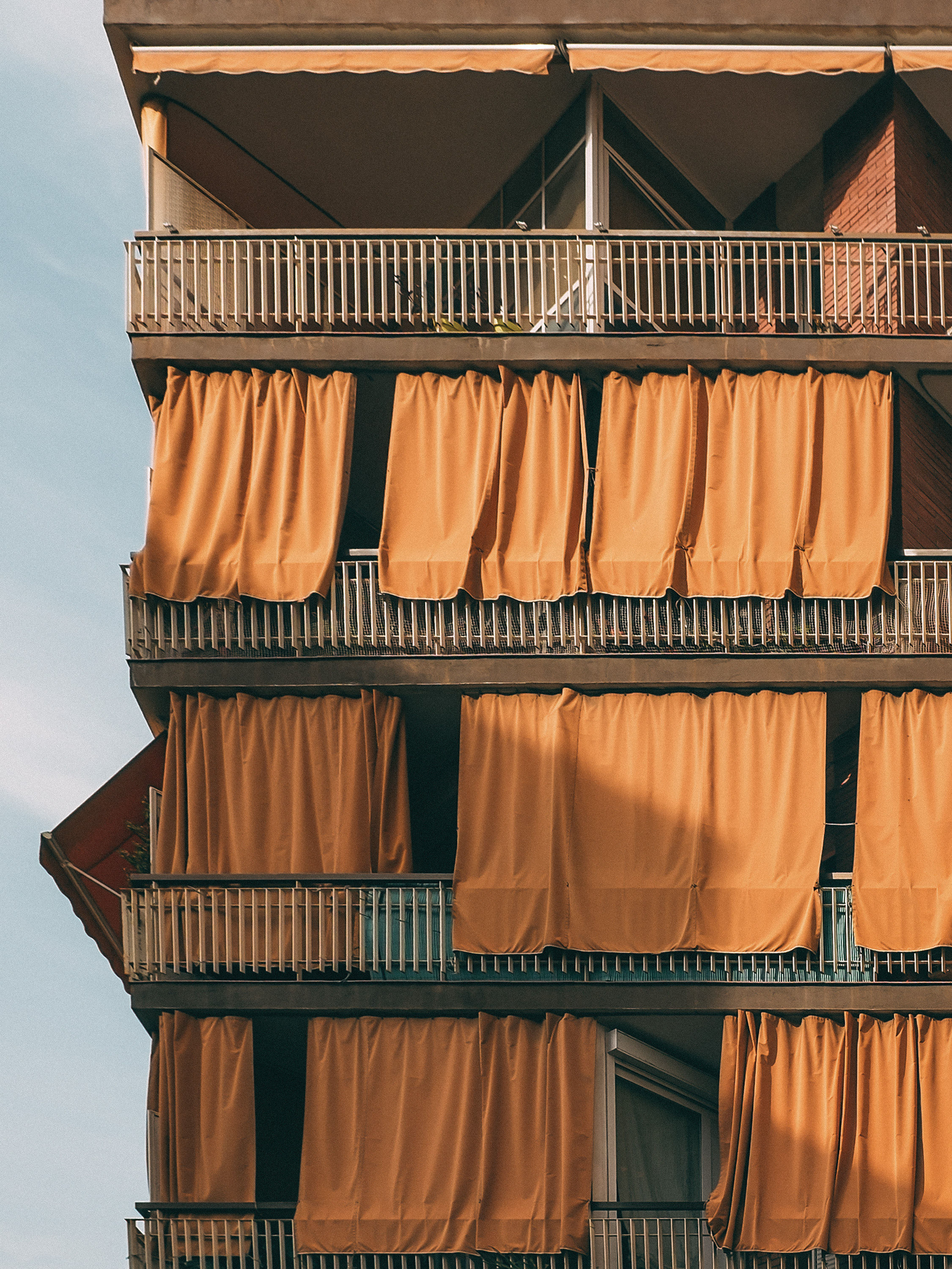
Balconies are transitional spaces—at once inside and outside, private and public. They are also a luxury: However pleasant they may be for lounging or useful for circulating air through apartments in hot climates, they cannot be considered essential.
These semi-enclosed spaces create illusions. Balcony-dwellers are seen but not heard, among the people but separate—and even protected—from them, as monarchs and presidents know well. Balconies trick an audience gathered for royal wedding celebrations or a pope’s speech into believing, if only for a moment, that strict social hierarchies do not exist since everyone is sharing the same air. But the very nature of the balcony’s design—that it cannot be put on the ground floor—reinforces the notion that its inhabitants are meant to be, both literally and figuratively, above the rest.
The effect a simple balcony can have, for leader and follower alike, was well understood by the architects who submitted a proposal in the early 1930s for the Palazzo del Littorio, Rome’s future Fascist Party headquarters. They wrote about what the inclusion of a balcony would bring to the design: “[Mussolini] is like a God, outlined against the sky; above Him there is no one… The Duce will stand before adoring multitudes; He will belong to everyone, He will be one with everyone.” Mussolini himself clearly grasped the power this architectural feature could conjure: He chose to declare war on France and Britain, and to proclaim Italy an empire, from the balcony of the Palazzo Venezia. The spot became so symbolically associated with him that it was closed for years following the war.
Less sinister is the long-held association between balconies and amorous desire. Although Shakespeare never mentioned a balcony in Romeo and Juliet, it is ubiquitous in stagings of the play. The balcony is a physical site where Juliet can move closer to her lover while still remaining inside her father’s house. In this, she is not alone. For women largely confined to interiors, balconies afford opportunities to “leave” the home without exiting the front door, complete with a stage that allows them to both look outward and display themselves.
That one of the most famous paintings with a balcony, Manet’s The Balcony, features women is therefore unsurprising. What seems peculiar, however, is that neither of the two women depicted in the foreground appear to be looking at anything at all. Instead, their deadened stares suggest pure introspection—self-voyeurism that subverts popular connotations of the balcony as a site of degenerate exhibitionism. Magritte considered these women to be far from liberated: In his Perspective: Manet’s Balcony, he copies Manet’s painting but puts nailed-up coffins where the people should be. A balcony may satisfy a voyeuristic impulse as its occupant gazes into others’ apartments or examines a neighbor’s private life through their laundry as it hangs drying. Both Manet and Magritte suggest, however, that they remain a world apart—on balconies, people are caged-in in ways that go beyond the railings that surround them.
Balconies allow public figures to be seen but not touched. In the UK, Buckingham Palace’s sweeping Royal Balcony has long been a focal point for national celebrations.