• Words Anna Furman
  • Photos Emman Montalvan

PERFECT HARMONY: IN THE STUDIO WITH BUDDY ROSS AND KELLY ZUTRAU.

PERFECT HARMONY: IN THE STUDIO WITH BUDDY ROSS AND KELLY ZUTRAU.

Issue 57

, Friendship

,
  • Words Anna Furman
  • Photos Emman Montalvan
  • Hair & Makeup Kris Jung

When Kelly Zutrau, lead vocalist in the Indie pop group Wet, first heard a track from Frank Ocean’s album Blonde, she asked who was behind the piano. The answer? “That’s Buddy Ross”—Ocean’s long-term producer and collaborator.

Ross and Zutrau would later meet in a recording session and in the decade since have become close friends and creative partners, together developing a sound that balances dreamy, distorted vocals with glimmers of percussive clarity. “We’re just kind of on the same wavelength,” Ross says, sitting in the control room of a Los Angeles recording studio. “We’re floaty people.”

Zutrau and Ross are in Los Angeles ahead of Wet’s US tour, by accident both sporting matching sand-colored tops and relaxed fit pants. They explain that they are guided by mutual trust and an intuitive sense of rhythm, melody and lyrics. Since their first collaboration—on Wet’s third album, Letter Blue, in 2021—Zutrau has come to the studio with “little words, phrases or scenes” for them to play with, but the songwriting process is always largely improvised: Ross sits at the piano while she strums the Autoharp before moving to vocals. “We have a very, very easy relationship,” Zutrau says. “Neither of us is dominating, creatively, in the studio, so we’re both deferring to the other a lot.” 

Ross has written and produced songs with Haim, Bon Iver and Vampire Weekend; Zutrau has collaborated with musician Amber Coffman (formerly of Dirty Projectors), director Gia Coppola and electronic artist Fred Again. They live on opposite coasts—he’s rooted in Los Angeles and she is based in New York City—but during the pandemic they came together to work on Wet’s latest album Two Lives at Ross’s cabin in Portland, Oregon. It’s a record teeming with looping vocals and spare lyrics about love, loss and yearning.

The tracks document a time when uncertainty loomed large in Zutrau’s personal life. Just before they started recording, she found out she was pregnant. It was February 2022, soon after Russia invaded Ukraine, and Zutrau remembers feeling uneasy about bringing a new person into the world. She was wracked with indecision, anxious and afraid. Ross encouraged her to dig into those emotions in the recording booth; they talked about what they imagined parenthood to be like, and their fears about the future, both personal and geopolitical. The result is an album that is permeated by a sense of longing—but for clarity over which path to take next in life, rather than a specific person or place.

“We’re just kind of on the same wavelength.”

“I could hear all these swirling thoughts in her head coming out,” Ross says of the initial vocal takes. He stayed quiet and mostly just listened. “I’m on the verge of crying on a few tracks,” Zutrau adds. “We’d stop, and I’d talk to him, then we’d go back in. I was just processing so much—this new possible life.”

There’s a complexity and intricacy in Zutrau’s lyrics that builds over the course of the album. She jumps from singing “I think I feel myself sinking again” on “Float,” to “This time, I’ll be alright, alright, alright,” on “Double.” By the final track, she is out of the mud and buoyant: “Next year, this time we’ll be higher than the sun, floating in the breeze.” On some of these tracks, Zutrau’s voice is soft and searching, and on others, it crackles with hesitation—some of the first takes were so raw and emotionally rich that they decided not to rerecord or polish them.

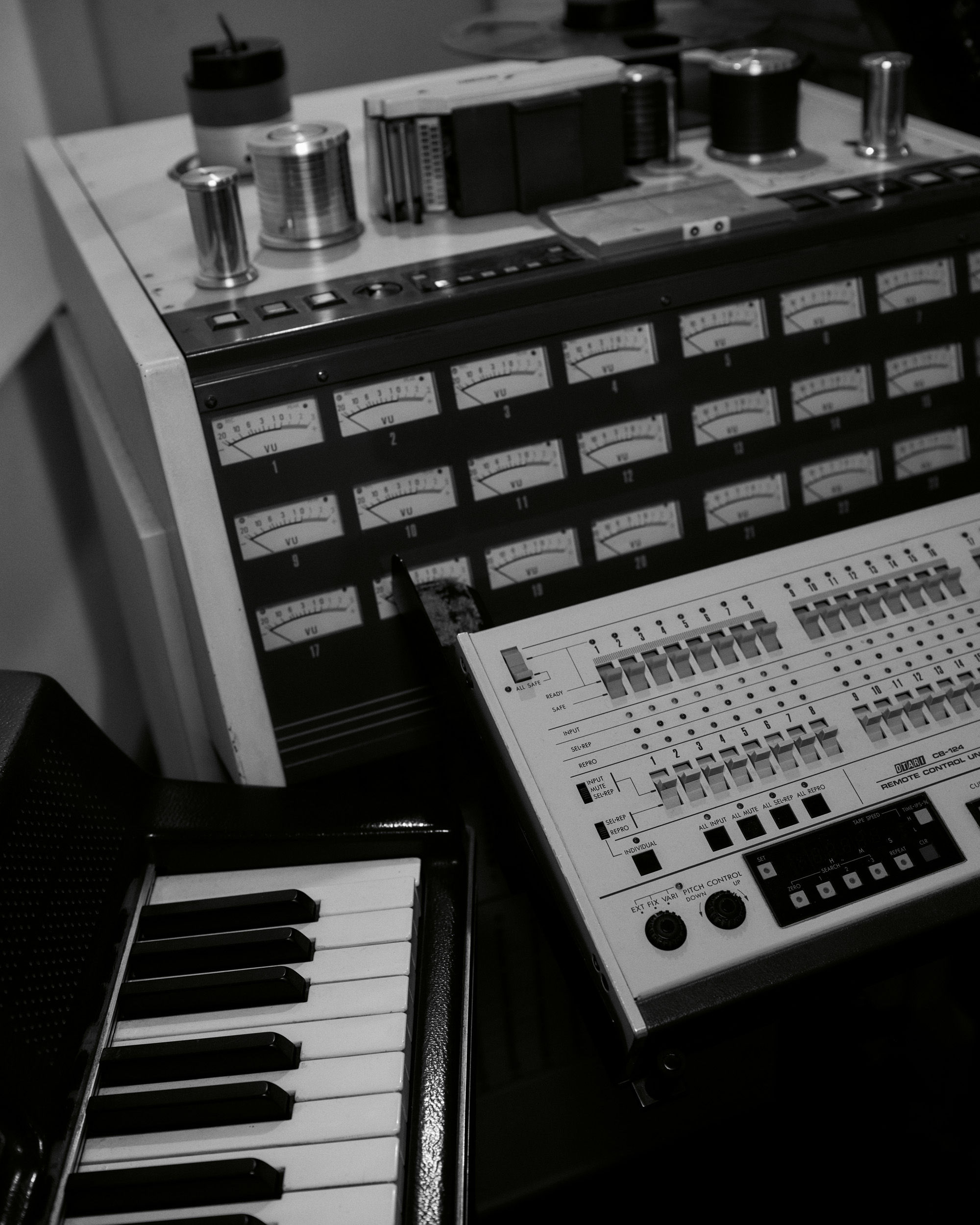
Ross, who is soft-spoken and reserved and brings a quiet confidence to his work, explains that his process is experimental—tracks aren’t planned beforehand but unfold organically, in spontaneous recording sessions. Typically, he fiddles with synthesizers and introduces what he calls “left-of-center sounds,” unconventional instruments or mixing, but for this album they kept the focus on the piano and Zutrau’s vocals. 

“We have completely different instincts, at least about the vocals,” Zutrau says. “What I like about working with Buddy is he pushes my idea of how a song should sound.” She takes inspiration from the way Ross “voices chords,” and his overall, distinctive sensibility: “He grew up playing church music, and the way that he plays is very spiritual and emotional and kind of dramatic. When he plays piano, I just start having a million ideas,” she says.

Zutrau is more anxious and impatient, but she can still be a clear-eyed and decisive partner—both creatively and personally. “I definitely call Kelly with big life things, music industry things—she’s always helped me see through the fog,” Ross says. 

Typically, after marathon-length studio sessions with musicians like Zutrau—following breaks for meals, beer, card games and naps—Ross collages key moments to create individual songs. “The fun for me is making a huge mess—cleaning it up allows me to spend a lot of time with the music to find little golden nuggets.” He compares this part of the process to winnowing down a marble block into a sculpture: It’s an exercise in chipping away at the audio until he’s carved out a series of cohesive shapes. “We’ve developed this way of writing where we just free jam,” he says. “Doing the free-form thing is good for our souls—and then if we get something, that’s a bonus.”

The friends clearly share a reverence for this music-making process, and a mutual understanding of when to deliver feedback—too early and it can be paralyzing, too late and it can be frustrating. “The best collaborations are when you really respect and trust the other person. Even if you don’t like something, you just let them realize their idea fully before you weigh in,” Zutrau says. “When we work, it’s a very safe space, and an environment of respect and admiration for each other. It’s definitely been a breakthrough for me—our relationship. I would like to do all my records with Buddy.” 

While creating the album, Zutrau decided to keep the baby, who is now three years old and like most toddlers, loves the soundtracks to Encanto and Frozen. Unlike most of her peers, however, she perks up when she hears a Wet song. “That’s Mama, that’s Mama,” Zutrau cries, mimicking her daughter’s high-pitched lilt. For part of the year, Zutrau and her family will retreat to Nantucket, where she plans the programming for an artist residency, Almanack Arts, that this year includes the musician Feist and chef Sabrina de Sousa. She’s invited Ross and his family to spend a week with them by the seaside, where time slows down and artists step away from work routines to focus on key projects and commune with nature.

This last album cycle has mapped neatly onto the next life stage for both friends. Just as they wrapped Two Lives and Zutrau went on tour in Europe, Ross and his fiancée, Hannah, had a baby. In May, Ross brought his child to Zutrau’s rehearsal at the Lodge Room in LA, a neat, full-circle moment in an era when they both became parents.

“It’s been a very wholesome, cute album cycle,” she says. “It just felt really special that we were going through this time of life together as collaborators—as friends.” 

You are reading a complimentary story from Issue 57

Want to enjoy full access? Subscribe Now

Subscribe Discover unlimited access to Kinfolk

  • Four print issues of Kinfolk magazine per year, delivered to your door, with twelve-months’ access to the entire Kinfolk.com archive and all web exclusives.

  • Receive twelve-months of all access to the entire Kinfolk.com archive and all web exclusives.

Learn More

Already a Subscriber? Login

Your cart is empty

Your Cart (0)