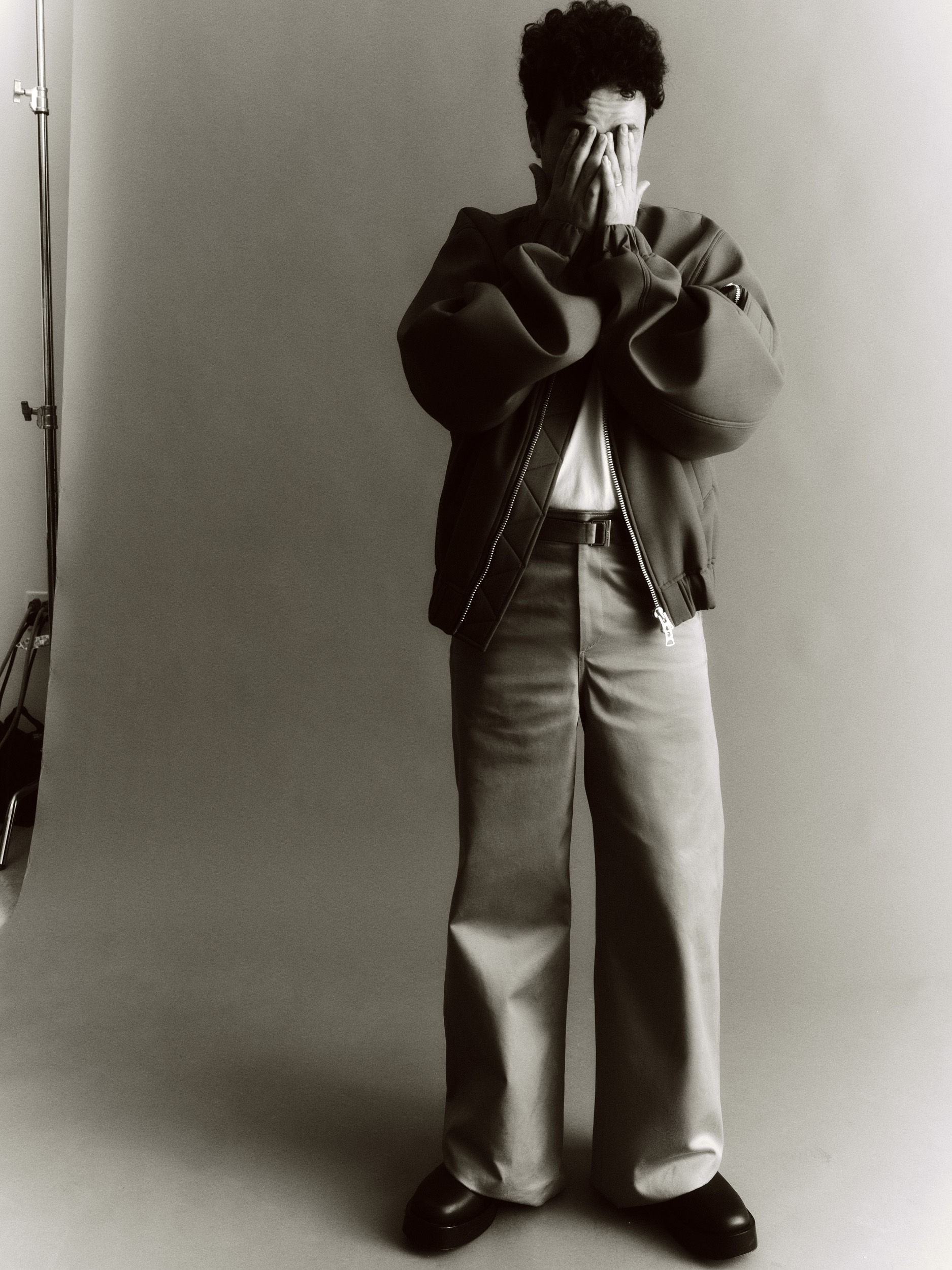
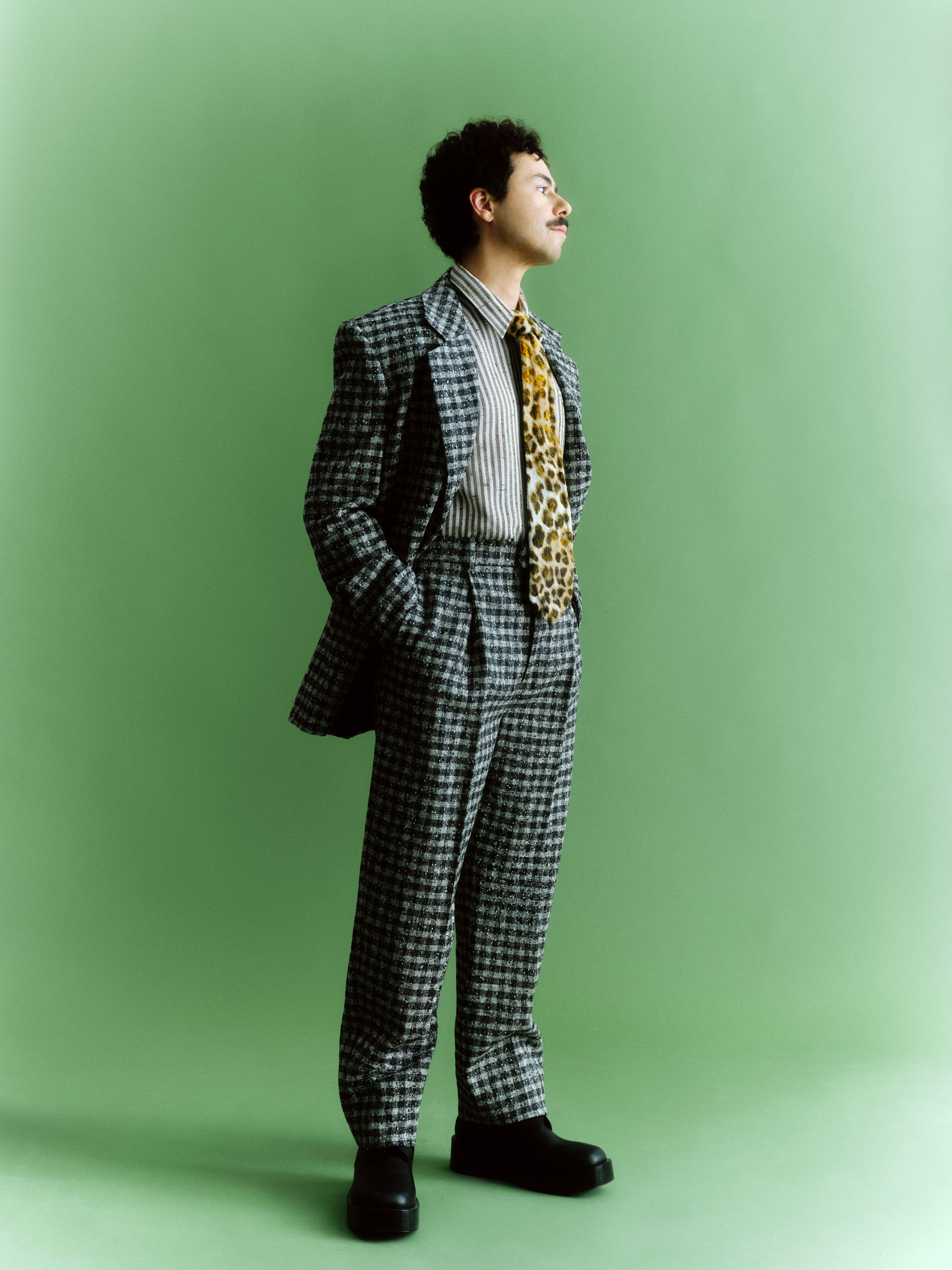
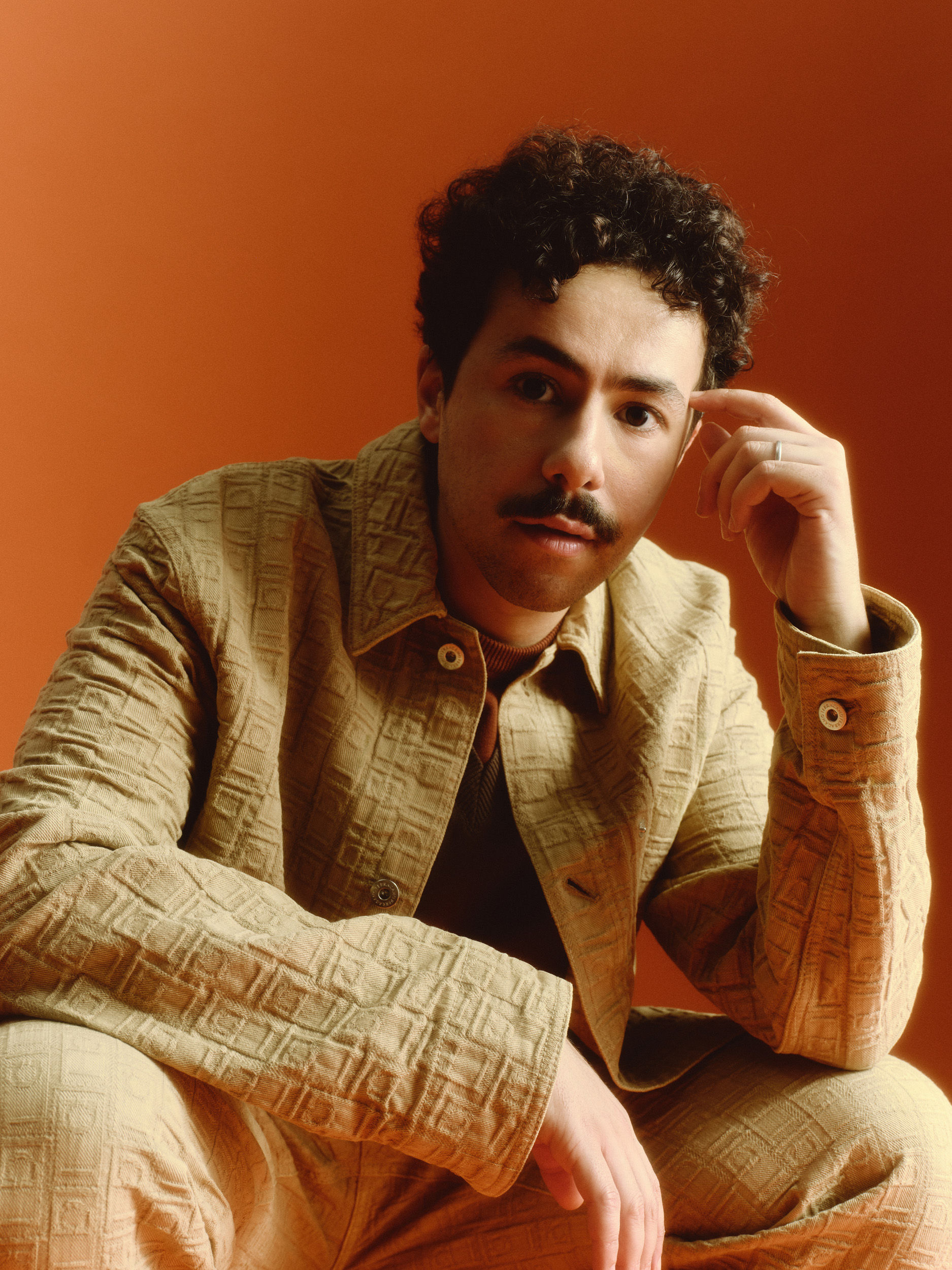
He wears a jacket, shirt and trousers by SACAI and shoes by BOTTEGA VENETA.
ramy
Netflix. Amazon Prime. HBO. Hulu.
Everyone wants a piece of Ramy Youssef.
Lara Atallah charts his unstoppable ascent.
- Words Lara Atallah
- Photos Carlos + Alyse
- Styling Von Ford
- Hair Andrea Grande-Capone
- Grooming Abigail Hayden
- Producer Veronica Leone
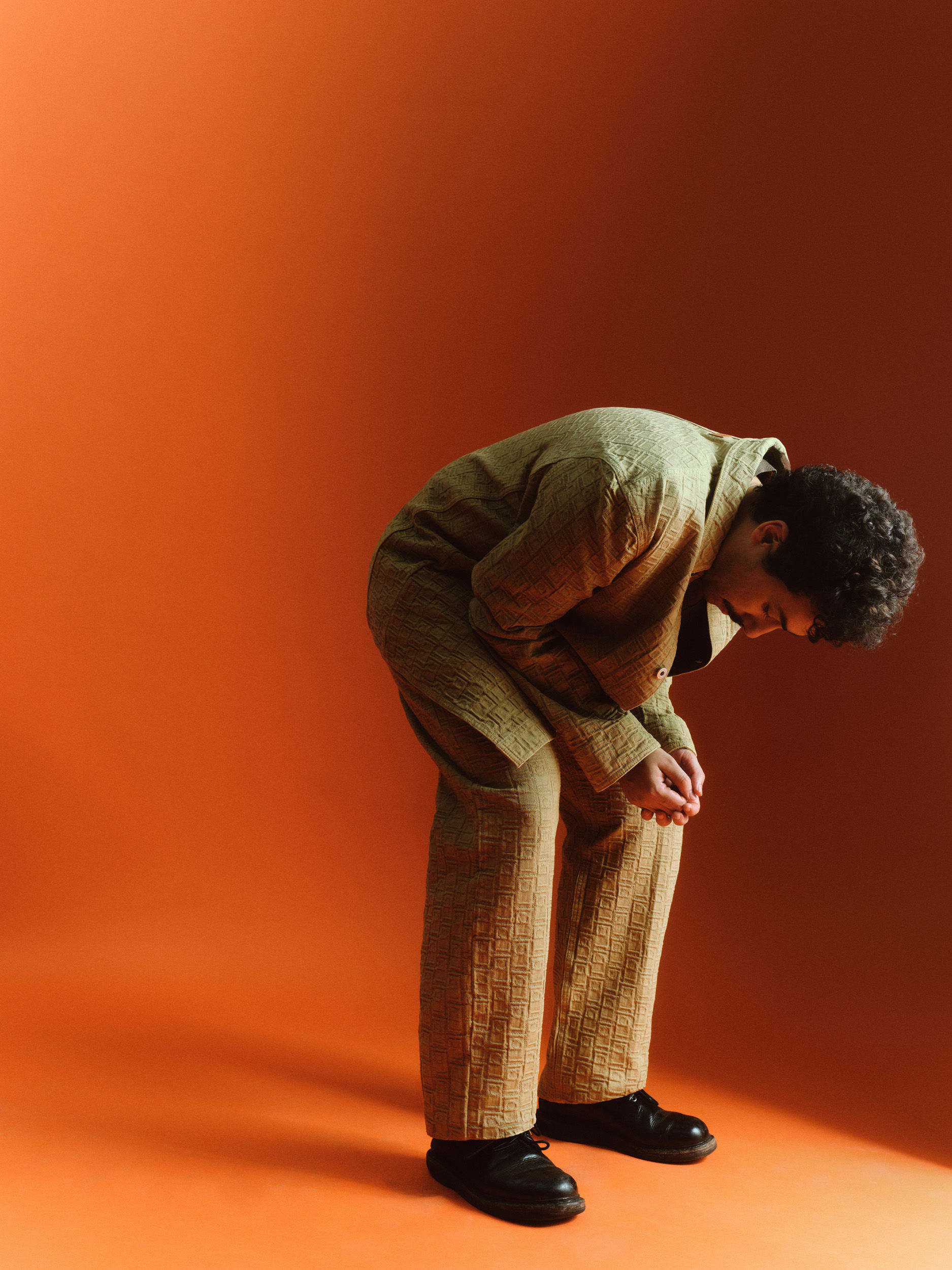
He wears an outfit by BOTTEGA VENETA.
( 1 ) In his first stand-up special, Feelings, Youssef talks about how his father once worked at a hotel in New York owned by Donald Trump, recounting how his father had hidden a photo of himself shaking hands with Trump because he didn’t want Youssef to use it as comedic material.
When it first aired in 2019, The New York Times described Ramy as a “quietly revolutionary comedy” for its sympathetic portrayal of Muslims on screen.
Ramy Youssef has never encountered a blank page he wasn’t excited to fill. Whether he’s performing stand-up, hosting late-night shows or creating and starring in award-winning series, the prolific 34-year-old multihyphenate never seems to be short of inspiration, mining his experience growing up as an Arab American and the stories of his community.1 Like the leading role he created and played in Ramy, the Hulu series that earned him a Golden Globe in 2020, Youssef also grew up in New Jersey, the son of Egyptian immigrants, and his routines, characters and collaborations with fellow actors, writers and directors have been informed by a compassionate response to the often challenging experience of Muslim Americans post-9/11.2
Yet his work is also a humorous reflection of everyday life. In Ramy, Youssef’s character moves from being an aimless 20-something living at home, desperately seeking a sense of purpose he can’t seem to find, to being a businessman and a father with responsibilities that force him to grow out of his recklessness. Embracing his Muslim background, he turns to faith, in what becomes a protracted search for God, albeit it with many detours down less than holy paths.
Ramy the actor and Ramy the character had less and less in common with each other as the seasons progressed (Youssef admits to regretting naming the character after himself) but what they share is a need for faith as an anchor and a compass, tools to navigate a world that is leaning further right. “The show was designed as a way to take this character and put him on a spiritual path,” he says. “I always knew in the back of my head that it would probably not do the same to me. If anything, the gap was kind of growing further as we continued making the show.”
“The thing that the real world really affected was tone,” he continues. “I wanted to be flexible, with each season feeling like a year of the character’s life. So you have some years that feel a little happier, some that feel darker, and then some years where, you know, you’re kind of blossoming.”
“Blossoming” is also a good way to describe Youssef since Ramy took a hiatus after the third season aired in 2022. When we meet on an unseasonably warm November day in Brooklyn, he is preparing to launch a new animated series through A24, capping a year that has seen him host Saturday Night Live, release a second stand-up special on HBO and enter into a creative partnership with Netflix to develop new projects through his own production company, Cairo Cowboy.3
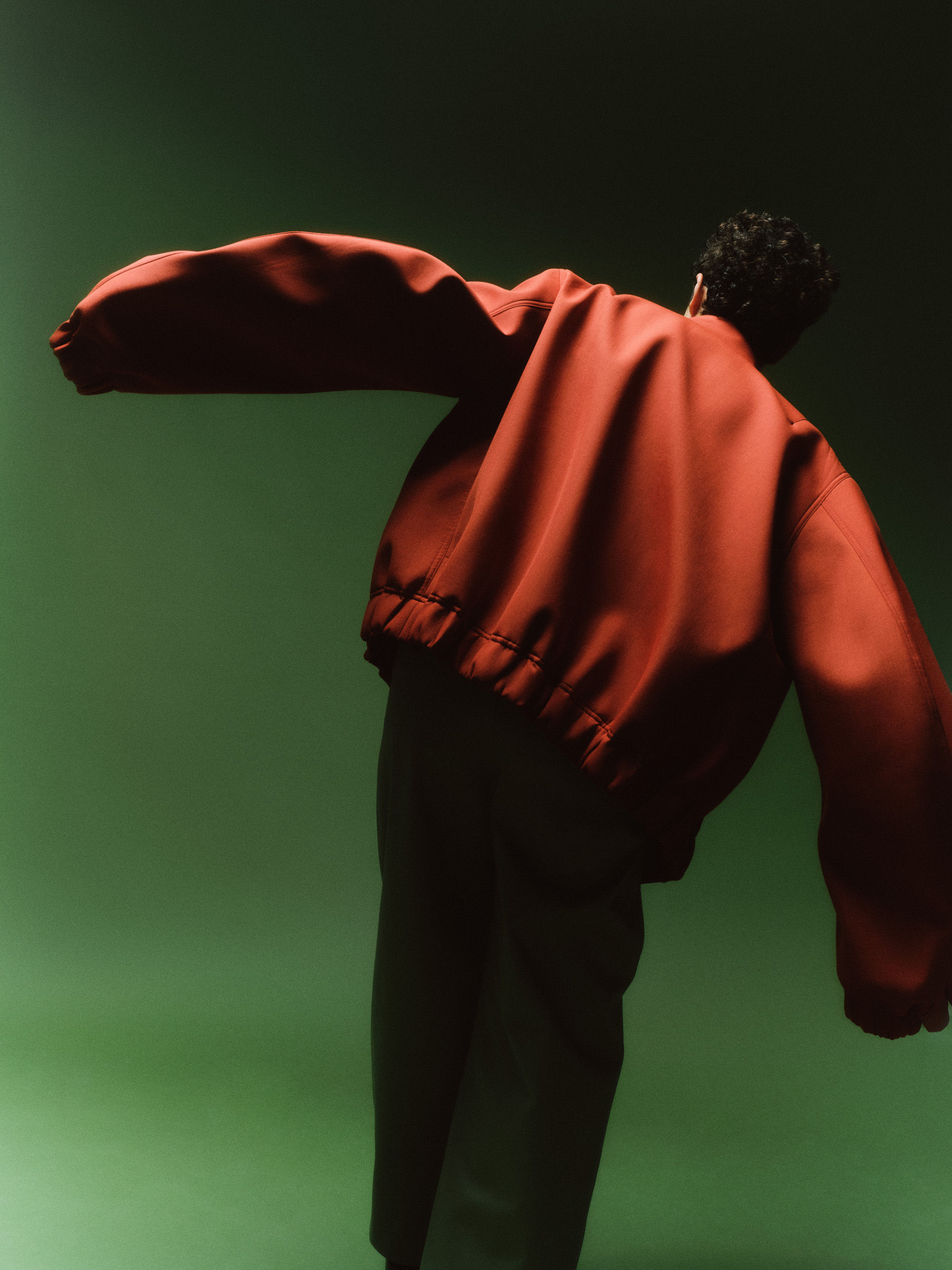
Youssef wears an outfit by SACAI.
( 1 ) In his first stand-up special, Feelings, Youssef talks about how his father once worked at a hotel in New York owned by Donald Trump, recounting how his father had hidden a photo of himself shaking hands with Trump because he didn’t want Youssef to use it as comedic material.
When it first aired in 2019, The New York Times described Ramy as a “quietly revolutionary comedy” for its sympathetic portrayal of Muslims on screen.
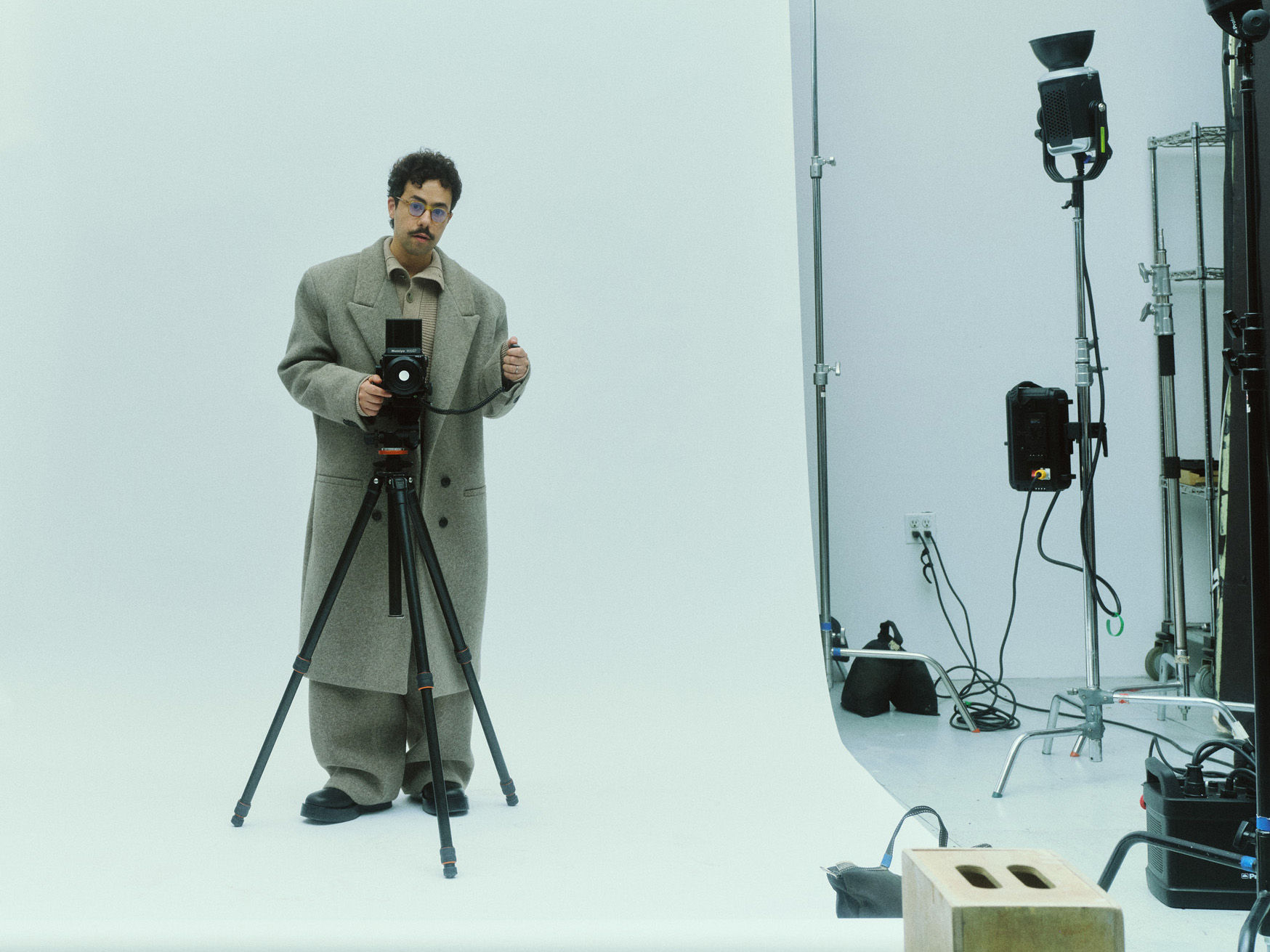
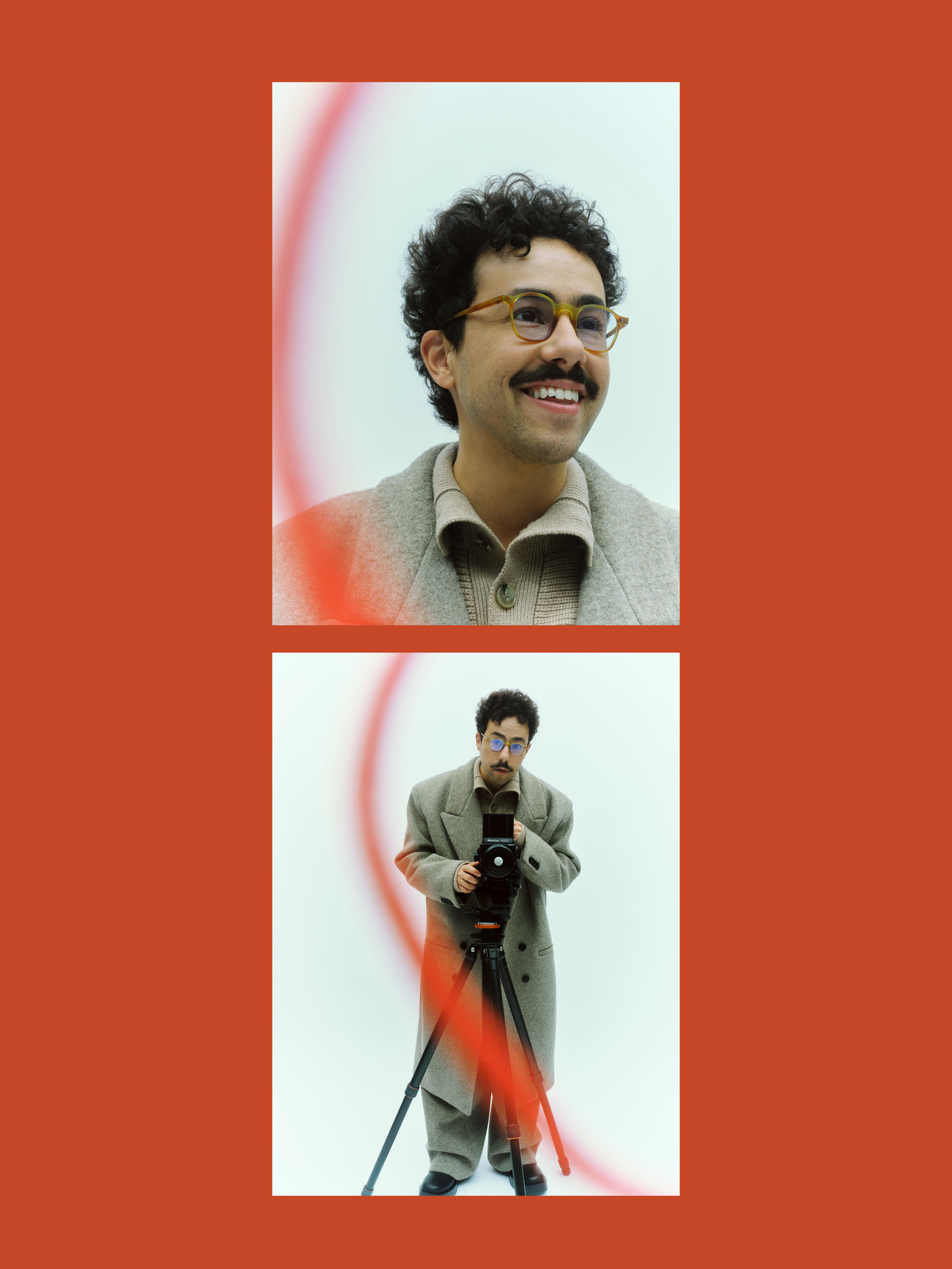
He wears a jacket and trousers by GCDS, a shirt by NANUSHKA, shoes by BOTTEGA VENETA and his own glasses.
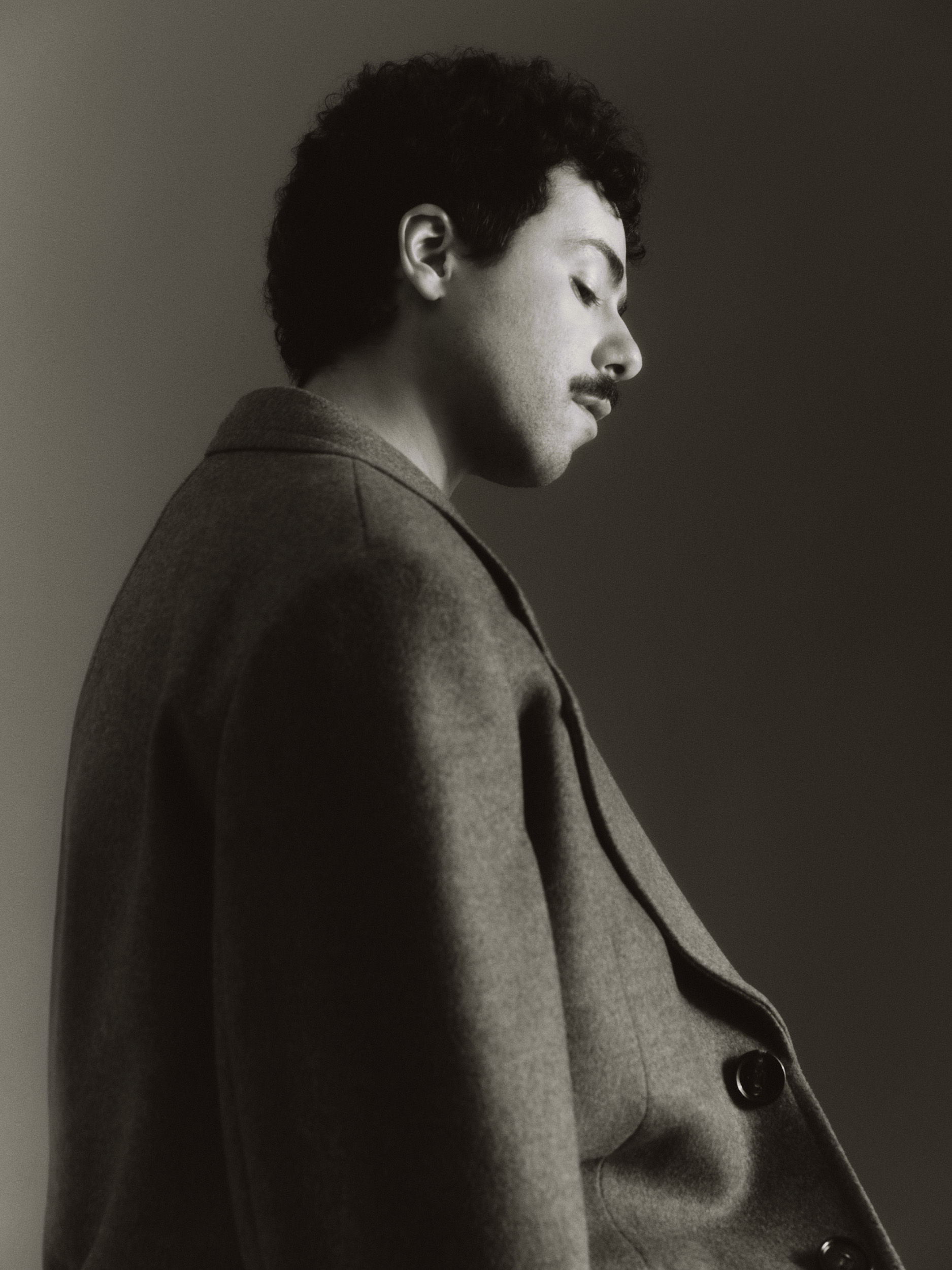
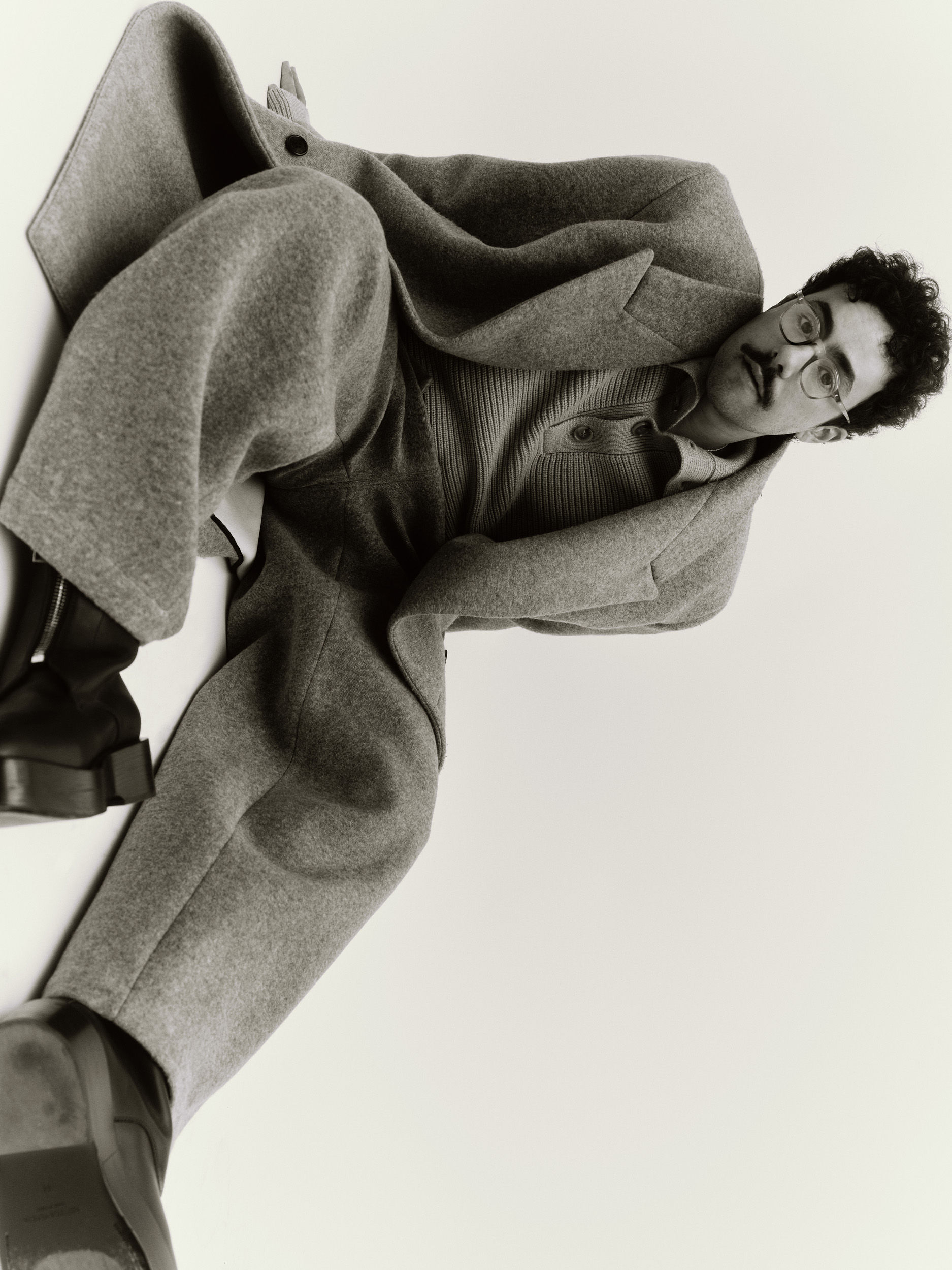
He wears a jacket by BOTTEGA VENETA.
( 3 ) Youssef’s appearance on Saturday Night Live included sketches like “Immigrant Dad Talk Show,” “Ozempic for Ramadan,” and “The Hitman,” where he plays a hitman about to take a shot, repeatedly interrupted by his UberEats delivery driver.
( 4 ) In addition to directing episodes of Ramy, Youssef was nominated for a Primetime Emmy for “Honeydew,” an episode of The Bear set in Copenhagen.
( 5 ) In the last quarter of 2023, the Council on American-Islamic Relations received more than 3,500 complaints of alleged Islamophobia, an increase of nearly 180 percent compared to the same period the previous year.
( 6 ) Code-switching is the act of adapting one’s appearance, speech or behavior in different social settings—often by minority groups to ease interactions or accommodate the comfort of the majority.
Even after a daylong photo shoot, Youssef is smiling and happy to chat. He explains that, as a practicing Muslim, whether by way of the divine, or through humor, he sees spirituality as an agent for hope, which he channels through his various creative endeavors. Playing a British scientist alongside Emma Stone and Willem Dafoe in Yorgos Lanthimos’ outrageous Poor Things does not deviate from that goal—it was his first major movie role, and a welcome change of pace from his usual projects—and Youssef makes it a point to clarify that he does not see the idea of only playing Arab roles as limiting in any way. To him, there’s so much to explore.
He gives the example of Ramy. While the character on the show is “both the butt of the joke and the butt of the issue,” he says the real stars are the cast of supporting characters, which opened up a rich tapestry of storylines about the Arab American experience beyond struggles of assimilation. His characters’ arcs took the series in different directions, and he was happy to follow. “So much of it,” he says, “is an organic experience based on how great the cast is.” It’s a testament to the camaraderie Youssef fosters on set and his openness toward fellow cast members sharing their own insights, perspectives and lived experiences.
“The show was designed as a way to take this character and put him on a spiritual path.”
Whether as an actor, comedian, screenwriter, producer or director, Youssef’s desire to showcase the imperfections of human nature and the fundamental similarities that bind us all, regardless of our respective backgrounds, gives his work broader appeal.4 He shows his audience the multiplicity of ways one can be an American, how citizenship transcends a pledge of allegiance and boils down to being a part of a community that bonds over shared universal values.
And so it is with sadness that he says that the past year has shown him how the ghost of the 9/11 era—when Arab Americans were routinely demonized—has resurfaced.5 It’s a situation that has reframed his perception of his new animated series, #1 Happy Family USA, which launches this spring on Amazon Prime—a show Youssef jokes was gestated, developed and birthed through both Trump administrations. The series centers on a Muslim family in America in the direct aftermath of 9/11. Finding themselves under much suspicion and scrutiny, the characters embark on an elaborate journey to prove to their neighbors that they are the happiest, most unthreatening family in America by mastering the art of code-switching as a means for survival within a hostile environment.6 “The funnest part was composing music and doing different voices, exploring the father character’s inner folk musician—imagine an Egyptian Bruce Springsteen,” he says. Fostered through a collaboration with artist Mona Chalabi and starring Alia Shawkat, Youssef had initially believed that the show would feel like a time capsule from a bygone era the world had moved past and learned from; he has since realized he had been out of touch with the reality on the ground.
While his work is a product of the stigma that has surrounded his community, his aim is to bring more people into the fold, exposing identity as a fragile concept. As someone who lived through the post-9/11 era as a child in New Jersey, Youssef remembers fearing himself, wondering if what he heard was true, whether he too was dangerous. “I was afraid: All the names and faces that were plastered everywhere seemed really similar to the names and faces in my family,” he says. But in the midst of it all, he also saw the discrepancies between other people’s perception of his community and the reality of who these people were, and the values with which they moved through the world. “If you let the definition being provided stand, you’re done,” he says. “For a lot of people who have family in the Middle East, we’ve been dealing with a dehumanization problem for a long time. That has been unfortunately very bipartisan: There’s the looming threat of the new administration, but it was already happening with the old one,” he says. “Time will tell where we stand.”
As the co-creator and a writer for the Netflix series Mo, Youssef saw an opportunity to bring the story of a Palestinian family in America to the television screen in 2022—long before the Israel–Hamas war erupted. With humor that echoes Ramy, Mo thrusts viewers into the world of the Najjar family, who are Palestinian refugees caught in the net of endless immigration bureaucracy, incompetent lawyers and a longing for a homeland which, from Texas, seems far away.
Youssef is determined to resist distraction brought on by news cycles. When asked whether the war might influence the direction of his future projects, he says he would prefer to channel his focus and energy into his current ones. There are stories to be told, and production schedules to move through. The work of telling important stories continues unabated, and it is more important now than it ever has been.
Youssef wears an outfit by FERRAGAMO.
( 3 ) Youssef’s appearance on Saturday Night Live included sketches like “Immigrant Dad Talk Show,” “Ozempic for Ramadan,” and “The Hitman,” where he plays a hitman about to take a shot, repeatedly interrupted by his UberEats delivery driver.
( 4 ) In addition to directing episodes of Ramy, Youssef was nominated for a Primetime Emmy for “Honeydew,” an episode of The Bear set in Copenhagen.
( 5 ) In the last quarter of 2023, the Council on American-Islamic Relations received more than 3,500 complaints of alleged Islamophobia, an increase of nearly 180 percent compared to the same period the previous year.
( 6 ) Code-switching is the act of adapting one’s appearance, speech or behavior in different social settings—often by minority groups to ease interactions or accommodate the comfort of the majority.

( 7 ) Mo is loosely based on the life of American Palestinian comedian Mohammed Amer, who also appears in Ramy. The series has received critical acclaim, holding a 100 percent approval rating on Rotten Tomatoes.
( 8 ) Youssef chose a song by ’70s Egyptian pop band El Masreyeen as Ramy’s theme. The band’s founder, Hany Shenouda, credited the show with sparking a resurgence in their music and even renamed the song “Ramy,” which Youssef found surreal, as his parents had heard it during soccer games as kids.
Speaking with Youssef, it is easy to feel like you’re chatting with an old friend and his enthusiasm encourages conversation to flow. Success to him is a by-product of moving authentically and unapologetically through the entertainment landscape with the willingness to engage in conversations and reach agreements that do not take away from his values or the essence of his projects. In his opening monologue on Saturday Night Live, for example, he talked about praying for his friend’s family in Gaza: “God—please… stop the suffering, stop the violence, please free the people of Palestine, please free the hostages.…” It was received with cheers from an engaged audience. In the same vein, his controversial red-carpet appearance sporting an “Artists for Ceasefire” pin, to signal his opposition to Israel’s relentless attacks, was intended to make a statement he believes needs to be made loudly and unambiguously. It was inevitably met with criticism online, with some people believing this gesture to be empty and performative, and others claiming it to be inflammatory and divisive.
But Youssef believes that the best thing about being an artist and an adult is the ability to stand firm on his principles—to free oneself from the need to code-switch, and call people in through good spirits and an inviting smile. His approach has set a new standard. In his wake, new names and faces, such as Emil Wakim and Nataly Aukar, have emerged on the scene, layering their own experiences as members of the same community on top of his. Even though, in many ways, Ramy Youssef is only just getting started, it already seems that his impact on pop culture will be the doors he is opening for others.8
“If you let the definition being provided stand, you’re done.”
( 7 ) Mo is loosely based on the life of American Palestinian comedian Mohammed Amer, who also appears in Ramy. The series has received critical acclaim, holding a 100 percent approval rating on Rotten Tomatoes.
( 8 ) Youssef chose a song by ’70s Egyptian pop band El Masreyeen as Ramy’s theme. The band’s founder, Hany Shenouda, credited the show with sparking a resurgence in their music and even renamed the song “Ramy,” which Youssef found surreal, as his parents had heard it during soccer games as kids.