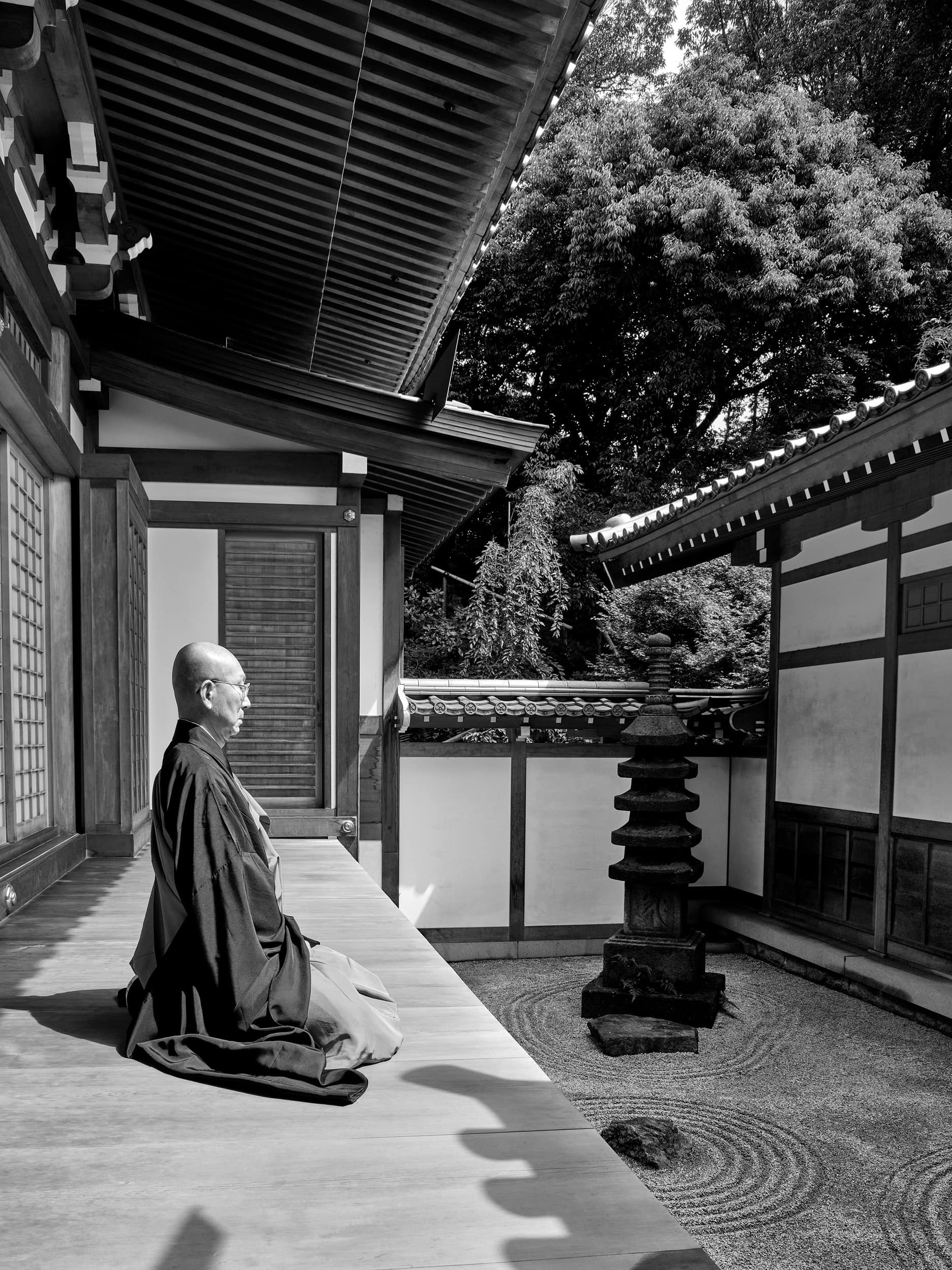
Received Wisdom Zen monk and garden designer Shunmyo Masuno on clearing the mind.
( 1 ) Dry gardens, often also called rock gardens or Zen gardens, are commonly found in temples and monasteries throughout Japan. Designed to be seen from a single viewpoint, they generally include rocks, water features, moss, pruned bushes and raked gravel or sand in stylized compositions that mimic landscapes.
Looking at a garden is a way to feel and realize certain things. The reason monks started engaging in garden creation is rooted in the original ideals of Zen. Ideally, one would build a small hut in a natural and abundant setting—in the midst of a forest, or near a river—and contemplate life. As natural surroundings disappeared, it prompted monks to create gardens to bring nature closer and they became symbolic, simplified and stylized.
I’m not a special person. I have a set daily routine, waking up at 4:30 a.m., opening doors, performing morning rituals and offering prayers. Afternoons involve emails and interactions with people, so the morning is when I can concentrate most. Nights are tiring, concentration decreases; I work until 9:30 or 10. I believe making mornings fulfilling is crucial for a fulfilling life.
My father was also a very busy person, but whenever he had time, he would weed or sweep. I’m similar to my father in serving as a temple priest, conducting zazen sessions and emphasizing the importance of cleaning in Zen. The difference is that my father didn’t engage in creative activities. The turning point for me was when I was taken to Ryoanji Temple in Kyoto when I was young. I wondered why such a beautiful garden existed.
That was the beginning of my interest in gardens; I thought, “Someday, I want to create a temple with such a beautiful space.” I never thought of designing other people’s gardens, but it’s natural to change, and if one doesn’t, it means they haven’t grown as a person.
When I was young, I found I couldn’t create dry landscape gardens.1 It was daunting because it requires a tremendous amount of skill and tests one’s abilities. I believed I still had much to learn and decided to seriously delve into dry gardens only when I was nearing 55—once I had reached a certain level of maturity. There’s more anxiety when you’re young. And where there’s anxiety, adding elements makes you feel secure. But Zen values the beauty of simplicity, emphasizing subtraction over addition so that only the most essential aspects remain. Now, I keep subtracting.
A calm mind is reflected in the garden, and it has the ability to heal those who view it. The relationship between gardens and humans is a significant and mutually influential one. Zen is a religious teaching, but it delves into how to live as a human being—exploring how to live one’s life in a way that brings peace to the heart. That’s what I want to communicate.
( 1 ) Dry gardens, often also called rock gardens or Zen gardens, are commonly found in temples and monasteries throughout Japan. Designed to be seen from a single viewpoint, they generally include rocks, water features, moss, pruned bushes and raked gravel or sand in stylized compositions that mimic landscapes.