( 1 ) People-watching is a near-universal pastime. In a winning entry for The New York Times’ “How To” Informational Writing Contest for teenagers, 17-year-old student Aziz AbdullaZoda describes it as “paying attention to the unspoken languages of the city.”
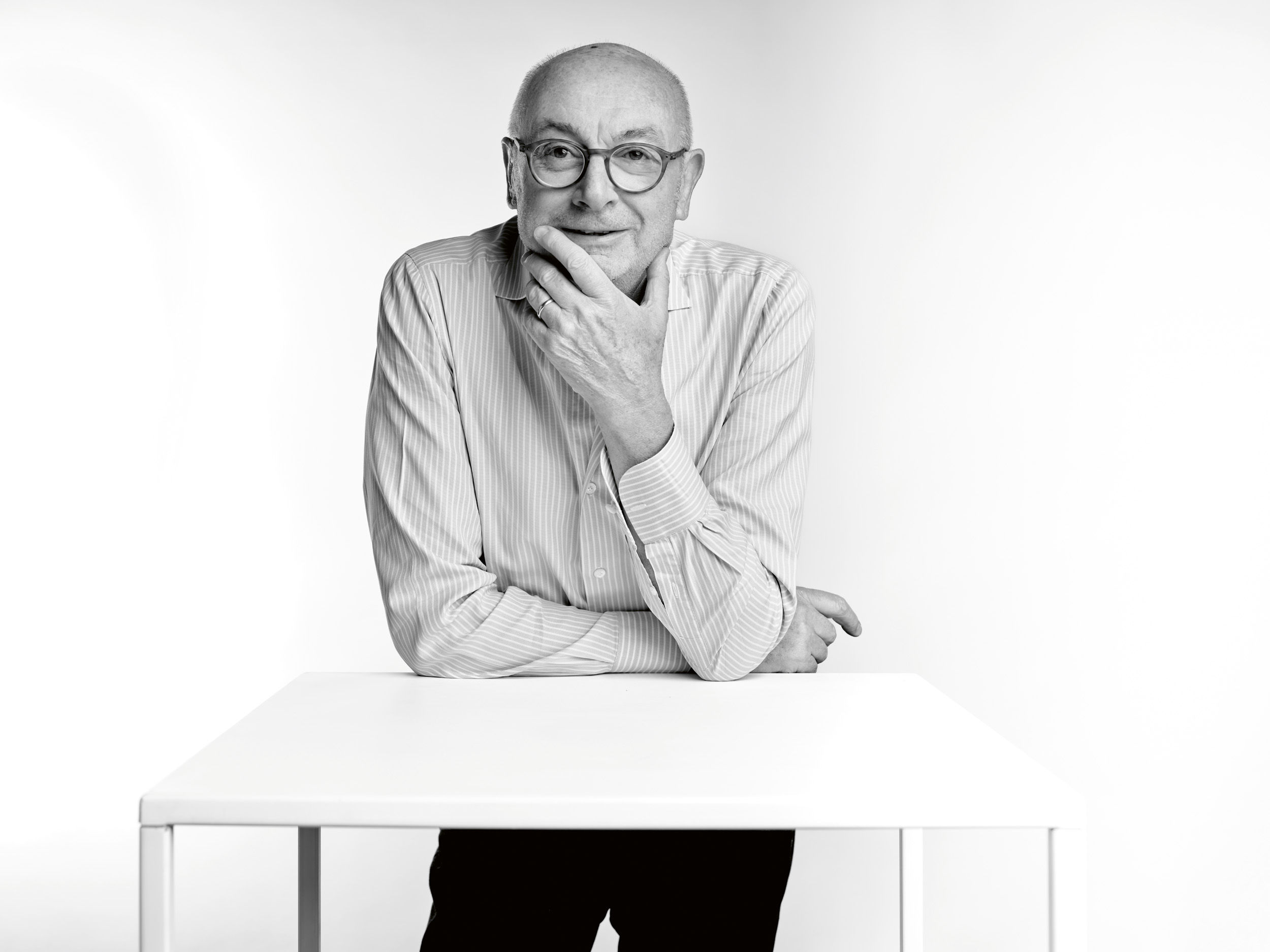
Received WisdomArchitect and designer Piero Lissoni on laziness, elegance and the complexity of simplicity.
Received WisdomArchitect and designer Piero Lissoni on laziness, elegance and the complexity of simplicity.
For as long as I can remember, I’ve wanted to be an architect. While other children dreamed of being pilots or astronauts, I was sketching houses and building small models. It became my passion.
I found my first client in November 1986—Boffi, one of the most prominent kitchen brands in the world. Professionally speaking, I was a nobody in the middle of nowhere: a young architect with no experience, new to the business of architecture and design. I never understood why they chose me; perhaps it was because I was confident. I started with the production processes, the communication, the graphics, the photography. Piece by piece, I began redesigning the whole process from inside.
That was almost 40 years ago—another century, another era. Today we work with robots and digital tools; manufacturing has completely transformed. Yet it’s still the same world in many ways: the same desires, the same vision. I’ve never changed my approach, only adapted it to whatever new tools arrive.
I’ve always believed that to be a good designer, you must accept mistakes and even welcome them. Sometimes you need to be stupid, to do something completely wrong, just to find the right path. For me, this stupidity is an incredible asset—if you’re not stupid, you can’t invent anything new. Our profession can be arrogant and self-conscious; I prefer to be childish, even ironic. I make mistakes, find a solution, mistake, solution, and so on. After 40 years, I'm still inventing new mistakes.