SOUPES À L'ANCIENNE

  • Recipes Donnie Dodson
  • Photos Gustav Almestål
  • Food & Set Design Niklas Hansen

Recipes from the Eats History archive.

Issue 60

, History

,
  • Recipes Donnie Dodson
  • Photos Gustav Almestål
  • Food & Set Design Niklas Hansen

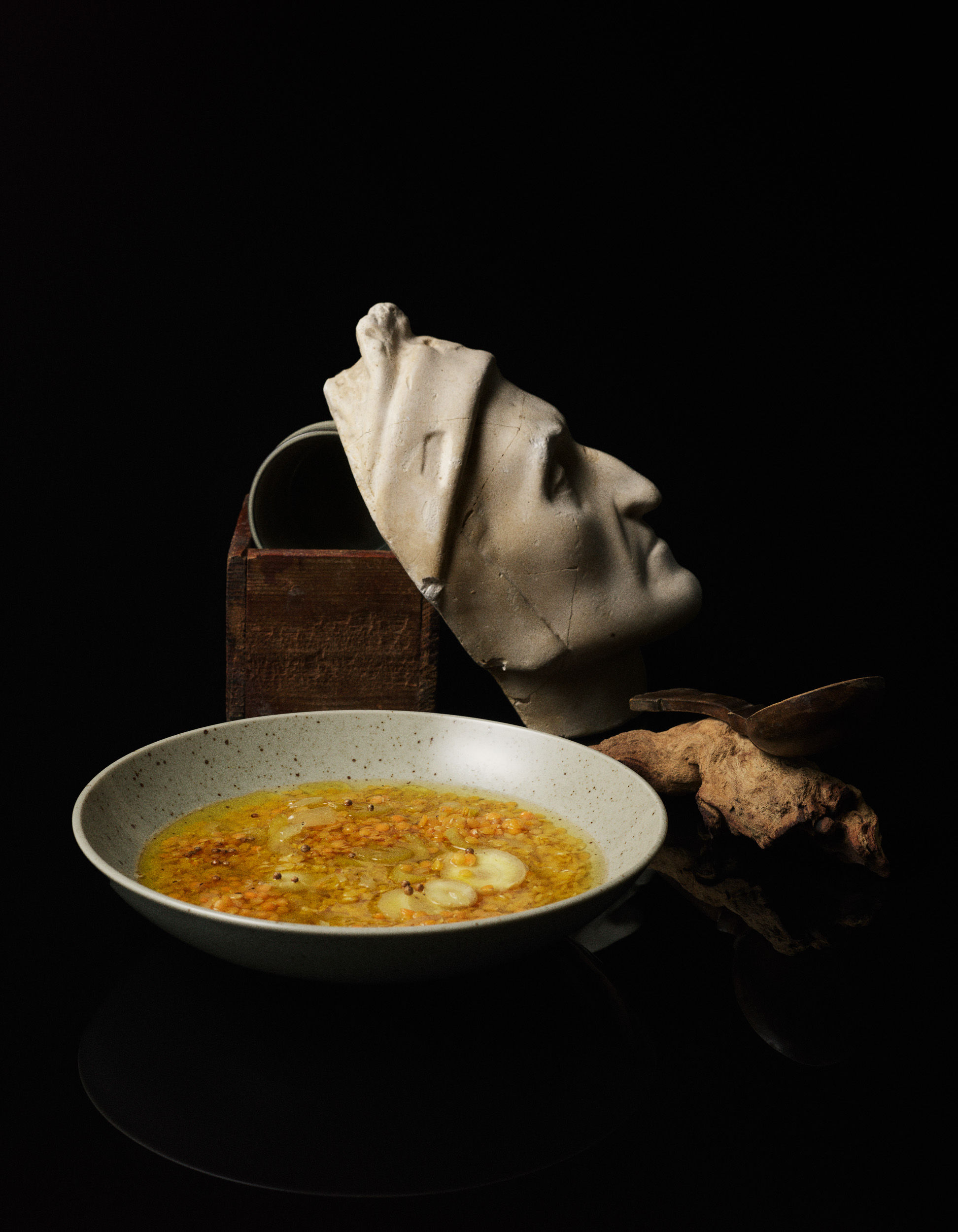
1.   ZENO STOIC LENTIL SOUP

This lentil soup draws from interpretations in Eugenia Salza Prina Ricotti’sMeals and Recipes from Ancient Greece, a scholarly reconstruction of Greek foodways based on literary and archaeological sources. The Greeks did not leave cookbooks in the modern sense; much of what we know comes from writers such as Athenaeus in Deipnosophistae, where meals appear in philosophical dialogue. This preparation reflects the spirit of Zeno of Citium, founder of Stoicism in the 3rd century B.C.E.: simple ingredients, balanced flavors and nourishment rather than excess.

SERVES 4
1 pound (450g) lentils, rinsed
8 cups (2L) vegetable or light meat broth
1 large leek, minced
1 carrot, sliced
1 stalk celery, sliced
1 small onion, sliced
2 tablespoons red wine vinegar
1 teaspoon honey
Salt and ground black pepper, to taste
Extra-virgin olive oil, for serving
12 whole coriander seeds per bowl

INSTRUCTIONS
In a medium pot, combine the rinsed lentils with the broth. Bring to a boil, then reduce the heat to maintain a steady simmer. Cook for 25 to 30 minutes, skimming any foam that rises to the surface.

Add the leek, carrot, celery and onion. Continue simmering for 20 to 25 minutes, until the vegetables are tender. If a thicker texture is desired, mash a portion of the lentils directly in the pot or pass some through a sieve and return them to the soup. Stir in the vinegar and honey, and season with salt and pepper to taste.

Serve hot with a generous drizzle of olive oil and exactly 12 coriander seeds scattered over each bowl.

2.   ROMAN GAZPACHO

This chilled bread-based dish is adapted from De Re Coquinaria, the Roman culinary collection traditionally attributed to Apicius and compiled between the 1st and 4th centuries C.E. Though not a gazpacho in the modern Spanish sense, the recipe combines soaked bread, vinegar, herbs, olive oil and cheese into a cooling, restorative preparation. Roman cooks often revived stale bread with posca, a diluted vinegar drink common among soldiers and laborers. The result is tangy, herbal and surprisingly fresh, reflecting the Roman instinct for balancing acidity, sweetness and fat in even the simplest dishes.

SERVES 2 TO 3
1 small loaf rustic bread (about 3 thick slices)
½ cup water mixed with 2 tablespoons vinegar and 1 tablespoon white wine (a posca substitute)
1 clove garlic
1 tablespoon chopped mint, plus more for serving
1 tablespoon chopped cilantro, plus more for serving
Pinch of freshly ground black pepper (long pepper, if available)
1 tablespoon honey
¼ cup finely grated Parmesan or aged hard cheese, plus more for serving
2 tablespoons olive oil, plus more for serving
1 to 2 tablespoons white wine, for serving
Pinch of salt

INSTRUCTIONS
Tear the bread into pieces and place in a medium bowl. Pour the vinegar-water mixture over the bread until fully soaked. Let stand for about 5 minutes.

In a mortar and pestle, pound together the garlic, mint, cilantro, pepper, honey, cheese and olive oil into a thick paste. (A food processor may be used instead.)

Add the soaked bread and continue to grind or blend until the mixture becomes smooth and spoonable. Add a small splash of water if needed to loosen the texture.

Chill for 15 to 20 minutes before serving.

Spoon into bowls and finish with a drizzle of white wine, olive oil and a scattering of additional herbs or cheese. Salt to taste.

3.   BABYLONIAN PIGEON STEW

This recipe is adapted from one of the Yale Babylonian culinary tablets, clay inscriptions dating to around 1750 B.C.E. and often cited as the world’s oldest recorded recipes. The original text, translated into English, reads with striking brevity: “Take a bird; prepare it; add water, salt, fat, onion, flour, milk, leek and garlic. Cook and serve.” Scholars believe the bird was likely pigeon, a common and valued meat in ancient Mesopotamia. The result is a surprisingly delicate stew, enriched with milk and thickened with grain; a rare, tangible connection to the kitchens of Babylon, nearly four thousand years ago.

SERVES 3 TO 4
1 tablespoon clarified butter or ghee
1 Cornish hen or small bird (roughly pigeon-sized), cut into thighs, breasts and drumsticks
1 small onion, chopped
2 cloves garlic, minced
1 leek, sliced
4 cups (1L) water
1 cup (235ml) whole milk
1 teaspoon salt, or to taste
1 tablespoon all-purpose flour 

INSTRUCTIONS
In a medium pot, heat the clarified butter over medium heat. Brown the bird pieces on all sides until lightly golden, then remove and set aside.

In the same pot, sauté the onion and garlic until softened and fragrant.

Return the bird to the pot and add the sliced leek and water. Bring to a gentle simmer and cook for about 20 minutes, until the meat is tender.

Stir in the milk and salt. Simmer gently for several minutes more.

In a small bowl, whisk the flour with a small amount of the broth to form a smooth paste, then stir it into the pot to lightly thicken the stew. Cook briefly until the broth takes on a soft, velvety texture. Serve warm.

4.   TAOIST SOUP FOR THE SOUL

Taoist philosophy, traditionally traced to the 4th–3rd century B.C.E. and the teachings of Laozi in the Tao Te Ching, placed great emphasis on harmony between the body and the natural world. Later Taoist practitioners developed dietary practices intended to cultivate clarity, longevity and the smooth flow of chi, the body’s vital energy. Some ascetics practicedbigu, or grain avoidance, favoring simple broths of roots, herbs and wild greens. This light vegetable soup reflects those principles: seasonal, restrained and nourishing without excess.

SERVES 2 TO 3
6 to 8 dried shiitake mushrooms (or other dried mushrooms)
4 cups (1L) water or light vegetable broth
1 medium carrot, sliced
1 small daikon or turnip, diced
2 slices fresh ginger
2 to 3 roughly chopped sprigs dandelion greens (or seasonal greens such as spinach or nettles)
Salt, to taste
Optional: chopped chives or fresh wild herb

INSTRUCTIONS
In a small bowl, soak the dried mushrooms in warm water for 20 minutes. Remove, slice and set aside. Reserve the soaking liquid to add to the broth, if desired.

In a medium pot, bring the water or broth to a gentle simmer. Add the carrot, daikon, reserved mushrooms and ginger. Cook for 15 to 20 minutes, until the vegetables are tender. Add the greens and cook for another 3 to 5 minutes, just until wilted.

Season lightly with salt. Sprinkle with chives or wild herbs, if using. Serve warm, allowing the natural flavors to remain clean and subtle.

FREE PREVIEW

Take a look inside Issue Sixty

You are reading a complimentary story from Issue 60

Want to enjoy full access? Subscribe Now

Subscribe Discover unlimited access to Kinfolk

  • Four print issues of Kinfolk magazine per year, delivered to your door, with twelve-months’ access to the entire Kinfolk.com archive and all web exclusives.

  • Receive twelve-months of all access to the entire Kinfolk.com archive and all web exclusives.

Learn More

Already a Subscriber? Login

Your cart is empty

Your Cart (0)