( 1 ) During its construction, Pope John Paul II asked that the dome be built slightly lower than that of St. Peter’s Basilica in the Vatican. The architect Pierre Fakhoury lowered the dome accordingly but added a giant cross, making the church 72 feet taller than St. Peter’s and, as a result, the tallest Catholic church in the world.
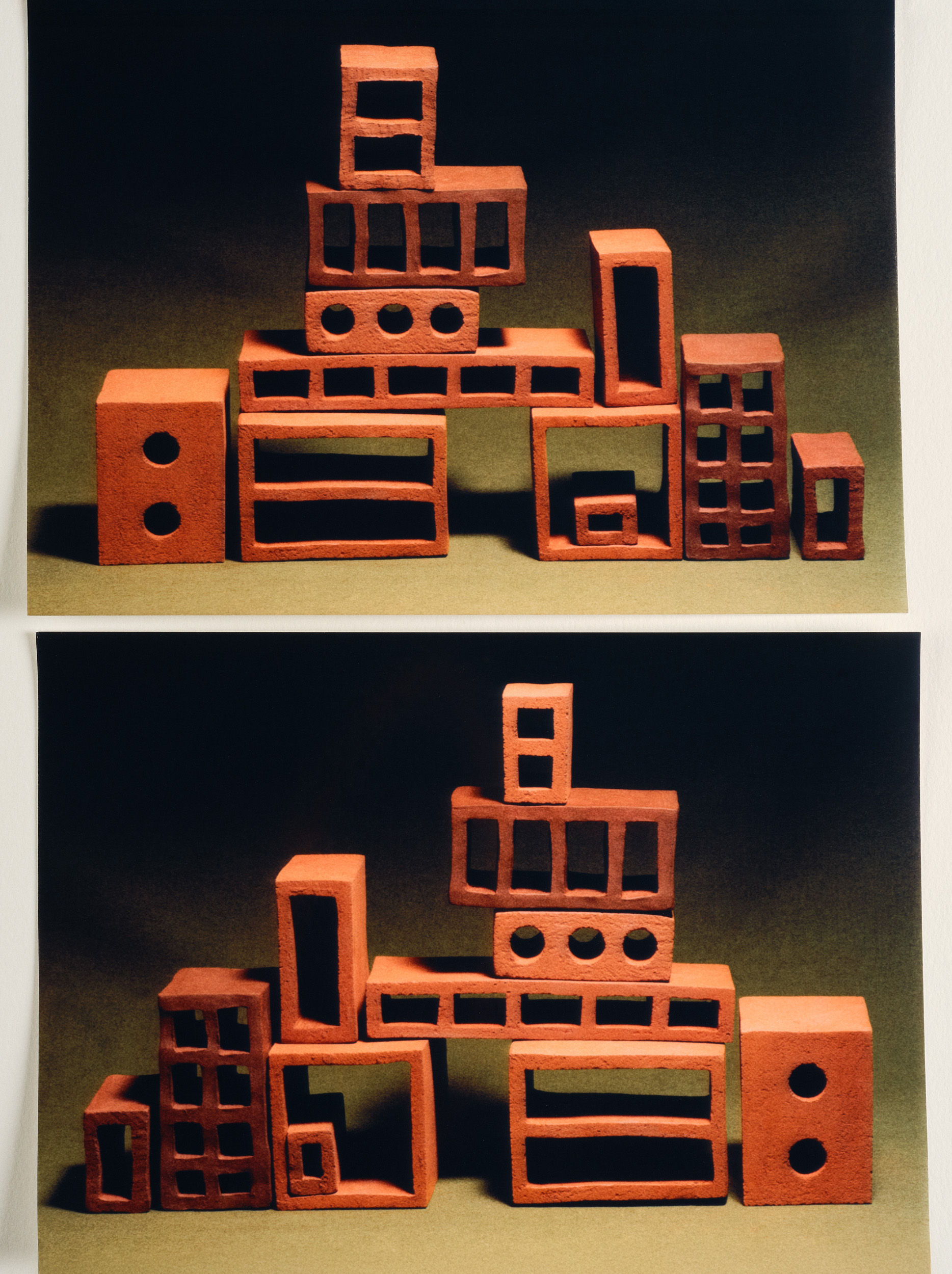
Spot the DifferenceOn architectural mimicry.
Spot the DifferenceOn architectural mimicry.
In the shimmering heat, massive columns encircle a piazza in front of a high-domed basilica, its form instantly recognizable as one of the most important—and largest—churches in the world, a place of pilgrimage for the world’s 1.3 billion Catholics. A breeze carries sounds of cows across the plaza.… Cows?
This basilica, as it happens, is not Bernini and Michelangelo’s masterpiece presiding over St. Peter’s Square at the Vatican but an ever-so-slightly larger replica looming over the fields outside Yamoussoukro, the capital of Ivory Coast. Inching out the original in terms of size and height (contrary to the wishes of the pope at the time), the Basilica of Our Lady of Peace of Yamoussoukro seems as much a monument to Félix Houphouët-Boigny, the first and longest-serving president of Ivory Coast, who commissioned the church in the 1980s, as it is an expression of Christian devotion.1
Here imitation is not flattery, but one-upmanship. The National Theater of Nigeria conveys a similar message. Its overtly technological concrete masts and suspended roof almost exactly duplicate Bulgaria’s Palace of Culture and Sports—but at four times the size. Commissioned under General Yakubu Gowon’s military government and completed in 1973, during an oil boom and after two decades of postcolonial independence, the building announced Nigeria’s new wealth and cultural ambition. If Europe had pioneered such monumental forms, Nigeria now demonstrated that it could match—and even surpass—them in scale.
Architectural duplication has become a crucial political tool throughout much of the world. While Western critics may disdain copying creative works because it “withers… the aura of the work of art,” to quote German philosopher Walter Benjamin, elsewhere, replicating important buildings bestows their symbolic power on the imitator. Municipalities throughout China have recreated famous Western buildings—London’s Tower Bridge, the Leaning Tower of Pisa, the Kremlin, the Colosseum, an entire Austrian village—not merely as architectural curiosities, but as assertions of strength. In Original Copies: Architectural Mimicry in Contemporary China, Bianca Bosker emphasizes that copying architecture is meant to project the nation’s global reach. “While it once considered itself the center of the world,” she explains, “China is remaking itself into the center that actually contains the world.”