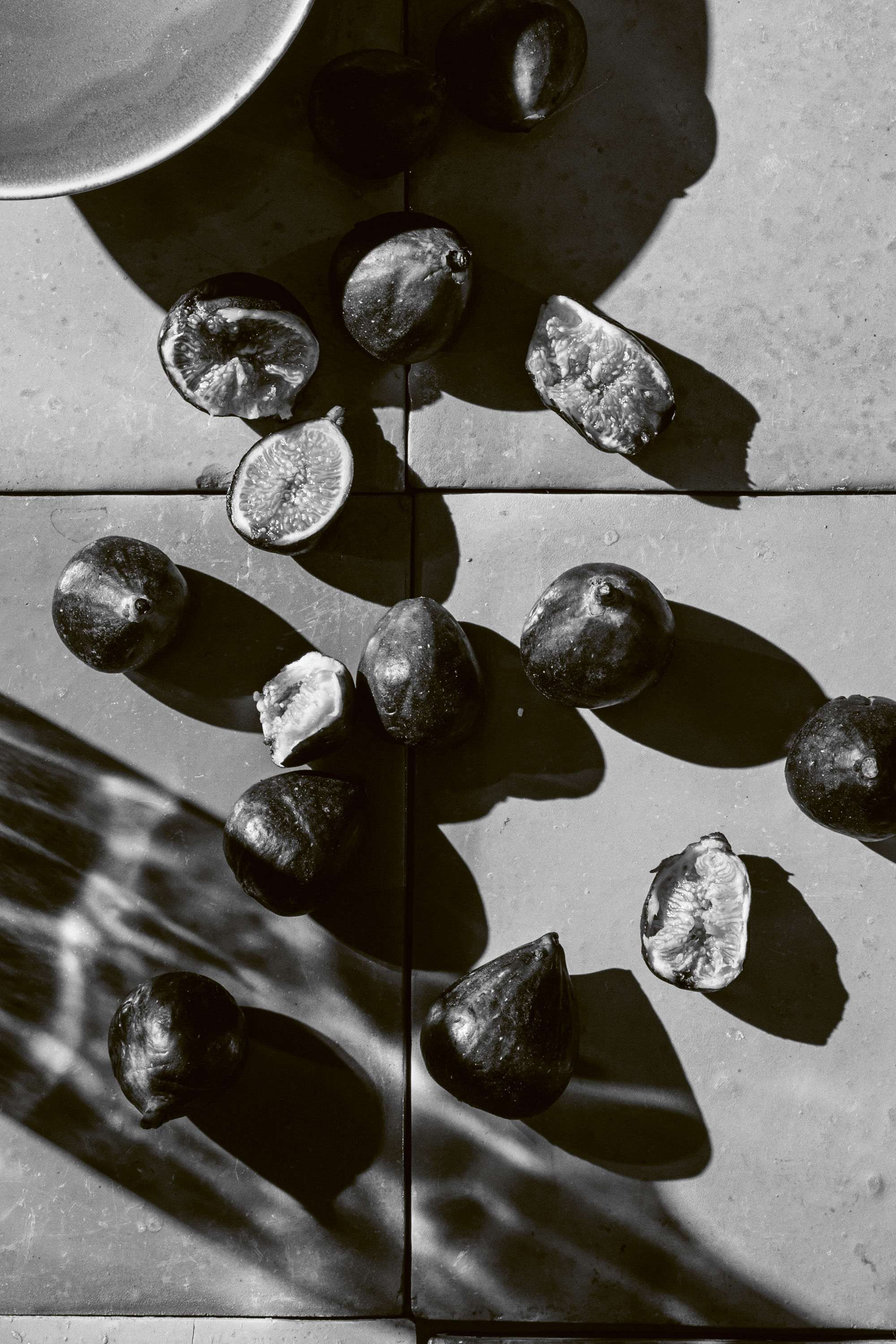
( 1 ) Despite the sensual associations of the fig, its leaves have long been linked with modesty and concealment. Following a decree issued in 1563, fig leaves were added to nude sculptures across Rome, inspired by Adam and Eve’s use of fig leaves to cover themselves in the Bible. The practice later gave rise to the phrase “fig leaf,” now used to describe an inadequate attempt to conceal something embarrassing.
TableOn the strange seduction of figs.
TableOn the strange seduction of figs.
Around this time of year, trees proffer some of their finest—and most challenging—fruits. It is as though they have been watching us prove ourselves: We started the year slowly, with entry-level clementines, building through to strawberry season. By late summer, we progressed to picking roadside blackberries through thorns—a rotten-berry roulette. We ate ripe plums with their occasional burrowing grubs. And now there are figs, the most grown-up fruit of all.
A fig is not technically a fruit, but a perversion of a bundle of tiny blooms. The body you see—the teardrop of green or brown or wine-purple skin—is a vessel for flowers. These grow inward from the spongy subcutaneous matter of the fig. They seek its depths, and because they are never exposed to the sun, they stay embryonic and even jellylike, forming what registers to us as sweet flesh, flushed pink like a berry. When truly ripe, which they seldom are if you buy imported ones from a grocery store, figs are thick with intoxicating perfume. In fact, some people believe that it was a fig, not an apple, that was the original forbidden fruit. Other fruits have a salutary air about them but a fig, in no uncertain terms, is a potent and ancient symbol of sensuality—the sex organ of the tree.1
There is an element of doubt each time you bite into a fig. An apple will reveal its wormhole to you as a warning; a fig keeps its secrets hidden. Certain varieties, mainly Smyrna figs—the tan-leather dried ones—are pollinated by tiny wasps that crawl inside the fruit to lay their eggs. The upshot is a pollinated fig. The downside for us is the knowledge that this flesh was once home to innumerable bugs. Thankfully, this doesn’t apply to all figs, but knowing that even one variety grows this way is enough to put some people off figs for life.
If you’re able to get over your squeamishness, the fig offers riches. Italian chef Giorgio Locatelli calls them “the fruits of Paradise.” The impulse for the fig novice is to cook them, perhaps grilling and serving them with honey and ricotta. This is good, but try the opposite: Put the figs on ice. Their squishy, multitudinous buds turn into cool, firm flesh resembling gorgeously marbled Wagyu beef. It still isn’t a beginner’s fruit, but serve these iced figs with some fresh mint or a few drops of Cointreau, and you have mastered the fruiting year.