Vicky KriepsAn interview with the actor.
Vicky KriepsAn interview with the actor.
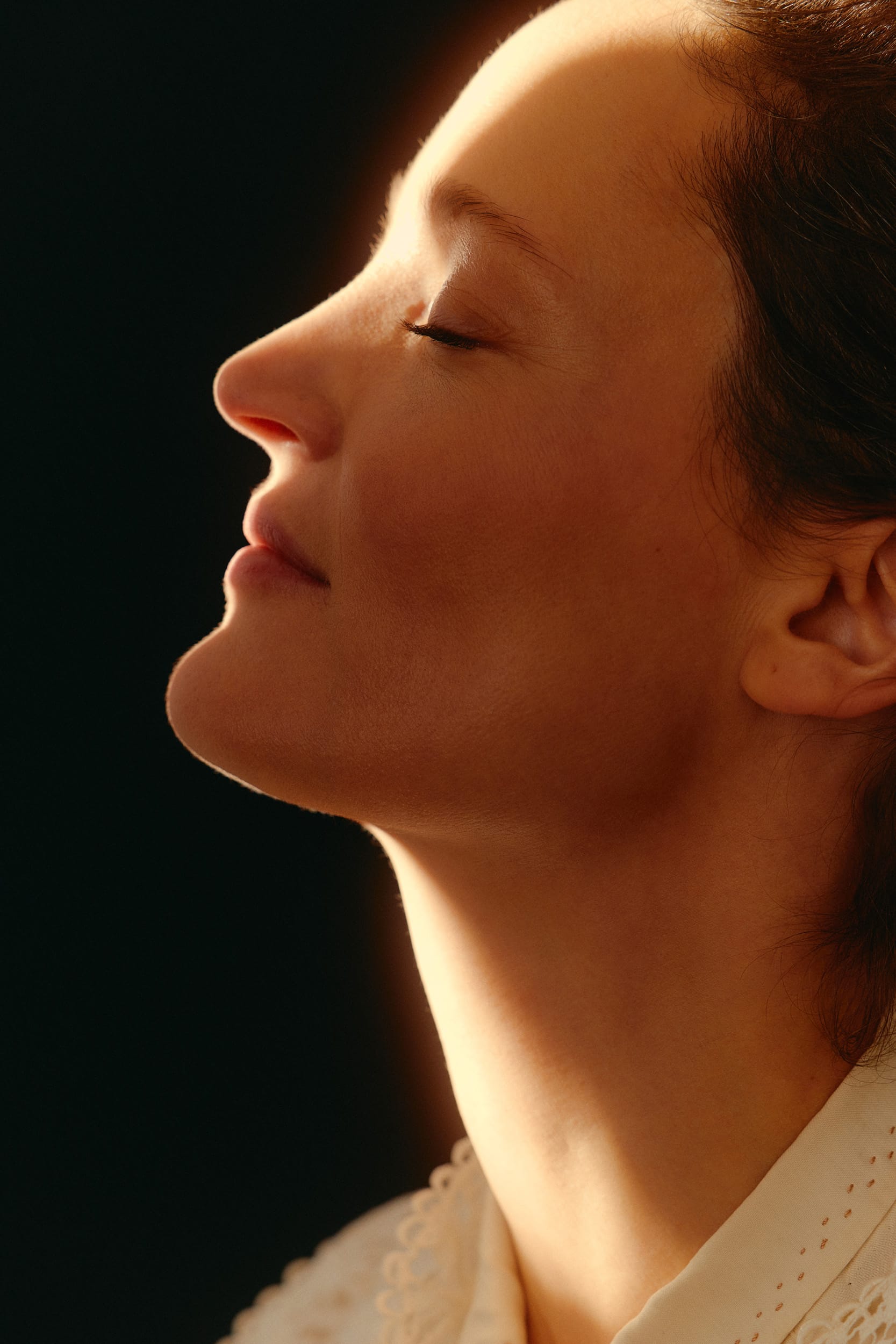
Krieps had starring roles in two French movies that had world premieres at the 2022 Cannes Film Festival: Mathieu Amalric’s thriller Hold Me Tight and Emily Atef’s drama More Than Ever.
It’s surprising that Vicky Krieps’ big break didn’t come sooner. The Luxembourgish actor had been steadily accruing roles in film and television across Europe for a decade when she starred alongside Daniel Day-Lewis in Paul Thomas Anderson’s Phantom Thread in 2017. Hollywood fell hard for her, but she never let herself fall too hard for it. Comfortable performing in French, German and English, she has always been guided in her career choices by her own intuition and desire. And since Phantom Thread, the opportunities have only grown more varied—arthouse dramas like Marie Kreutzer’s Corsage and Mia Hansen-Løve’s Bergman Island or larger scale blockbusters like Old, M. Night Shyamalan’s beach thriller, and the big-budget French adaptation of Alexandre Dumas’ The Three Musketeers. Throughout it all, she has been steadfast in her commitment to her independence, a driving force for the actor as she continues to blaze a trail across the industry.
Caitlin Quinlan: How do you navigate between the craft of acting and the business side of the film industry?
Vicky Krieps: I seem to be representative of a movement in acting. I think it’s a combination of timing and financial independence. It’s not only having money so that you can live without a man but also being able to decide clearly about what money I am taking. I have never made a choice in my career that was not completely my decision and within my standards of moral or artistic approach.
CQ: Was this impacted by having such a celebrated breakthrough as Alma in Phantom Thread?
VK: Paul [Thomas Anderson] allowed me to use the role in the way I wanted to. Paul is a very specific artist and when he works, he’s very much in his own world. I decided to go into it as open and vulnerable as possible. I was able to create this character very freely because I was slightly removed from Hollywood. I did feel that even if Paul is an artist and Daniel [Day-Lewis] is an artist, behind them stood this Hollywood machine. I could sense it.
CQ: There’s a lot of power in being new to an establishment and able to shake it up.
VK: I did an interview with the actor Daniel Brühl recently and the first thing he said to me was, “Vicky, I’ve known you from the beginning and you really haven’t changed.” He said, “Usually someone needs to get very successful before you realize, Oh, it’s all bullshit.” And that is true: There was something for me from the beginning that had the nature of a game. Making a movie is very close to living in the house of an obsessed couturier [as in Phantom Thread]. Fashion and art and cinema and music—they all have this game going on. Until now, it was mainly men who were allowed to drop out of the game.
CQ: Where do you think your independent streak came from?
VK: I remember being very young and already having this feeling of the “game.” I would be in the middle of a class at school and have all these feelings rushing up like, What am I doing here? Why are we all just sitting here? Is anyone actually really talking or are we all just robots? I use acting to dissect this: If life is made from all these weird structures, games and rules, then I will use acting to understand what it is we’re all doing. I also use acting to see what happens if I don’t play the game.
CQ: What guides your decisions when choosing which roles to take?
VK: It can be the character, but it’s always instinctive and that can be a little bit of a curse because it’s difficult for me to explain to people why I don’t want to do something. Often, I’ll get goose bumps, sometimes even before reading the script. I was in Arizona shooting The Wall, for example, and being in the desert, I remember thinking “I want to make a Western.” In the same week, I received an email that Viggo Mortensen would like to talk to me about a Western script [The Dead Don’t Hurt]. I felt like it wasn’t a coincidence.
CQ: Do you enjoy the challenge of switching between different genres and roles?
VK: I think it fulfills me because I need life to be more than just one way, or the one thing someone expects of you. I try to break every pattern that comes my way in order to stay awake. From the beginning, my approach has been to show that acting is nothing special. I mean, if it is anything, it’s just a complete surrendering and letting go of control, and venturing into spaces where you don’t know how things will turn out or how you will be perceived. I think that’s the key: giving up the need to please and the need to be understood.
CQ: How do you prepare for your roles?
VK: I completely lose myself in the research. I feel like I am both the scientist and the object of investigation at the same time. One way I explain it to people is that to catch a wild animal you have to pretend that you’re not even interested. You look away but you want it to come to you so you can tame it. So that’s what I do with my roles. Sometimes I will buy a book about the character or the subject and read a page, and then put the book away as if I’m not interested in it. But eventually I take the book out again.
CQ: Do you find it easy to leave a role behind?
VK: I found I needed to find a way to get out of a role because I go into a character in such a deep way, so I bought a guitar and I started writing a song for each character. With some songs, I need months after the movie to finish them but when I have finished writing the songs, I can let go.
To just let go of your character and kill it would be so harsh because it’s so much of you and your life, so if I give the characters a song, they don’t have to leave me but they’re no longer really inside me. They live on in the song. The more I talk about it, the more I see how every actor has this problem and how we don’t have the tools to deal with it. I’m not special but I am part of a new generation of people who say we want our work to be ethically and morally acceptable, so that we feel good about it.
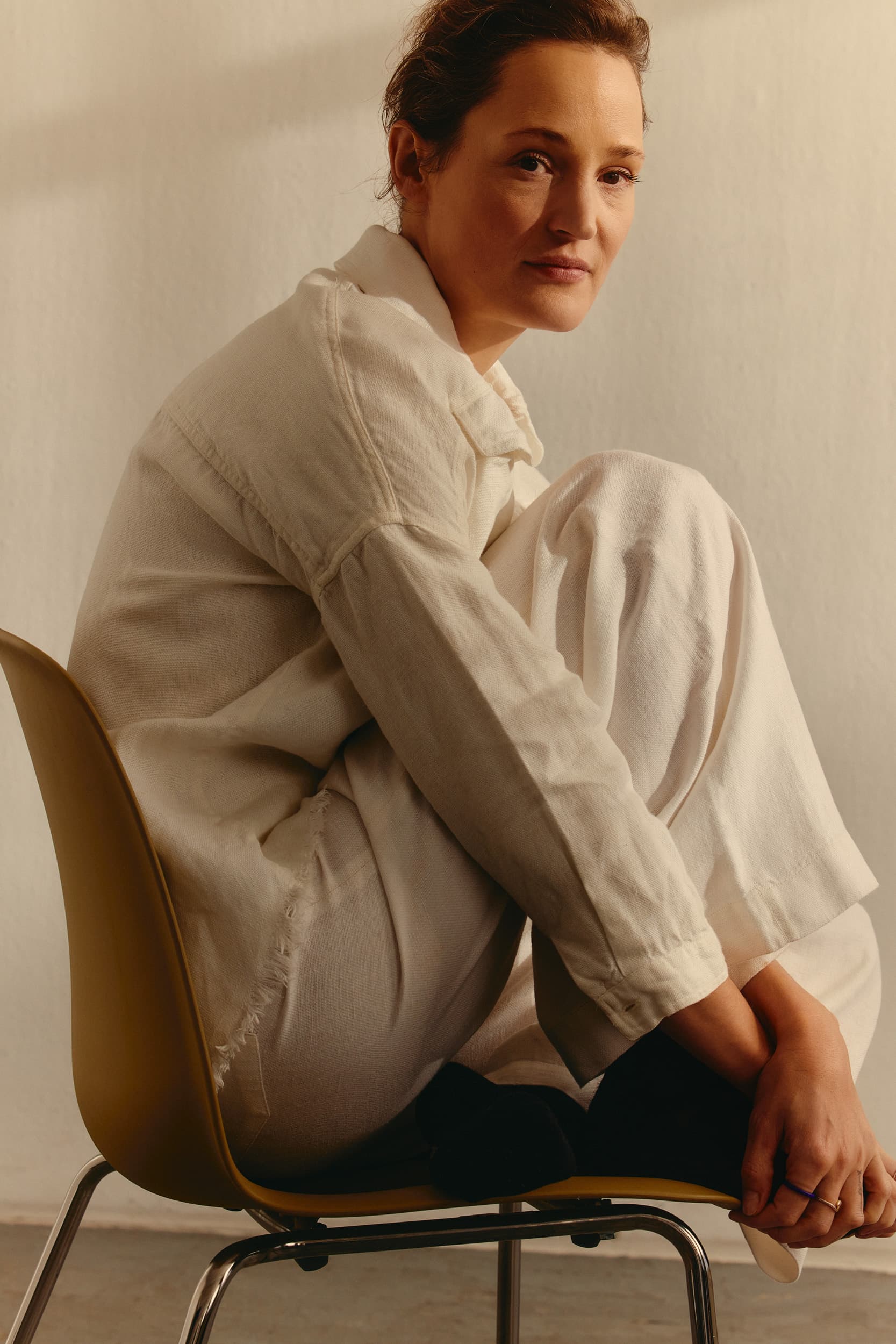
Krieps had starring roles in two French movies that had world premieres at the 2022 Cannes Film Festival: Mathieu Amalric’s thriller Hold Me Tight and Emily Atef’s drama More Than Ever.