( 1 ) Pascal went on to suggest that an inability to rest can be blamed for everything from wanderlust to war: “A man who has enough to live on, if he knew how to stay with pleasure at home, would not leave it to go to sea or to besiege a town.”
Village PeopleWhy is it so difficult to cultivate community?
Village PeopleWhy is it so difficult to cultivate community?
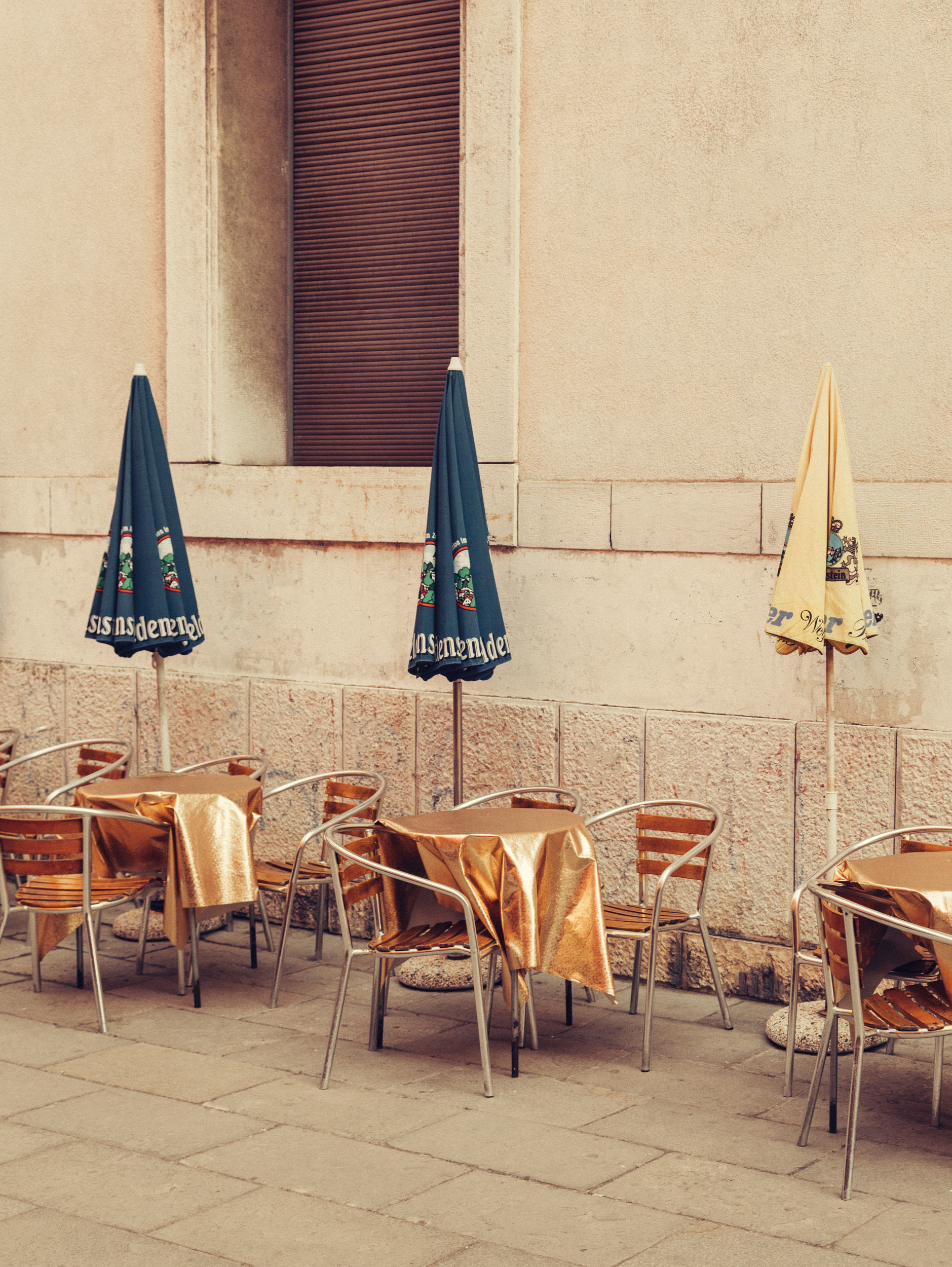
The traveler’s holy grail is a bar or restaurant frequented solely by locals. You know the place: the furniture mismatched, the radio on, there’s at least one person reading a newspaper; there’s a warmth, as well as a subtle guarantee of quality, that emanates from a place where everyone seems to know one another.
Such a close-knit way of life centered in a local community might be termed the “village mentality.” Marked by a shared focus on the immediate locality, and the people who inhabit it, it’s a mindset that can be cultivated in the neighborhoods of a city as well as in small towns and villages. Friendships are made, and maintained, within the community, growing organically from regular encounters; people come to see their home as the area itself, rather than just their house or apartment, and so life is lived more openly.
Encountered as a stranger, a community like this can feel like a low-key utopia, but establishing something similar back home can be a challenge. A village does not germinate overnight; it can take years, decades or generations, and the day-to-day reality might not be as straightforwardly delightful as what you experience when away from home. Always seeing the same faces can become tiresome—the old man reading a newspaper is picturesque on first encounter, but perhaps not when you see him every day and discover the topics that set him off.
Is it any wonder that so many of us, after a busy week of work, opt for a change of scene, as often as we can, rather than stay put and build the kind of community that we find so appealing elsewhere? The 17th-century French thinker Blaise Pascal suggested that this was down to humankind’s “secret instinct which impels them to seek amusement and occupation abroad.”1 Alongside this urge, Pascal wrote, stood a contradictory pillar of self-knowledge: “That happiness in reality consists only of rest, and not in stir.” In the case of the village mentality the contradiction is evident: We want the deep peace of belonging, but our itchy feet undermine our ability to put in the hours.
Yet what if the urge to wander wasn’t originally incompatible with the village mentality? The travel writer Bruce Chatwin argued that we are preternaturally disposed to wandering, that “Natural Selection has designed us—from the structure of our brain-cells to the structure of our big toe—for a career of seasonal journeys.” If Chatwin was right, and such a collective nomadism is our natural state, the competition between our desire for a stable community and the urge to wander is shown to be the product of our modern, static ways of living, rather than an inherent contradiction in our nature.
Given that the widespread readoption of a nomadic lifestyle isn’t feasible, what can be done to neutralize this clash of impulses and approach something of the village mentality? For many people, this occurs when they consciously take a stake in the area. Often this is when they have children, but sprouting progeny is not the only way to do it. You could join a community group or a sports club, volunteer or get involved with local politics, and if just the thought of this is making you want to head straight to the airport, at least stop by your nearest bar or pub first, and have a chat with the man reading a newspaper: You might just find that there’s a community there, ready and waiting for you to join the conversation.