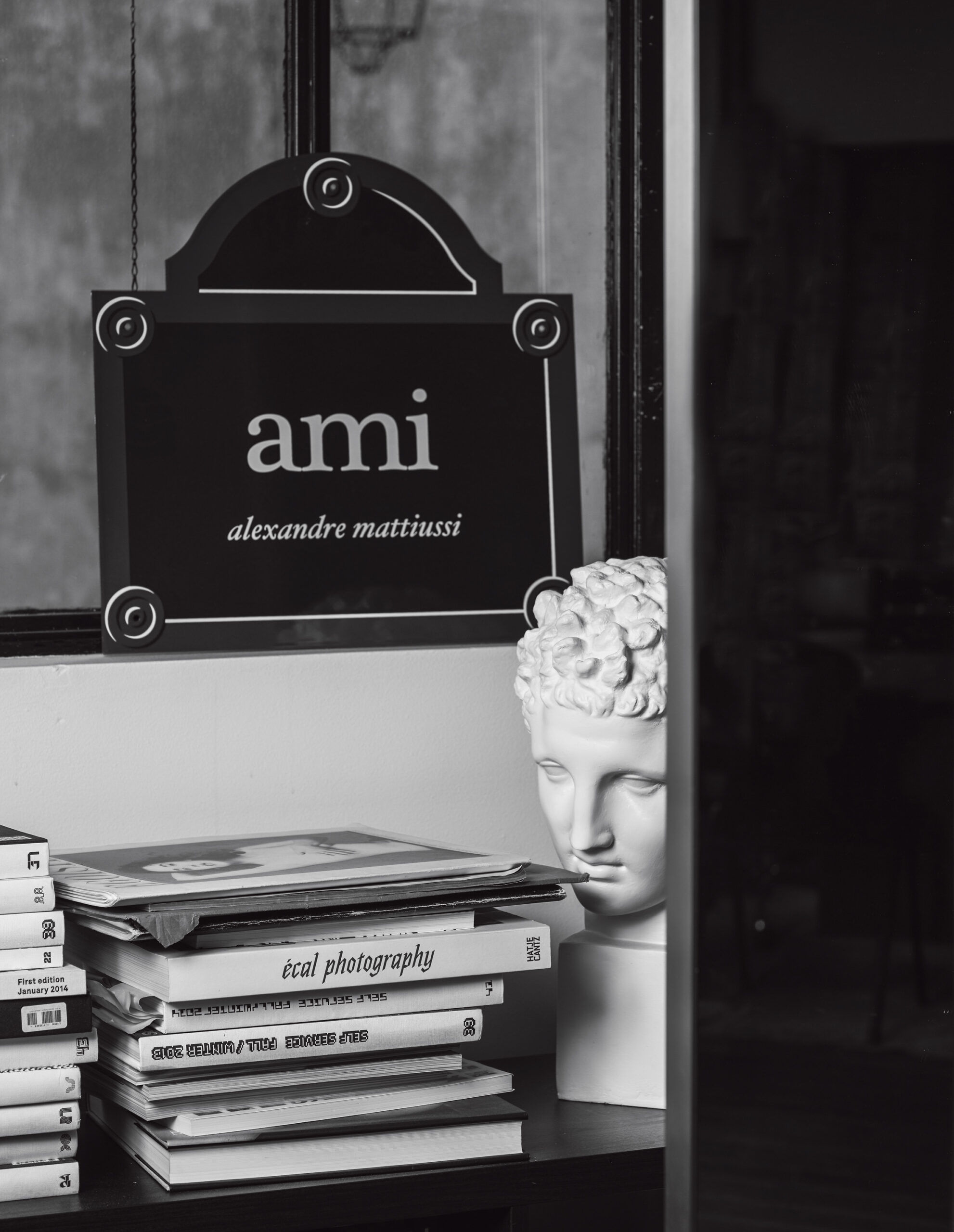
Alexandre Mattiussi Meet the French fashion designer who just wants to be friends.
Alexandre Mattiussi Meet the French fashion designer who just wants to be friends.
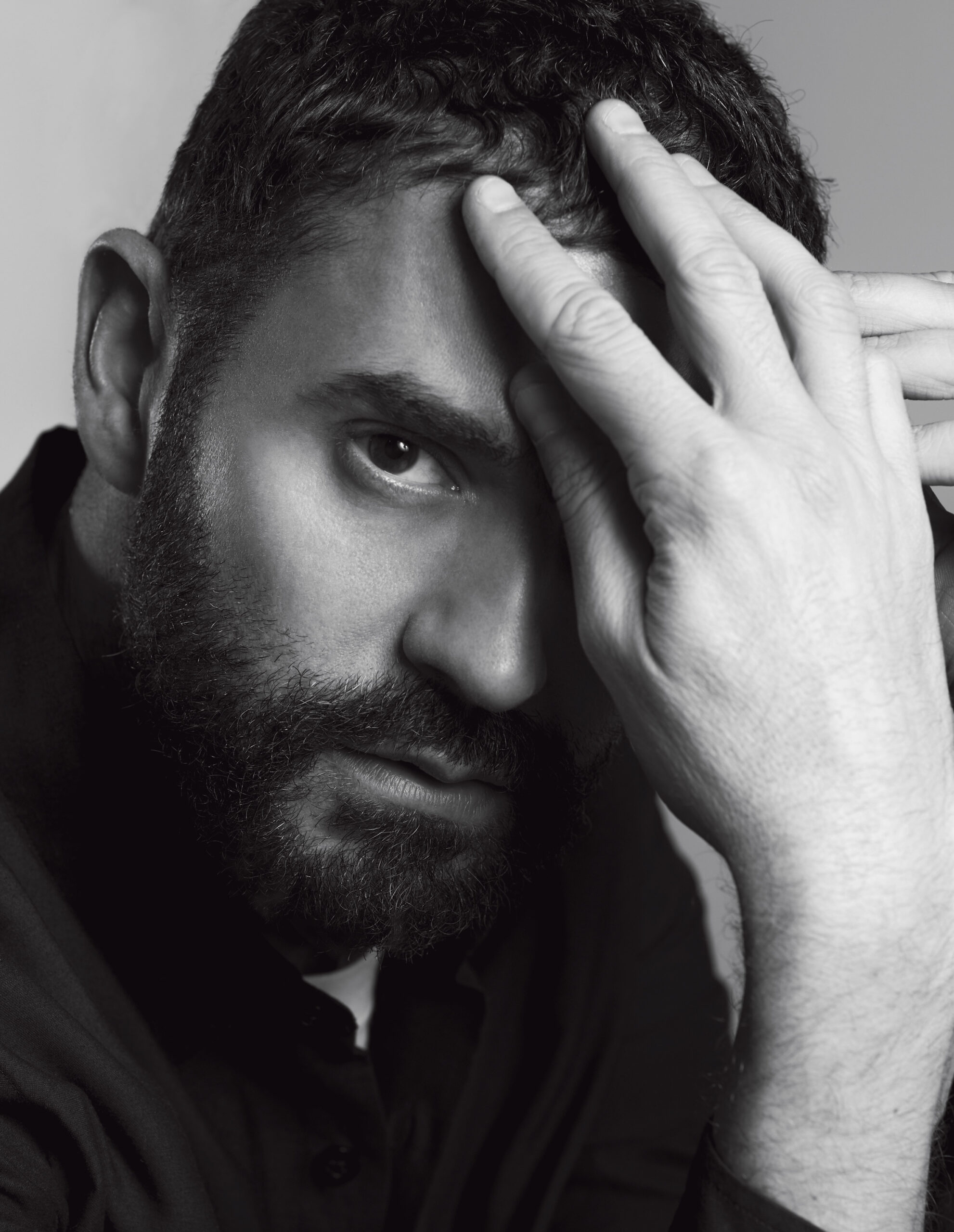
Mattiussi donates all profits from the sale of AMI's red beanie hat to French organization Sidaction, which raises awareness and funds for those living with HIV or AIDS.
1. Mattiussi closed down an earlier form of the business in 2002 but, following a meeting with Marc Jacobs’ CEO Bertrand Stalla-Bourdillon, was convinced he could give AMI a second try in 2011—providing he had a strong team to support him.
2. “Having an idea, being creative, isn’t the hardest part,” Mattiussi says of his business. “The hardest part is setting everything up so that it actually happens, that it ends up on a rack, in a shop.”
They say you cannot choose your family, but you can choose your friends. Alexandre Mattiussi would like you to choose him—or rather his label AMI, a contraction of his initials and the last letter of his name (it means “friend” in French). The 39-year-old designer, an alum of Dior, Givenchy and Marc Jacobs, launched his first menswear collection in January 2011¹ with the promise of making fashion more approachable, and has since become a global player with stores in Paris, London, Tokyo, Hong Kong, Beijing and Chengdu.² Now, as the Parisian house ventures into womenswear, Mattiussi maintains a down-to-earth approach to his craft and, he insists, one goal: to be happy.
Does “friendly fashion” sum up your brand’s philosophy?
Yes, as soon as I realized that my initials formed the word “ami,” I felt it suited me. And when I started developing an interest in fashion, I immediately thought that it would be a great brand name. Clothes are intimate—we get into people’s closets—but there’s a commercial side too. I like the idea of commerce de proximité, local commerce. People aren’t paying an arm and a leg for a 4,000-euro T-shirt, but we’re still talking about quality products that they spend a certain sum of money on, and I respect that a lot. When I design a garment, I always think about the person who will wear it, a little like a baker makes his baguette knowing a client will buy it to make toast for breakfast. Some designers are not in fashion because they want to dress people, but the premise of AMI is straightforward: I want to draw clothes that me and my friends want to wear and that we can afford. That’s the deal.
I’m not making clothes so they end up hanging in a museum. I’m a normal designer—I like saying that.
How do you want the AMI customer to feel in your clothes?
I try to work around the ideal wardrobe, relatively speaking of course, but something that feels essential. I like the idea of a garment that fits everyone, that most people love. A garment that is well cut, well-constructed, that feels right. AMI is a brand that you recommend through word of mouth, like you would a good restaurant. I enjoy not being mainstream, not having a thousand stores around the world. AMI is a brand that you have to discover and choose. I like that it’s democratic and confidential at the same time.
1. Mattiussi closed down an earlier form of the business in 2002 but, following a meeting with Marc Jacobs’ CEO Bertrand Stalla-Bourdillon, was convinced he could give AMI a second try in 2011—providing he had a strong team to support him.
2. “Having an idea, being creative, isn’t the hardest part,” Mattiussi says of his business. “The hardest part is setting everything up so that it actually happens, that it ends up on a rack, in a shop.”
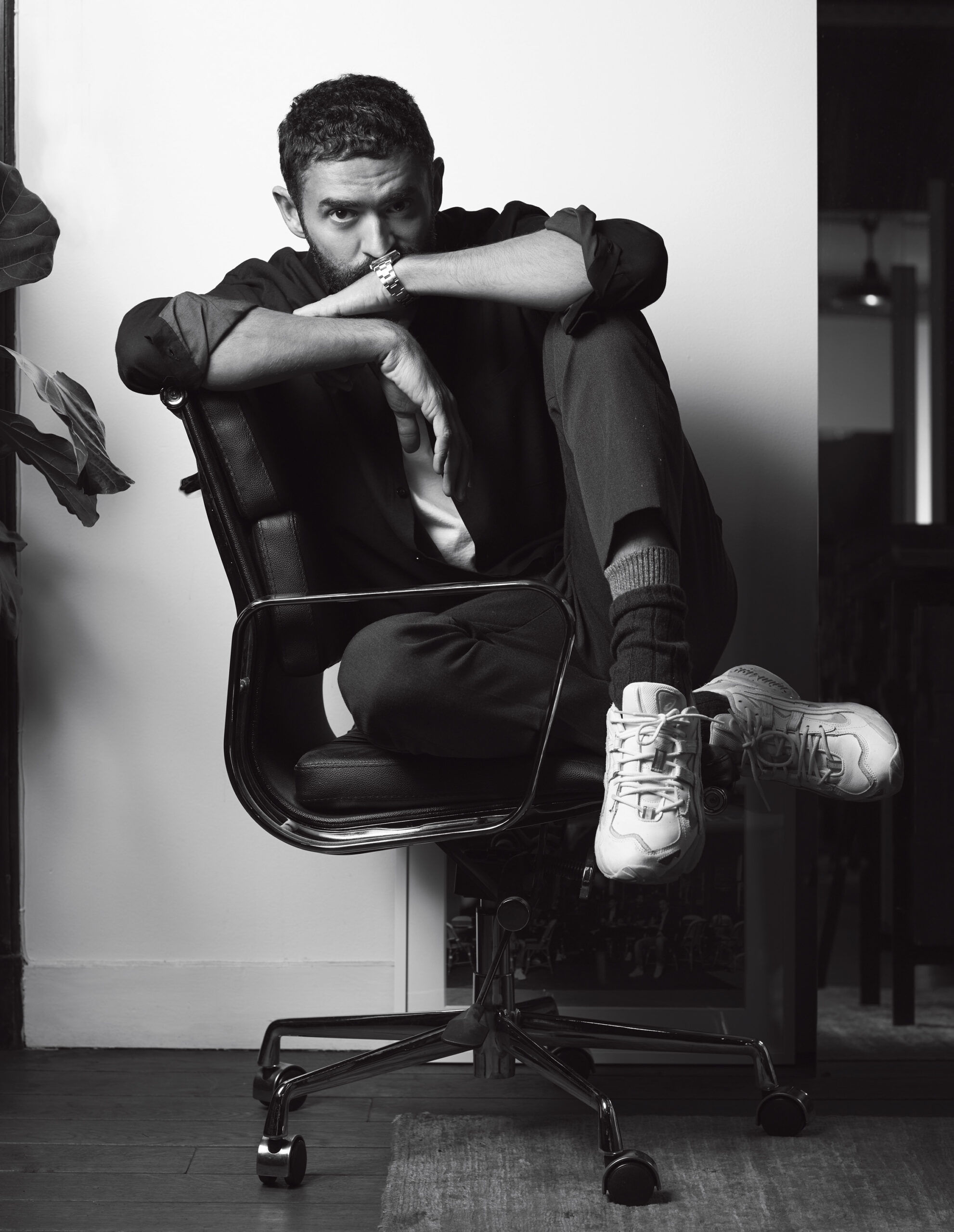
"I'm not a clothes revolutionary, I like to approach things slowly," says Mattiussi of his design process.
MADE WITH LOVE
by Harriet Fitch Little
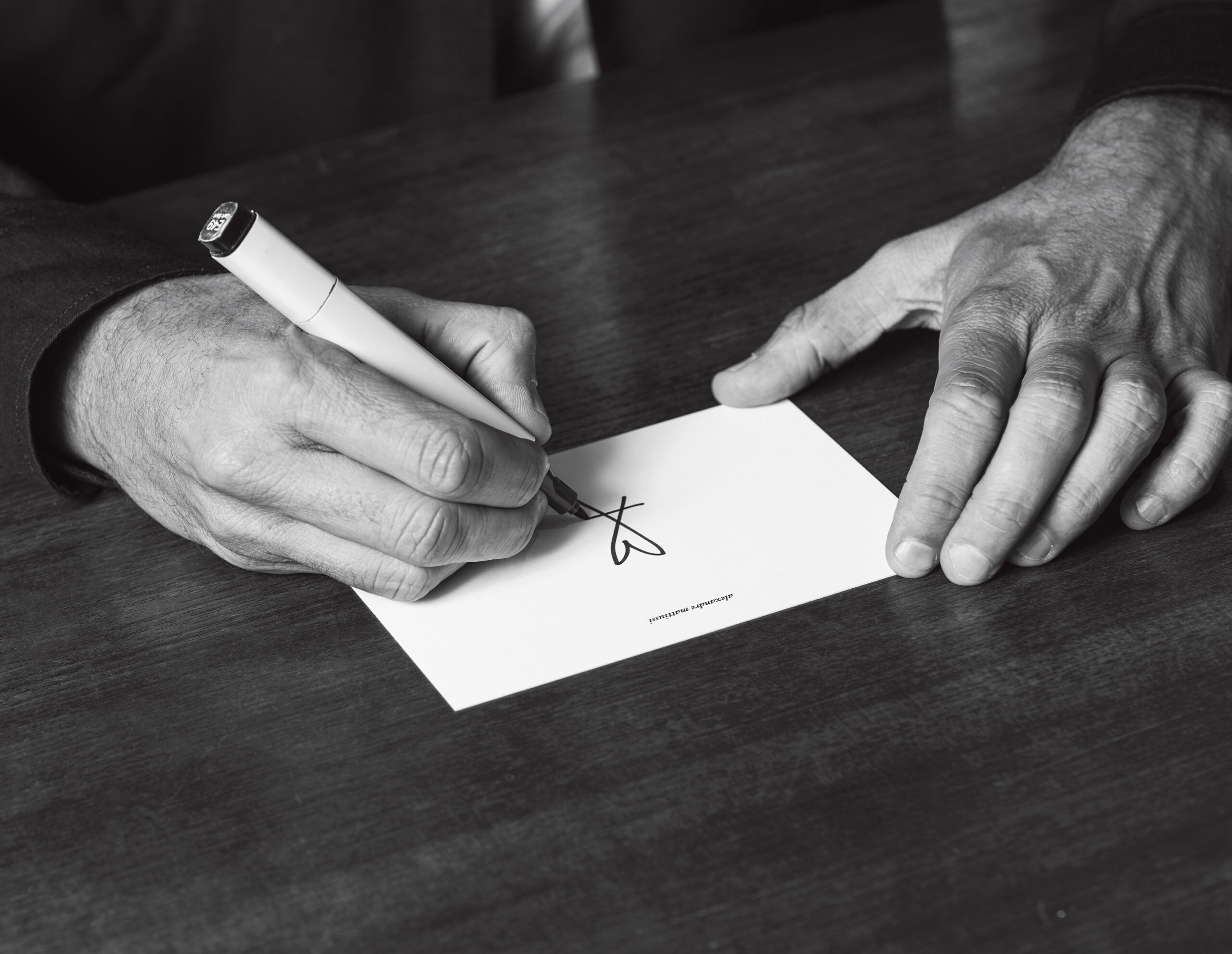
The AMI logo—which consists of the letter A, topped with a heart—is descended from a childhood doodle by Mattiussi that he adopted as his signature when writing letters to loved ones. Christened the “ami de coeur”—which translates as friend of hearts—this playful twist on the ace of hearts is intended to communicate AMI’s overarching desire to approach fashion in a more friendly way.
As a child, you considered becoming a professional ballet dancer, but you’ve said that you realized you hated competing with others after trying out for the Opéra de Paris. Do you still feel that way?
I was a French Billy Elliot. I was always dancing with my girlfriends, which was quite unusual for a little boy from Normandie back in the 1980s. At 14, I decided to try out for the Opéra de Paris, and suddenly found myself in a room with another 500 children who were ready to kill in order to succeed. The energy was so violent—it wasn’t something I’d encountered before. I got out of there and thought: “This isn’t for me.” I still feel the same. I’ve never sought to measure myself against others. My only goal is to be happy in what I do and to do things for people rather than against them.
What kind of person is a good fit for your team?
I’m very intuitive when it comes to hiring. I don’t really look at CVs. I look for professionalism, talent and energy, but we have a lot of fun too. I love my team because they’re all very different from one another. They don’t fit one single profile. In the past, I worked for fashion houses where we all looked alike because the artistic director who hired us had only one kind of person in mind and it felt like we were an army of clones. I’ve known places where we were seriously bored and scared. I promised myself that when I had my own brand, nobody would have a knot in their stomach coming into work. I’m happy, because I’ve achieved that. My team’s energy is amazing.
You’re a menswear designer by trade. How did the transition into womenswear happen?
I’m surrounded by women. Half of my team are women, I have my girlfriends, my mother…Very quickly, these women adopted our men’s wardrobe, so eventually, I decided to create a collection for them. At first, I called it “menswear for women,” because it was a continuation of the men’s wardrobe and because I wanted to take it slow. It wouldn’t have made sense for me to suddenly present dresses and high heels. Out of humility, I wanted to take my time to start this conversation with the AMI woman. And that woman helps me so much, she challenges me, she makes me see the AMI man that I built nine years ago differently.
How so?
I’ve been working in menswear for 20 years, so I have one kind of body in mind, proportions, sleeve lengths… All of a sudden, with women, I need to approach the garment differently—it doesn’t fit the same way. And that also makes me see menswear with new eyes, with more tenderness. For instance, we usually design the men’s collection first, and later decide what can be adapted into womenswear. But for our most recent collection, we started designing for women first, so it was womenswear that became an inspiration for the menswear this time around.
What lessons did you learn from past positions at Dior, Givenchy, Marc Jacobs?
Dior was my first real experience. It was mainly observation, because I was straight out of school, where you learn how to be creative but not how to be a designer. Givenchy was a fundamental experience for me. It’s where I really learned the ins and outs of the job—how to build a collection from A to Z and how to work with others, because a designer never works in isolation. With Marc Jacobs…You learn from everything of course, but that job mostly made me realize that I was ready to tell my own story.
Is it true that, during a job interview, you once said that your ambition in life is to be happy?
Yes. I said that being happy was the only thing that mattered, whether I’m rich or poor, alone or not… And it totally shocked them. I’m proud of my answer, because I would have been miserable in a place where you’re not allowed to voice that. Today, I’ve found my happiness in AMI. I’m happy to build this story that keeps growing, with a team I adore and with clients around the world wearing my clothes. I’m always touched when I see someone wearing my designs. I’ve followed people in the street to make sure that it’s really my clothes they’re wearing.
MADE WITH LOVE
by Harriet Fitch Little
The AMI logo—which consists of the letter A, topped with a heart—is descended from a childhood doodle by Mattiussi that he adopted as his signature when writing letters to loved ones. Christened the “ami de coeur”—which translates as friend of hearts—this playful twist on the ace of hearts is intended to communicate AMI’s overarching desire to approach fashion in a more friendly way.