
DAVID CHIPPERFIELD
- Words Ali Morris
- Photos Cecilie Jegsen
The iconic architect working between past and present.
( 1 ) More than 500,000 pilgrims walk the Camino de Santiago each year, starting from various points across Europe. The pilgrimage—traditionally undertaken by Catholics, though today open to all—can take anywhere from five days to over a month, depending on the route and starting point.
( 2 ) There are more than 70 words for rain in Galician, including orballo (light drizzle), poalla (fine rain that soaks slowly), babuña (a slimy, persistent drizzle) and treboada (rain accompanied by thunder).
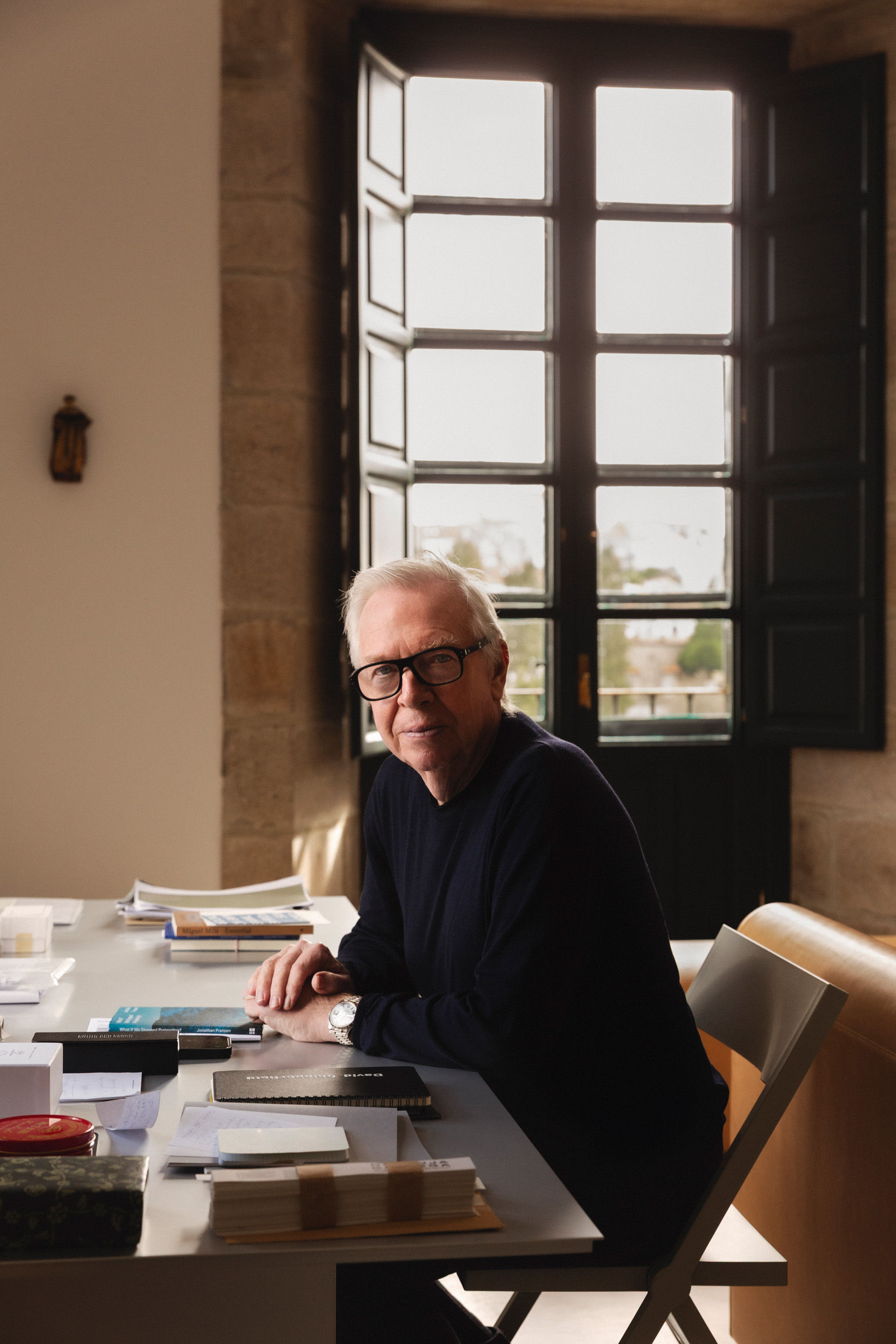
Tucked among the unassuming stone-fronted buildings of Santiago de Compostela in Galicia, northwest Spain—the traditional end point of the Camino de Santiago, where pilgrims arrive at the cathedral to visit the tomb of St. James—is an unlikely outpost of one of the most influential architects working today.1 For much of his career, David Chipperfield has worked between London and Berlin where his internationally renowned practice has gained a reputation for considered, conscious architecture: offices, housing, civic buildings and, above all else, cultural projects that integrate their historical context and local culture. But in recent years, Galicia has become a working base for the architect. It's a place he knows well—he’s been vacationing here for more than 30 years, after having designed a seafront retreat in nearby Corrubedo in the 1990s.
( 1 ) More than 500,000 pilgrims walk the Camino de Santiago each year, starting from various points across Europe. The pilgrimage—traditionally undertaken by Catholics, though today open to all—can take anywhere from five days to over a month, depending on the route and starting point.
( 2 ) There are more than 70 words for rain in Galician, including orballo (light drizzle), poalla (fine rain that soaks slowly), babuña (a slimy, persistent drizzle) and treboada (rain accompanied by thunder).