Archive: Martha Gellhorn
Inside the archives of one of the world’s greatest war correspondents.
- Words Cody Delistraty
- Photography Courtesy of Scanpix Denmark
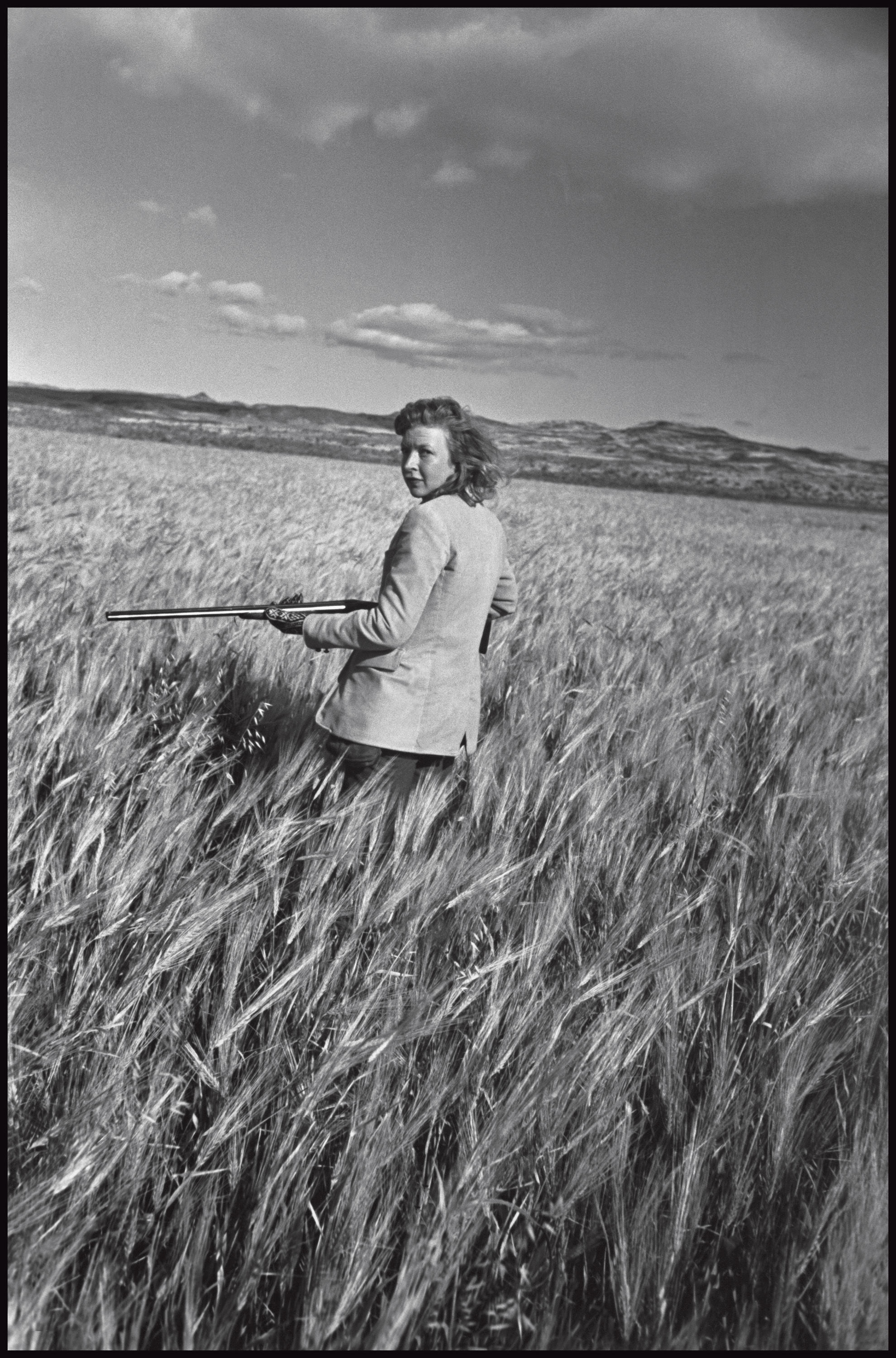
Photograph: Scanpix/Denmark (Source: © Robert Capa/Magnum).
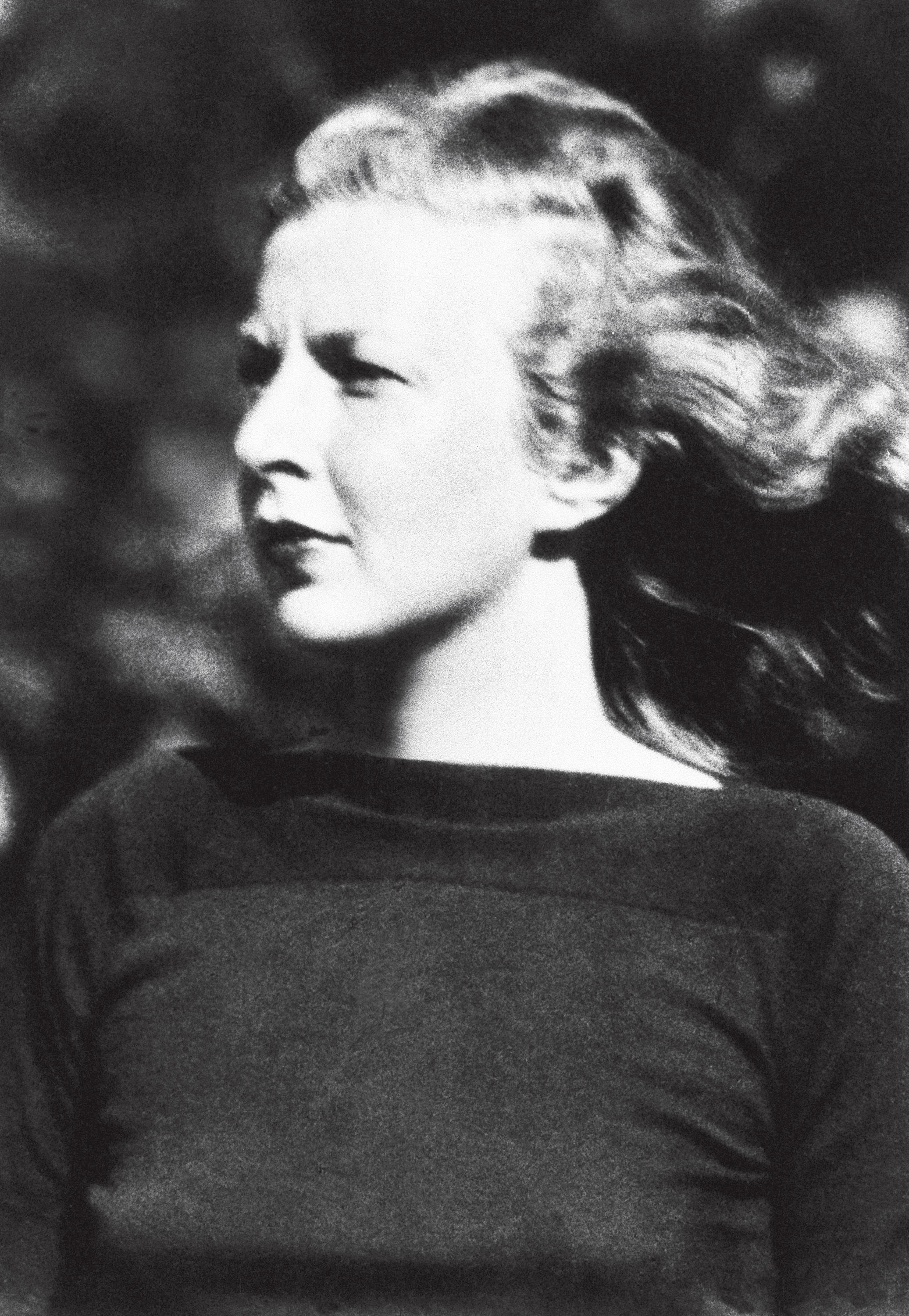
Photograph: AP/Ritzau Scanpix
In 1937, at the age of 29, Martha Gellhorn left for Madrid with a knapsack of clothes, a contract with Collier’s magazine to write about the Spanish Civil War and little else. She had $50 in her pocket and no bank account. This was to be her break free.
Born in St. Louis, Gellhorn had graduated from the all-women’s Bryn Mawr College in a tony Philadelphia suburb, placed a few articles in The New Republic and signed on as a crime reporter at the Albany Times Union in upstate New York. She’d been raised in a particularly progressive manner—her father, a gynecologist, seeing that her biology class textbooks in high school blurred out the anatomically explicit parts, petitioned her school to have them made more accurate; her mother, an outspoken advocate of women’s voting rights, took her to rallies like the Missouri Votes for Women Parade and eventually helped Missouri win the vote for women in 1920.
Gellhorn had already traveled widely, both abroad as a brochure-writer for a cruise ship company and as a student visiting Germany, as well as domestically, writing a series of dispatches from the Midwest on rural poverty after the Great Depression, as a part of the New Deal’s media push. But she wanted to be everywhere, to know everything, especially when the reports coming out of Europe leading up to the Second World War seemed fishy, spoon-fed to wire reporters by the governments involved. “It seems to me that they feed war reporters at these ridiculous briefings in the ballroom of hotels miles from anywhere,” she later wrote.
Just a year after arriving in Spain, Gellhorn found herself in the middle of the Spanish Civil War, evoking its bizarre, banal atmosphere for American readers. “In Barcelona, it was perfect bombing weather,” she wrote in a November 1938 report. “The cafés along the Ramblas were crowded. There was nothing much to drink; a sweet fizzy poison called orangeade and a horrible liquid supposed to be sherry. There was, of course, nothing to eat. Everyone was out enjoying the cold afternoon sunlight.”
She met up with Ernest Hemingway, whom she’d run into at a bar near his summer home in Key West, Florida, a year earlier. In Spain, they became close, traveling and working together, eventually falling in love. But his manifold sexual and masculine insecurities, set against Gellhorn’s quest for independence, combined to create the most confrontational of his four marriages and perhaps the trickiest psychological situation of Gellhorn’s life.
After they left Europe, married and briefly settled in Cuba, Gellhorn got cabin fever and returned to Europe to cover the Normandy invasion for Collier’s. Hemingway followed. As the more famous writer of the two of them, he told the magazine he wanted her assignment—stealing it out from under her. But as he wrote about the invasion from afar, Gellhorn snuck onto a hospital ship that was returning to Omaha Beach to pick up wounded Allied soldiers, a risky move that allowed her to write a more intimate and compelling account of the invasion—one that sold far better and was read far wider than Hemingway’s article.
Hemingway was irked, his masculinity challenged again, and a year later, after a fight at the posh Dorchester Hotel in London, she walked out on him—a husband who consistently
tried to scuttle her career in order to bolster his own. Gellhorn was perhaps the greatest investigative reporter of the 20th century. She was, to put it simply, everywhere: at the Nuremberg Trials, at Russia’s war against Finland, at the Vietnam War, in the Palestine refugee camps, at the McCarthy hearings, amid the Nicaraguan contras, even, at the age of 81, at the invasion of Panama. But her intensity as a globe-trekking journalist and the fact that she was a woman—and a well-dressed and typically feminine one at that—often conspired against her.
Conventionally, there have been two ways to view Gellhorn, both of which cut along gendered lines: as a fashionable femme fatale—a blond using her sex and her savvy to get stories that her male counterparts could never reach—or as a brassy, hardworking woman who chain-smoked and drank hard, forever poking at her sticky typewriter. That is, either a seductress or a shrew.
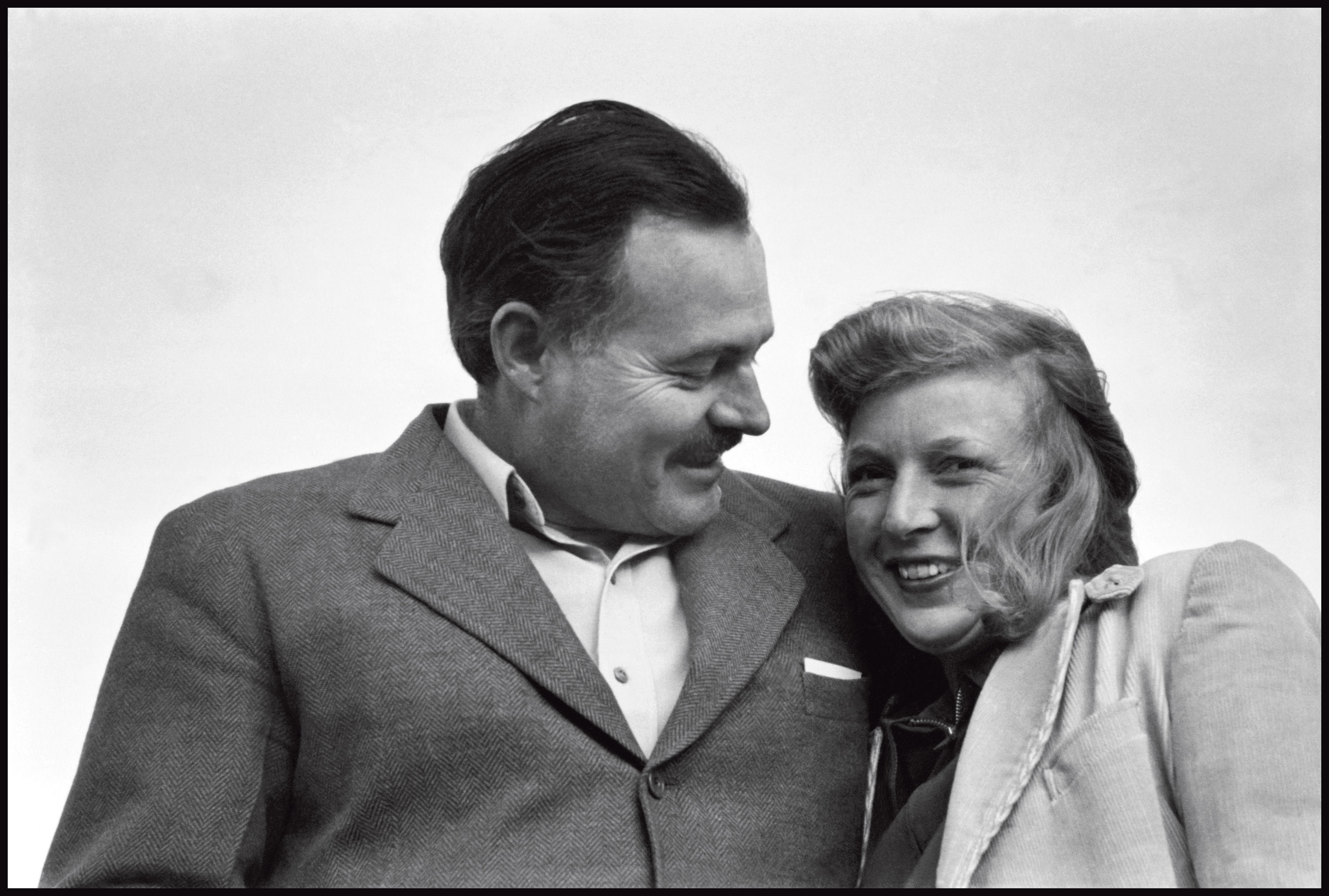
In the early 1930s, Gellhorn was invited to the White House by her friend Eleanor Roosevelt so she could talk directly to the president about her reporting on the unemployment crisis. Photograph courtesy of Scanpix Denmark (Source: © Robert Capa/Magnum)
Philip Kaufman’s 2012 biopic about the Gellhorn-Hemmingway romance, which starred Nicole Kidman and Clive Owen, was poorly received. “[Kidman] works hard on the ambitious, intrepid Gellhorn but makes her seem smaller than life,” wrote The New York Times. Photograph: © Ian Berry/Magnum Photos/Scanpix Denmark.
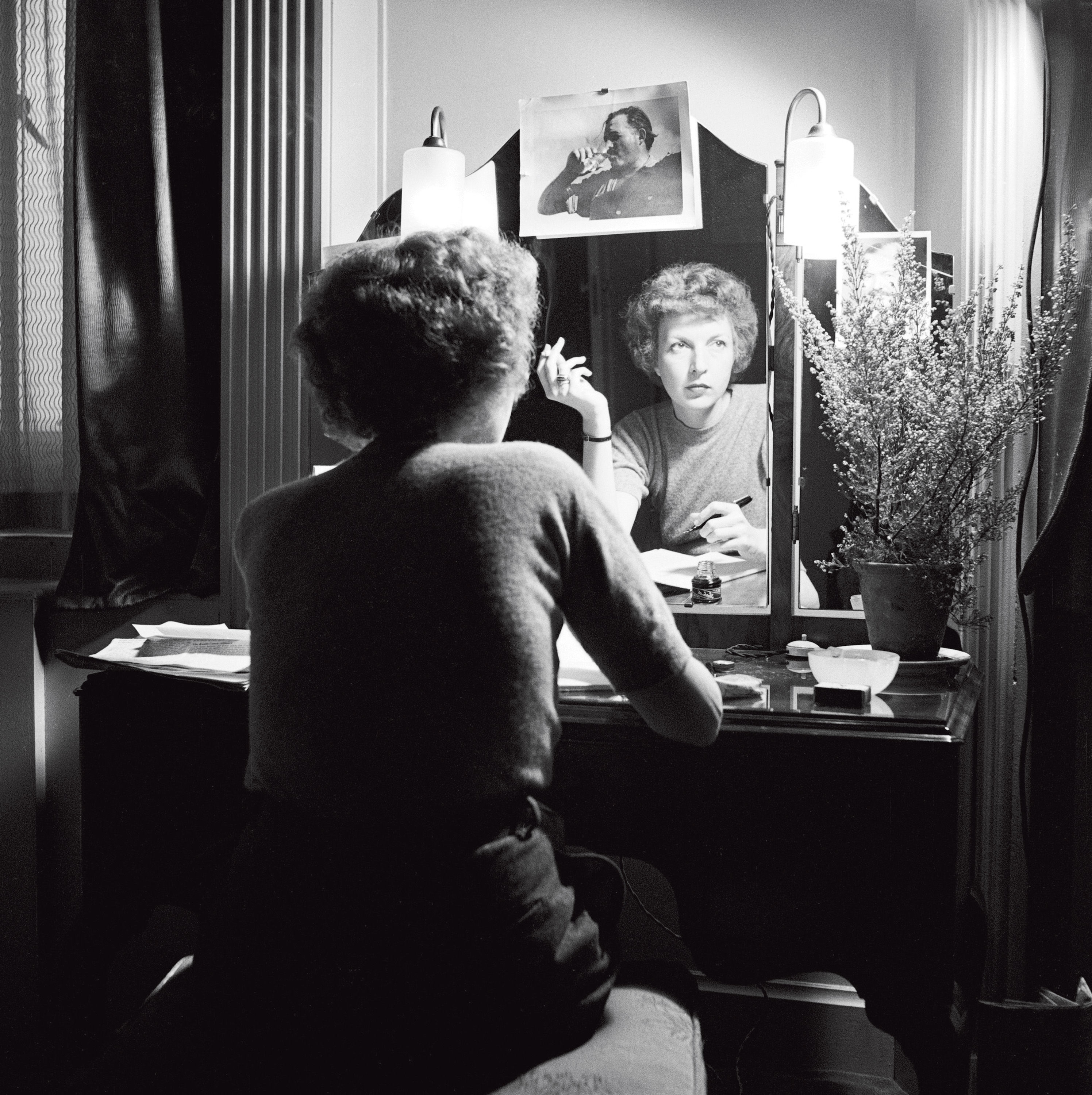
Gellhorn fictionalized her life as a war correspondent. In A Stricken Field (1940), her protagonist Mary wrestles with questions of journalistic integrity in wartime Prague. Photograph: © Lee Miller Archives
“Conventionally, there have been two ways to view Gellhorn: as a seductress or a shrew.”
But Gellhorn is harder to categorize than that. She found that putting too much emphasis on her gender was not empowering but rather harmful, even calling out feminists whose insistence on female power, she believed, tended to end up as more condescending than enabling. “Feminists nark me,” she wrote. “I think they’ve done a terrible disservice to women, branding us as ‘women’s writers.’ Nobody says men writers; before, we were all simply writers.”
She has also long been accused of using her sexuality in unethical ways. “She knew how important sex was for most men, and she used it not only to please men but to get good stories,” wrote the biographer Carl Rollyson, whose reporting and analysis have been widely disputed, including by Gellhorn herself, who wrote him a 25-page rebuttal upon reading his draft of Beautiful Exile: The Life of Martha Gellhorn. “She slept with generals; she had one-night stands with ordinary soldiers who might not survive the next day,” Rollyson added, undeterred. “She dressed elegantly, used makeup skillfully, flirted, and coaxed men to do her bidding.”
And yet, as much as she supposedly leveraged sex for her job, she also never much liked it. “If I practiced sex out of moral conviction, that was one thing; but to enjoy it… seemed a defeat,” she wrote as a more reflective 64-year-old. “All I got was a pleasure of being wanted, I suppose, and the tenderness (not nearly enough) that a man gives when he is satisfied. I daresay I was the worst bed partner in five continents.”
Gellhorn was a feminist in deeds, despite her dislike of any obsession with gender; she was a woman who rarely found sexual connections but who also slept around. She was a bundle of paradoxes. “On the one hand, she saw no need for the help of feminism in any shape or form, saying that she had never been discriminated against in any way,” Caroline Moorehead, Gellhorn’s major biographer and the collector of her letters, told me. “On the other, she made the most of her looks and charm, knew she pleased men, used that fact to get to places and do things she wouldn’t have been able to do otherwise.”
But even more than a condescending kind of feminism, even more than accusations that she slept with anyone and everyone who might be a potential source, what Gellhorn hated most was being in another’s shadow, especially Hemingway’s. “Why should I be a footnote to somebody else’s life?” she famously asked. She wrote five novels over her lifetime, two of which she published before even meeting Hemingway. (She also wrote 14 novellas and two collections of short stories.)
“I feel Martha is still grappling with the patriarchy in death,” Iona Craig, a British investigative journalist who’s won the Orwell Prize for Journalism and the Martha Gellhorn Prize for Journalism, told me. “Women have made considerable progress since Martha led the way in reporting on conflict. The large number of female reporters now regularly covering wars around the world is a significant part of Martha’s legacy. When we can remember Martha for that rather than as ‘the wife of…’ then we’ll know we’ve made greater strides forward.”
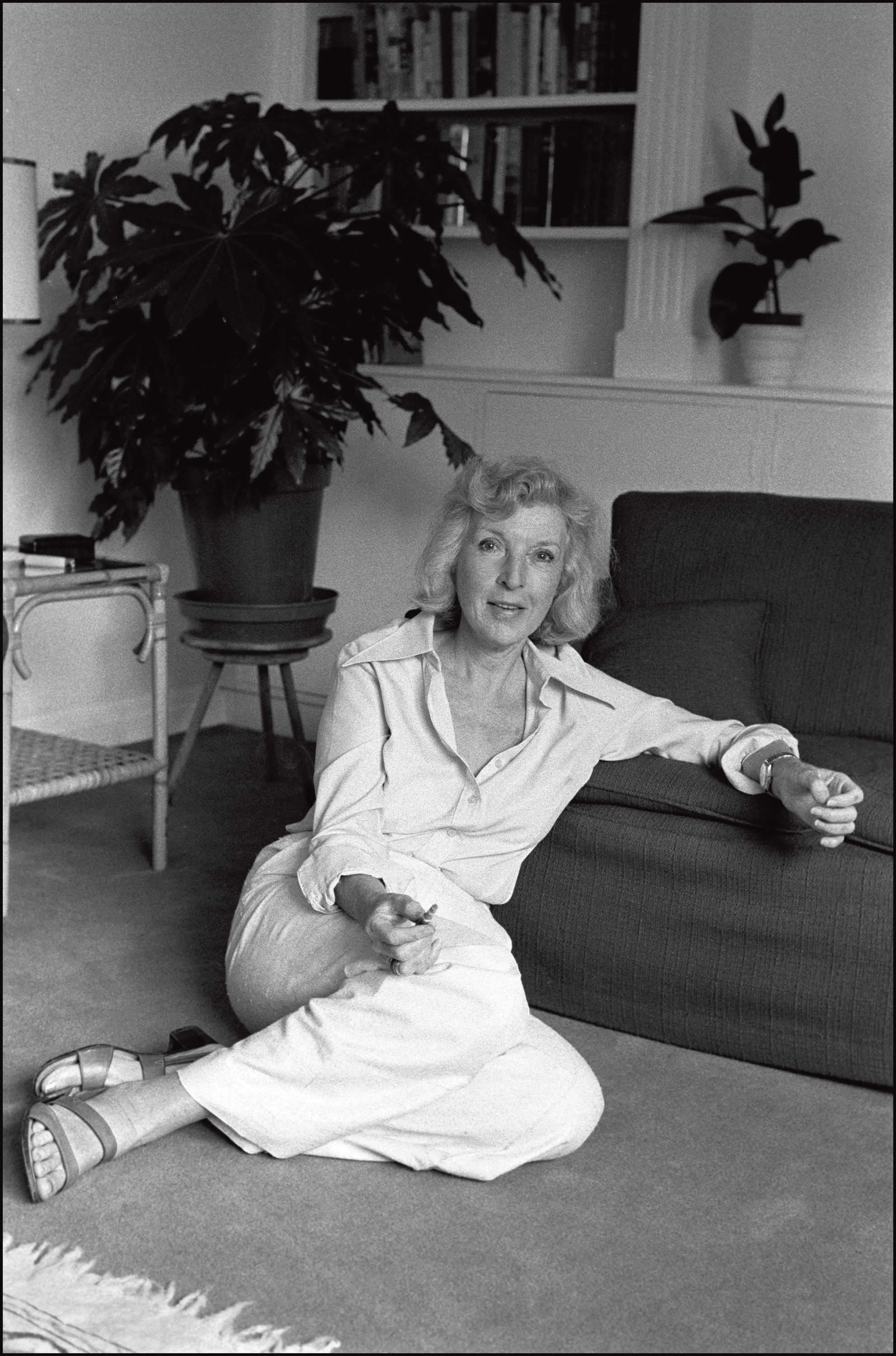
In her final years, living in a sixth-floor apartment on Cadogan Square in London, Gellhorn hosted a variety of distinguished friends, including many authors and war reporters. Her only rule was that no one speak of Hemingway. Even after a relatively brief, five-year marriage, he was still a central point of conversation.
It is indeed unfair to assign too great a significance to Hemingway’s time in her life, but he is nonetheless instructive in understanding how she ended up thinking of herself as both a woman and a journalist. Like Pablo Picasso or a number of other male “geniuses,” he afflicted the women in his life in a psychosexual way, attempting to leverage his fame and power within his relationships. When Gellhorn later wrote, “A man must be a very great genius to make up for being such a loathsome human being,” her implication was that Hemingway was at once a loathsome human being and perhaps not a very great genius after all. But it didn’t much matter to her. Her combination of a beautiful, traditionally feminine exterior with an ambition and drive that was, at the time, considered traditionally masculine ultimately led Hemingway to trouble. Unable to control her and seeing his own failings mirrored back—as when she outdid him in covering D-Day—he tried to take control of their relationship with ever more brazen power grabs. But Gellhorn wouldn’t have it. She wouldn’t play his psychosexual game.
Gellhorn extracted herself altogether from questions of gender—embodying both what might be considered feminine and masculine. There was little difference as far as she cared; what she wanted was a great story, to hold the global hegemons accountable. Before she died—swallowing a cyanide capsule in bed—she got into a silk slip and began going about her London apartment organizing documents and contracts, calling friends, sorting out who she’d give her jewelry to. It was February 15, 1998, and she was 89. She was half blind from a botched cataracts operation and dying from ovarian cancer that was spreading to her liver.
“I have never found what I was seeking and probably never will,” she wrote in one of her final letters. But Gellhorn also likely saw that her dismissal of gender stereotypes—and her independence in just about every facet of her life—had freed her from mundaneness that plagues so many others.
“I’ve had a wonderful life,” she added. “I didn’t deserve it but I’ve had it.”