( 1 ) Most people know Yoko Ono as John Lennon’s partner, but she is an accomplished artist whose seven-decade career spans conceptual, performance and multimedia practices. Her work includes Cut Piece (1964), an influential performance in which audience members were invited to cut away her clothing with scissors, and the ongoing Wish Tree series (from 1996), where visitors tie handwritten wishes to the branches of living trees.
ArtJohn Zabawa on painting the liminal.
ArtJohn Zabawa on painting the liminal.
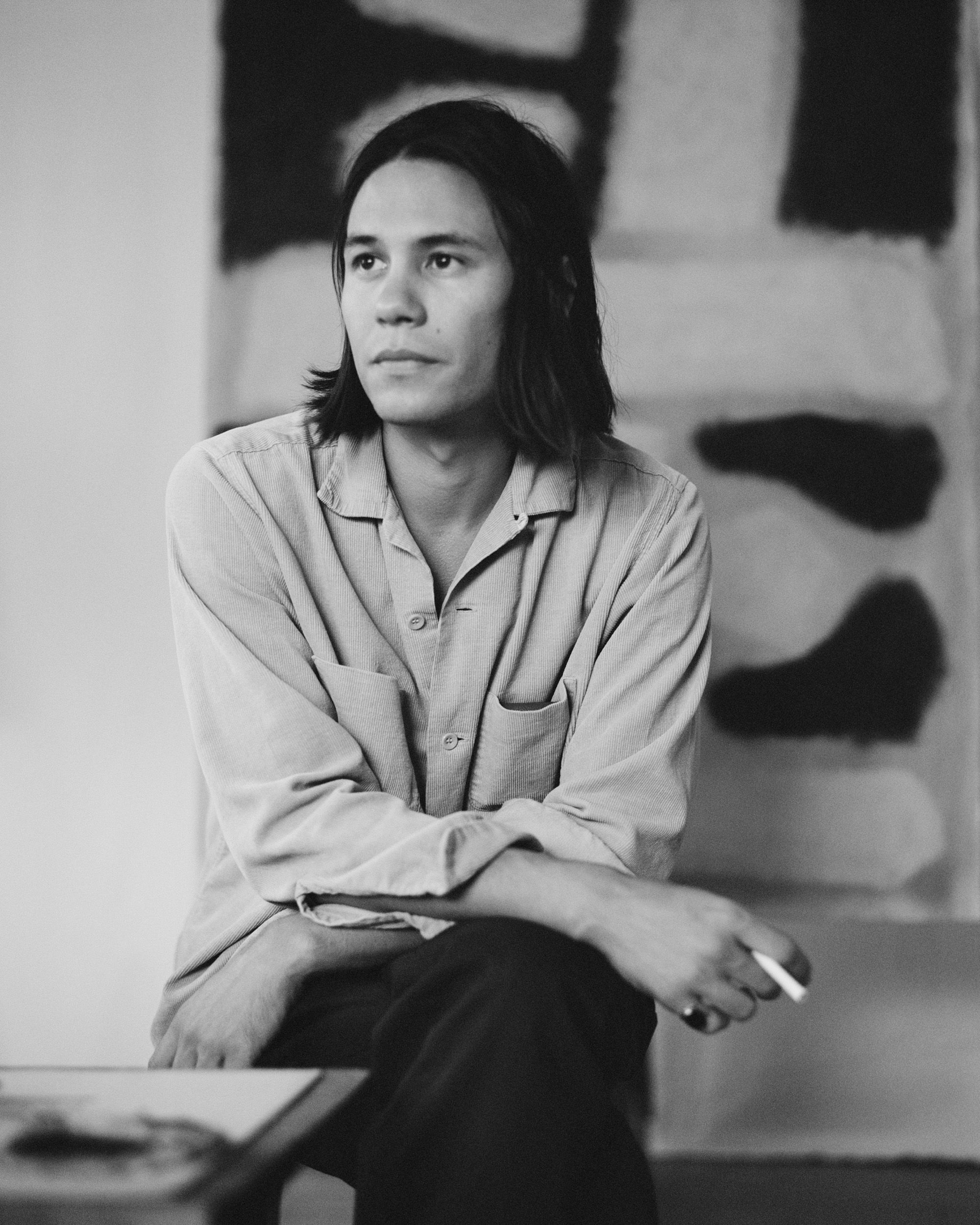
In another life, John Zabawa may have been a philosopher. In this one, his existential inquiries unfold in luminous paintings that pull viewers into the present. A graphic designer turned artist, Zabawa grounds his work in technical precision and an acute understanding of color, yet his practice hovers into more elusive territory, where nothing is certain and everything seems possible.
Salomé Gómez-Upegui: You move fluidly between abstraction and figuration. How does a painting reveal the form it wants to take?
John Zabawa: I think it comes from my experience working as a designer and thinking deeply about visual communication. As a designer, you’re usually responding to someone else’s needs. Over time, that trained me to listen closely to the brief and to focus on finding the clearest solution within an infinite field of creative possibilities. It’s a way of setting aside ego.
I think that’s how I approach painting as well. When an idea arrives, I try to listen to it. The paintings in my latest series, Crashing Waves, for instance, are rendered in a figurative style, but I’ve explored the same motif abstractly too. It’s about giving the idea what it asks for. I see myself as a passenger, trying not to get in my own way.
SGU: The sky is another motif that appears in your work. What keeps drawing you back to it?