DELPHINE HORVILLEUR
- Words TAL JANNER-KLAUSNER
- Photos LUCAS LEHMANN
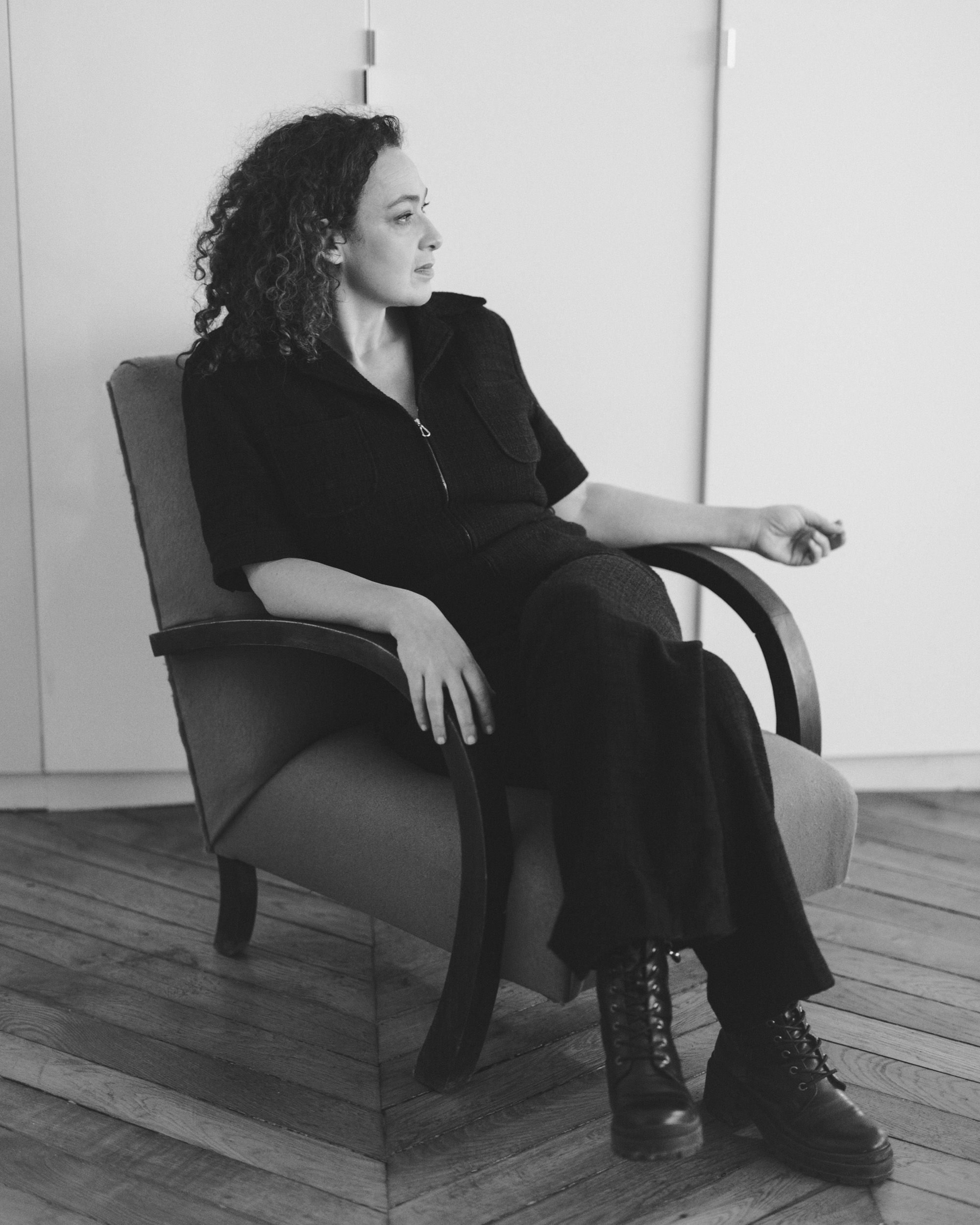
The pioneering French rabbi.
( 1 ) Since the 1970s, over 1,000 women have been ordained as rabbis, although mainly in the US. Horvilleur was the third French woman to become a rabbi when she was ordained in 2008.
( 2 ) On October 7, 2023, paramilitary forces led by the Palestinian militant group Hamas attacked areas of Israel near the border with Gaza, leading to the deaths of 1,143 people, 247 people being taken hostage and the outbreak of the Israel–Hamas war.
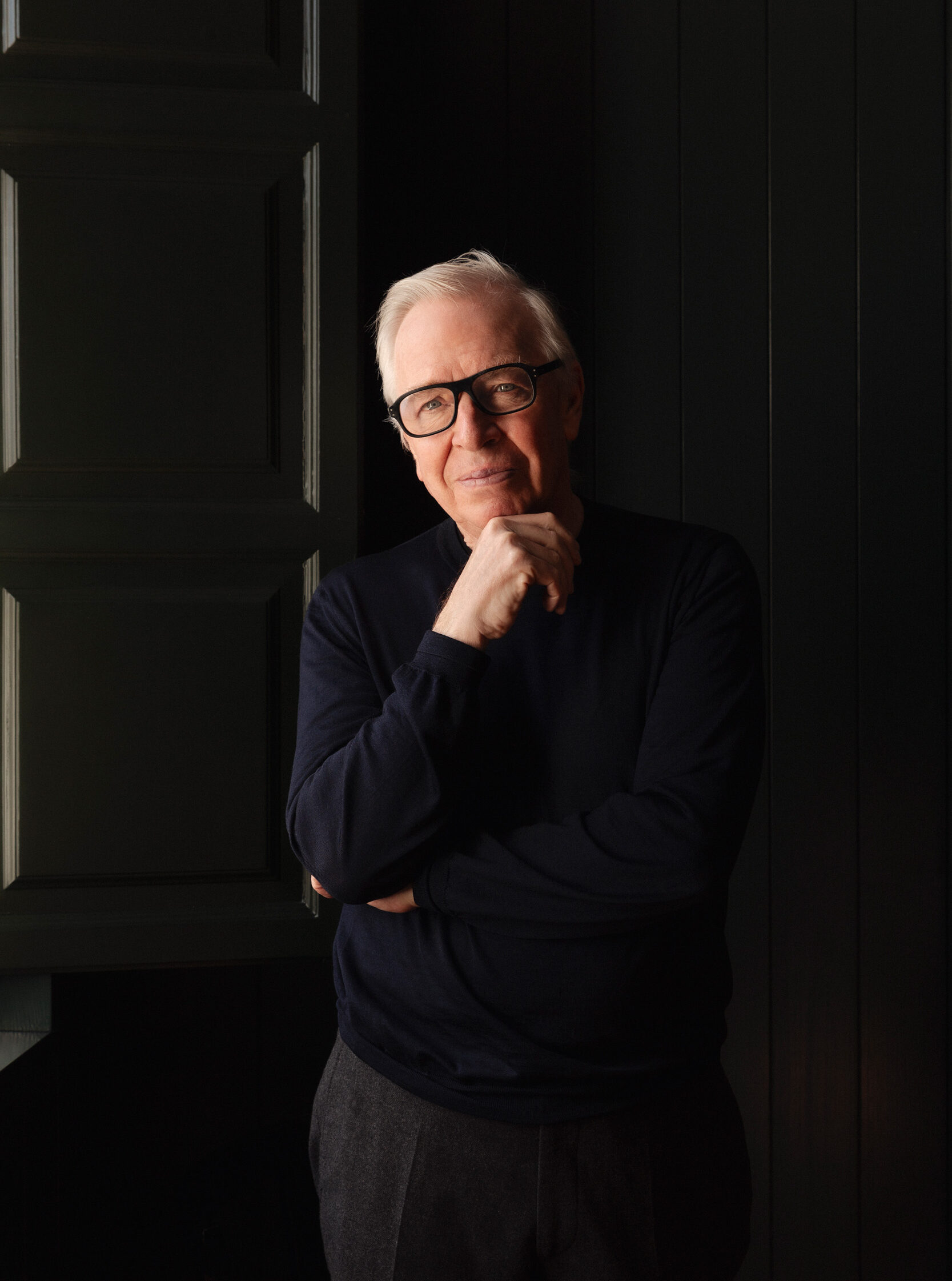
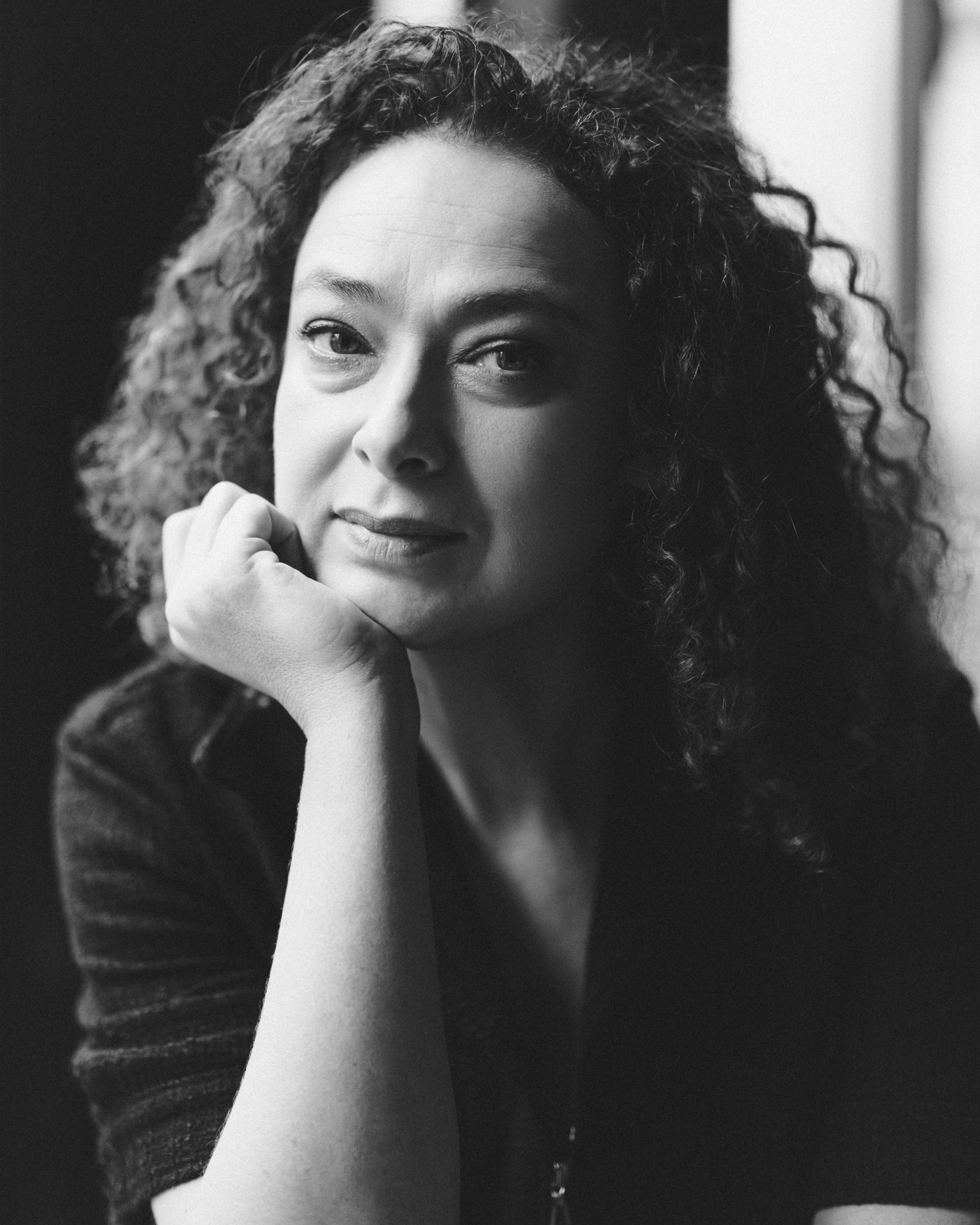
Delphine Horvilleur, a leader of France’s Liberal Jewish Movement and the rabbi of a large congregation in Paris, is an also an acclaimed public intellectual and broadcaster. Her writing and teaching on Jewish texts and ideas, and her progressive position on the place of women and the LGBTQ+ community in Judaism, has resonated with both Jews and gentiles around the world.
Horvilleur says that listening and storytelling are fundamental to everything she does. Her recent book, Living with Our Dead: On Loss and Consolation, collects stories and reflections from her years accompanying the bereaved and officiating at funerals, weaving in contemporary issues and religious teachings. Here she speaks about the place of death in our lives, and what we can all learn from vulnerability.
Tal Janner-Klausner: How did you come to be a rabbi?
Delphine Horvilleur: I arrived at the rabbinate via a complicated route. I lived in Israel for four years and studied medicine, and then was a journalist in France. I searched for places to study Judaism but in France it is very Orthodox—each time they told me: “It’s only for men.” Later, in New York, I discovered pluralistic Judaism. Suddenly it was clear to me that what I had looked for in medicine and journalism was what was bringing me to the rabbinate: I always wanted to be in a position where I could listen. I studied [to become a rabbi] in New York. I could have stayed in the US, but I wanted to bring the voice that I felt had been missing when I was growing up in France. It was very hard for me to be accepted at first, but I started to publish books and received recognition in French society, so the Jewish community had to get used to the idea of a female rabbi.1 Now I’m a community rabbi and I write books, I run a magazine called Tenou’a [Movement], and we have a beit midrash [Jewish study institution]. Every month we have 600 people studying together in Paris—we don’t have enough space and there are waiting lists. It’s about 70% Jews and 30% non-Jews. I’m really proud of it.
TJK: How has your book been received?
DH: I was surprised by how much it caught on in French society. People have often told me that they were at a secular funeral, without a priest, without a rabbi, and at one point someone read from a chapter of the book as if it was secular liturgy. People search for texts that will accompany them, even when they themselves have nothing to do with religion. The book was written quickly, during COVID, when our relationship with death changed for all of us. I felt that this was the right moment to write the book. For years people told me, “You spend so much time in cemeteries and hospitals, you have to tell people how you deal with it.” Then, during COVID, I often had to officiate funerals from my living room. There was no separation between home and the cemetery; I no longer had this shelter from death that I had tried to build. I remember how the phone would ring that summer: “There’s a funeral tomorrow, can you come?” Suddenly, the dead whose stories I was writing on the computer met the dead who I accompanied in those days, like a meeting of dybbuks [spirits of the dead].
TJK: Do you have dybbuks in your life?
DH: I really believe in the Jewish term of dybbuk. People often think that a dybbuk is a ghost, and that you either believe in it or you don’t. It’s more complicated than that. “Dybbuk” in Hebrew comes from the same etymological root as “to stick.” Those who are no longer with us stick to us. My grandparents’ generation are strong dybbuks in my life. My father’s family are French Jews who are full of appreciation for the non-Jews who saved them during the war. My mother’s side were all murdered in Auschwitz. These two families tell opposing stories: the story of rescue and hope in humanity, and the story of being abandoned and murdered. Even as a child, I knew that I needed to navigate between these two philosophies.
TJK: How has this informed your approach today?
DH: My work often concerns the question of how to stand by people’s side when they mourn. Since October 7th, for many of us, things have changed.2 As a rabbi, the fact that I’m now so deeply in mourning changes the way in which I’m able to stand by people’s side. Sometimes my own sense of vulnerability is so strong that it feels as if there is no ground beneath my feet. I always search for the right distance when accompanying mourners. This balance between strength and vulnerability is delicate.
TJK: What can we gain from being vulnerable?
DH: Being aware of your own brokenness enables you to resonate with the pain of the person who faces you—your brokenness and theirs are suddenly connected. I think about Leonard Cohen’s lyrics: “There is a crack in everything, that’s how light gets in.” This is the spiritual work—you have to search for the cracks so that the light will come through them.
I always felt—and it became even stronger after the 7th of October—that the state of Israel is built on the denial of its weakness. Jewishness is built on weakness and the awareness of vulnerability. We are always breaking things: Moses broke the tablets; the first and second temples were broken; when we get married, we break a glass. But the state of Israel and post-Holocaust Zionism are built on the denial of that weakness and a conviction that being strong is a condition for survival. This narrative brought us to where we are today. Our only chance is to reconnect from within Judaism to what is broken, to what is incomplete. If we are not at peace with what is not whole, then there will not be peace.
TJK: What do you hope to achieve with your work?
DH: Again, we come back to the cracks and what is missing. I grew up in a French Jewish world where I was always looking for something that seemed like it didn’t exist—the ability to connect to tradition in a way that was both intellectual and spiritual. I felt, as a woman in a traditional Orthodox community, that I didn’t have a place, that there was no space for my liberal way of thinking. I see my role as a rabbi as trying to build a sort of Tikkun [reparation] for what I had been missing. I often think—“What do I want to give, that as a young woman I would have wanted to receive?”
TJK: Tell us about your relationship with death.
DH: Often people think that because I accompany many people on their final journey, I’m less afraid of death. It’s not true. I’m very aware that in a second, life changes course. After the book was published, I received hundreds of letters from people who wanted to tell stories about their dead. It made me realize that in our society we don’t have somewhere to put this pain. People live with incredible stories that they keep to themselves. If I can summarize the book in one sentence, it’s that I believe that the Jewish tradition has an ability to make life win, despite everything. It’s what I try to do each time I officiate at someone’s funeral. Of course, death is present, but if we speak about life—about the life that was and the life that will remain in us, then life will get the last word, and not the angel of death.
( 1 ) Since the 1970s, over 1,000 women have been ordained as rabbis, although mainly in the US. Horvilleur was the third French woman to become a rabbi when she was ordained in 2008.
( 2 ) On October 7, 2023, paramilitary forces led by the Palestinian militant group Hamas attacked areas of Israel near the border with Gaza, leading to the deaths of 1,143 people, 247 people being taken hostage and the outbreak of the Israel–Hamas war.