Field NotesHow to listen to the lake.
Field NotesHow to listen to the lake.
From a distance, the lake appears innocently blue, like open water. As you ski closer, however, a thin blanket of ice reveals itself. Nearer still, you hear strange noises from beneath the surface—grumbles, gurgles and moans that echo like an ancient language. They resonate like whale song, or a rumbling stomach.
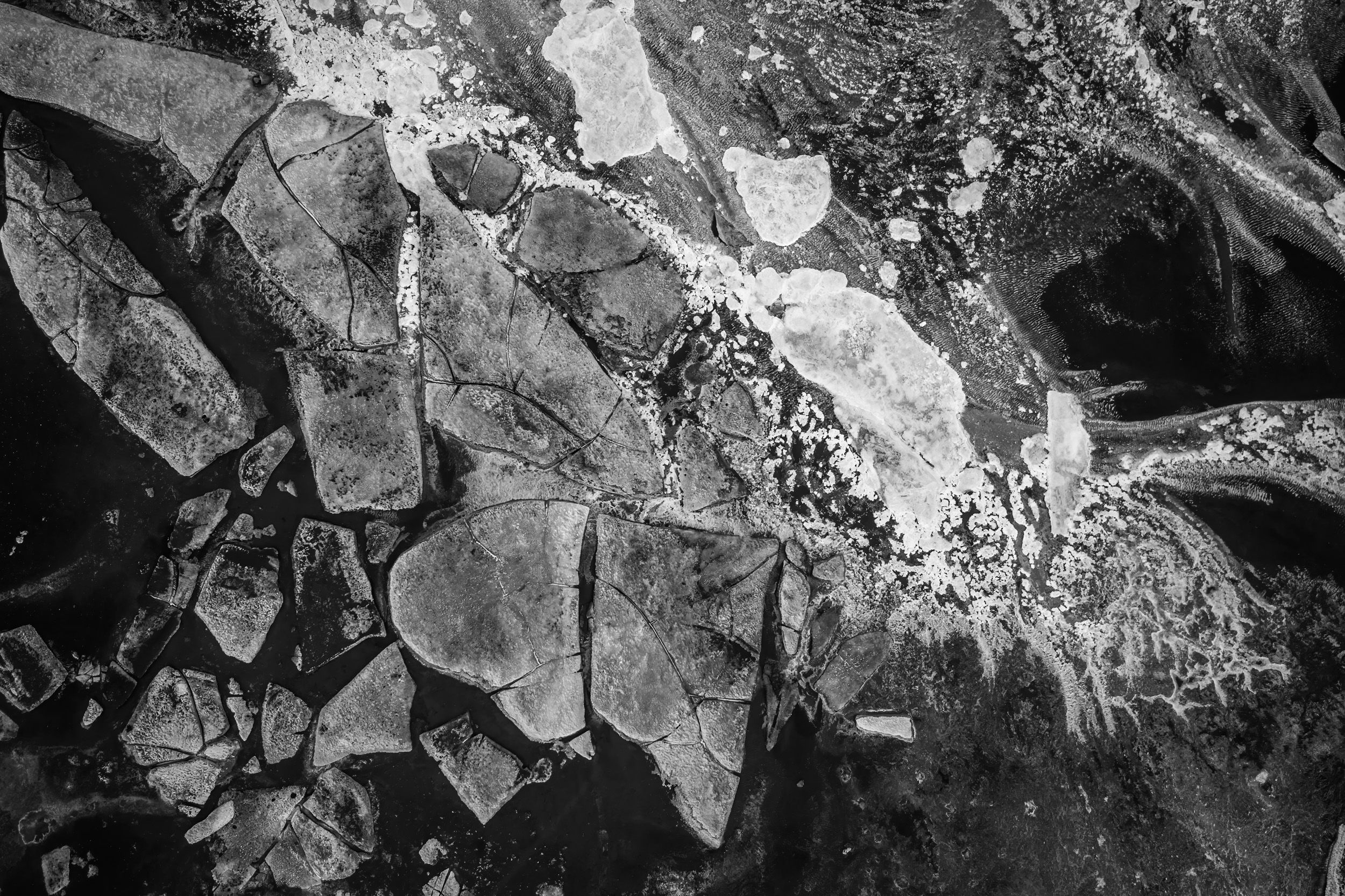
These sounds have a rational explanation. During the day, the shifting temperature causes the ice to expand and contract. At night, the water cools, thickening the ice as hexagonal crystals align and form hydrogen bonds. Ice can form in various ways: Congelation ice forms on the surface and grows downward; superimposed ice is created from frozen rain or seepage; shelf ice is floating ice pushed ashore by the wind and waves; and candle ice, a form of “rotten ice,” appears when ice begins to melt, creating a distinctive honeycomb structure. Sometimes small pools of water dot the surface, and pressure ridges—formed when sheets of ice are compressed and buckle upward—can run through it like scars.
If you fancy venturing out on the ice, bear in mind that its strength can vary significantly, even in the same body of water, so it’s always best to err on the side of caution. Four solid inches of lake ice can typically support the weight of a single person but be cautious of slush, cracks or a grayish-white appearance that suggest the ice is weak, and avoid areas with currents, underwater springs, docks and incoming streams, where the ice is often thinner. If the ice is less than two inches thick, stay off it.
The sounds the ice makes are a memory of all these factors and fluctuations. Richard Nelson, a cultural anthropologist, writes that Koyukon people of Alaska believe the sounds are the lake asking the heavens for a blanket of snow to insulate it from the cold. It’s a reminder to stop, listen and wonder about the stories this icy expanse holds.