Photo: Fritz von der Schulenburg (edited).
Gil Schafer
- Words Alex Anderson
Inside the all-American family home.
Photos: Eric Piasecki.
Contemporary but classic; sophisticated but simple. Architect Gil Schafer on the 21st-century American aesthetic.
In conversation with Gil Schafer III, it’s immediately evident that he has a deep, intuitive sense of what makes a home work, how it frames and adapts to people’s lives, reflects its place in time, and how it can become integral to its surroundings.
He has been designing houses for 30 years, more than 20 of those as principal of his own firm, which focuses exclusively on residential design. Each home the firm has built conveys a pervasive sense of comfort and an authentic but relaxed relationship with historical precedent. Whether a house in San Francisco or an apartment in Manhattan, each project reflects a uniquely American version of a familiar historical style.
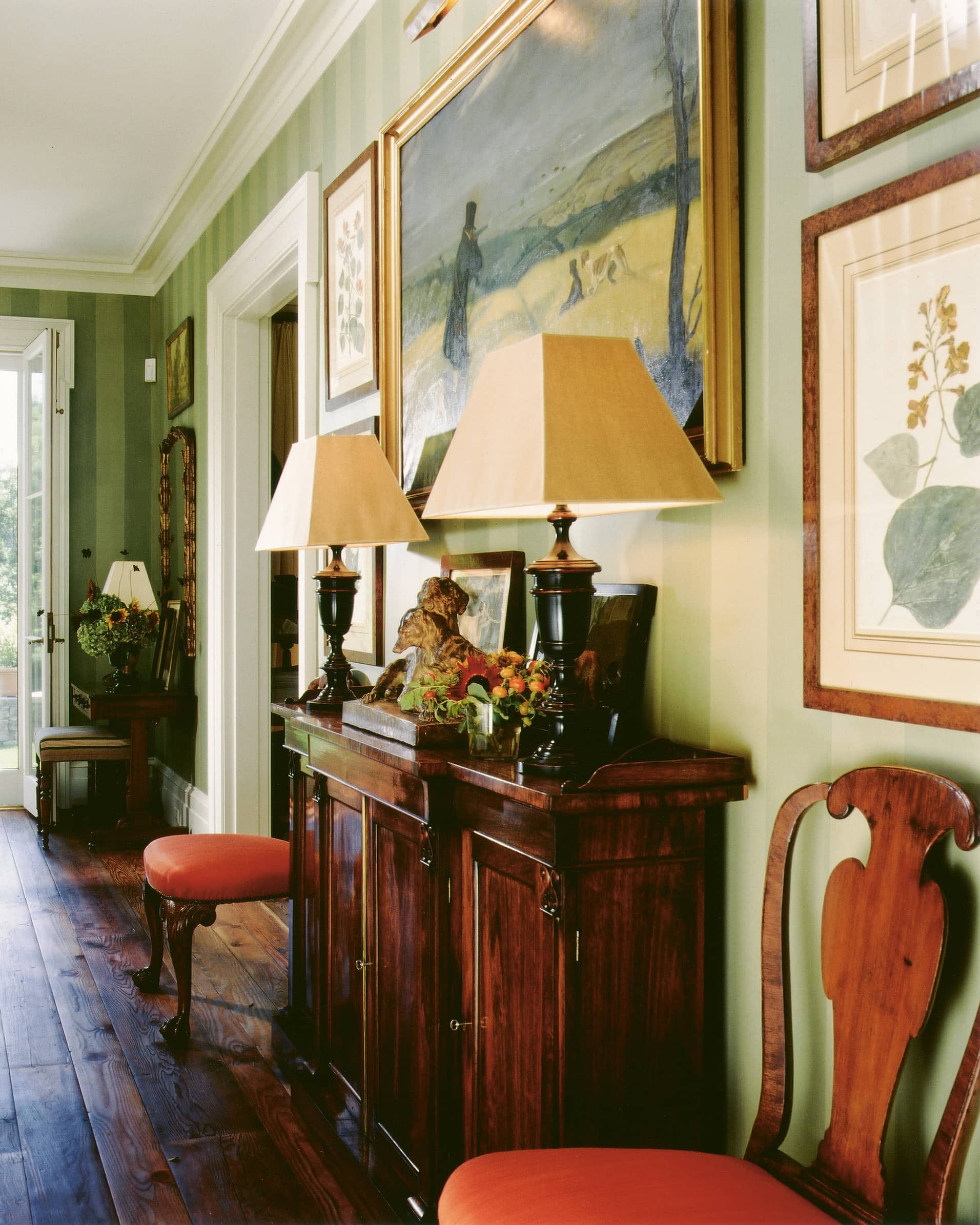
The Greek Revival house Schafer built for his own family more than 20 years ago in rural New York embodies his profound understanding of home. It stands confidently on a rise among rolling green fields. Low stone walls and hedges expand the house into outdoor rooms, visible through high windows from the warmly furnished interiors.
Alex Anderson: How did you come to work solely as a designer of houses?
Gil Schafer: My grandfather was an architect, and my parents were always building things, so I was around architecture and sensitized to it. I also had a stepmother who was a decorator. I was, I think, genetically wired to be interested in architecture. We also moved around a lot. We lived in different kinds of houses. I probably, in some deep Freudian way, idealized home in my psyche. In architecture school, you’re almost never given the problem of house design to solve. You do libraries, museums—very lofty kinds of things.
At Yale, I had really interesting studio critics; the last of these was [architect] Bernard Tschumi, who invited me to work for him after school. That was exciting, but it was sort of an extension of school. And the kinds of problems we were doing in the studio—including a hotel proposal for Euro Disney and a competition entry for the Kansai airport in Osaka, a mile-long building and super interesting intellectually—didn’t resonate in my soul. I realized that I just needed to switch gears completely. So, I went to work for a small firm that did residential work, and that somehow clicked for me. I felt like I could really plug into the user more directly than when designing an airport for hundreds of thousands of people.
AA: How would you characterize “home” in the work that you do?
GS: Well, the way I approach it is really thinking about what resonates for the homeowner. That has to do with memory and things that are familiar. For a lot of clients, these are not always right on the surface; you have to dig sometimes. Also, it’s just creating places for people to live their lives and make their own memories, to create experiences for their families now. It’s important that the “homeness” of the building allows for the evolution of a family, and the way a family lives. We’ve all, in the last three years, been through an amazing test in terms of how our homes can adapt to changes in our world, in our life.
AA: You called your 2012 book The Great American House: Tradition for the Way We Live Now. Is your work American in any particular way?
GS: I’m always looking at history as a place to be inspired. We’re generally looking at American historical precedent, as opposed to European, so that’s often where I start. Wherever we’re building, I want to somehow connect to the place. You can go into American communities that have English Tudor and French Provençal [houses], all this kind of stuff.1 But there’s a certain inherent simplification that occurs, which is part of what makes it American, and part of what makes it appealing in a more democratic way. It’s been reinterpreted, simplified, made less grandiose.
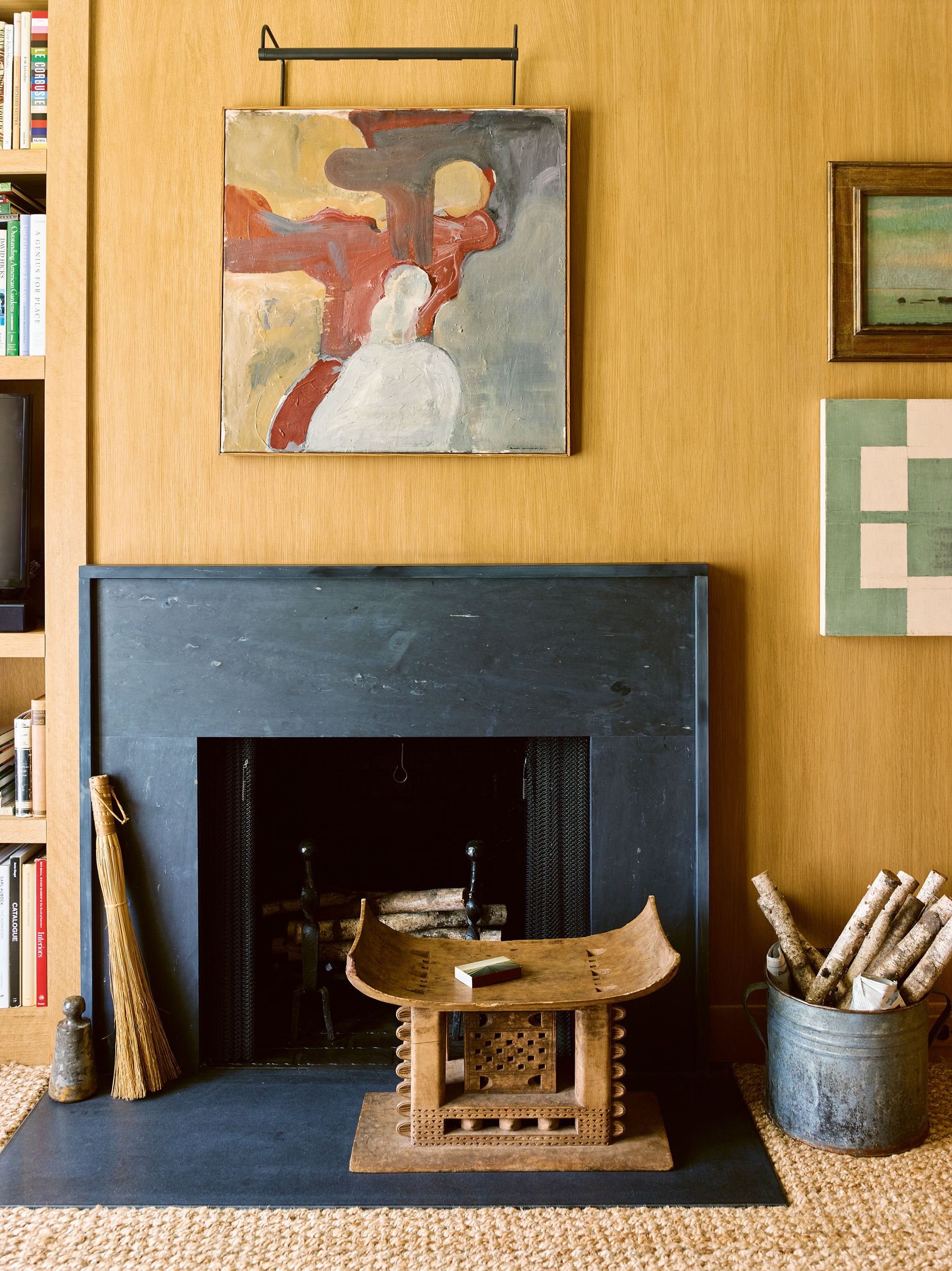
The fireplace at Schafer's home in coastal Maine creates a sense of intimacy in an otherwise expansive, barnlike space.
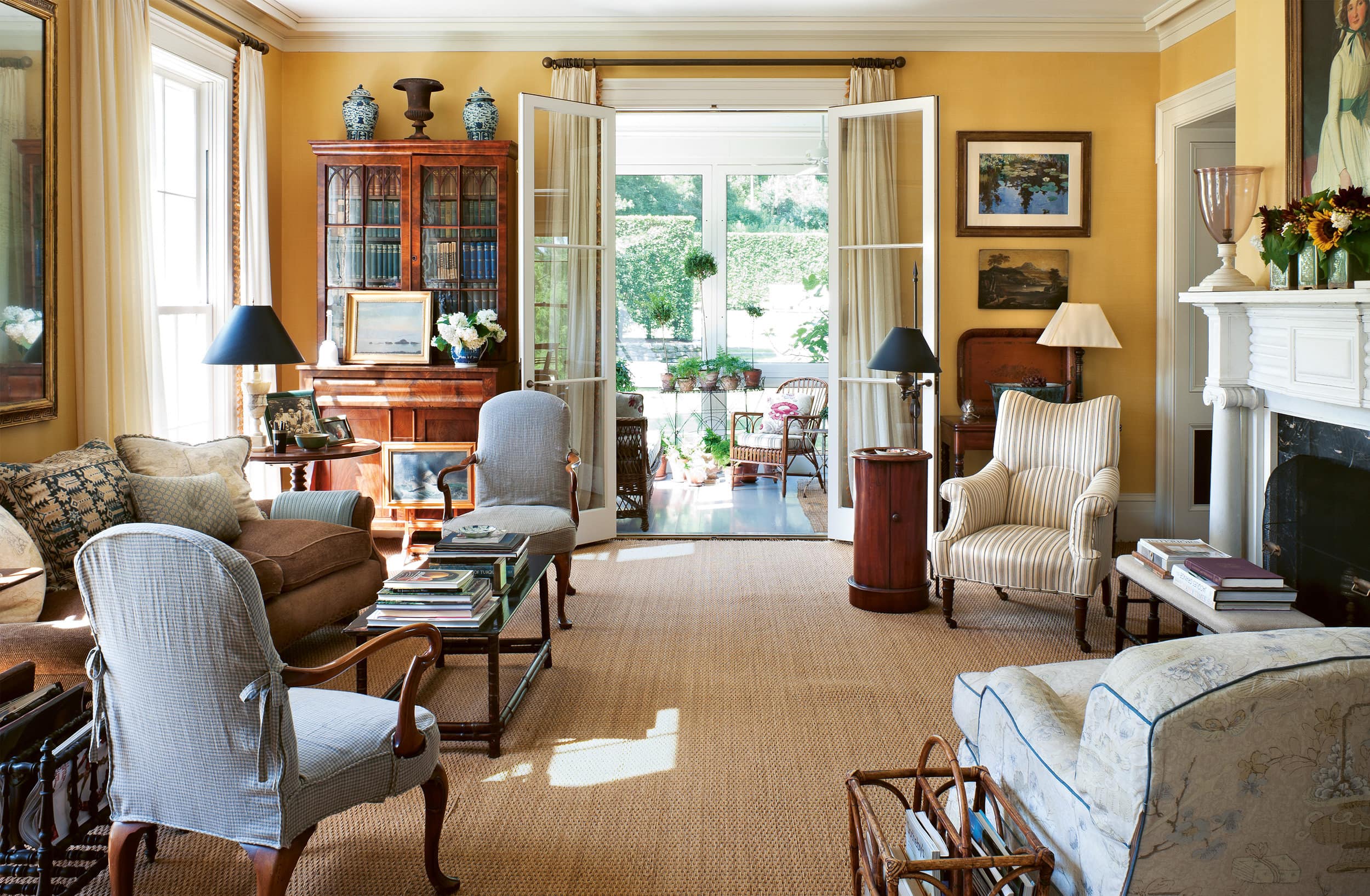
Photo: John Hall.
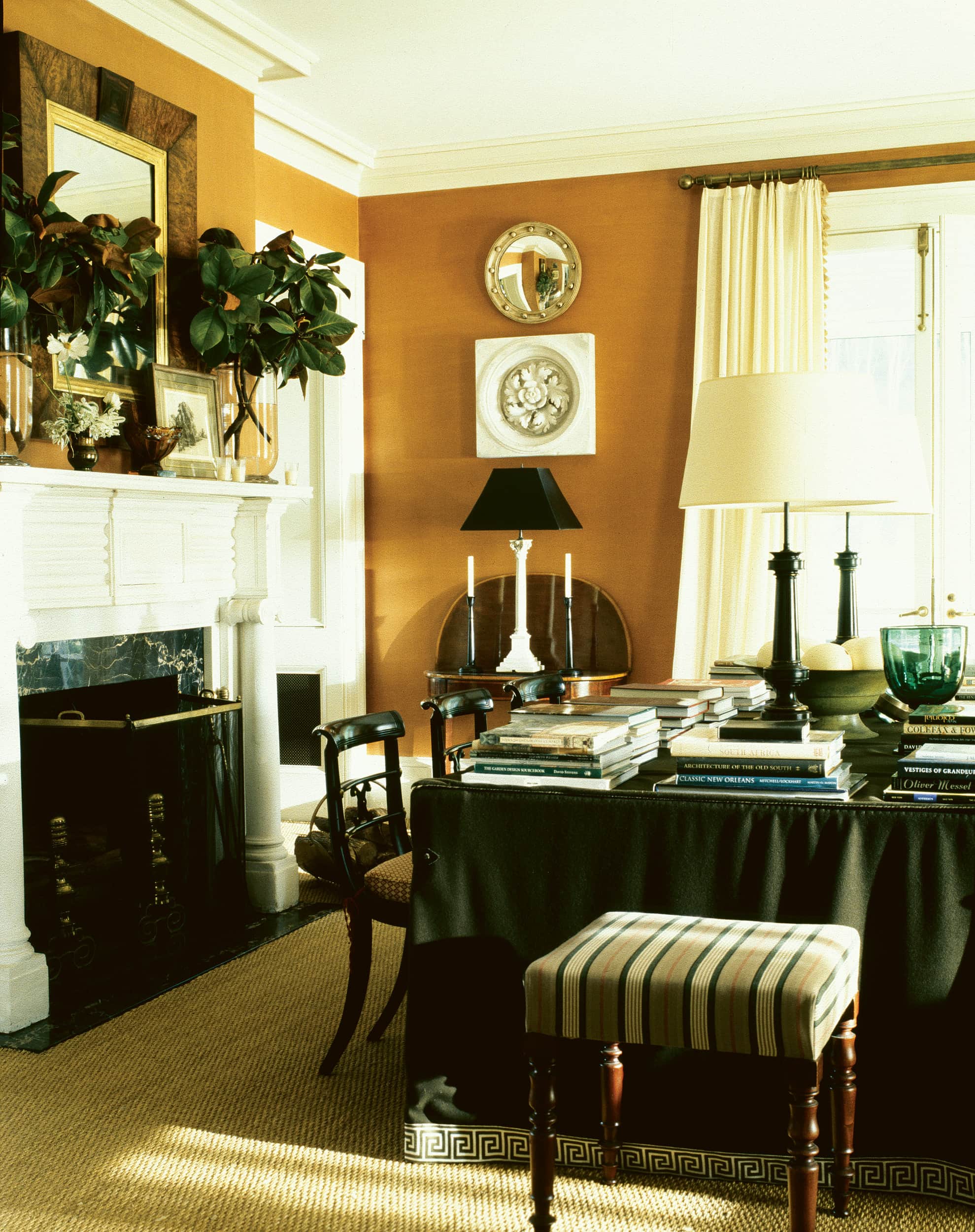
Photo: Fernando Bengoechea.
( 1 ) Tudor architecture became fashionable in the United States in the mid-19th century and remained popular until World War II. Because it was an expensive construction style that required a lot of bricks, it became known as “Stockbroker’s Tudors” for the owners who became wealthy during the market boom of the 1920s. French-style houses became popular after World War I, influenced by soldiers returning from Europe.
“There’s a certain inherent simplification that occurs, which is part of what makes it American.”
AA: Can you explain the distinction you make between your academic understanding of architecture and your own intuitive way of designing?
GS: We look at the style in order to understand it, because it’s a language. We try to learn that language and be somewhat fluent in it, so we can adjust it without it being totally wrong. What’s interesting is that a client almost never cares about the academic intellectual framework. If it’s right, it just feels right. If it’s wrong, it definitely feels wrong, but they won’t know why. We make sure that we get it right. How we got there is less interesting to them than: Where is the family room going to be? How is the kitchen going to work? All of those things that are more about living life every day.
AA: How do you think about the house in relation to the landscape?
GS: The picture is incomplete if you can’t think about the natural setting and how you engage with it—reaching out from the house and trying to connect with the things that are outside. Can you create something artful in the landscape that extends the ideas of the house beyond the four walls? Making rooms with hedges or walls has always been interesting to me, but it can also be the way you shape a view with natural elements to make a richer experience of living.
AA: How about the other direction, with the interiors?
GS: A lot of that grew out of recognizing that interior design is important. It’s such an integral part of the way people want to live in their house. We started to get projects where there was no decorator, but there needed to be some thinking about that in order to complete the picture. I realized it was another part of things that really interested me, so we embraced it rather than ran from it.
AA: You do many renovations, but you incorporate older elements even in your new work. How does that work in your design process?
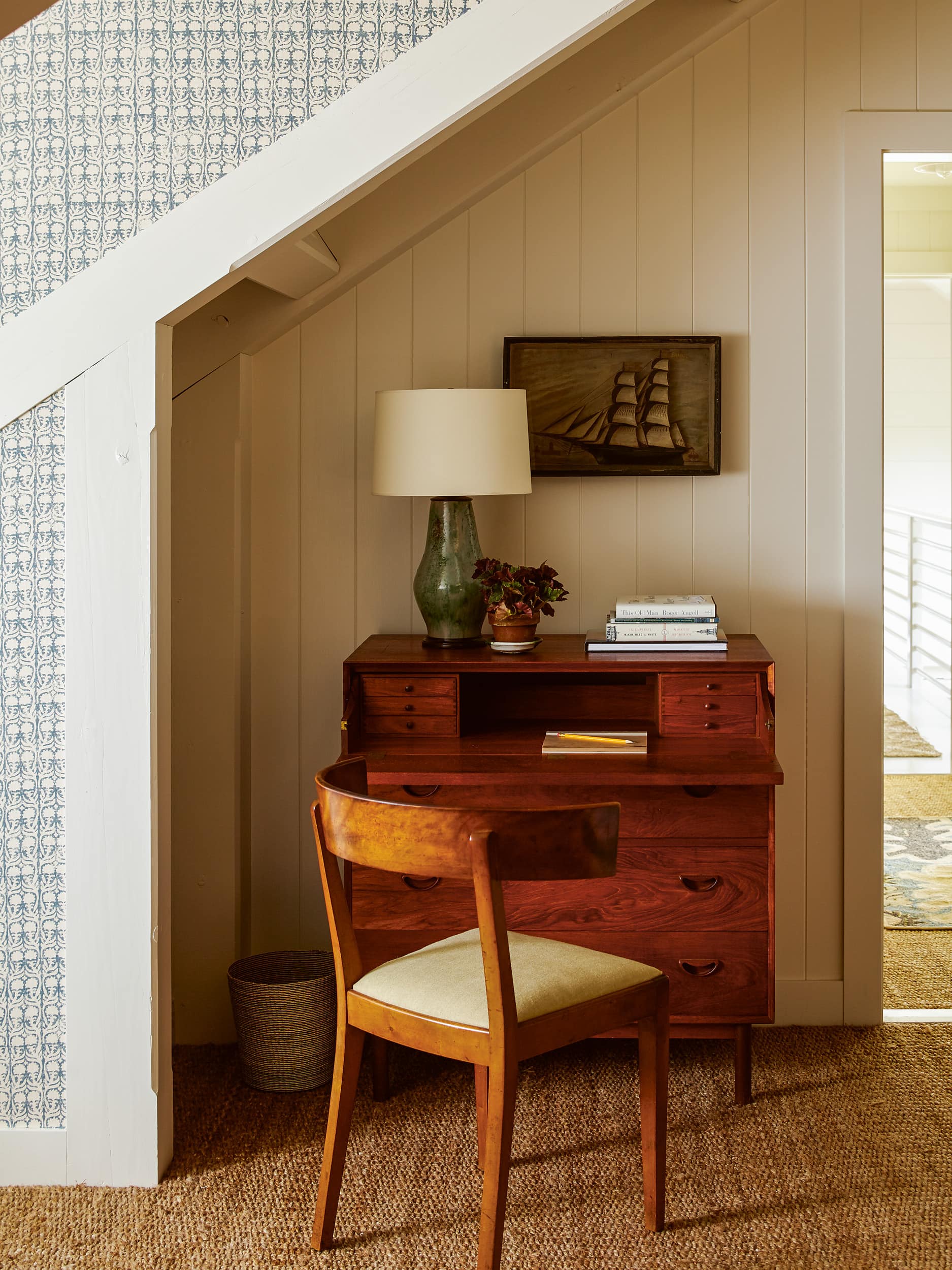
GS: Old materials, like old floors or hardware, right away, on a subliminal level, make a house have a sense of age. I love old things; I love patina, and a lot of our clients like that too. It feels comfortable; it ties into memory. My own house in Maine, which was built in 1992, had nothing historic about it, nothing that felt of a past time, so I had to embrace a slightly more contemporary language. As architects we love learning all the time and being challenged in a new way.
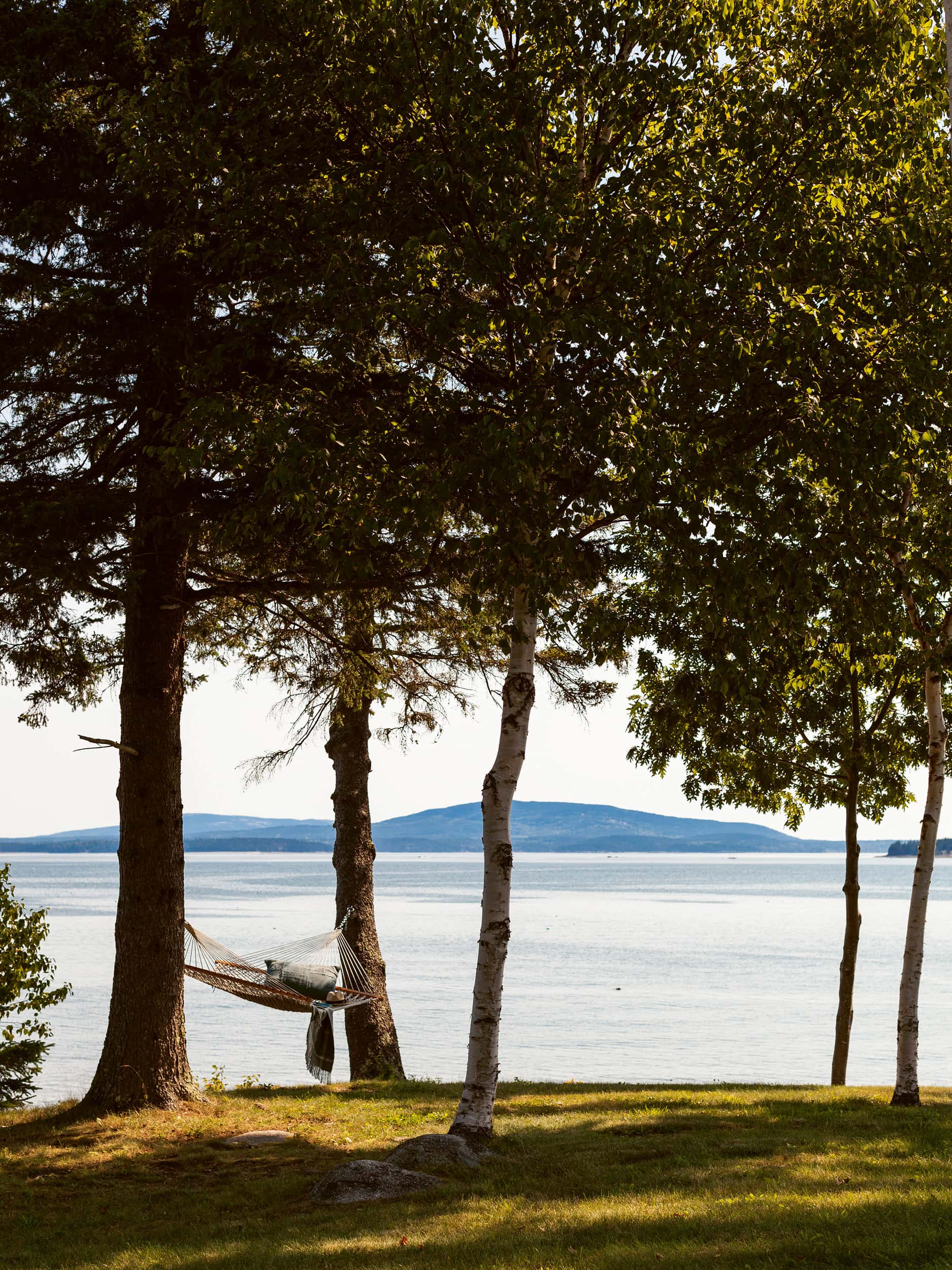
Schafer's home in Brooklin, Maine, is set among acres of woodland and affords views over Blue Hill Bay toward Mount Desert Island. Photo: Eric Piasecki.
( 1 ) Tudor architecture became fashionable in the United States in the mid-19th century and remained popular until World War II. Because it was an expensive construction style that required a lot of bricks, it became known as “Stockbroker’s Tudors” for the owners who became wealthy during the market boom of the 1920s. French-style houses became popular after World War I, influenced by soldiers returning from Europe.