( 1 ) Many evolutionary biologists have speculated about how humans might evolve. Suggestions range from becoming taller, more lightly built and increasingly physically alike—with smaller brains —to splitting into entirely separate species or merging with machines.
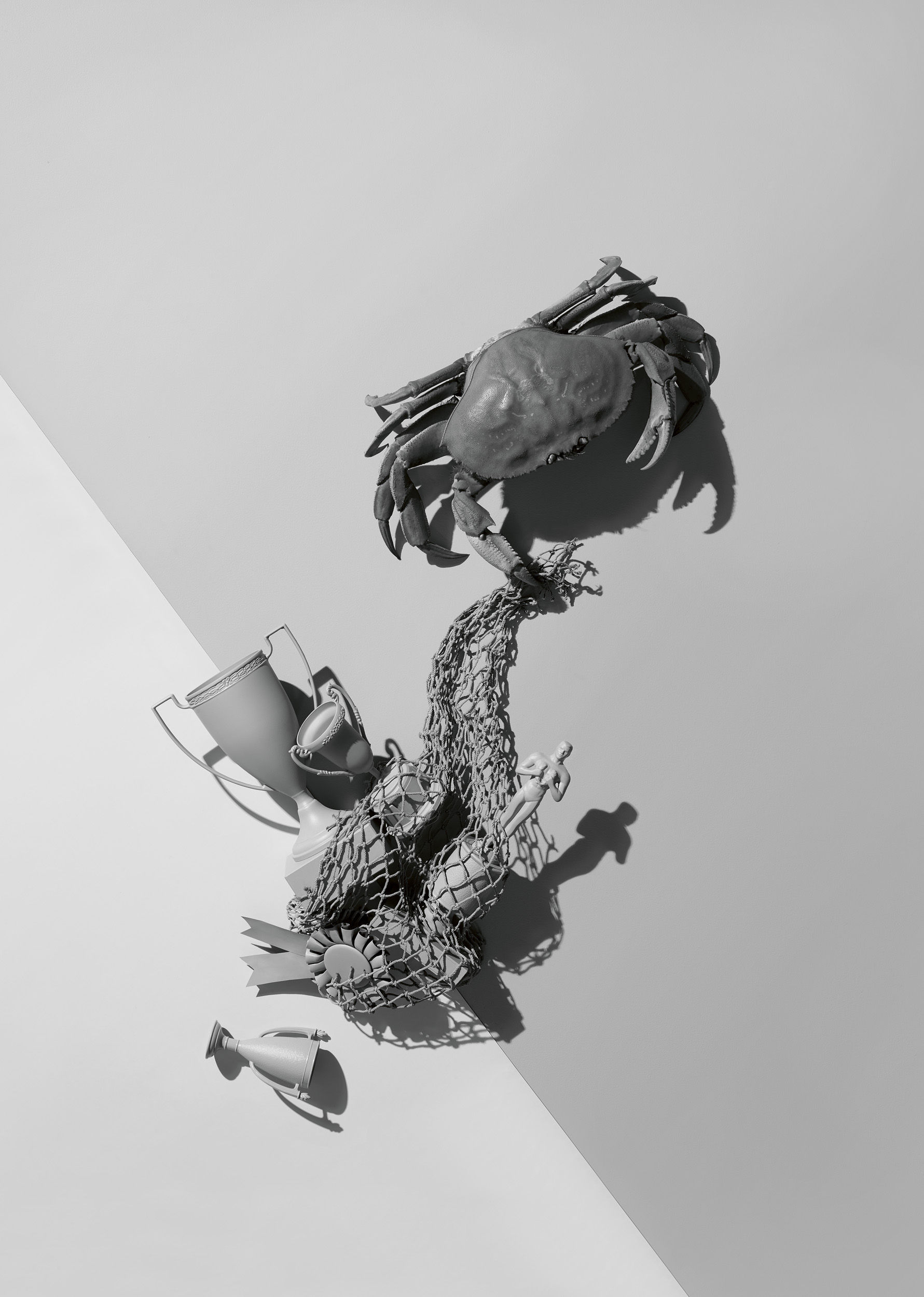
Imitation CrabA sideways scuttle to perfection.
Imitation CrabA sideways scuttle to perfection.
Once there were only single-celled organisms, bobbing around in the primordial soup. A few billion years of evolution later we have golden eagles, baobab trees and Dua Lipa. It’s a startlingly broad spectrum that suggests that such diversity will only continue to grow. But, in fact, it seems that many different species have arrived at the same place.
“Convergent evolution” is the name for the phenomenon by which organisms separately progress toward similar ends, like middle-class parents all ending up with the same “original” names for their children. It means we can legitimately ask the question: Of earth’s cornucopia, which of those organisms comes closest to perfection?
Certain bats, birds and insects all worked out that wings might come in handy. At some point sharks (fish) and dolphins (mammals) acquired similar go-faster hydrodynamic forms. One study found that mammals have evolved to become ant-eaters (or at least ant-eating) not once but 12 times in history.
But as far as scientists can tell, no form is currently more desirable than that of the crab. At least five different crustaceans have evolved crab-like forms, a process called carcinization, going from being more lobster- or shrimp-like toward having a flat, rounded shell and a tail that is folded under the body. Some are in the sea, some are on land. They are so numerous that there is a term for them: “false crabs,” impersonators at whom the true crabs presumably turn up their noses.