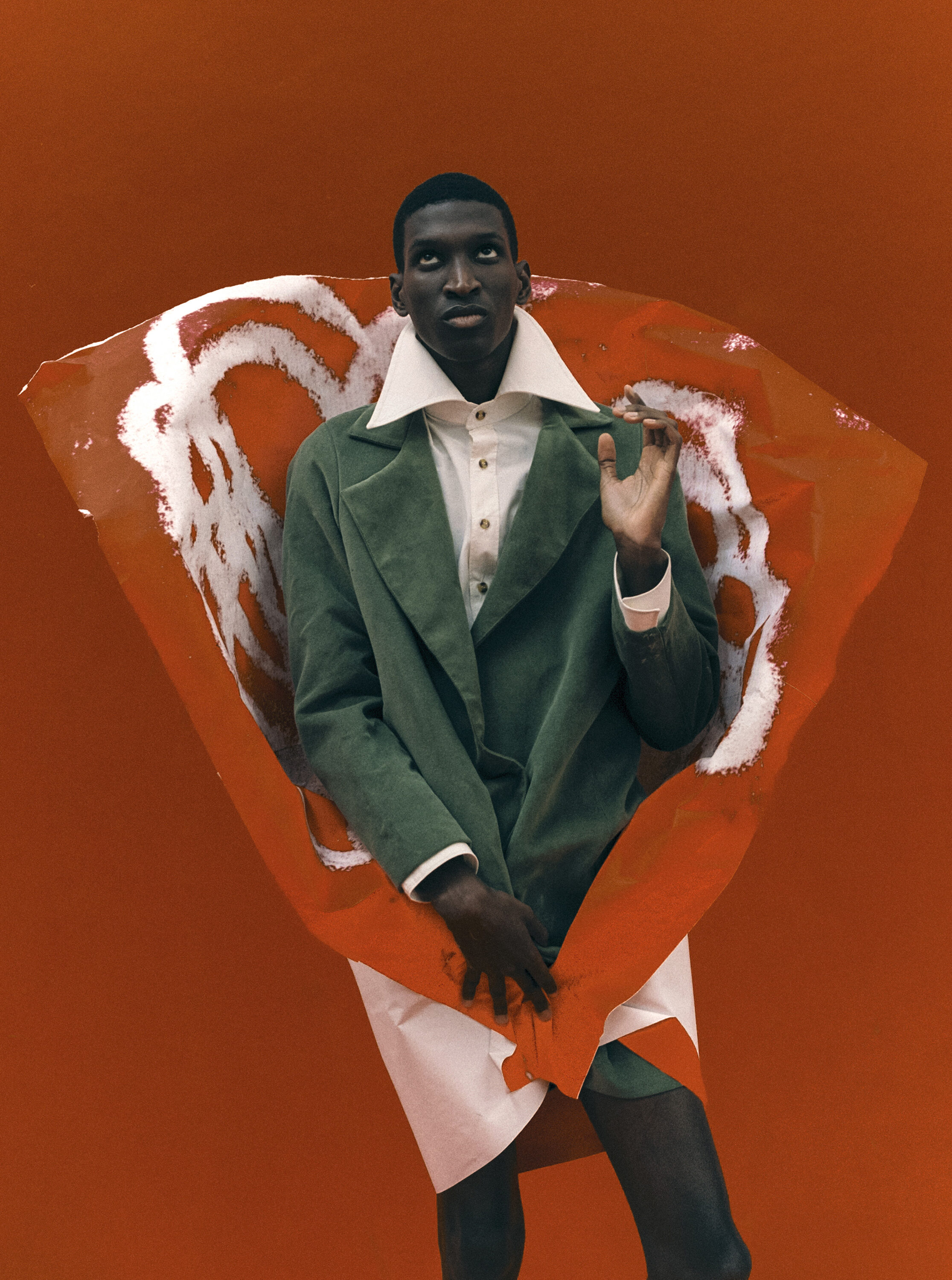
Kaytranada

Kaytranada built his reputation as a producer from a bedroom in his mom’s house in Montreal.

  • Words Sean Michaels
  • Photography Ted Belton

Kaytranada’s working on it. The Haitian-born, Quebec-raised producer, whose 2016 debut 99.9% was a glitter-bomb dropped onto the dance floor, is back on his grind, mixing songs, building grooves and grappling with a surprising degree of self-doubt. The last time he was doing this—finishing an album—he was living with his mom and best known as a bedroom beatmaker who put out (illicit) remixes of Janet Jackson and Missy Elliott. Since then Louis Kevin Celestin has left home, come out, and crisscrossed the planet to work with artists including Craig David and Kendrick Lamar. He’s got a boyfriend now, and received Canada’s most important music award—the Polaris Prize. But as much as he’s living his new, best life—and that includes finding comfort in Quebec’s subzero winters (“The snow puts me in a mindset of ease,” he says)—the soft-spoken DJ reveals that the work hasn’t gotten any easier.

Creating music must feel so different now, after all your success. You were still living at home when you released your first album.

When I think about it now, it’s so weird. All I had [then] was my laptop. I wasn’t even traveling to have sessions—I did just one track in studio, when I had some free time in London. Otherwise, I remember doing it in my bedroom. I remember doing it in the living room. Now it’s a whole different process.

Is it just the technical side that has changed?

How can I say it? I feel like the fire, the momentum I had is not there [now]. People don’t want to quite get into the ride and be on the second album. It’s more difficult. When I dropped 99.9%, things went crazy. People were talking about me, my name would come up a lot. But that was what, three years ago? Now I feel like I have to prove myself again. People think, “Oh, Kaytranada—I remember him.” People don’t think you’ve [still] got it, or they don’t understand the evolution of my beat-making. Everything I did with 99.9% was really stuff that I did when I was 19 or 20 years old—and now I’m 26.

It’s hard to believe people’s memories are that short.

I have to have a salesman mentality. To be like, “Yo, it would be cool if you got on this track. It would be revolutionary, some new shit for the game.” But some people don’t want to do that. Some people just want the usual, basic stuff they’re comfortable with. You have to work to push them out of their comfort zone—[adopting] the producer mentality, telling them what you really need.

So has your sound changed?

I’ve always been influenced by disco, but I’m taking that more seriously and bringing that theme to the album—this feel-good, club kind of music: love songs that are danceable, breakup songs that are danceable. Music for DJs. Up-tempo, drum-break stuff, an ’80s hip-hop [vibe]. A lot of Afrobeat influence, a lot of dancehall influence. A mixture of everything. But I feel like that mixture is myself, you know? Whenever I make a beat, it’s going to sound like me.

“I feel like I have to prove myself again. People don’t think you’ve still got it.”

How do you build a track? Do you have an idea in your head—a feeling, a concept, some kind of musical image?

It’s more freestyle. I’ll start with a high hat and build around it, add the kick drums and the bass line—singing to myself until I find something I feel in my gut. It never quite comes out like what I had in my head, but it sounds hot anyway. And then I add the chords, or the [vocals]… The easiest way to make beats used to be sampling, but the sampling game is dying right now.

Do you stick around for the winter in Montreal? It’s hard for me to imagine you making such sunny music here.

Last year I escaped for two months maybe, but I actually kind of enjoy it. The snow puts me in a mindset of ease. I’m in a condo, I don’t need to do the hard work outside. Watching white snow [falling] outside, seeing how white it is, it’s like, “OK, I can chill.” I don’t have to do anything besides make beats.

Can you tell when you’ve made something really good? Or do you have wait until you’ve played it for somebody else?

I used to know. Now, because I’ve been so much in my own head, I’m not as sure. I’ll show it to my manager, but I can tell when he’s faking it. Sometimes he’ll just say, “That’s sick,” and that’s it—and you know that it’s not as crazy [as it should be]. But when I show him something that’s full of energy, he’ll be like, “Yo those drums, man! Those drums you added!” He’ll be really specific—and then you can tell. When people really like something, it’s in their face.

Do you dance to your own stuff?

Totally. If you see me live in my DJ sets, sometimes I’m the only one dancing in the whole room. And when I make beats, I’ll bob my head so hard. That’s when I know, “This one is ready to go.”

Are you happiest when you’re just starting a new song? Or when it’s finished?

When it’s done. It’s like: “One song down, boom.” My people are finally going to hear it, and stop complaining.

Who’s complaining?

You get tweets. “We’re waiting for a damn album, what the fuck Kaytranada?” Or Instagram DMs: “Could we get an album, sir, please?” But y’all don’t understand—it’s difficult. As a producer, making an album, trying to keep linked with everybody, especially not living in LA—it’s so difficult, man. I know I’m a strong motherfucker and one day [the album] will come out, no matter what, but it drives me crazy sometimes.

Knowing that—that it will eventually come out, and people will love it—isn’t that a comfort?

I feel like I have two people inside of me. One of them always says, “Yeah, don’t worry about it.” And then the other [part of me] is like, “Oh goddamn—ain’t you worried about your album?” [My friends say] “Don’t worry. You don’t need to worry at all. Take your damn time.” And they’re right. If D’Angelo can take 10 years to drop an album, if André 3000’s not dropping an album—I shouldn’t worry about it, honestly. But I feel like I have to. When I drop the second album I want everybody to know, right away, “That’s a Kaytranada joint.” If somebody doesn’t know me—when they hear a song and ask, “Oh, what is that?” [I want] everyone [else] to be like: “Yeah. That’s Kaytra.”

FREE PREVIEW

Take a look inside Issue Sixty

You are reading a complimentary story from Issue 33

Want to enjoy full access? Subscribe Now

Subscribe Discover unlimited access to Kinfolk

  • Four print issues of Kinfolk magazine per year, delivered to your door, with twelve-months’ access to the entire Kinfolk.com archive and all web exclusives.

  • Receive twelve-months of all access to the entire Kinfolk.com archive and all web exclusives.

Learn More

Already a Subscriber? Login

Your cart is empty

Your Cart (0)